SAVE A HISTORIC HOUSE FROM DEMOLITION

SAVE A HISTORIC HOUSE FROM DEMOLITION
The Issue
HELP!! One of Saint Paul's earliest and most iconic pioneer houses, The Justus Ramsey House is at high risk of being TORN DOWN WITHIN A MATTER OF DAYS if we don't speak up!
Help us SAVE THIS RARE AND PRECIOUS BUILDING that is an integral part of Saint Paul's West Seventh Street Neighborhood. IF WE DO NOTHING, THIS BUILDING WILL BE LOST FOREVER! By signing this petition you are showing that you care and adding your voice to preserving our collective heritage.
The more signatures we receive, the more time we have to find better options for the Justus Ramsey house, including moving it to another lot.
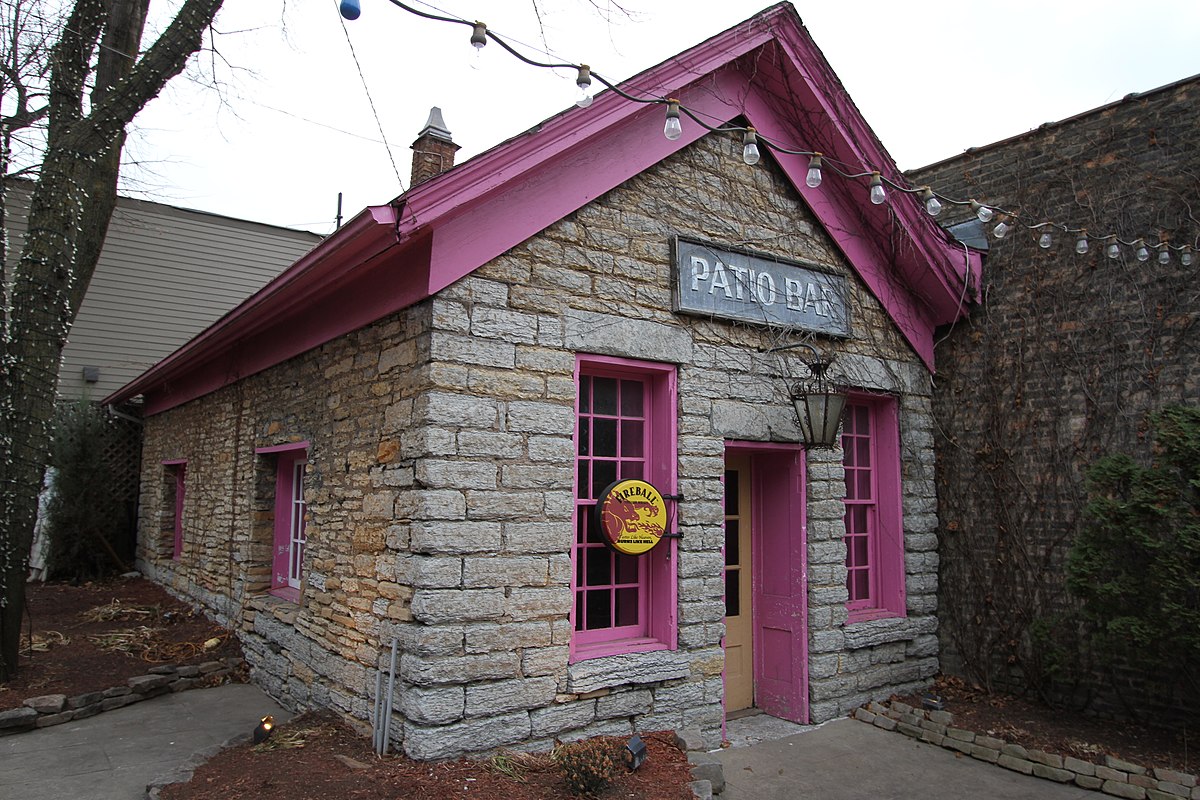
Hi, I’m Elsa Schroeder and I was born and raised in the West Seventh neighborhood. My family owns a successful local business in a restored limestone building almost as old as the Justus Ramsey House that was once vacant, deemed a safety hazard and could easily have been torn down. I’m fighting to save the Justus Ramsey House because our history, including our historic buildings, are what make our neighborhoods unique. They tell our stories.
Also, demolishing buildings that have potential reuses is simply wasteful. This building in particular is built of solid limestone, maintains its original character, and (as our family's business shows) could easily be leveraged for any number of uses. And if you look around the neighborhood, you’ll see many examples of small businesses thriving not despite, but partly because of, the historic character of their buildings.
The current owner of the Justus Ramsey House doesn't see it that way, and wants to demolish the building to make room for more outdoor patio space for his restaurant. As recently as 2015 an official City survey described the building as “in sound condition” and “not threatened with demolition or removal.” However, the building has not been maintained, and the owner now seeks to remove it entirely. We support small businesses. We understand that, to a restaurant, tables mean money. But when you choose run your business next to a building that's been historically designated not just once, but THREE TIMES, if you don't want to make use of it, we think you at least owe a duty to your community not to destroy it.
Please DO NOT send hate or threats to Burger Moe’s. Me and my family are long time patrons of their establishment. We hope to inspire them to not (worst case scenario, stop them) tear down the building—negativity in their direction is antithesis to our goal. This will be an ongoing legal process to save the building, so any disrespect or defamation sent to Moe or his business is HARMFUL to our mission!!!
HISTORY:
Our West Seventh neighborhood is literally the place where Saint Paul was born, near the Upper Landing. Immigrants and migrants came to the bluffs of the Mississippi to join the many industries along the river. Buildings in our neighborhood are some of the oldest in the Twin Cities— and tell the City's earliest and most compelling stories.
• The Justus Ramsey House is among the oldest surviving houses in the City (built 1852) and is both a National Register (1978) and a twice-designated St. Paul Heritage Preservation site (2004 and 2015).
• The house is a rare, solid limestone building built by stone masons Ezra Cook and William Beaumette. It's quite small, only one story, and in the Greek Revival style. But its associations are large: while Justus Ramsey owned the site, its earliest known occupant was Robert A. Smith, the Territorial Secretary to Minnesota’s first Territorial Governor Willis Gorman, and subsequently County Treasurer, 4-term City Council member, 8-term Mayor of Saint Paul, and 2-term representative in the Minnesota Legislature. Both St. Paul’s Smith Avenue and Smith Avenue Bridge are named in his honor.
EXAMPLES OF SUCCESSFUL BUSINESSES IN RESTORED BUILDINGS:
Although older buildings may seem useless to some, Saint Paul has seen a resurgence in popular restoration projects that celebrate our city’s cultures and communities.
-Hope Breakfast Bar, the original Saint Paul Fire Station. The building was almost torn down, but now it’s a popular brunch spot—a place so popular the street gets closed down so more customers can sit outside.
-Keg and Case, located in Schmidt Brewery. A long-vacant brewery warehouse has now been turned into a hub for nightlife, local business, and community gatherings.
-Bad Weather Brewing. I grew up playing behind this ugly, abandoned, sheet-metal clad truck tire warehouse that hadn't been occupied for more than a decade. Today, it’s one of the most popular microbreweries in the City.
-Waldmann Brewery is housed in an 1850s limestone building that was in shambles, not code-compliant and on the City’s vacant building list. Today, it’s a brewery and restaurant that thousands visit annually, hosts a popular Oktoberfest and celebrates the City's ethnic, immigration, Civil War and architectural heritage.
-City House is the last historical project I’ll mention, though I could go on. This long-abandoned concrete grain tower is now a hip spot to sit on the Mississippi, have a beer, have food, play games, and host events.
WHY PRESERVE HISTORIC STRUCTURES?
“Historic preservation is a movement in planning designed to conserve old buildings and areas in an effort to tie a place’s history to its population and culture. It is also an essential component of green building in that it reuses structures that are already present as opposed to new construction. Additionally, historic preservation can help a city become more competitive because historic, unique buildings give areas more prominence when compared to the homogeneous skyscrapers that dominate in many large cities.”
Briney, Amanda. "The Importance of Historic Preservation." ThoughtCo. https://www.thoughtco.com/historic-preservation-and-urban-planning-1435784 (accessed October 5, 2022).
The following reasons for encouraging historic preservation are excerpts taken from Community Tool Box:
-it is an efficient use of resources; historic preservation reduces waste and saves money by using materials already available
-it preserves old methods of workmanship
-IT ADDS CHARM/CHARACTER TO A COMMUNITY AND EMPHASIZES ITS UNIQUENESS
-it attracts investment and change to neighborhoods.
Rabinowitz, Phil. Implementing Promising Community Interventions: “Encouraging Historic Preservation,” Community Tool Box, accessed October 5th, 2022.
We truly appreciate your consideration if you’ve made it this far. From the bottom of our hearts-thank you for helping us preserve our neighborhood, our history, and our heritage.
—Elsa Schroeder

2,802
The Issue
HELP!! One of Saint Paul's earliest and most iconic pioneer houses, The Justus Ramsey House is at high risk of being TORN DOWN WITHIN A MATTER OF DAYS if we don't speak up!
Help us SAVE THIS RARE AND PRECIOUS BUILDING that is an integral part of Saint Paul's West Seventh Street Neighborhood. IF WE DO NOTHING, THIS BUILDING WILL BE LOST FOREVER! By signing this petition you are showing that you care and adding your voice to preserving our collective heritage.
The more signatures we receive, the more time we have to find better options for the Justus Ramsey house, including moving it to another lot.
Hi, I’m Elsa Schroeder and I was born and raised in the West Seventh neighborhood. My family owns a successful local business in a restored limestone building almost as old as the Justus Ramsey House that was once vacant, deemed a safety hazard and could easily have been torn down. I’m fighting to save the Justus Ramsey House because our history, including our historic buildings, are what make our neighborhoods unique. They tell our stories.
Also, demolishing buildings that have potential reuses is simply wasteful. This building in particular is built of solid limestone, maintains its original character, and (as our family's business shows) could easily be leveraged for any number of uses. And if you look around the neighborhood, you’ll see many examples of small businesses thriving not despite, but partly because of, the historic character of their buildings.
The current owner of the Justus Ramsey House doesn't see it that way, and wants to demolish the building to make room for more outdoor patio space for his restaurant. As recently as 2015 an official City survey described the building as “in sound condition” and “not threatened with demolition or removal.” However, the building has not been maintained, and the owner now seeks to remove it entirely. We support small businesses. We understand that, to a restaurant, tables mean money. But when you choose run your business next to a building that's been historically designated not just once, but THREE TIMES, if you don't want to make use of it, we think you at least owe a duty to your community not to destroy it.
Please DO NOT send hate or threats to Burger Moe’s. Me and my family are long time patrons of their establishment. We hope to inspire them to not (worst case scenario, stop them) tear down the building—negativity in their direction is antithesis to our goal. This will be an ongoing legal process to save the building, so any disrespect or defamation sent to Moe or his business is HARMFUL to our mission!!!
HISTORY:
Our West Seventh neighborhood is literally the place where Saint Paul was born, near the Upper Landing. Immigrants and migrants came to the bluffs of the Mississippi to join the many industries along the river. Buildings in our neighborhood are some of the oldest in the Twin Cities— and tell the City's earliest and most compelling stories.
• The Justus Ramsey House is among the oldest surviving houses in the City (built 1852) and is both a National Register (1978) and a twice-designated St. Paul Heritage Preservation site (2004 and 2015).
• The house is a rare, solid limestone building built by stone masons Ezra Cook and William Beaumette. It's quite small, only one story, and in the Greek Revival style. But its associations are large: while Justus Ramsey owned the site, its earliest known occupant was Robert A. Smith, the Territorial Secretary to Minnesota’s first Territorial Governor Willis Gorman, and subsequently County Treasurer, 4-term City Council member, 8-term Mayor of Saint Paul, and 2-term representative in the Minnesota Legislature. Both St. Paul’s Smith Avenue and Smith Avenue Bridge are named in his honor.
EXAMPLES OF SUCCESSFUL BUSINESSES IN RESTORED BUILDINGS:
Although older buildings may seem useless to some, Saint Paul has seen a resurgence in popular restoration projects that celebrate our city’s cultures and communities.
-Hope Breakfast Bar, the original Saint Paul Fire Station. The building was almost torn down, but now it’s a popular brunch spot—a place so popular the street gets closed down so more customers can sit outside.
-Keg and Case, located in Schmidt Brewery. A long-vacant brewery warehouse has now been turned into a hub for nightlife, local business, and community gatherings.
-Bad Weather Brewing. I grew up playing behind this ugly, abandoned, sheet-metal clad truck tire warehouse that hadn't been occupied for more than a decade. Today, it’s one of the most popular microbreweries in the City.
-Waldmann Brewery is housed in an 1850s limestone building that was in shambles, not code-compliant and on the City’s vacant building list. Today, it’s a brewery and restaurant that thousands visit annually, hosts a popular Oktoberfest and celebrates the City's ethnic, immigration, Civil War and architectural heritage.
-City House is the last historical project I’ll mention, though I could go on. This long-abandoned concrete grain tower is now a hip spot to sit on the Mississippi, have a beer, have food, play games, and host events.
WHY PRESERVE HISTORIC STRUCTURES?
“Historic preservation is a movement in planning designed to conserve old buildings and areas in an effort to tie a place’s history to its population and culture. It is also an essential component of green building in that it reuses structures that are already present as opposed to new construction. Additionally, historic preservation can help a city become more competitive because historic, unique buildings give areas more prominence when compared to the homogeneous skyscrapers that dominate in many large cities.”
Briney, Amanda. "The Importance of Historic Preservation." ThoughtCo. https://www.thoughtco.com/historic-preservation-and-urban-planning-1435784 (accessed October 5, 2022).
The following reasons for encouraging historic preservation are excerpts taken from Community Tool Box:
-it is an efficient use of resources; historic preservation reduces waste and saves money by using materials already available
-it preserves old methods of workmanship
-IT ADDS CHARM/CHARACTER TO A COMMUNITY AND EMPHASIZES ITS UNIQUENESS
-it attracts investment and change to neighborhoods.
Rabinowitz, Phil. Implementing Promising Community Interventions: “Encouraging Historic Preservation,” Community Tool Box, accessed October 5th, 2022.
We truly appreciate your consideration if you’ve made it this far. From the bottom of our hearts-thank you for helping us preserve our neighborhood, our history, and our heritage.
—Elsa Schroeder
2,802
Supporter Voices
Petition created on October 5, 2022