

Sataya Code of Conduct: Protect the Dolphins and the Marine Sanctuary
The Issue
Sataya Reef, also known as Dolphin Reef (location), is a unique and precious marine habitat in the Red Sea, home to diverse marine life, including graceful spinner dolphins. To preserve this sanctuary for future generations and avoid dolphin harassment from irresponsible human activities, we invite all visitors, boat operators, and tour guides to adhere to the Dolphin Code of Conduct prepared by the Hurghada Environmental Protection and Conservation Association (HEPCA).
Be aware that the Dolphin Code of Conduct is now mandatory and the non-respect of the code is now punishable by law and with a fine.
PASSIVE INTERACTION: Always remember: the most enjoyable and fulfilling wildlife experience is the one where animals interact on their own terms!
CODE OF CONDUCT FOR BOAT CAPTAINS
- Always maintain a clearance distance of a minimum of 30m from the dolphins.
- Only approach dolphins in open water by driving carefully and parallel to their swimming direction.
- As soon as dolphins are observed, drive slowly at a maximum speed of 4 knots or 7km/h or adjust to the speed of the slowest dolphin. Never reverse, accelerate, or change direction suddenly.
- If dolphins approach your vessel, put your engine in neutral.
- If dolphins are bow riding, do not suddenly change direction.
- NEVER herd, chase, encircle, or separate dolphin groups. Always leave the animals an “escape route”.
- When dolphins are already approached by another boat wait for your turn.
- NEVER follow dolphins inside lagoons and rest areas and keep a safe distance from the reef. Use immediately the moorings at the anchoring place.
- Avoid noises. Do not shout, whistle, use horns, or play music.
- Be aware of possible signs of distress (e.g. avoidance, fluke slaps) and, if observed, leave the area at a very low speed.
- When calves (young dolphins) are present, always apply extra care.
CODE OF CONDUCT FOR SWIMMERS
- All swimmers MUST wear fins, mask, snorkel, and a lifejacket.
- Enter gently into the water, without jumping or excessive splashes.
- Once in the water, always keep quiet and swim gently using your fins only.
- Always swim on the side of the group (parallel) and never dive down from the top.
- DO NOT chase dolphins. Let them approach and decide how to interact.
- The use of scooters while swimming close to dolphins is strictly forbidden.
- Avoid any loud noises (in particular shouts and whistles).
- Remember that touching dolphins is strictly forbidden. The risk of exchanging diseases is very likely.
- NEVER throw trash in the water.
- NEVER feed the animals.
Guides should be the role model for their guests. Even if some dolphins are very curious and come very close to humans, we should not touch them. Physical contact can lead to the onset of pathologies, diseases, and infections in animals or humans. Furthermore, they are not pets: we should respect them and their wildness. Never forget: dolphins are top predators; they are strong and wild animals with unpredictable reactions.
Summary of HEPCA Dolphin Code of Conduct:
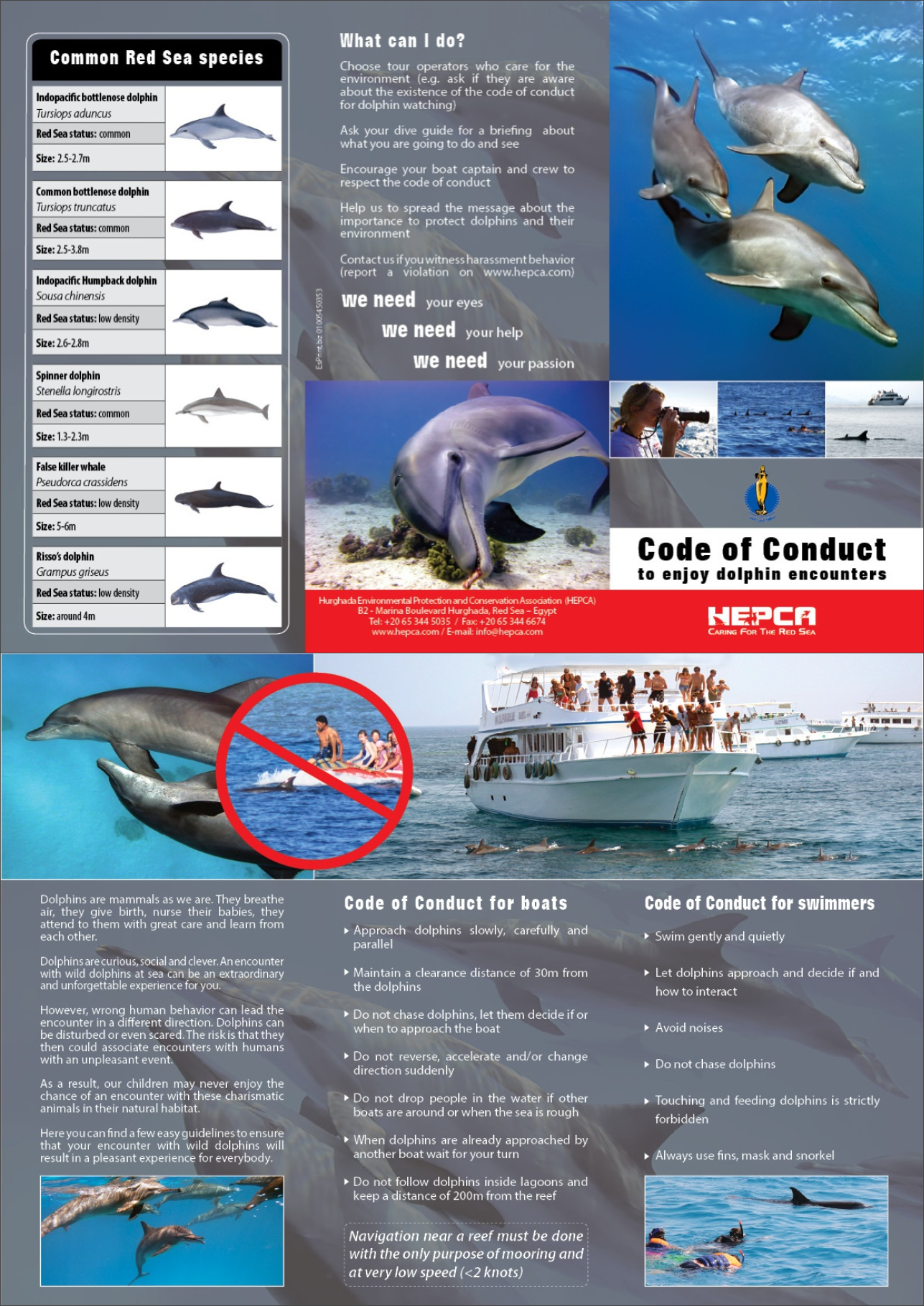
Additionally to the HEPCA Code of Conduct, we invite everyone to follow also the sustainable practices below:
FOR EVERYONE
- Treat Sataya as a sacred marine sanctuary.
- Support sustainable tourism by choosing operators who follow eco-friendly practices.
- Spread awareness about the importance of protecting this extraordinary ecosystem. Educate passengers, tour guides, and boat owners on sustainable practices and the importance of marine conservation before reaching Sataya.
- Reduce or avoid using Zodiacs: Minimize the use of inflatable speedboats in the lagoon to reduce noise and stress on the dolphins.
- Do not disturb resting dolphins: Refrain from approaching or making noise near dolphins that are resting to allow them the undisturbed rest they need.
- No drone usage: Refrain from using any drones, whether aerial, surface, or underwater, to prevent disturbance to the dolphins and other marine life.
- Eco-friendly photography: Do not use flash photography underwater.
- Respect and protect the ecosystem: Take proactive measures to minimize noise pollution, avoid any release of chemicals or waste into the water, and ensure that all operations have minimal impact on Sataya Reef’s marine life and habitats.
- Reduce ship engine usage: Turn off engines whenever feasible to minimize emissions, reduce fuel consumption, and promote a quieter marine environment.
- Eliminate single-use plastics and support No Plastic Campaign in the Red Sea.
- Use reef-safe products: Ensure that all cleaning supplies, sunscreens, and personal care products used on board are eco-friendly and do not harm the marine ecosystem.
Why This Matters
Sataya Reef is not only a haven for dolphins but also a vital part of the Red Sea's rich biodiversity. However, increasing tourism poses significant threats to this fragile environment. With your commitment to the Sataya Code of Conduct, we can:
- Protect the dolphins from stress and harm.
- Preserve coral reefs and other marine species.
- Ensure that future generations can enjoy this natural wonder.
Additional Resources
- HEPCA - Hurghada Environmental Protection and Conservation Association is devoted to the protection and conservation of marine life and the underwater environment in the Red Sea
- Dolphin Code of Conduct by HEPCA
- WWF Protecting Whales and Dolphins Initiative
- World Cetacean Alliance - A world where cetaceans are free, oceans thrive, and communities care
- Mission Blue - Igniting public support for a global network of Marine protected areas
- Red Sea Project - International non-profit organization dedicated to the protection and conservation of marine ecosystems and biodiversity
- Ministry of Environment, Egypt - Feel free to reach out to the Ministry of Environment for more information or to report any activities that threaten the sanctuary
Join Us
SIGN and SHARE this petition to express your support for the Sataya Code of Conduct. Together, we can encourage all stakeholders to adopt sustainable practices and preserve the beauty and tranquility of Sataya Reef.

211
The Issue
Sataya Reef, also known as Dolphin Reef (location), is a unique and precious marine habitat in the Red Sea, home to diverse marine life, including graceful spinner dolphins. To preserve this sanctuary for future generations and avoid dolphin harassment from irresponsible human activities, we invite all visitors, boat operators, and tour guides to adhere to the Dolphin Code of Conduct prepared by the Hurghada Environmental Protection and Conservation Association (HEPCA).
Be aware that the Dolphin Code of Conduct is now mandatory and the non-respect of the code is now punishable by law and with a fine.
PASSIVE INTERACTION: Always remember: the most enjoyable and fulfilling wildlife experience is the one where animals interact on their own terms!
CODE OF CONDUCT FOR BOAT CAPTAINS
- Always maintain a clearance distance of a minimum of 30m from the dolphins.
- Only approach dolphins in open water by driving carefully and parallel to their swimming direction.
- As soon as dolphins are observed, drive slowly at a maximum speed of 4 knots or 7km/h or adjust to the speed of the slowest dolphin. Never reverse, accelerate, or change direction suddenly.
- If dolphins approach your vessel, put your engine in neutral.
- If dolphins are bow riding, do not suddenly change direction.
- NEVER herd, chase, encircle, or separate dolphin groups. Always leave the animals an “escape route”.
- When dolphins are already approached by another boat wait for your turn.
- NEVER follow dolphins inside lagoons and rest areas and keep a safe distance from the reef. Use immediately the moorings at the anchoring place.
- Avoid noises. Do not shout, whistle, use horns, or play music.
- Be aware of possible signs of distress (e.g. avoidance, fluke slaps) and, if observed, leave the area at a very low speed.
- When calves (young dolphins) are present, always apply extra care.
CODE OF CONDUCT FOR SWIMMERS
- All swimmers MUST wear fins, mask, snorkel, and a lifejacket.
- Enter gently into the water, without jumping or excessive splashes.
- Once in the water, always keep quiet and swim gently using your fins only.
- Always swim on the side of the group (parallel) and never dive down from the top.
- DO NOT chase dolphins. Let them approach and decide how to interact.
- The use of scooters while swimming close to dolphins is strictly forbidden.
- Avoid any loud noises (in particular shouts and whistles).
- Remember that touching dolphins is strictly forbidden. The risk of exchanging diseases is very likely.
- NEVER throw trash in the water.
- NEVER feed the animals.
Guides should be the role model for their guests. Even if some dolphins are very curious and come very close to humans, we should not touch them. Physical contact can lead to the onset of pathologies, diseases, and infections in animals or humans. Furthermore, they are not pets: we should respect them and their wildness. Never forget: dolphins are top predators; they are strong and wild animals with unpredictable reactions.
Summary of HEPCA Dolphin Code of Conduct:
Additionally to the HEPCA Code of Conduct, we invite everyone to follow also the sustainable practices below:
FOR EVERYONE
- Treat Sataya as a sacred marine sanctuary.
- Support sustainable tourism by choosing operators who follow eco-friendly practices.
- Spread awareness about the importance of protecting this extraordinary ecosystem. Educate passengers, tour guides, and boat owners on sustainable practices and the importance of marine conservation before reaching Sataya.
- Reduce or avoid using Zodiacs: Minimize the use of inflatable speedboats in the lagoon to reduce noise and stress on the dolphins.
- Do not disturb resting dolphins: Refrain from approaching or making noise near dolphins that are resting to allow them the undisturbed rest they need.
- No drone usage: Refrain from using any drones, whether aerial, surface, or underwater, to prevent disturbance to the dolphins and other marine life.
- Eco-friendly photography: Do not use flash photography underwater.
- Respect and protect the ecosystem: Take proactive measures to minimize noise pollution, avoid any release of chemicals or waste into the water, and ensure that all operations have minimal impact on Sataya Reef’s marine life and habitats.
- Reduce ship engine usage: Turn off engines whenever feasible to minimize emissions, reduce fuel consumption, and promote a quieter marine environment.
- Eliminate single-use plastics and support No Plastic Campaign in the Red Sea.
- Use reef-safe products: Ensure that all cleaning supplies, sunscreens, and personal care products used on board are eco-friendly and do not harm the marine ecosystem.
Why This Matters
Sataya Reef is not only a haven for dolphins but also a vital part of the Red Sea's rich biodiversity. However, increasing tourism poses significant threats to this fragile environment. With your commitment to the Sataya Code of Conduct, we can:
- Protect the dolphins from stress and harm.
- Preserve coral reefs and other marine species.
- Ensure that future generations can enjoy this natural wonder.
Additional Resources
- HEPCA - Hurghada Environmental Protection and Conservation Association is devoted to the protection and conservation of marine life and the underwater environment in the Red Sea
- Dolphin Code of Conduct by HEPCA
- WWF Protecting Whales and Dolphins Initiative
- World Cetacean Alliance - A world where cetaceans are free, oceans thrive, and communities care
- Mission Blue - Igniting public support for a global network of Marine protected areas
- Red Sea Project - International non-profit organization dedicated to the protection and conservation of marine ecosystems and biodiversity
- Ministry of Environment, Egypt - Feel free to reach out to the Ministry of Environment for more information or to report any activities that threaten the sanctuary
Join Us
SIGN and SHARE this petition to express your support for the Sataya Code of Conduct. Together, we can encourage all stakeholders to adopt sustainable practices and preserve the beauty and tranquility of Sataya Reef.
Petition Updates
Share this petition
Petition created on December 13, 2024