
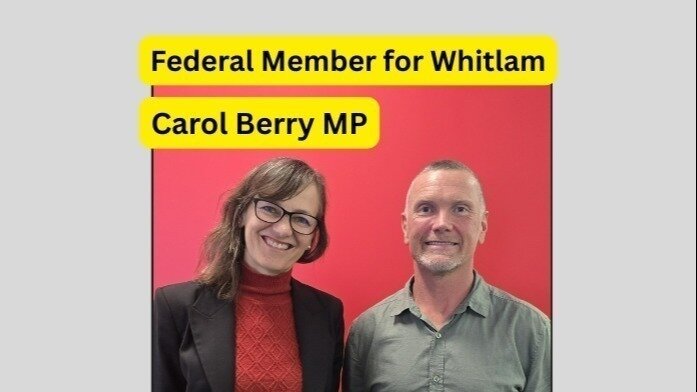
Got a reply from my local MP after months of waiting — and I’ve responded.
Because the reality hasn’t changed.
Veterans with treatment-resistant PTSD and TBI still don’t have access to medicinal cannabis through DVA.
At the same time:
• Barriers are increasing
• Prescriber access is shrinking
• Veterans who are stable risk being pushed backwards
This is happening despite what the Royal Commission highlighted about the risks of complex medication pathways.
One of the biggest gaps?
Education around the endocannabinoid system (ECS) — the body’s natural system that regulates stress, sleep, mood, and recovery.
If we’re serious about better outcomes, policy needs to catch up with biology.
We need:
✔️ Access to safer options
✔️ Proper ECS education for clinicians and policymakers
✔️ Decisions based on real-world outcomes
Visit www.saferveteransaustralia.org/take-action to:
👉 Sign & share the petition (aiming for 50,000 — currently ~35,000)
👉 Contact your local MP (2 minutes)
#SaferVeteransAustralia #NoMoreZombieVeterans #ECS #VeteranHealth #PTSD #TBI
......................................................................................................................................................
The Hon. Carol Berry MP 21 April 2026
Federal Member for Whitlam
Telephone: (02) 4297 2285
Email: carol.berry.mp@aph.gov.au
Subject: Follow-up: Correspondence regarding DVA medicinal cannabis policy and veteran wellbeing
Dear MP Berry,
Thank you for your reply of 10 March and for taking the time to respond to my previous correspondence.
I appreciate your acknowledgement of the No More Zombie Veterans / Safer Veterans Australia campaign, and I welcome the government’s recent investment in veteran treatment and rehabilitation, including innovative therapies such as medicinal cannabis, MDMA-assisted therapy for PTSD, and psilocybin for treatment-resistant depression.
However, it is important to clarify that while medicinal cannabis was referenced as part of the broader discussion around innovative therapies, current DVA policy does not provide funded access to medicinal cannabis for veterans living with treatment-resistant PTSD or traumatic brain injury. This distinction is important because many veterans understood the announcement as signalling broader access, when in practice the current policy position regarding PTSD and TBI remains unchanged.
In addition, the recent changes to the DVA medicinal cannabis framework announced on 16 February have raised concerns among veterans and families in the Whitlam electorate, as well as in electorates across the country, about potential unintended consequences. Veterans are particularly concerned about:
Reduced prescriber availability.
Increasing barriers for those in regional and remote areas.
Risks to continuity of care for veterans who have stabilised on existing treatments.
These concerns come at a time when the number of veterans participating in medicinal cannabis treatment continues to grow, as reflected in recent DVA Freedom of Information (FOI) releases.
These issues sit within the broader context of the Royal Commission into Defence and Veteran Suicide, which highlighted the risks associated with complex psychiatric polypharmacy and the importance of improving treatment pathways for veterans living with treatment-resistant conditions.
More broadly, there is a growing need for greater awareness and clinical discussion around the endocannabinoid system (ECS)—the biological system involved in regulating stress responses, sleep, mood, and inflammation—and its relevance to PTSD and TBI. Improved education and engagement with clinical experts in this field may help ensure policy discussions remain aligned with emerging evidence.
As a veteran who spent 17 years navigating complex psychiatric medication regimes following my service, this issue is deeply personal. During that time, the impacts extended beyond my own health, affecting my family, home, and stability in ways many veterans and their families will recognize. My advocacy work is driven not only by my own lived experience, but also by the findings of the Royal Commission, which underscored the need to move away from ineffective long-term medication models toward safer, more effective outcomes.
I would welcome clarification on whether your office supports a further review of DVA policy relating specifically to funded access for treatment-resistant PTSD and TBI.
Finally, as this advocacy work has been undertaken voluntarily as a public campaign, I would appreciate any guidance your office may be able to provide regarding government or community grants that support veteran-led education or wellbeing initiatives.
Thank you again for your time and for representing veterans and families in the Whitlam electorate.
Kind regards,
Derek Pyrah
RAAF Veteran
Founder – No More Zombie Veterans / Safer Veterans Australia
www.saferveteransaustralia.org
nomorezombieveterans@gmail.com