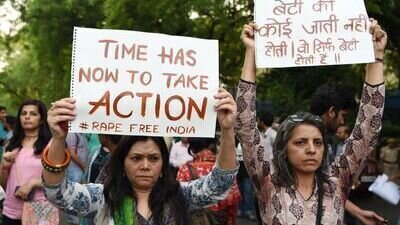

Safe to Be Free: Rethinking Women’s Safety and Sexual Violence in India
The Issue
A Petition for Women’s Right to Safety Without Sacrificing Their Freedom
In India, women are constantly told to adjust their lives around the fear of sexual assault. How many of us have shared our live location while traveling alone? Told not to go out after it's dark? Changed our clothes because we were worried about our safety, or avoided a place because it was “not safe for girls”? But where is the equivalent demand being placed on those who commit sexual violence? Why has this become normal? Why do we have to cage ourselves to remain safe?
29,536.
That is the number of rape cases recorded by police across India in 2024. And 4,41,534 crimes against women that were registered that same year, that is roughly 1,210 every day. However, these figures represent cases that reached the police. We will never know how many women never reported. Using national household data research has previously found extremely low reporting of sexual violence to police. That research is not a current annual estimate; however, it highlights a fundamental problem: police statistics cannot capture violence that women never report.
So, we need to ask ourselves:
How many women are missing from that number?
How many were afraid of their families?
How many feared being blamed?
How many were threatened by their offenders?
How many did not trust the police?
How many believed that reporting would change nothing?
We cannot claim to have solved a problem when we do not even know its true scale.
And what happens after a woman does report?
At the end of 2024, 185,785 rape cases were pending before Indian courts, representing around 89.8% of the rape cases in the trial pipeline. Only 20,587 rape trials were completed during the year.
So where is the urgency?
India already has strict laws which claim to protect our women. Under the Bharatiya Nyaya Sanhita, rape carries a minimum sentence of ten years which can be extended to life imprisonment. Certain aggravated offences, child rape and repeat offences can lead imprisonment for the remainder of the offender’s life or, in specified circumstances, the death penalty. Rape is also already classified as a non-bailable offence. However, the question is why are we letting out rapists?
The question is no longer just:
“Do we have laws?”
The question is:
Are those laws actually protecting women?
A law written on paper cannot protect a woman walking home tonight. Our solution cannot be to cage women in their houses.
How many cases have we seen where the victim's family and the victim itself have waited years and fought for years to seek justice? A survivor should not have to become an investigator, lawyer, and case manager simply to follow their own case.
Every survivor reporting a serious sexual offence should have access to an independent case-support system that explains the legal process, track procedural delays, connect them with legal and psychological services, and help them understand what is happening with their case. The victim does not need to feel judged or ashamed by society for another person's crime. Punishment on paper is not the same as protection in practice.
And 2026 has given us yet another reason to ask.
In September, a teenage girl was allegedly gang-raped at Delhi’s Aastha Kunj Park. Reporting identified concerns including poor lighting, unmanned gates, and inadequate surveillance. The case has contributed to wider protests and renewed demands for accountability over women's safety.
Other recent cases have involved minors, public spaces, commercial premises, and allegations of sexual violence within institutional environments. Where exactly are girls "safe"?
This is not simply a “women should not go out at night” problem.
Sexual violence happens in parks.
It happens on roads.
It happens in workplaces.
It happens in universities.
It happens in hotels.
It happens in homes.
It happens within families.
So, what exactly are women supposed to avoid?
Everything?
Should we stop studying?
Stop working?
Stop travelling?
Stop socialising?
Stop going to parks?
Stop going out after dark?
Stop wearing what we want?
Should we simply stay inside?
Because rape happens behind closed doors too.
A woman’s freedom cannot be the price of another person’s criminal behaviour.
If a woman wears a short skirt, is that consent?
No.
If she walks alone at midnight?
No.
If she is drunk?
No.
If she is someone's girlfriend or wife?
No.
So why are women continuously taught how to avoid rape instead of society being forced to confront the people who commit it?
We demand a change in what “women’s safety” actually means.
1. Safe public spaces , this does not mean restrict women. Mandate lighting, appropriate CCTV, emergency systems, patrols and regular safety audits instead of restricting when women can use public spaces.
2. Accountability for serious sexual offences. Rape is already non-bailable, but courts can grant bail. We demand rigorous scrutiny, written reasons for why the bail was granted and safeguards against intimidation, evidence tampering and repeat offending. Aggravated and repeat offenders should face the strongest sentences permitted by law.
3. Real investigation deadlines. Delays in sexual-offence investigations should trigger mandatory review and institutional accountability.
4. Specialist sexual-violence units. Create trained police and forensic teams equipped specifically to investigate sexual offences.
5. Transparency. Publish district-level data on FIRs, investigation and forensic delays, chargesheets, trials, convictions and case pendency.
6. Online protection. Sexual threats, stalking, blackmail, obscene harassment and non-consensual sexual material must be investigated promptly, with escalating consequences for repeat offenders. We do not need to wait for a crime to occur in order to take action!
And finally, we need to ask ourselves:
Do we really want our daughters to inherit the same rules we inherited? Should they learn to live in fear too?
Do we want them to learn that safety means staying inside?
That their clothes determine how men are allowed to treat them?
That walking alone is irresponsible?
That being outside after dark makes them responsible for what happens to them?
No.
We have laws.
We have police.
We have courts.
We have technology.
We have resources.
So why are we still asking women to hide themselves?
Why aren't we demanding more from the institutions responsible for preventing, investigating and prosecuting sexual violence?
Why are we normalising fear?
Why are we teaching girls how to survive a dangerous society instead of building one in which they can live freely?
We should not be teaching women how to disappear.
Sign this petition for the right to be safe and the right to be free.

29
The Issue
A Petition for Women’s Right to Safety Without Sacrificing Their Freedom
In India, women are constantly told to adjust their lives around the fear of sexual assault. How many of us have shared our live location while traveling alone? Told not to go out after it's dark? Changed our clothes because we were worried about our safety, or avoided a place because it was “not safe for girls”? But where is the equivalent demand being placed on those who commit sexual violence? Why has this become normal? Why do we have to cage ourselves to remain safe?
29,536.
That is the number of rape cases recorded by police across India in 2024. And 4,41,534 crimes against women that were registered that same year, that is roughly 1,210 every day. However, these figures represent cases that reached the police. We will never know how many women never reported. Using national household data research has previously found extremely low reporting of sexual violence to police. That research is not a current annual estimate; however, it highlights a fundamental problem: police statistics cannot capture violence that women never report.
So, we need to ask ourselves:
How many women are missing from that number?
How many were afraid of their families?
How many feared being blamed?
How many were threatened by their offenders?
How many did not trust the police?
How many believed that reporting would change nothing?
We cannot claim to have solved a problem when we do not even know its true scale.
And what happens after a woman does report?
At the end of 2024, 185,785 rape cases were pending before Indian courts, representing around 89.8% of the rape cases in the trial pipeline. Only 20,587 rape trials were completed during the year.
So where is the urgency?
India already has strict laws which claim to protect our women. Under the Bharatiya Nyaya Sanhita, rape carries a minimum sentence of ten years which can be extended to life imprisonment. Certain aggravated offences, child rape and repeat offences can lead imprisonment for the remainder of the offender’s life or, in specified circumstances, the death penalty. Rape is also already classified as a non-bailable offence. However, the question is why are we letting out rapists?
The question is no longer just:
“Do we have laws?”
The question is:
Are those laws actually protecting women?
A law written on paper cannot protect a woman walking home tonight. Our solution cannot be to cage women in their houses.
How many cases have we seen where the victim's family and the victim itself have waited years and fought for years to seek justice? A survivor should not have to become an investigator, lawyer, and case manager simply to follow their own case.
Every survivor reporting a serious sexual offence should have access to an independent case-support system that explains the legal process, track procedural delays, connect them with legal and psychological services, and help them understand what is happening with their case. The victim does not need to feel judged or ashamed by society for another person's crime. Punishment on paper is not the same as protection in practice.
And 2026 has given us yet another reason to ask.
In September, a teenage girl was allegedly gang-raped at Delhi’s Aastha Kunj Park. Reporting identified concerns including poor lighting, unmanned gates, and inadequate surveillance. The case has contributed to wider protests and renewed demands for accountability over women's safety.
Other recent cases have involved minors, public spaces, commercial premises, and allegations of sexual violence within institutional environments. Where exactly are girls "safe"?
This is not simply a “women should not go out at night” problem.
Sexual violence happens in parks.
It happens on roads.
It happens in workplaces.
It happens in universities.
It happens in hotels.
It happens in homes.
It happens within families.
So, what exactly are women supposed to avoid?
Everything?
Should we stop studying?
Stop working?
Stop travelling?
Stop socialising?
Stop going to parks?
Stop going out after dark?
Stop wearing what we want?
Should we simply stay inside?
Because rape happens behind closed doors too.
A woman’s freedom cannot be the price of another person’s criminal behaviour.
If a woman wears a short skirt, is that consent?
No.
If she walks alone at midnight?
No.
If she is drunk?
No.
If she is someone's girlfriend or wife?
No.
So why are women continuously taught how to avoid rape instead of society being forced to confront the people who commit it?
We demand a change in what “women’s safety” actually means.
1. Safe public spaces , this does not mean restrict women. Mandate lighting, appropriate CCTV, emergency systems, patrols and regular safety audits instead of restricting when women can use public spaces.
2. Accountability for serious sexual offences. Rape is already non-bailable, but courts can grant bail. We demand rigorous scrutiny, written reasons for why the bail was granted and safeguards against intimidation, evidence tampering and repeat offending. Aggravated and repeat offenders should face the strongest sentences permitted by law.
3. Real investigation deadlines. Delays in sexual-offence investigations should trigger mandatory review and institutional accountability.
4. Specialist sexual-violence units. Create trained police and forensic teams equipped specifically to investigate sexual offences.
5. Transparency. Publish district-level data on FIRs, investigation and forensic delays, chargesheets, trials, convictions and case pendency.
6. Online protection. Sexual threats, stalking, blackmail, obscene harassment and non-consensual sexual material must be investigated promptly, with escalating consequences for repeat offenders. We do not need to wait for a crime to occur in order to take action!
And finally, we need to ask ourselves:
Do we really want our daughters to inherit the same rules we inherited? Should they learn to live in fear too?
Do we want them to learn that safety means staying inside?
That their clothes determine how men are allowed to treat them?
That walking alone is irresponsible?
That being outside after dark makes them responsible for what happens to them?
No.
We have laws.
We have police.
We have courts.
We have technology.
We have resources.
So why are we still asking women to hide themselves?
Why aren't we demanding more from the institutions responsible for preventing, investigating and prosecuting sexual violence?
Why are we normalising fear?
Why are we teaching girls how to survive a dangerous society instead of building one in which they can live freely?
We should not be teaching women how to disappear.
Sign this petition for the right to be safe and the right to be free.
The Decision Makers

Petition Updates
Share this petition
Petition created on 1 October 2026