
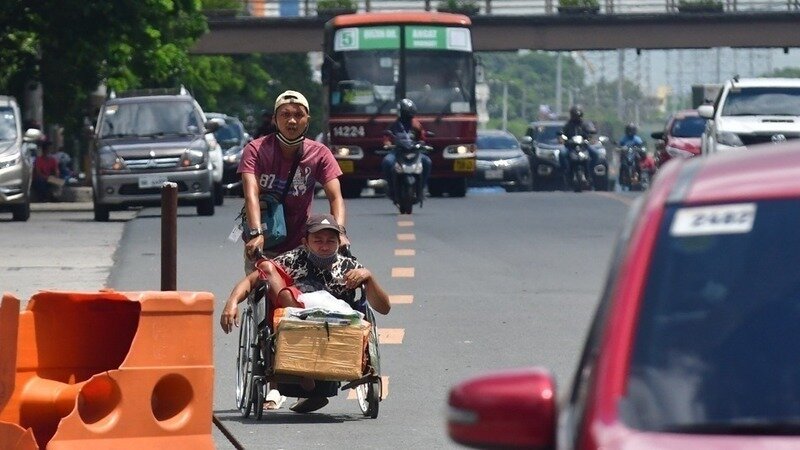
Ride Without Limits: Making Philippine Public Transport More Accessible to PWDs
The Issue
Public transportation is supposed to serve everyone, yet for persons with disabilities (PWDs) in the Philippines, it still remains a daily struggle. Despite existing laws, many buses, jeepneys, trains, and terminals are still not designed with accessibility in mind. Ramps are missing, priority areas are often disregarded, and simple features that could make commuting easier are still overlooked.
For instance, in Metro Manila’s train system, where accessibility should be prioritized, many stations lack essential facilities such as elevators, escalators, and tactile paving. Worse, in places where these features exist, poor maintenance often leaves them unusable, forcing PWDs to rely on assistance or expensive alternatives. Moreover, jeepneys are often difficult to access because of their high steps and limited space. Similarly, tricycles, which are commonly used in rural areas, pose the same accessibility issues.
Currently, there are 2.4 million registered PWDs in the Philippines as of March 7, 2025 according to the National Council on Disability Affairs, however, the actual number could be even higher due to underreporting. Despite their significant number, they continue to be set aside and deprived of the consideration they deserve in a transport system meant to cater to everyone. Rather than providing mobility, public transportation in the Philippines remains as an obstacle for those who need it the most.
Despite the enactment of the Philippine Accessibility Law (Batas Pambansa Blg. 344) in 1982 and the Magna Carta for Disabled Persons (Republic Act No. 7277) in 1992, many public transport systems remain inaccessible to PWDs. These laws mandate the installation of facilities such as sidewalks, ramps, and railings to enhance mobility for disabled persons.
Inaccessible transportation limits PWDs' access to employment, education, healthcare, and social activities, perpetuating social exclusion and economic disparity. Improving accessibility benefits not only PWDs but also the elderly, pregnant women, and individuals with temporary injuries.
In order for public transportation in the Philippines to become fully accessible to persons with disabilities (PWD) we must advocate for the enforcement of existing accessibility laws and the development of an inclusive public transport system that upholds the rights and dignity of all individuals.
In response, this petition urges government agencies and local sectors to take action in making Philippine public transportation PWD-friendly, accessible, and inclusive by enforcing laws and implementing necessary reforms:
- Strict Enforcement of Accessibility Laws – The Department of Transportation (DOTr) and the Land Transportation Franchising and Regulatory Board (LTFRB) should regularly inspect public transport facilities for compliance with BP 344 and RA 7277.
- Improvement of Transport Terminals and Waiting Areas – The Metropolitan Manila Development Authority (MMDA), LGUs, and private terminal operators should ensure that bus stops, train stations, and jeepney terminals have ramps, clear pathways, and accessible entry/exit points.
- Retrofitting of Existing Public Transport – The DOTr, local government units (LGUs), and transport cooperatives should work together to upgrade older buses, jeepneys, and train stations with PWD-friendly features such as handrails, priority-seating, non-slip flooring, designated wheelchair spaces, and audible/visual announcements for accessibility.
- PWD Awareness Training for Drivers and Operators – The LTFRB, transport cooperatives, and driver associations should require public transport drivers and conductors to undergo sensitivity training on assisting PWD passengers properly.
Every Filipino deserves safe and accessible transportation. Sign this petition and be a voice for those whose struggles are often ignored. The more voices we gather, the louder our call for change will be. Let's stand together and push for a transport system that truly serves everyone!

27
The Issue
Public transportation is supposed to serve everyone, yet for persons with disabilities (PWDs) in the Philippines, it still remains a daily struggle. Despite existing laws, many buses, jeepneys, trains, and terminals are still not designed with accessibility in mind. Ramps are missing, priority areas are often disregarded, and simple features that could make commuting easier are still overlooked.
For instance, in Metro Manila’s train system, where accessibility should be prioritized, many stations lack essential facilities such as elevators, escalators, and tactile paving. Worse, in places where these features exist, poor maintenance often leaves them unusable, forcing PWDs to rely on assistance or expensive alternatives. Moreover, jeepneys are often difficult to access because of their high steps and limited space. Similarly, tricycles, which are commonly used in rural areas, pose the same accessibility issues.
Currently, there are 2.4 million registered PWDs in the Philippines as of March 7, 2025 according to the National Council on Disability Affairs, however, the actual number could be even higher due to underreporting. Despite their significant number, they continue to be set aside and deprived of the consideration they deserve in a transport system meant to cater to everyone. Rather than providing mobility, public transportation in the Philippines remains as an obstacle for those who need it the most.
Despite the enactment of the Philippine Accessibility Law (Batas Pambansa Blg. 344) in 1982 and the Magna Carta for Disabled Persons (Republic Act No. 7277) in 1992, many public transport systems remain inaccessible to PWDs. These laws mandate the installation of facilities such as sidewalks, ramps, and railings to enhance mobility for disabled persons.
Inaccessible transportation limits PWDs' access to employment, education, healthcare, and social activities, perpetuating social exclusion and economic disparity. Improving accessibility benefits not only PWDs but also the elderly, pregnant women, and individuals with temporary injuries.
In order for public transportation in the Philippines to become fully accessible to persons with disabilities (PWD) we must advocate for the enforcement of existing accessibility laws and the development of an inclusive public transport system that upholds the rights and dignity of all individuals.
In response, this petition urges government agencies and local sectors to take action in making Philippine public transportation PWD-friendly, accessible, and inclusive by enforcing laws and implementing necessary reforms:
- Strict Enforcement of Accessibility Laws – The Department of Transportation (DOTr) and the Land Transportation Franchising and Regulatory Board (LTFRB) should regularly inspect public transport facilities for compliance with BP 344 and RA 7277.
- Improvement of Transport Terminals and Waiting Areas – The Metropolitan Manila Development Authority (MMDA), LGUs, and private terminal operators should ensure that bus stops, train stations, and jeepney terminals have ramps, clear pathways, and accessible entry/exit points.
- Retrofitting of Existing Public Transport – The DOTr, local government units (LGUs), and transport cooperatives should work together to upgrade older buses, jeepneys, and train stations with PWD-friendly features such as handrails, priority-seating, non-slip flooring, designated wheelchair spaces, and audible/visual announcements for accessibility.
- PWD Awareness Training for Drivers and Operators – The LTFRB, transport cooperatives, and driver associations should require public transport drivers and conductors to undergo sensitivity training on assisting PWD passengers properly.
Every Filipino deserves safe and accessible transportation. Sign this petition and be a voice for those whose struggles are often ignored. The more voices we gather, the louder our call for change will be. Let's stand together and push for a transport system that truly serves everyone!
Petition Updates
Share this petition
Petition created on March 12, 2025