

Return Lorado Taft's The Solitude of the Soul for display at the Art Institute of Chicago
The Issue
The Art Institute of Chicago brings visitors from around the world to view its outstanding collection. Many people over the years have found Lorado Taft’s “The Solitude of the Soul” the masterpiece that moves them above all other works of art in the museum. Its haunting beauty and profound message evoke deep emotions. Poems, articles and blogs have been written about the statue since it entered the museum in 1914. This statue sheds light on human relationships and the complexity of the human condition. As the artist said: "The thought is the eternally present fact that however closely we may be thrown together by circumstances … we are unknown to each other.”
However, the sculpture is no longer available for public viewing, and no reason has been given for moving it.
Most recently, it was in the Roger McCormick Memorial Court, where it could be seen from all sides, as it should be. When I recently asked a guard where it is, she said it had been out of view for about 3 years. She expressed that not seeing it was as disappointing to her as it is to the viewers who miss it. "But I have no say," she said. The small sculptures that replace it, some by Taft's students, do not have the power to move or challenge the visitors nearly as much as this masterpiece.
This masterful work was conceived by Lorado Taft from 1898 to 1901 and was carved of marble by assistant Walter Zimmermann. Its absence from the public eye is not only a loss to art enthusiasts and the local community but also an oversight in honoring Chicago's cultural heritage. Taft was a Chicago civic leader, an international lecturer on sculpture and a teacher at the Art Institute from 1886 to 1907. As a teacher and head of a large studio, he promoted the successful careers of women and minority students. Taft was ahead of his time in many ways, although current curators may look down at realistic sculpture from the early 20th century. Multiple styles, whether figurative or abstract, merit our attention, even if not considered part of the avant-garde.
The Art Institute of Chicago is one of the nation's top 5 art museums. Its strength lies in the period between the mid-nineteenth century and the mid-twentieth century. "The Solitude of the Soul" fits into this period. Taft is seen by art historians as Chicago's greatest sculptor and as a bridge between the two centuries. (Taft worked in clay, marble and bronze, as those trained in 19th century traditions did, and in cast concrete, as in the magnificent Black Hawk Memorial in Oregon, IL and The Fountain of Time in Washington Park, Chicago.)
Lorado Taft also completed many national commissions, from Washington DC to Washington state. His last completed works were for the state of Louisiana. He was the first sculptor asked to work on Mt. Rushmore but ultimately declined. Though he took commissions, his greatest works came from his unique inspiration, as was the case of this masterpiece owned by the Art Institute.
Since Taft’s other great works of art: Eternal Silence; the Black Hawk Memorial; the Fountain of Time, and The Blind, in Champaign, IL are not easily accessible, it is especially important that sculpture lovers can see “The Solitude of the Soul” when they visit Chicago. Bringing "The Solitude of the Soul" back to public display will enrich the visitor experience and honor the creative vision of Lorado Taft. We urge the leadership of the Art Institute to reconsider this decision carefully and prioritize the desires of its audience.
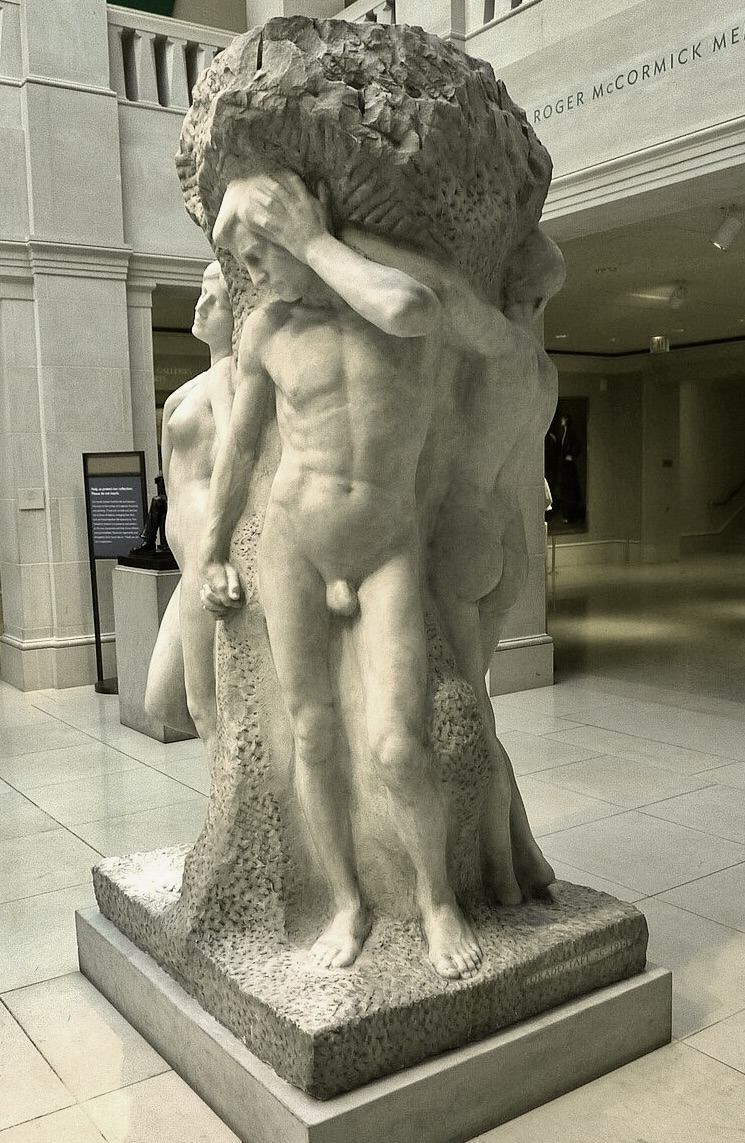
This statue could easily become one of the top 10 tourist attractions in the museum if the AIC showcased Taft in the light he deserves. The museum should explain the artist's importance for promoting public art and the careers of women artists who went on to make significant contributions to the art of sculpture in other states. This statue merits a deep look, with careful curatorial explanation of Taft's importance to Chicago, to the art of sculpture and to the development of such a profound statement.
Join us in asking the Art Institute of Chicago to return “The Solitude of the Soul” to public display. Your signature can support this movement and help ensure that this influential piece remains accessible for generations to come. Sign this petition and help preserve the cultural heritage within our reach, without disrespecting the diversity of the Art Institute's audience.

430
The Issue
The Art Institute of Chicago brings visitors from around the world to view its outstanding collection. Many people over the years have found Lorado Taft’s “The Solitude of the Soul” the masterpiece that moves them above all other works of art in the museum. Its haunting beauty and profound message evoke deep emotions. Poems, articles and blogs have been written about the statue since it entered the museum in 1914. This statue sheds light on human relationships and the complexity of the human condition. As the artist said: "The thought is the eternally present fact that however closely we may be thrown together by circumstances … we are unknown to each other.”
However, the sculpture is no longer available for public viewing, and no reason has been given for moving it.
Most recently, it was in the Roger McCormick Memorial Court, where it could be seen from all sides, as it should be. When I recently asked a guard where it is, she said it had been out of view for about 3 years. She expressed that not seeing it was as disappointing to her as it is to the viewers who miss it. "But I have no say," she said. The small sculptures that replace it, some by Taft's students, do not have the power to move or challenge the visitors nearly as much as this masterpiece.
This masterful work was conceived by Lorado Taft from 1898 to 1901 and was carved of marble by assistant Walter Zimmermann. Its absence from the public eye is not only a loss to art enthusiasts and the local community but also an oversight in honoring Chicago's cultural heritage. Taft was a Chicago civic leader, an international lecturer on sculpture and a teacher at the Art Institute from 1886 to 1907. As a teacher and head of a large studio, he promoted the successful careers of women and minority students. Taft was ahead of his time in many ways, although current curators may look down at realistic sculpture from the early 20th century. Multiple styles, whether figurative or abstract, merit our attention, even if not considered part of the avant-garde.
The Art Institute of Chicago is one of the nation's top 5 art museums. Its strength lies in the period between the mid-nineteenth century and the mid-twentieth century. "The Solitude of the Soul" fits into this period. Taft is seen by art historians as Chicago's greatest sculptor and as a bridge between the two centuries. (Taft worked in clay, marble and bronze, as those trained in 19th century traditions did, and in cast concrete, as in the magnificent Black Hawk Memorial in Oregon, IL and The Fountain of Time in Washington Park, Chicago.)
Lorado Taft also completed many national commissions, from Washington DC to Washington state. His last completed works were for the state of Louisiana. He was the first sculptor asked to work on Mt. Rushmore but ultimately declined. Though he took commissions, his greatest works came from his unique inspiration, as was the case of this masterpiece owned by the Art Institute.
Since Taft’s other great works of art: Eternal Silence; the Black Hawk Memorial; the Fountain of Time, and The Blind, in Champaign, IL are not easily accessible, it is especially important that sculpture lovers can see “The Solitude of the Soul” when they visit Chicago. Bringing "The Solitude of the Soul" back to public display will enrich the visitor experience and honor the creative vision of Lorado Taft. We urge the leadership of the Art Institute to reconsider this decision carefully and prioritize the desires of its audience.
This statue could easily become one of the top 10 tourist attractions in the museum if the AIC showcased Taft in the light he deserves. The museum should explain the artist's importance for promoting public art and the careers of women artists who went on to make significant contributions to the art of sculpture in other states. This statue merits a deep look, with careful curatorial explanation of Taft's importance to Chicago, to the art of sculpture and to the development of such a profound statement.
Join us in asking the Art Institute of Chicago to return “The Solitude of the Soul” to public display. Your signature can support this movement and help ensure that this influential piece remains accessible for generations to come. Sign this petition and help preserve the cultural heritage within our reach, without disrespecting the diversity of the Art Institute's audience.
The Decision Makers

Supporter Voices
Petition Updates
Share this petition
Petition created on February 3, 2026