RETIRE Roberto Clemente's #21 in all MLB

RETIRE Roberto Clemente's #21 in all MLB
The issue
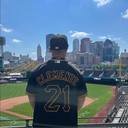
For my birthday this year, I'd like to make a petition for the MLB to retire Roberto Clemente's #21 league wide. The Clemente family have tried several times. As a kid growing up, Clemente was the biggest athlete I looked up to, even though I was born 21 years after his death.
In 2008, my brother and I tried out for the 8th grade baseball team. We had to practice in the gym since it was raining out. I hit line drive after line drive, and thought for sure I would make the team, but unfortunately my brother and I didn't make it. It hurt a lot to not make the team, especially on our birthday. I had this bad gut feeling that it was because of our skin color. My brother and I were the only non-Caucasian players trying out. We are of Puerto Rican descent and are proud to be. That was a hard day, but it also taught me a valuable life lesson. Everyone won't treat you equal because of the way you look or the color of your skin, and no matter how good you think you are at something, and no matter how much you love something, not everyone will treat you the same. I took it hard because I thought I played well, and I felt that I was tossed aside and not given a real chance.
I felt it was a good time to share this since I've visited Puerto Rico many times and went to Pittsburgh last year where I've learned more about Roberto Clemente, who made my love for the game of baseball stronger. No matter how much I personally failed at the game, baseball is a real-life lesson. You fail more than you succeed.
*I'd like to mention that in 1945 when Jackie Robinson tried out for the Boston Red Sox, they had no intention of signing him. Robinson had no chance. The Red Sox became the last team in baseball to integrate players of color into their organization in 1959, which is tough to hear since I'm a Red Sox fan.
"Any time you have an opportunity to make a difference in this world and you don't, then you are wasting your time on this earth."
Roberto Clemente was born on August 18th, 1934, in Carolina, Puerto Rico. He was the youngest of seven siblings in a poor family. Clemente grew up participating in track and field and was an Olympic hopeful before deciding to turn his attention to baseball. Roberto grew to love the game of baseball, and soon gained attention by local coaches with his impressive play with other neighborhood kids. Roberto and the local kids often had to use anything they could get their hands on, like broomsticks for a bat and cans for a ball. Clemente's family didn't have money for equipment, so one day Roberto carved a bat from a tree branch and made a glove from a coffee sack. Roberto could hit anything the pitcher threw and had a cannon for a throwing arm.
While playing for the Puerto Rican baseball club, the Cangrejeros de Santurce (Crabbers), Clemente was recruited by the Brooklyn Dodgers. Clemente signed with the Dodgers' triple-A team, the Montreal Royals in 1954.
*A fact here is that Jackie Robinson also played for the Montreal Royals, who he signed with in 1945, and then signed with the Dodgers in 1946. Robinson and Clemente were both scouted by the same man, Clyde Sukeforth. He signed Robinson in on opening day in 1947 as the first black player to play in the MLB, and drafted Clemente from Brooklyn in the Rule 5 Draft in 1954.
*Clyde Sukeforth coached both Robinson and Clemente, while on the Dodgers from 1943-1951, and the Pirates from 1952-1957.
For the 1954 season, Clemente would see the field very inconsistently with the Montreal Royals, as they were "hiding" him so other teams didn't know how good he was. The Dodgers knew he was a great player but didn't want any other team to have him. Clemente grew frustrated at his low playing time and thought about quitting and returning to Puerto Rico several times. He also had to deal with being in a different country and being around a different language spoken than what he was used to. Late in the season, after coming on as a defensive replacement, Clemente hit a walk-off home run. He then had his playing time increased significantly, and scouts started to notice him, including Sukeforth. Upon the end of the season, the Pittsburgh Pirates would select Clemente as the 1st pick in the Rule 5 draft.
*The Rule 5 draft occurs every year in December and has happened every year since 1920. It aims to prevent teams from stockpiling too many young players on their minor league affiliate teams when other organizations would be willing to have them play in the major leagues.
*The Dodgers were not willing to fill a Major League roster spot for Clemente. The team with the worst record that season was the Pirates, who drafted Clemente.
*Another fact here is that the man who signed Clemente to the Pirates in 1955, is Branch Rickey, who is also responsible for signing Jackie Robinson to the Dodgers in 1946. Branch Rickey is responsible for signing 2 of the most legendary players in baseball history. Most baseball fans and other sports fans know the story of Jackie Robinson, and how he changed the game of baseball and other sports for the course of history when he became the first black player to play in the MLB in 1947. Throughout Robinson's career, he fought as a civil rights activist against racism and discrimination, and for the equal right for African Americans to play the same professional games as white players. As we all know, Jackie Robinson had a very inspirational life of achievements, which put him on the highest pedestal in major league sports. His #42 was retired throughout all of baseball in 1997.
If there's anyone else that would be considered at the same level as Robinson, regarding his accomplishments on and off the field, that would be Clemente.
Clemente played for the Pittsburgh Pirates from 1955-1972, becoming the 1st Latin American inducted into the Hall of Fame in 1973. Clemente was a 15x All-Star, 12x Gold Glove Award Winner, 4x NL Batting Champion, 2x World Series Champion, NL MVP (1966), and World Series MVP (1971). Clemente had a .317 lifetime batting average and exactly 3000 hits for his career.
Clemente endured racial discrimination and prejudice throughout his career, especially during spring training in Florida. The newspapers and media back then called him a 'Puerto Rican hot dog,' making fun of the way he spoke, and other derogatory remarks. Clemente didn't know a word of English when coming to play baseball in the states. He was a Spanish speaking man with dark skin and was treated very poorly throughout much of his career, due to the way he spoke and his skin color. Clemente didn't take it kindly and snapped back at anyone who spoke low of him in the newspapers and media. They would also call him Bob or Bobby but preferred to be called Roberto. He noticed when he would go on away games with his teammates, the colored players would be treated very poorly and as second-class citizens, and sometimes by their own teammates. They often couldn't stay at the same hotel as their white teammates and couldn't eat at the same restaurants. Clemente thought about leaving the Pirates many times during his first few years, though was encouraged by Branch Rickey, and Roberto's wife, Vera, to stay. He fought against racial injustice throughout his whole career, and to allow more Latin Americans to play on major league teams.
*Through many of the rough times for Robinson and Clemente, Branch Rickey was always there for them and encouraged them to keep going, no matter how much they were discriminated against. He was their biggest support person on the field.
In a similar way, Roberto Clemente fought for the equality of Hispanics and Latin Americans, as Jackie Robinson did for blacks and African Americans to play the sport they love and be treated as equals.
*During the civil rights movement in the 1960s, Martin Luther King Jr. was at the forefront for implementing equal rights for all people, including African Americans. During both Jackie's and Roberto's lives, they both befriended MLK. Jackie became very involved post retirement and fought alongside MLK. During Roberto's career, MLK visited the Clemente's family ranch in Carolina, Puerto Rico, a couple times to learn about the Latin American's struggles with
discrimination.
Clemente was an exceptional advocate for equitable treatment of Latin baseball players, in which he took great pride. Near the end of his career, Clemente commented, “My greatest satisfaction comes from helping to erase the old opinion about Latin Americans and Blacks.” A close friend of Clemente’s added, “Roberto Clemente was to Latinos what Jackie Robinson was to Black baseball players. He spoke up for Latinos; he was the first one to speak out.”
Clemente refused to be treated as a second-class citizen, and repeatedly protested Jim Crow segregation, as did Jackie Robinson during his career. When Roberto encountered racism and stereotypes, he fought back vocally and visibly, even when that made him a bigger target.
Clemente was also a greatly admired humanitarian, helping others with lesser means than him. He would go out of his way to help people in his hometown, spend time with kids at children's hospitals and provided to the communities of Pittsburgh and Carolina. He did all of this while dealing with severe back injuries throughout his career, which was treated with massages before each game, and he gave back by giving free massages to locals in Carolina.
When Roberto heard that an earthquake had struck the country of Nicaragua, he immediately started a drive to gather supplies for the citizens. Roberto admired the people of Nicaragua due to their kindness and making it feel like home for him when he would travel there to manage Puerto Rican baseball teams. Roberto learned that the militia and government were taking the supplies for themselves and giving nothing to their poor citizens, and decided to go deliver the supplies himself. On December 31st, 1972, Roberto was planning to fly on a DC-7 plane with supplies to Nicaragua. The plane was very unstable, as it was overloaded, one of the engines failed on takeoff, the pilot had his license revoked 6 months prior to the event, and the plane was not fit to fly. They crashed into the ocean, off the coast of Puerto Rico only a few minutes after takeoff. The wreckage and Clemente's body has never been found.
Roberto's best friend, Manny Sanguillen, spent several days in the water looking for him and anything he could find from the plane. The only thing Vera got back was Roberto's sock, which floated to shore.
*Clemente and Robinson both passed away in the year of 1972.
This past New Year's Eve on 12/31/22, I went to Carolina, Puerto Rico to see my uncle, and we went to Piñones beach where Clemente's family was having a 50th Anniversary memorial. Two of Clemente's sons were there, as we sang songs of Clemente.
Roberto Clemente represented people who didn't have a voice. He used baseball to give them a voice.
It's time. Let's get it done. Retire #21 for "The Great One" Roberto Clemente.
Thank you.
135
The issue
For my birthday this year, I'd like to make a petition for the MLB to retire Roberto Clemente's #21 league wide. The Clemente family have tried several times. As a kid growing up, Clemente was the biggest athlete I looked up to, even though I was born 21 years after his death.
In 2008, my brother and I tried out for the 8th grade baseball team. We had to practice in the gym since it was raining out. I hit line drive after line drive, and thought for sure I would make the team, but unfortunately my brother and I didn't make it. It hurt a lot to not make the team, especially on our birthday. I had this bad gut feeling that it was because of our skin color. My brother and I were the only non-Caucasian players trying out. We are of Puerto Rican descent and are proud to be. That was a hard day, but it also taught me a valuable life lesson. Everyone won't treat you equal because of the way you look or the color of your skin, and no matter how good you think you are at something, and no matter how much you love something, not everyone will treat you the same. I took it hard because I thought I played well, and I felt that I was tossed aside and not given a real chance.
I felt it was a good time to share this since I've visited Puerto Rico many times and went to Pittsburgh last year where I've learned more about Roberto Clemente, who made my love for the game of baseball stronger. No matter how much I personally failed at the game, baseball is a real-life lesson. You fail more than you succeed.
*I'd like to mention that in 1945 when Jackie Robinson tried out for the Boston Red Sox, they had no intention of signing him. Robinson had no chance. The Red Sox became the last team in baseball to integrate players of color into their organization in 1959, which is tough to hear since I'm a Red Sox fan.
"Any time you have an opportunity to make a difference in this world and you don't, then you are wasting your time on this earth."
Roberto Clemente was born on August 18th, 1934, in Carolina, Puerto Rico. He was the youngest of seven siblings in a poor family. Clemente grew up participating in track and field and was an Olympic hopeful before deciding to turn his attention to baseball. Roberto grew to love the game of baseball, and soon gained attention by local coaches with his impressive play with other neighborhood kids. Roberto and the local kids often had to use anything they could get their hands on, like broomsticks for a bat and cans for a ball. Clemente's family didn't have money for equipment, so one day Roberto carved a bat from a tree branch and made a glove from a coffee sack. Roberto could hit anything the pitcher threw and had a cannon for a throwing arm.
While playing for the Puerto Rican baseball club, the Cangrejeros de Santurce (Crabbers), Clemente was recruited by the Brooklyn Dodgers. Clemente signed with the Dodgers' triple-A team, the Montreal Royals in 1954.
*A fact here is that Jackie Robinson also played for the Montreal Royals, who he signed with in 1945, and then signed with the Dodgers in 1946. Robinson and Clemente were both scouted by the same man, Clyde Sukeforth. He signed Robinson in on opening day in 1947 as the first black player to play in the MLB, and drafted Clemente from Brooklyn in the Rule 5 Draft in 1954.
*Clyde Sukeforth coached both Robinson and Clemente, while on the Dodgers from 1943-1951, and the Pirates from 1952-1957.
For the 1954 season, Clemente would see the field very inconsistently with the Montreal Royals, as they were "hiding" him so other teams didn't know how good he was. The Dodgers knew he was a great player but didn't want any other team to have him. Clemente grew frustrated at his low playing time and thought about quitting and returning to Puerto Rico several times. He also had to deal with being in a different country and being around a different language spoken than what he was used to. Late in the season, after coming on as a defensive replacement, Clemente hit a walk-off home run. He then had his playing time increased significantly, and scouts started to notice him, including Sukeforth. Upon the end of the season, the Pittsburgh Pirates would select Clemente as the 1st pick in the Rule 5 draft.
*The Rule 5 draft occurs every year in December and has happened every year since 1920. It aims to prevent teams from stockpiling too many young players on their minor league affiliate teams when other organizations would be willing to have them play in the major leagues.
*The Dodgers were not willing to fill a Major League roster spot for Clemente. The team with the worst record that season was the Pirates, who drafted Clemente.
*Another fact here is that the man who signed Clemente to the Pirates in 1955, is Branch Rickey, who is also responsible for signing Jackie Robinson to the Dodgers in 1946. Branch Rickey is responsible for signing 2 of the most legendary players in baseball history. Most baseball fans and other sports fans know the story of Jackie Robinson, and how he changed the game of baseball and other sports for the course of history when he became the first black player to play in the MLB in 1947. Throughout Robinson's career, he fought as a civil rights activist against racism and discrimination, and for the equal right for African Americans to play the same professional games as white players. As we all know, Jackie Robinson had a very inspirational life of achievements, which put him on the highest pedestal in major league sports. His #42 was retired throughout all of baseball in 1997.
If there's anyone else that would be considered at the same level as Robinson, regarding his accomplishments on and off the field, that would be Clemente.
Clemente played for the Pittsburgh Pirates from 1955-1972, becoming the 1st Latin American inducted into the Hall of Fame in 1973. Clemente was a 15x All-Star, 12x Gold Glove Award Winner, 4x NL Batting Champion, 2x World Series Champion, NL MVP (1966), and World Series MVP (1971). Clemente had a .317 lifetime batting average and exactly 3000 hits for his career.
Clemente endured racial discrimination and prejudice throughout his career, especially during spring training in Florida. The newspapers and media back then called him a 'Puerto Rican hot dog,' making fun of the way he spoke, and other derogatory remarks. Clemente didn't know a word of English when coming to play baseball in the states. He was a Spanish speaking man with dark skin and was treated very poorly throughout much of his career, due to the way he spoke and his skin color. Clemente didn't take it kindly and snapped back at anyone who spoke low of him in the newspapers and media. They would also call him Bob or Bobby but preferred to be called Roberto. He noticed when he would go on away games with his teammates, the colored players would be treated very poorly and as second-class citizens, and sometimes by their own teammates. They often couldn't stay at the same hotel as their white teammates and couldn't eat at the same restaurants. Clemente thought about leaving the Pirates many times during his first few years, though was encouraged by Branch Rickey, and Roberto's wife, Vera, to stay. He fought against racial injustice throughout his whole career, and to allow more Latin Americans to play on major league teams.
*Through many of the rough times for Robinson and Clemente, Branch Rickey was always there for them and encouraged them to keep going, no matter how much they were discriminated against. He was their biggest support person on the field.
In a similar way, Roberto Clemente fought for the equality of Hispanics and Latin Americans, as Jackie Robinson did for blacks and African Americans to play the sport they love and be treated as equals.
*During the civil rights movement in the 1960s, Martin Luther King Jr. was at the forefront for implementing equal rights for all people, including African Americans. During both Jackie's and Roberto's lives, they both befriended MLK. Jackie became very involved post retirement and fought alongside MLK. During Roberto's career, MLK visited the Clemente's family ranch in Carolina, Puerto Rico, a couple times to learn about the Latin American's struggles with
discrimination.
Clemente was an exceptional advocate for equitable treatment of Latin baseball players, in which he took great pride. Near the end of his career, Clemente commented, “My greatest satisfaction comes from helping to erase the old opinion about Latin Americans and Blacks.” A close friend of Clemente’s added, “Roberto Clemente was to Latinos what Jackie Robinson was to Black baseball players. He spoke up for Latinos; he was the first one to speak out.”
Clemente refused to be treated as a second-class citizen, and repeatedly protested Jim Crow segregation, as did Jackie Robinson during his career. When Roberto encountered racism and stereotypes, he fought back vocally and visibly, even when that made him a bigger target.
Clemente was also a greatly admired humanitarian, helping others with lesser means than him. He would go out of his way to help people in his hometown, spend time with kids at children's hospitals and provided to the communities of Pittsburgh and Carolina. He did all of this while dealing with severe back injuries throughout his career, which was treated with massages before each game, and he gave back by giving free massages to locals in Carolina.
When Roberto heard that an earthquake had struck the country of Nicaragua, he immediately started a drive to gather supplies for the citizens. Roberto admired the people of Nicaragua due to their kindness and making it feel like home for him when he would travel there to manage Puerto Rican baseball teams. Roberto learned that the militia and government were taking the supplies for themselves and giving nothing to their poor citizens, and decided to go deliver the supplies himself. On December 31st, 1972, Roberto was planning to fly on a DC-7 plane with supplies to Nicaragua. The plane was very unstable, as it was overloaded, one of the engines failed on takeoff, the pilot had his license revoked 6 months prior to the event, and the plane was not fit to fly. They crashed into the ocean, off the coast of Puerto Rico only a few minutes after takeoff. The wreckage and Clemente's body has never been found.
Roberto's best friend, Manny Sanguillen, spent several days in the water looking for him and anything he could find from the plane. The only thing Vera got back was Roberto's sock, which floated to shore.
*Clemente and Robinson both passed away in the year of 1972.
This past New Year's Eve on 12/31/22, I went to Carolina, Puerto Rico to see my uncle, and we went to Piñones beach where Clemente's family was having a 50th Anniversary memorial. Two of Clemente's sons were there, as we sang songs of Clemente.
Roberto Clemente represented people who didn't have a voice. He used baseball to give them a voice.
It's time. Let's get it done. Retire #21 for "The Great One" Roberto Clemente.
Thank you.
135
Petition created on 5 April 2023