

Restart Mangaluru-Katra Navyug Express via Hassan–Hubballi–Belagavi–Miraj–Pune route
The Issue
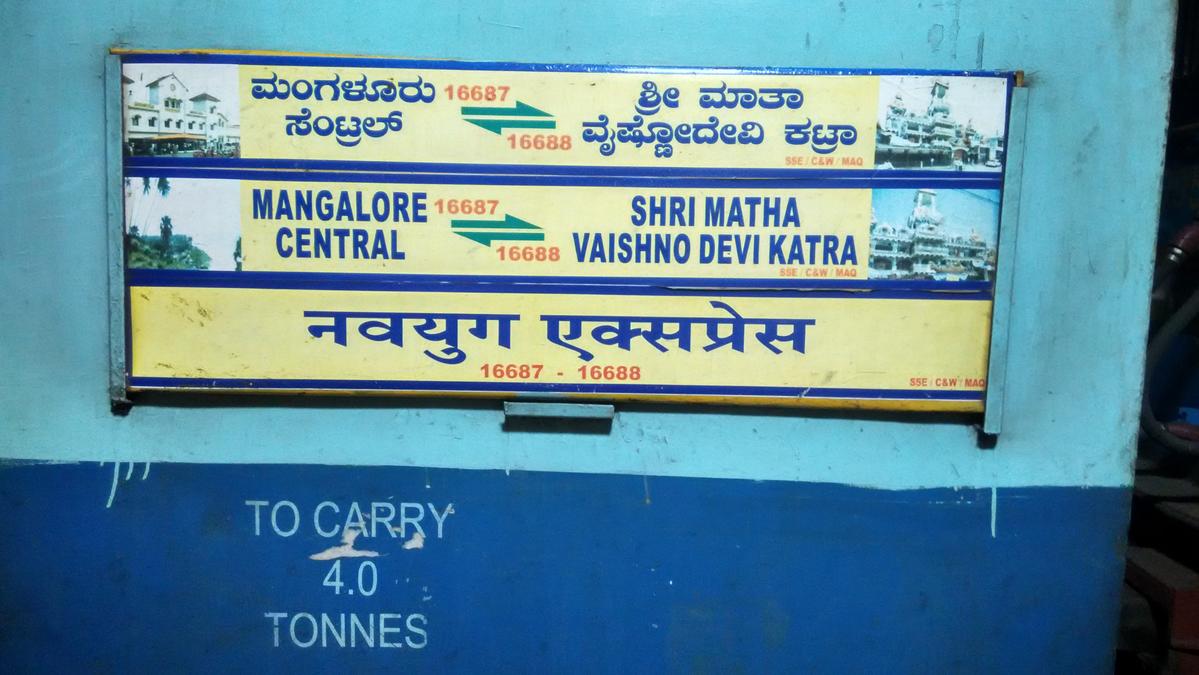
Train No. 16687/88 Mangaluru Central-Shri Mata Vaishno Devi Katra Navyug Express once provided a vital single‐seat link between Mangaluru Central on the Arabian Sea coast and Shri Mata Vaishno Devi Katra in Jammu & Kashmir. Its old route ran northward through Kasaragod, Kannur, Kozhikode, Palghat, Coimbatore, and Erode, then continued via Andhra Pradesh, Telangana, Maharashtra, Madhya Pradesh, Uttar Pradesh, Delhi, Haryana, and finally into Jammu & Kashmir. Although this coastal–eastern alignment technically connected South India to the North, it remained largely useless for interior Karnataka passengers. Travelers from Hassan, Hubballi, Belagavi, and many other towns in Karnataka had no practical way to board this train without first reaching Mangaluru (over 400 km away) or detouring via Chennai or Bengaluru—adding both time and cost.
When the COVID-19 lockdown began in March 2020, the Ministry of Railways suspended nearly all long-distance trains, including the Navyug Express. In the months that followed, the rail authorities decided to treat the Mangaluru–Katra portion of the run as merely a “slip” to Train No. 16787/16788 Tirunelveli – Shri Mata Vaishno Devi Katra Express. In practice, the coaches that had departed Mangaluru would merge at Erode Junction with a separate rake coming from Tirunelveli. Once merged, they ran northbound to Katra as part of Tr. 16787/16788, effectively canceling the original Navyug Express’s identity. As a result, Coastal Karnataka passengers were never able to board at Mangaluru—the Navyug Express nameplate disappeared from the timetable almost immediately, and the LHB coaches that should have served Mangaluru were reclassified under the Tirunelveli–Katra service.
By absorbing the Mangaluru rake into the Tirunelveli run, the Ministry effectively canceled the original Navyug Express permanently, leaving thousands of pilgrims, students, traders, and Army personnel feeling cheated. The local rail-users’ forum in Dakshina Kannada District pointed out that if the Mangaluru coaches had truly been “slip” coaches, they should have resumed once railway services stabilized—but that never happened. Instead, passengers were told the train “no longer exists” except as part of the Tirunelveli–Katra Express—which travels roughly 600 km away from Mangaluru before even starting its journey north.
Today, there is widespread demand to restart and reroute the Navyug Express via the interior Karnataka corridor—namely Hassan – Hubballi – Belagavi – Miraj – Pune—so that Mangaluru once again has a direct, weekly express to Katra. This proposed path serves a continuous string of cities and towns that were bypassed by the old coastal alignment:
- Mangaluru – Puttur – Subrahmanya – Sakleshpur: Mangaluru is a fast-growing port and education hub (NITK Surathkal). Puttur (“Dakshina Kashi”) and Subrahmanya attract thousands of daily pilgrims. Sakleshpur’s Western-Ghat tourism is also a rising draw.
- Hassan – Arsikere – Kadur/Birur – Chikmagalur: Hassan is famed for Hoysala temples at Belur, Halebidu, and Shravanabelagola. Arsikere is a key junction linking south-central Karnataka, and Chikmagalur—the birthplace of Indian coffee—is a major hill-station destination.
- Davanagere – Haveri: Known as the “Manchester of Karnataka,” Davanagere drives the state’s textile industry, while Haveri—“gateway to North Karnataka”—is renowned for Byadgi chillies and its rich cultural heritage.
- Hubballi – Dharwad – Londa: Hubballi (“Chota Mumbai”) and Dharwad host over 100 000 MSMEs, premier educational institutions (IIIT Dharwad, Karnatak University), the Siddharoodha Swamy Math, and a thriving tech-park ecosystem. Londa links Karnataka to Goa’s Konkan coast.
- Belagavi – Miraj – Pune: Belagavi is a power-loom and agro-trade centre with cultural landmarks like Gokak Falls and a famous “Belagavi Kunda” sweet. Miraj, historically a Deccan bastion, is a junction to Kolhapur and is itself an important stop for Maharashtrian pilgrims. Pune, an IT–education powerhouse, currently lacks any direct train to Mangaluru or Katra.
Continuing northward, the train would serve Bhusaval, Bhopal, Jhansi, New Delhi, Ambala Cantt., Pathankot, Jammu Tawi and finally Katra, offering the only single-seat connection from interior Karnataka—including Hassan, Hubballi, Belagavi, Davanagere, Chikmagalur—directly to Jammu & Kashmir. This ensures that Karnataka gets a direct train service to Jammu & Kashmir (via this route), benefiting everyone from pilgrims to defense personnel.
Millions stand to gain from this rerouting:
- Pilgrims traveling to Vaishno Devi, Amarnath Cave, and other northern shrines regain an affordable, overnight sleeper instead of facing multiple connections or expensive flights.
- Students and professionals in Hubballi, Belagavi, Hassan, Pune, and Miraj who study or work in New Delhi, Bhopal or Ambala Cantt. avoid costly flights and ticket-splitting.
- Farmers and traders shipping Byadgi chillies, areca nut, coffee, fish and cashew to North Indian markets can load produce onto refrigerated parcel vans without losing a day in transit.
- Tourists from Pune and Miraj have a direct gateway to Western-Ghat hill stations—Sakleshpur or Chikmagalur—without detouring through Bengaluru.
- Migrant workers returning from northern postings have a single-seat journey all the way to their home districts in Karnataka.
- Indian Army personnel once again have a dedicated rail corridor for moving between Karnataka and Jammu & Kashmir, saving time and expense.
What we request the Ministry of Railways, South Western Railway and Southern Railway to do immediately:
- Restart Train Nos. 16687/16688 as a weekly express.
- Reroute it via Hassan – Hubballi – Belagavi – Miraj – Pune, abandoning the outdated coastal alignment that provided no practical benefit for interior Karnataka.
Restarting the Navyug Express on this interior route will reconnect Coastal and North Karnataka to Central and North India without circuitous transfers, shaving 8–10 hours off the journey and saving hundreds of rupees per passenger. It will revive agricultural and small-scale industries—Byadgi chilli merchants, coffee growers in Chikmagalur, seafood exporters in Mangaluru, and textile manufacturers in Davanagere. Tourism will surge as weekend travelers from Pune or Miraj can reach Hassan’s heritage sites or coastal beaches without detours. Pilgrimage footfall at Kukke Subrahmanya, Dharmasthala, and the Northern Yatra circuit will rise, bolstering local economies. Students from Maharashtra who attend NITK Surathkal or other coastal colleges regain a safe, overnight sleeper option. Most critically, as the only direct train linking Karnataka with Jammu & Kashmir via this path, it restores an essential transportation lifeline—especially for Army personnel who once depended on it.
By signing this petition, you stand with thousands of families, businesses, and soldiers in Karnataka and Maharashtra who have been effectively cheated by the permanent cancellation disguised as a “slip” merger. This is not a minor timetable update—it is an urgent correction of a policy that cut off millions in Karnataka from direct rail access to Northern India.
Please join us in urging the Ministry of Railways, South Western Railway and Southern Railway to restart the Mangaluru Central – Shri Mata Vaishno Devi Katra Navyug Express via Hassan – Hubballi – Belagavi – Miraj – Pune as soon as possible. Your signature can help bring this lifeline train back into service, ensuring Karnataka finally regains an unbroken rail corridor to Jammu & Kashmir.

282
The Issue
Train No. 16687/88 Mangaluru Central-Shri Mata Vaishno Devi Katra Navyug Express once provided a vital single‐seat link between Mangaluru Central on the Arabian Sea coast and Shri Mata Vaishno Devi Katra in Jammu & Kashmir. Its old route ran northward through Kasaragod, Kannur, Kozhikode, Palghat, Coimbatore, and Erode, then continued via Andhra Pradesh, Telangana, Maharashtra, Madhya Pradesh, Uttar Pradesh, Delhi, Haryana, and finally into Jammu & Kashmir. Although this coastal–eastern alignment technically connected South India to the North, it remained largely useless for interior Karnataka passengers. Travelers from Hassan, Hubballi, Belagavi, and many other towns in Karnataka had no practical way to board this train without first reaching Mangaluru (over 400 km away) or detouring via Chennai or Bengaluru—adding both time and cost.
When the COVID-19 lockdown began in March 2020, the Ministry of Railways suspended nearly all long-distance trains, including the Navyug Express. In the months that followed, the rail authorities decided to treat the Mangaluru–Katra portion of the run as merely a “slip” to Train No. 16787/16788 Tirunelveli – Shri Mata Vaishno Devi Katra Express. In practice, the coaches that had departed Mangaluru would merge at Erode Junction with a separate rake coming from Tirunelveli. Once merged, they ran northbound to Katra as part of Tr. 16787/16788, effectively canceling the original Navyug Express’s identity. As a result, Coastal Karnataka passengers were never able to board at Mangaluru—the Navyug Express nameplate disappeared from the timetable almost immediately, and the LHB coaches that should have served Mangaluru were reclassified under the Tirunelveli–Katra service.
By absorbing the Mangaluru rake into the Tirunelveli run, the Ministry effectively canceled the original Navyug Express permanently, leaving thousands of pilgrims, students, traders, and Army personnel feeling cheated. The local rail-users’ forum in Dakshina Kannada District pointed out that if the Mangaluru coaches had truly been “slip” coaches, they should have resumed once railway services stabilized—but that never happened. Instead, passengers were told the train “no longer exists” except as part of the Tirunelveli–Katra Express—which travels roughly 600 km away from Mangaluru before even starting its journey north.
Today, there is widespread demand to restart and reroute the Navyug Express via the interior Karnataka corridor—namely Hassan – Hubballi – Belagavi – Miraj – Pune—so that Mangaluru once again has a direct, weekly express to Katra. This proposed path serves a continuous string of cities and towns that were bypassed by the old coastal alignment:
- Mangaluru – Puttur – Subrahmanya – Sakleshpur: Mangaluru is a fast-growing port and education hub (NITK Surathkal). Puttur (“Dakshina Kashi”) and Subrahmanya attract thousands of daily pilgrims. Sakleshpur’s Western-Ghat tourism is also a rising draw.
- Hassan – Arsikere – Kadur/Birur – Chikmagalur: Hassan is famed for Hoysala temples at Belur, Halebidu, and Shravanabelagola. Arsikere is a key junction linking south-central Karnataka, and Chikmagalur—the birthplace of Indian coffee—is a major hill-station destination.
- Davanagere – Haveri: Known as the “Manchester of Karnataka,” Davanagere drives the state’s textile industry, while Haveri—“gateway to North Karnataka”—is renowned for Byadgi chillies and its rich cultural heritage.
- Hubballi – Dharwad – Londa: Hubballi (“Chota Mumbai”) and Dharwad host over 100 000 MSMEs, premier educational institutions (IIIT Dharwad, Karnatak University), the Siddharoodha Swamy Math, and a thriving tech-park ecosystem. Londa links Karnataka to Goa’s Konkan coast.
- Belagavi – Miraj – Pune: Belagavi is a power-loom and agro-trade centre with cultural landmarks like Gokak Falls and a famous “Belagavi Kunda” sweet. Miraj, historically a Deccan bastion, is a junction to Kolhapur and is itself an important stop for Maharashtrian pilgrims. Pune, an IT–education powerhouse, currently lacks any direct train to Mangaluru or Katra.
Continuing northward, the train would serve Bhusaval, Bhopal, Jhansi, New Delhi, Ambala Cantt., Pathankot, Jammu Tawi and finally Katra, offering the only single-seat connection from interior Karnataka—including Hassan, Hubballi, Belagavi, Davanagere, Chikmagalur—directly to Jammu & Kashmir. This ensures that Karnataka gets a direct train service to Jammu & Kashmir (via this route), benefiting everyone from pilgrims to defense personnel.
Millions stand to gain from this rerouting:
- Pilgrims traveling to Vaishno Devi, Amarnath Cave, and other northern shrines regain an affordable, overnight sleeper instead of facing multiple connections or expensive flights.
- Students and professionals in Hubballi, Belagavi, Hassan, Pune, and Miraj who study or work in New Delhi, Bhopal or Ambala Cantt. avoid costly flights and ticket-splitting.
- Farmers and traders shipping Byadgi chillies, areca nut, coffee, fish and cashew to North Indian markets can load produce onto refrigerated parcel vans without losing a day in transit.
- Tourists from Pune and Miraj have a direct gateway to Western-Ghat hill stations—Sakleshpur or Chikmagalur—without detouring through Bengaluru.
- Migrant workers returning from northern postings have a single-seat journey all the way to their home districts in Karnataka.
- Indian Army personnel once again have a dedicated rail corridor for moving between Karnataka and Jammu & Kashmir, saving time and expense.
What we request the Ministry of Railways, South Western Railway and Southern Railway to do immediately:
- Restart Train Nos. 16687/16688 as a weekly express.
- Reroute it via Hassan – Hubballi – Belagavi – Miraj – Pune, abandoning the outdated coastal alignment that provided no practical benefit for interior Karnataka.
Restarting the Navyug Express on this interior route will reconnect Coastal and North Karnataka to Central and North India without circuitous transfers, shaving 8–10 hours off the journey and saving hundreds of rupees per passenger. It will revive agricultural and small-scale industries—Byadgi chilli merchants, coffee growers in Chikmagalur, seafood exporters in Mangaluru, and textile manufacturers in Davanagere. Tourism will surge as weekend travelers from Pune or Miraj can reach Hassan’s heritage sites or coastal beaches without detours. Pilgrimage footfall at Kukke Subrahmanya, Dharmasthala, and the Northern Yatra circuit will rise, bolstering local economies. Students from Maharashtra who attend NITK Surathkal or other coastal colleges regain a safe, overnight sleeper option. Most critically, as the only direct train linking Karnataka with Jammu & Kashmir via this path, it restores an essential transportation lifeline—especially for Army personnel who once depended on it.
By signing this petition, you stand with thousands of families, businesses, and soldiers in Karnataka and Maharashtra who have been effectively cheated by the permanent cancellation disguised as a “slip” merger. This is not a minor timetable update—it is an urgent correction of a policy that cut off millions in Karnataka from direct rail access to Northern India.
Please join us in urging the Ministry of Railways, South Western Railway and Southern Railway to restart the Mangaluru Central – Shri Mata Vaishno Devi Katra Navyug Express via Hassan – Hubballi – Belagavi – Miraj – Pune as soon as possible. Your signature can help bring this lifeline train back into service, ensuring Karnataka finally regains an unbroken rail corridor to Jammu & Kashmir.
The Decision Makers

Petition Updates
Share this petition
Petition created on 6 June 2025