
Require Proof for "Free-Range Chicken" Labels
The Issue
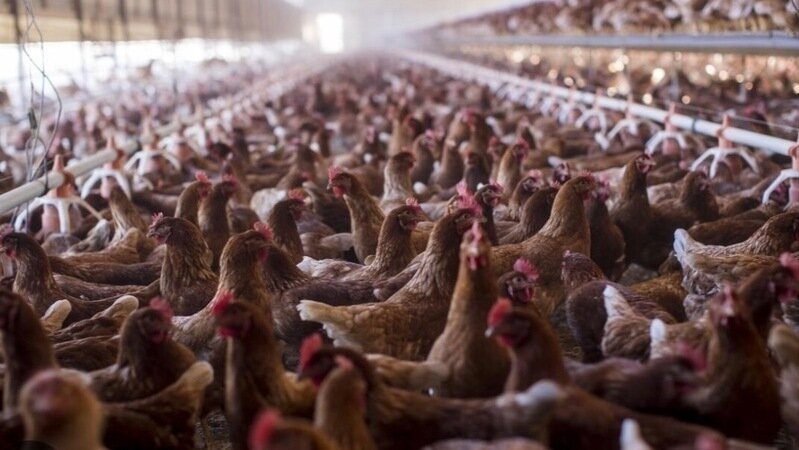
In recent years, the demand for free-range chicken has surged, driven by consumers who value animal welfare and seek food products that adhere to ethical farming practices. However, the term "free-range" can often be misleading, with no standardized regulations ensuring chickens have actually benefitted from free-range conditions. This has led to businesses unfairly taking advantage of consumer trust, labeling products as free-range without adhering to conditions that genuinely reflect this status.
Not all establishments provide their chickens with enough space to roam freely, thus undermining the essence of 'free-range'. Genuine free-range farming provides chickens with access to the outdoors, space to move and exhibit natural behaviors, with perimeters clearly specified. To protect consumers and uphold the integrity of the term, it is imperative that only those businesses which can demonstrably prove compliance with defined free-range conditions be allowed to use the label on their products.
We propose that businesses should only use the "free-range" label if they can provide verifiable evidence of compliance an established space requirements for each chick that needs to be established by a federal regulation agency. Should a business fail to meet these standards, they must either acquire additional land to meet the conditions or revise their operations, such as selling their excess chickens to other free-range compliant farms.
This action will not only maintain the integrity of free-range farming but also ensure fair competition among poultry providers. It will empower consumers by providing truthful information and foster humane treatment practices across the industry.
Currently:
If a business labels their chicken products as "free range", the USDA requires them to demonstrate that the birds have had access to the outdoors during their growing cycle. This generally means providing a written description of the housing conditions to the USDA's Labeling Program and Delivery Division for approval.
However, it's important to note the limitations of the USDA's "free range" definition:
Loose definition: The USDA regulations on "free-range" don't specify the duration of outdoor access or the quality of the outdoor space provided. This means that simply having a small door allowing access to a limited outdoor area for a short period of time can qualify for the label, according to Healthline.
No "free range" for eggs: The term "free range" is regulated by the USDA for poultry (chicken meat) but not for eggs. If you see "free range" on an egg carton, it's not a federally regulated claim.
"Cage-free" is different: "Cage-free" for eggs is regulated by the USDA, meaning the hens have unlimited access to food, water, and space to roam within an indoor facility. However, "cage-free" does not necessarily mean the hens have outdoor access.
Therefore, while businesses are required to provide proof of outdoor access to use the "free range" label on chicken products, the standards are relatively loose. For eggs, the term isn't federally regulated at all.
Please join us in calling for regulatory bodies to enforce stricter guidelines on free-range labeling. Sign this petition to demand accuracy, fairness, and accountability in poultry farming today.

1,590
The Issue
In recent years, the demand for free-range chicken has surged, driven by consumers who value animal welfare and seek food products that adhere to ethical farming practices. However, the term "free-range" can often be misleading, with no standardized regulations ensuring chickens have actually benefitted from free-range conditions. This has led to businesses unfairly taking advantage of consumer trust, labeling products as free-range without adhering to conditions that genuinely reflect this status.
Not all establishments provide their chickens with enough space to roam freely, thus undermining the essence of 'free-range'. Genuine free-range farming provides chickens with access to the outdoors, space to move and exhibit natural behaviors, with perimeters clearly specified. To protect consumers and uphold the integrity of the term, it is imperative that only those businesses which can demonstrably prove compliance with defined free-range conditions be allowed to use the label on their products.
We propose that businesses should only use the "free-range" label if they can provide verifiable evidence of compliance an established space requirements for each chick that needs to be established by a federal regulation agency. Should a business fail to meet these standards, they must either acquire additional land to meet the conditions or revise their operations, such as selling their excess chickens to other free-range compliant farms.
This action will not only maintain the integrity of free-range farming but also ensure fair competition among poultry providers. It will empower consumers by providing truthful information and foster humane treatment practices across the industry.
Currently:
If a business labels their chicken products as "free range", the USDA requires them to demonstrate that the birds have had access to the outdoors during their growing cycle. This generally means providing a written description of the housing conditions to the USDA's Labeling Program and Delivery Division for approval.
However, it's important to note the limitations of the USDA's "free range" definition:
Loose definition: The USDA regulations on "free-range" don't specify the duration of outdoor access or the quality of the outdoor space provided. This means that simply having a small door allowing access to a limited outdoor area for a short period of time can qualify for the label, according to Healthline.
No "free range" for eggs: The term "free range" is regulated by the USDA for poultry (chicken meat) but not for eggs. If you see "free range" on an egg carton, it's not a federally regulated claim.
"Cage-free" is different: "Cage-free" for eggs is regulated by the USDA, meaning the hens have unlimited access to food, water, and space to roam within an indoor facility. However, "cage-free" does not necessarily mean the hens have outdoor access.
Therefore, while businesses are required to provide proof of outdoor access to use the "free range" label on chicken products, the standards are relatively loose. For eggs, the term isn't federally regulated at all.
Please join us in calling for regulatory bodies to enforce stricter guidelines on free-range labeling. Sign this petition to demand accuracy, fairness, and accountability in poultry farming today.
The Decision Makers


Supporter Voices
Petition Updates
Share this petition
Petition created on July 20, 2025