From Complaints to Concrete Inspiration – Real Alternatives to Pesticides Are Here

It's easy to complain about the problems, not so easy to solve them.
Pesticides are embedded in industrial agriculture, and mounting evidence links their widespread use to serious health concerns...including developmental and neurological issues affecting children and communities. Complaints alone don't change systems but vision, innovation, and scalable solutions that protect both productivity and public health have the potential to transform the status quo.
For too long, we've accepted a false choice: high-yield farming or fewer chemicals. The exciting truth emerging from farms, research, and real-world trials is that society can move toward phasing out broad-spectrum pesticides without sacrificing output. Innovative, non-chemical tools are already in use and scaling up proving that a healthier food system is not just possible, but practical. I'd frankly like to not be doused in chemicals while going out for a walk or have children with learning disabilities, if possible. Makes life a lot more peaceful for all involved.
Promising Mechanical and Thermal Alternatives...
Steam Weeding and Soil Steaming: This isn't backyard experimentation, commercial systems like Satusteam™ (saturated steam + boiling water) deliver targeted heat to kill weeds, seeds, and soil pathogens without residues. Propane-powered steamers target the top soil layer where weeds germinate, achieving strong control (often 80%+) while reducing reliance on fumigants. Trials in vegetable production (e.g., lettuce fields) show reduced weeds, lower disease pressure, and maintained or improved yields. It's chemical-free, leaves no re-entry restrictions, and works for both conventional and organic operations.
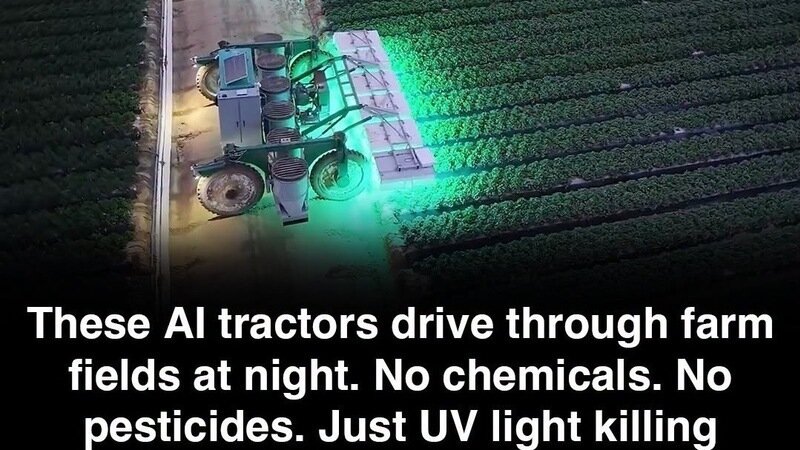
UV-Based Weed and Pest Control: UV light technology is advancing rapidly. Directed UV systems (including tractor-mounted or robotic setups) disrupt weed growth by targeting DNA and chloroplasts. Companies are developing field-scale UV "zappers" and autonomous robots that patrol at night with UV-C light to suppress pests, mildew, and diseases...zero sprays, no chemical drift. Examples include robotic platforms for strawberries and other crops, plus UV stimulation tools mounted on standard tractors that boost plant defenses as a fungicide alternative. Early results show high efficacy while preserving crop health and soil biology.
These aren't futuristic dreams... they're being tested and deployed today, combined with precision tech like AI vision for targeted application. Social media and farmer networks are buzzing with discussions because they work at scale in real conditions that maintain productivity while cutting chemical inputs.
Why This Matters
Transitioning away from pesticides addresses root causes of health burdens without crashing food production. Farmers win with lower long-term input costs and healthier soils; communities win with reduced exposure risks; and the industry stays strong and innovative.
Projected Costs of Transition
Transition costs vary by farm size, crop type, region, and whether systems are purchased outright, leased, or used as a service. Figures below are estimates based on current commercial offerings, trials, and market analyses (as of 2025–2026 data). They represent rough orders of magnitude...actual costs depend on scale, subsidies, and integration with existing equipment. Ongoing operational savings (fuel/energy, reduced labor/chemicals, higher premiums for residue-free produce) often offset initial investments over 3–5 years.
Individual Farmer Scale (e.g., mid-sized operation, 50–500 acres):
Steam Weeding Equipment:
Entry-level units (e.g., SW800/SW2100) start around $10,000–$50,000 for smaller/horticultural use. Larger tractor-mounted or trailer systems (e.g., SW3100/SW3800) range $40,000–$95,000+. Per-acre operating costs (fuel, water, maintenance) can be higher than herbicides initially but competitive in high-value crops. Some trials show 2–4x higher upfront treatment costs than mechanical methods, though labor and chemical savings help.
UV/Robotic Systems: Semi-autonomous or tractor-scale units often $150,000–$450,000 per robot (or lower for prototypes ~$5,000–$50,000). Many (like TRIC) use a service model...no large upfront purchase; farmers pay per treatment similar to current pest control budgets. Payback via labor/chemical reduction in 3–5 years for suitable crops. For a typical farmer, initial infrastructure changes (equipment purchase + training) might range $20,000–$200,000+ depending on acreage and tech mix, with potential government incentives or cooperatives reducing the burden.
US/National or Global Scale: US has ~1.88 million farms and ~876 million acres of farmland. Full transition isn't uniform...focus would start with high-pesticide crops (vegetables, fruits, strawberries).
Rough extrapolation: equipping a significant portion could require billions in capital. For context, annual US herbicide expenditures are in the multi-billion range; alternatives could shift rather than purely add costs.
Broader economic studies on non-chemical shifts suggest short-term national increases (e.g., labor/equipment) but long-term savings in health, environment, and resistance management.
These are not insurmountable barriers...especially with policy support, R&D, and shared equipment models.
Call to Action:
If you're a signer of this petition, share this update widely. Talk to your local farmers, policymakers, and agribusiness leaders about piloting or incentivizing these tools. Debate research funding, subsidies for adoption, and regulatory support for non-chemical methods. Support farms already making the shift, how that would be readily available to the average consumer I have no f*cking clue since labels lie and no one is ever honest.
These technologies show the path forward. Let's turn inspiration into implementation.
#HealthyFarming #AlternativesToPesticides #InnovationInAg
Sources and References
Steam Weeding / Satusteam SystemsWeedtechnics Satusteam™ Official Products — Detailed equipment specs, models (SW800, SW2100, SW3100, SW3800, Green Ninja), and applications.
https://steamnweeds.com/products/satusteam-by-weedtechnics/
https://steamcleanersinc.com/weed-technics/
Farm Show Magazine – Steam Weeder Runs Off PTO (Pricing: SW3100 ~$42,990 without trailer; up to $94,990 mounted).
https://www.farmshow.com/a_article.php?aid=38856
UC Davis / UC ANR Research on Steam for Weeds & Soil Pests — Efficacy, yields, and soil health benefits.
https://ucanr.edu/blog/uc-weed-science-weed-control-management-ecology-and-minutia/article/weed-killing-robots-and
https://www.plantsciences.ucdavis.edu/news/Escalona-steam
Additional Commercial & Trial Info
https://steamericas.com/steam-weeder/ (Optima Steamer weeding tools)
https://www.covercropstrategies.com/articles/3446-new-technology-lets-farms-steam-roll-weeds-and-pests (Propane-powered systems, labor/yield impacts)
UV / Robotic Systems (e.g., TRIC Robotics)TRIC Robotics Official Site — UV-C light for pest/disease control in strawberries, service model (no large upfront farmer cost), autonomy details.
https://www.tricrobotics.com/
https://www.tricrobotics.com/robots-new/
AgFunderNews – TRIC Raises $5.5M (Fleet expansion, service model, 70% pesticide reduction potential).
https://agfundernews.com/armed-with-fresh-funds-tric-robotics-plans-aggressive-fleet-expansion-across-cas-strawberry-fields
Additional Coverage on TRIC Luna Robot
https://www.therobotreport.com/tric-robotics-raises-seed-funding-help-farmers-control-pests-plant-disease/
Costs, Transition, and Broader ContextIndividual Equipment & Per-Acre Insights — Steam units from entry-level (~$10k–$50k) to larger systems; UV as service model; comparisons to chemical costs.
(See Weedtechnics and Farm Show links above)
Scaling & Economic Notes: Labor savings, payback periods (often 1–5 years), challenges for very large acreage.
https://www.covercropstrategies.com/articles/3446-new-technology-lets-farms-steam-roll-weeds-and-pests
https://extension.msstate.edu/publications/soil-steaming-101 (Soil steaming costs/fuel considerations)