Request For T&T Parliament To Pass Law On Gel Blaster Guns Making It Illegal.

Request For T&T Parliament To Pass Law On Gel Blaster Guns Making It Illegal.
The Issue
Parliament Must Pass Law on The Importation, Sale, Possession and Use of Gel Blast.
In recent years, Trinidad and Tobago has been grappling with an escalating crime rate, with firearm-related offenses becoming an alarming concern. Against this backdrop, the rise in popularity of gel blaster guns has added a new layer of complexity to public safety. These realistic-looking devices, which shoot small water-absorbent pellets, may seem harmless at first glance. However, their potential for misuse and their resemblance to real firearms make them a significant concern for law enforcement and public security. It is imperative for the government to introduce legislation banning the possession and use of gel blaster guns to safeguard the public and address potential threats.
The Danger of Misuse and Realistic Appearance
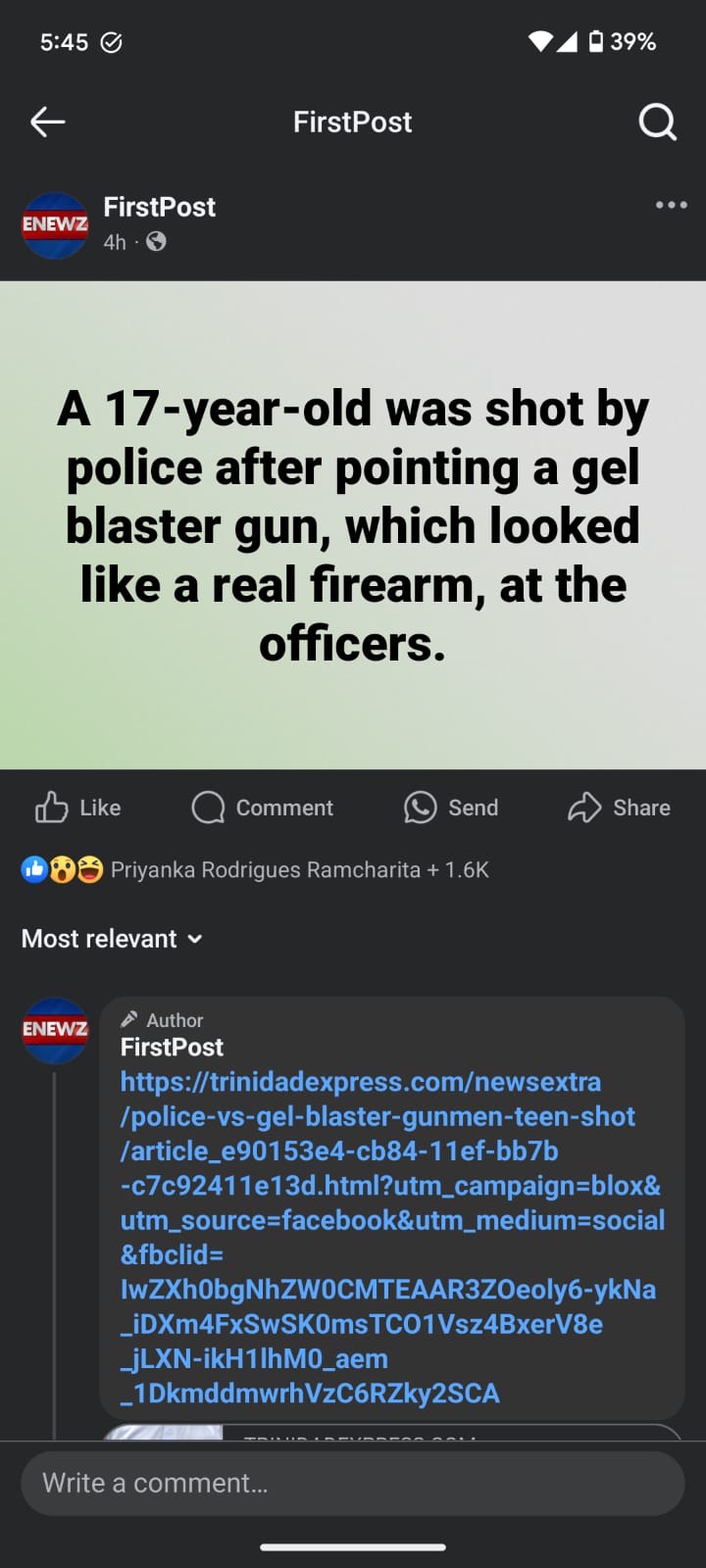
Gel blaster guns are designed to closely mimic real firearms in appearance, weight, and function. While their primary purpose is recreational, they have increasingly been used in dangerous and illegal ways in other countries. For example, criminals can use gel blasters to intimidate or threaten individuals during robberies, as victims and even law enforcement officers may struggle to distinguish them from actual weapons. This creates a hazardous environment where split-second decisions could have fatal consequences, particularly for police officers who may feel compelled to use lethal force against someone wielding a gel blaster in self-defense.
Moreover, these devices can be modified to increase their firing power or range, making them capable of causing significant injury. Reports from other countries have shown incidents of gel blaster misuse, including assaults, vandalism, and the intentional targeting of vulnerable individuals such as children and the elderly. Allowing their unrestricted possession could lead to a similar pattern of abuse in Trinidad and Tobago.
The Impact on Public Safety
The rise of gel blaster guns poses a direct challenge to public safety and by extension a national security threat in Trinidad and Tobago. The country’s already overburdened police force would be required to invest additional resources in distinguishing gel blasters from real firearms during investigations and responses. This could delay critical law enforcement actions and place officers and civilians at unnecessary risk.
Furthermore, the presence of gel blasters in public spaces could lead to panic or confusion among citizens, especially in a society already on edge due to high crime rates. Public trust in law enforcement and the judicial system is fragile, and introducing gel blasters into this environment could exacerbate feelings of insecurity and fear.
Learning from International Experiences
Several countries, including Australia and parts of the United States, have enacted strict regulations or outright bans on gel blaster guns due to their potential risks. These measures have been taken to prevent their misuse and maintain public safety. Trinidad and Tobago can draw on these international experiences to develop effective legislation that addresses the unique challenges the country faces.
A ban on gel blasters would not only prevent their misuse but also send a strong message about the government’s commitment to public safety. By taking a proactive approach, Trinidad and Tobago can avoid the pitfalls experienced by other nations and demonstrate leadership in addressing emerging security threats.
Proposed Legislative Action
The government should move swiftly to introduce a law banning the importation, sale, possession, and use of gel blaster guns in Trinidad and Tobago. This legislation should include the following components:
1. Comprehensive Ban: Prohibit the manufacturing, importation, sale, and possession of gel blaster guns.
2. Clear Definitions: Define gel blaster guns and similar devices to ensure the law is unambiguous and enforceable.
3. Severe Penalties: Impose strict penalties for violations, including fines and imprisonment, to deter misuse.
4. Public Awareness Campaign: Launch an education campaign to inform the public about the dangers of gel blasters and the reasons for the ban.
5. Buyback Program: Offer a limited-time amnesty period for individuals to surrender gel blasters without penalty, along with a buyback program to encourage compliance.
Conclusion
In a society already struggling with the impacts of high gun violence and criminal activity, the introduction of gel blaster guns adds an unnecessary risk to public safety. Their realistic appearance and potential for misuse make them a serious concern for law enforcement and civilians alike. By passing legislation to ban the possession and use of gel blaster guns, Trinidad and Tobago can take a crucial step toward ensuring the safety and security of its citizens. This proactive measure will not only address an emerging threat but also reinforce the government’s commitment to creating a safer and more peaceful nation.

29
The Issue
Parliament Must Pass Law on The Importation, Sale, Possession and Use of Gel Blast.
In recent years, Trinidad and Tobago has been grappling with an escalating crime rate, with firearm-related offenses becoming an alarming concern. Against this backdrop, the rise in popularity of gel blaster guns has added a new layer of complexity to public safety. These realistic-looking devices, which shoot small water-absorbent pellets, may seem harmless at first glance. However, their potential for misuse and their resemblance to real firearms make them a significant concern for law enforcement and public security. It is imperative for the government to introduce legislation banning the possession and use of gel blaster guns to safeguard the public and address potential threats.
The Danger of Misuse and Realistic Appearance
Gel blaster guns are designed to closely mimic real firearms in appearance, weight, and function. While their primary purpose is recreational, they have increasingly been used in dangerous and illegal ways in other countries. For example, criminals can use gel blasters to intimidate or threaten individuals during robberies, as victims and even law enforcement officers may struggle to distinguish them from actual weapons. This creates a hazardous environment where split-second decisions could have fatal consequences, particularly for police officers who may feel compelled to use lethal force against someone wielding a gel blaster in self-defense.
Moreover, these devices can be modified to increase their firing power or range, making them capable of causing significant injury. Reports from other countries have shown incidents of gel blaster misuse, including assaults, vandalism, and the intentional targeting of vulnerable individuals such as children and the elderly. Allowing their unrestricted possession could lead to a similar pattern of abuse in Trinidad and Tobago.
The Impact on Public Safety
The rise of gel blaster guns poses a direct challenge to public safety and by extension a national security threat in Trinidad and Tobago. The country’s already overburdened police force would be required to invest additional resources in distinguishing gel blasters from real firearms during investigations and responses. This could delay critical law enforcement actions and place officers and civilians at unnecessary risk.
Furthermore, the presence of gel blasters in public spaces could lead to panic or confusion among citizens, especially in a society already on edge due to high crime rates. Public trust in law enforcement and the judicial system is fragile, and introducing gel blasters into this environment could exacerbate feelings of insecurity and fear.
Learning from International Experiences
Several countries, including Australia and parts of the United States, have enacted strict regulations or outright bans on gel blaster guns due to their potential risks. These measures have been taken to prevent their misuse and maintain public safety. Trinidad and Tobago can draw on these international experiences to develop effective legislation that addresses the unique challenges the country faces.
A ban on gel blasters would not only prevent their misuse but also send a strong message about the government’s commitment to public safety. By taking a proactive approach, Trinidad and Tobago can avoid the pitfalls experienced by other nations and demonstrate leadership in addressing emerging security threats.
Proposed Legislative Action
The government should move swiftly to introduce a law banning the importation, sale, possession, and use of gel blaster guns in Trinidad and Tobago. This legislation should include the following components:
1. Comprehensive Ban: Prohibit the manufacturing, importation, sale, and possession of gel blaster guns.
2. Clear Definitions: Define gel blaster guns and similar devices to ensure the law is unambiguous and enforceable.
3. Severe Penalties: Impose strict penalties for violations, including fines and imprisonment, to deter misuse.
4. Public Awareness Campaign: Launch an education campaign to inform the public about the dangers of gel blasters and the reasons for the ban.
5. Buyback Program: Offer a limited-time amnesty period for individuals to surrender gel blasters without penalty, along with a buyback program to encourage compliance.
Conclusion
In a society already struggling with the impacts of high gun violence and criminal activity, the introduction of gel blaster guns adds an unnecessary risk to public safety. Their realistic appearance and potential for misuse make them a serious concern for law enforcement and civilians alike. By passing legislation to ban the possession and use of gel blaster guns, Trinidad and Tobago can take a crucial step toward ensuring the safety and security of its citizens. This proactive measure will not only address an emerging threat but also reinforce the government’s commitment to creating a safer and more peaceful nation.
29
Petition created on 5 January 2025