
Reject 18% Tax on Solar and EVs in Pakistan's Federal Budget 2026-27
The Issue
Pakistan’s federal budget for FY 2026 to 2027 proposes an 18% GST on solar panels and electric vehicles. This tax punishes the very people who stepped up when the system failed. When electricity became unaffordable and load shedding stretched to 18 hours a day, citizens did not wait. Families, farmers, shopkeepers, and small businesses invested an estimated 14 to 18 billion dollars of their own savings into rooftop solar since 2017. That is nearly twice the amount Pakistan received from the IMF in loans. This is the largest citizen-financed energy transition in our history. It has already saved the country more than 12 billion dollars in fuel imports since 2018. And now, the government wants to tax it.
What this tax will do:
- Increase the cost of solar systems by 15-20%; pricing lower and middle income families out of clean energy.
- Undermine the only reliable source of electricity for communities still facing long outages
- Widen the energy divide between those who can afford independence and those forced to remain on a failing grid
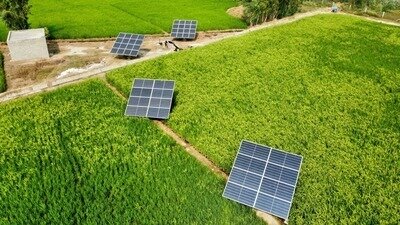
- Hurt rural households, farmers, and off-grid communities that rely on small solar systems for basic needs
- Weaken a sector that supports around 500,000 jobs in installation, engineering, and maintenance
- Slow Pakistan’s shift away from imported fuel at a time when energy security is critical
Solar has quietly become one of Pakistan’s most important sources of electricity. Batteries and electric vehicles are following a similar path. This transition was not driven by policy. It was driven by citizens who could not wait any longer for reliable power. Taxing them now sends the wrong message to every investor and every household. The ongoing crisis in the power sector is not caused by solar adoption. Transmission and distribution losses have surged, and capacity payments for underutilized fossil fuel plants continue to rise. These inefficiencies should not be passed on to citizens who invested in their own solutions.
We call on the government to:
- Immediately withdraw the proposed 18GST on solar panels and all related equipment, and maintain zero tax on renewable energy technologies
- Withdraw the proposed 18% GST on electric vehicles, hybrids, and plug-in hybrids
- Introduce policies that support solar adoption for rural, agricultural, and off-grid communities, expanding access instead of restricting it
Solar, batteries, and electric vehicles are not luxuries. They are how families keep the lights on, how farmers irrigate their land, and how Pakistan reduces its dependence on imported fuel. This is our energy. This is our investment. We ask the government to protect it, not tax it.
Sign this petition to stand for affordable energy and a sustainable future.

Victory
The Issue
Pakistan’s federal budget for FY 2026 to 2027 proposes an 18% GST on solar panels and electric vehicles. This tax punishes the very people who stepped up when the system failed. When electricity became unaffordable and load shedding stretched to 18 hours a day, citizens did not wait. Families, farmers, shopkeepers, and small businesses invested an estimated 14 to 18 billion dollars of their own savings into rooftop solar since 2017. That is nearly twice the amount Pakistan received from the IMF in loans. This is the largest citizen-financed energy transition in our history. It has already saved the country more than 12 billion dollars in fuel imports since 2018. And now, the government wants to tax it.
What this tax will do:
- Increase the cost of solar systems by 15-20%; pricing lower and middle income families out of clean energy.
- Undermine the only reliable source of electricity for communities still facing long outages
- Widen the energy divide between those who can afford independence and those forced to remain on a failing grid
- Hurt rural households, farmers, and off-grid communities that rely on small solar systems for basic needs
- Weaken a sector that supports around 500,000 jobs in installation, engineering, and maintenance
- Slow Pakistan’s shift away from imported fuel at a time when energy security is critical
Solar has quietly become one of Pakistan’s most important sources of electricity. Batteries and electric vehicles are following a similar path. This transition was not driven by policy. It was driven by citizens who could not wait any longer for reliable power. Taxing them now sends the wrong message to every investor and every household. The ongoing crisis in the power sector is not caused by solar adoption. Transmission and distribution losses have surged, and capacity payments for underutilized fossil fuel plants continue to rise. These inefficiencies should not be passed on to citizens who invested in their own solutions.
We call on the government to:
- Immediately withdraw the proposed 18GST on solar panels and all related equipment, and maintain zero tax on renewable energy technologies
- Withdraw the proposed 18% GST on electric vehicles, hybrids, and plug-in hybrids
- Introduce policies that support solar adoption for rural, agricultural, and off-grid communities, expanding access instead of restricting it
Solar, batteries, and electric vehicles are not luxuries. They are how families keep the lights on, how farmers irrigate their land, and how Pakistan reduces its dependence on imported fuel. This is our energy. This is our investment. We ask the government to protect it, not tax it.
Sign this petition to stand for affordable energy and a sustainable future.
The Decision Makers
Petition Updates
Share this petition
Petition created on 10 June 2026