

Raise Awareness For Child Labour In The Cocoa Industry
The issue
Every year Australians spend millions of dollars on chocolates. Today, millions of children are still working as child labourers/slave labourers in the chocolate industry. Improvements have been made by the chocolate manufacturers but more needs to be done.
Our story of growing chocolate using child labour begins in Africa.
The Cocoa pods grow high up in the plantation trees. They need a hot and humid climate with regular rainfall. Children as young as 6 to 14 years climb trees to collect the cocoa pods. They are given the machetes to cut down the pods. These large, heavy, dangerous knives are standard tools for children. They work 12 to 14 hours daily. Most of the children have multiple scars on their arms and cuts on their fingers from the machetes. The children use a rake-like tool to spread out the beans from inside the pods to dry. Children are also exposed to agricultural chemicals. Remember the climate is hot and wet, so these chemicals are used to get rid of the prolific insect population in the plantation. The children's spray the cocoa pods with large amounts of these industrial, agricultural chemicals. They do not wear protective clothing. Often their whole body is covering some form of skin disease from the chemicals. Children carry very large bags of cocoa beans by themselves. For very young children, the bags of cocoa beans are taller and heavier than they are. When this happens, it takes two people to place a bag on the young child's head so he/she can carry it. Sometimes the children fall and are beaten with branches or bike chains until they get up.
Sadly, these children are never going to taste the chocolate they helped produce.
Sometimes kids get mistreated and are doing it against their will. This is called forced labour, that is commonly confused with child labour. Cases of forced slavery in the cocoa industry often involve acts of physical violence, such as being whipped for working slowly or trying to escape. Reporters have also documented cases where children were locked in at night to prevent them from escaping.
It is suspected that the main causes of child labour are:
- The families that work on the farms are too poor to hire workers to harvest and carry the cocoa pods.
- The farmers don't have access to good schools for their kids.
- The parents were unaware that child labour is harmful.
So what can you do?
Things we can do to make a difference with this problem is educate yourself and others, contact shop owners and importers and ask about the origins of the product and buy from ethical brands and certification schemes. You can also contact the big people (the government ect.) and ask about laws banning a product made with child/slave labour, or invest ethically.
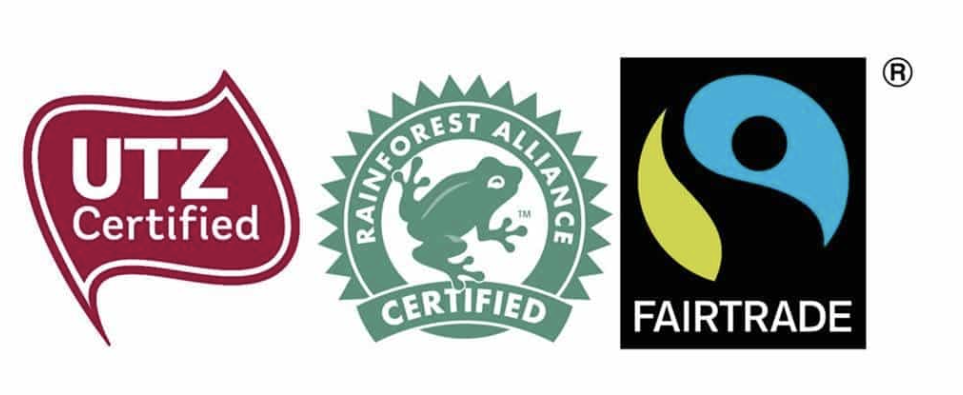
Below I have attached some labels that you will find on cocoa products, indicating it is slavery free.
Thank you!
Lily

2
The issue
Every year Australians spend millions of dollars on chocolates. Today, millions of children are still working as child labourers/slave labourers in the chocolate industry. Improvements have been made by the chocolate manufacturers but more needs to be done.
Our story of growing chocolate using child labour begins in Africa.
The Cocoa pods grow high up in the plantation trees. They need a hot and humid climate with regular rainfall. Children as young as 6 to 14 years climb trees to collect the cocoa pods. They are given the machetes to cut down the pods. These large, heavy, dangerous knives are standard tools for children. They work 12 to 14 hours daily. Most of the children have multiple scars on their arms and cuts on their fingers from the machetes. The children use a rake-like tool to spread out the beans from inside the pods to dry. Children are also exposed to agricultural chemicals. Remember the climate is hot and wet, so these chemicals are used to get rid of the prolific insect population in the plantation. The children's spray the cocoa pods with large amounts of these industrial, agricultural chemicals. They do not wear protective clothing. Often their whole body is covering some form of skin disease from the chemicals. Children carry very large bags of cocoa beans by themselves. For very young children, the bags of cocoa beans are taller and heavier than they are. When this happens, it takes two people to place a bag on the young child's head so he/she can carry it. Sometimes the children fall and are beaten with branches or bike chains until they get up.
Sadly, these children are never going to taste the chocolate they helped produce.
Sometimes kids get mistreated and are doing it against their will. This is called forced labour, that is commonly confused with child labour. Cases of forced slavery in the cocoa industry often involve acts of physical violence, such as being whipped for working slowly or trying to escape. Reporters have also documented cases where children were locked in at night to prevent them from escaping.
It is suspected that the main causes of child labour are:
- The families that work on the farms are too poor to hire workers to harvest and carry the cocoa pods.
- The farmers don't have access to good schools for their kids.
- The parents were unaware that child labour is harmful.
So what can you do?
Things we can do to make a difference with this problem is educate yourself and others, contact shop owners and importers and ask about the origins of the product and buy from ethical brands and certification schemes. You can also contact the big people (the government ect.) and ask about laws banning a product made with child/slave labour, or invest ethically.
Below I have attached some labels that you will find on cocoa products, indicating it is slavery free.
Thank you!
Lily
Petition Updates
Share this petition
Petition created on 11 October 2024