
Push to Ban New Data Centers From Being Built in Miami, Florida
The Issue
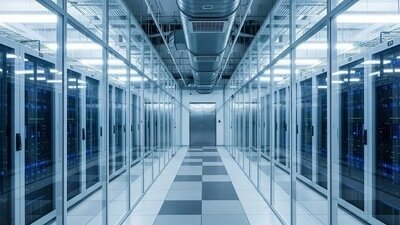
These days, you can search using artificial intelligence (AI) with the click of a button. But behind every “perfect” answer, is a data center far from perfect.
With the rise of the internet, data centers have boomed in the United States. In fact, a city in Virginia has been nicknamed “Data Center Alley,” for its 139 data centers.
Now, what is the problem with an abundance of data centers?
Energy and Resource Demands
According to the World Resources Institute, a single AI data center uses as much power needed to power about 100,000 homes. Larger ones that are soon expected to be built around the country will take up to 20 times that amount of energy (2026). This could mean an exponential increase in the cost of utilities for households in the area.
Water Impacts
Although water covers 70% of the Earth, less than 0.5% is available to drink, making water security a delicate balance throughout the entire world. Artificial intelligence uses audacious amounts of water to cool its systems. The Environmental and Energy Study Institute notes that large data centers can use up to 5 million gallons of water per day, enough water to supply a town of 10,000 to 50,000 people (2025). Women and children in various underdeveloped countries have to walk an average of about 3.7 miles to reach drinkable water. Meanwhile, AI is wasting tons of it each day to produce convenient answers. Moreover, residents near these data centers have noticed a decrease in their water quality and supply since the data center was built, with some noticing a brown residue and/or extremely low water pressure.
Air Pollution
Data centers rely on fossil fuels, which release harmful pollutants and greenhouse gases into the atmosphere. Many data centers rely on day-to-day power, meaning that the heat-trapping carbon dioxide gas is being released continuously. This is predicted to further global warming. Alongside this, the diesel-fueled backup generators have been associated with respiratory disease, heart disease, asthma, and other severe health risks from air pollutants, as stated by the World Resources Institute (2026).
Alongside this, artificial intelligence itself is already negatively affecting society - droughts are becoming more prevalent, there is a higher rate of cheating and cognitive decline in the student population, and individuals are losing their jobs due to an AI-takeover of the field.
Right now, a $150 million AI-ready data center is being proposed to District 12 of Miami-Dade County. And this is not the only one. You have the power to protect Miami - a place of beautiful beaches, a melting pot of cultural diversity, and the one-and-only Everglades - from being tainted. Be on the right side of history. Act now. Sign this petition.

105
The Issue
These days, you can search using artificial intelligence (AI) with the click of a button. But behind every “perfect” answer, is a data center far from perfect.
With the rise of the internet, data centers have boomed in the United States. In fact, a city in Virginia has been nicknamed “Data Center Alley,” for its 139 data centers.
Now, what is the problem with an abundance of data centers?
Energy and Resource Demands
According to the World Resources Institute, a single AI data center uses as much power needed to power about 100,000 homes. Larger ones that are soon expected to be built around the country will take up to 20 times that amount of energy (2026). This could mean an exponential increase in the cost of utilities for households in the area.
Water Impacts
Although water covers 70% of the Earth, less than 0.5% is available to drink, making water security a delicate balance throughout the entire world. Artificial intelligence uses audacious amounts of water to cool its systems. The Environmental and Energy Study Institute notes that large data centers can use up to 5 million gallons of water per day, enough water to supply a town of 10,000 to 50,000 people (2025). Women and children in various underdeveloped countries have to walk an average of about 3.7 miles to reach drinkable water. Meanwhile, AI is wasting tons of it each day to produce convenient answers. Moreover, residents near these data centers have noticed a decrease in their water quality and supply since the data center was built, with some noticing a brown residue and/or extremely low water pressure.
Air Pollution
Data centers rely on fossil fuels, which release harmful pollutants and greenhouse gases into the atmosphere. Many data centers rely on day-to-day power, meaning that the heat-trapping carbon dioxide gas is being released continuously. This is predicted to further global warming. Alongside this, the diesel-fueled backup generators have been associated with respiratory disease, heart disease, asthma, and other severe health risks from air pollutants, as stated by the World Resources Institute (2026).
Alongside this, artificial intelligence itself is already negatively affecting society - droughts are becoming more prevalent, there is a higher rate of cheating and cognitive decline in the student population, and individuals are losing their jobs due to an AI-takeover of the field.
Right now, a $150 million AI-ready data center is being proposed to District 12 of Miami-Dade County. And this is not the only one. You have the power to protect Miami - a place of beautiful beaches, a melting pot of cultural diversity, and the one-and-only Everglades - from being tainted. Be on the right side of history. Act now. Sign this petition.
The Decision Makers


Petition Updates
Share this petition
Petition created on June 22, 2026