
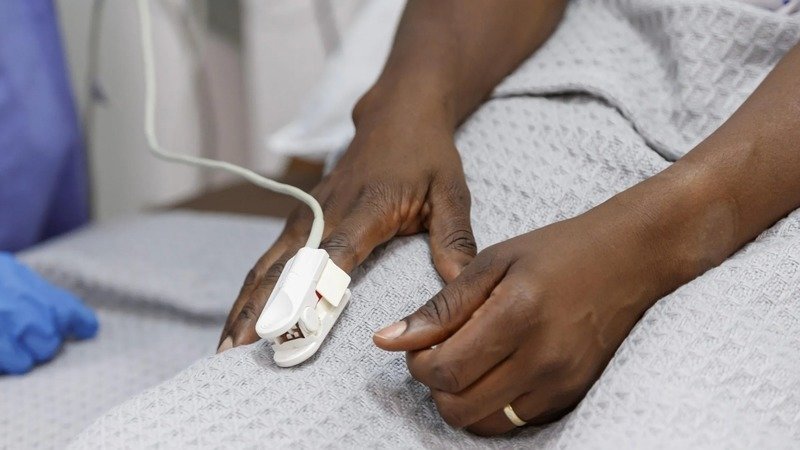
Pulse oximeters that work for EVERYONE!
The Issue
Patients with a vast range of medical conditions can become hypoxemic, from preterm newborns in respiratory distress, to children with infectious diseases like pneumonia, to adults with non-communicable conditions like chronic obstructive pulmonary disease (COPD), and many more. Pulse oximetry is also a screening tool for congenital heart disease and essential for safe surgery.
This is why the large and growing body of evidence that shows pulse oximeters do not work as effectively on patients with darker skin pigmentation is so alarming.
Over the last two decades, multiple studies have shown that pulse oximeters can overestimate oxygen saturation in the blood of patients with darker skin. This can lead to under-treatment or to no treatment at all, with potentially catastrophic consequences.
Many more studies have been published during the pandemic, as so many COVID-19 patients became hypoxemic and needed massive amounts of oxygen. One of these studies (Chesley et al, 2022) concluded that, "measurement error from pulse oximetry is more common for those with darker skin pigmentation, yet this topic remains understudied, and evidence-based clinical mitigation strategies do not currently exist.” Another (Henry et al, 2022) found this measurement error was associated with increased mortality.
So far, the US Food and Drug Administration (FDA) is the only national regulatory authority to act decisively on this issue. In 2021, the FDA issued a Safety Communication on Pulse Oximeter Accuracy and Limitations and announced a special public meeting on 1 November 2022 to discuss ongoing concerns that pulse oximeters may be less accurate in individuals with darker skin to guide further regulatory actions.
Other national and international health regulatory authorities have remained silent, including the World Health Organization (WHO), and just one pulse oximetry manufacturer, Masimo, has shared their own internal evaluation.
Meanwhile pulse oximeters are being used every day on millions of patients across the world and large quantities are still being procured by international health and development agencies and sent to low- and middle-income countries without the confidence that they will perform accurately on populations with darker skin pigmentation.
This is unacceptable.
To accelerate the development and uptake of pulse oximeters that work equally well on all patients everywhere, we call on:
- WHO to review the evidence on pulse oximetry accuracy on darker skin pigmentation and issue guidance to Member States as well as to other UN and international health and development agencies who routinely procure pulse oximeters;
- National regulatory agencies to follow the FDA’s lead and review the evidence, issue guidance to clinicians and the public, and take further regulatory action, if necessary to protect patients with darker skin pigmentation;
- Manufacturers of pulse oximeters to undertake internal evaluations of the accuracy of their pulse oximeter/s on a range of skin pigmentations and to publish the results, committing to improving the product/s where deficiencies are found;
- National governments receiving subsidized or donated pulse oximeters from international donors to require evidence of accurate performance on darker skin pigmentations before they receive products or accept donations;
- International donors and procuring agencies to require evidence of a pulse oximeter’s performance on darker skin pigmentations as a requirement of tenders with industry, and to enable the publication of this performance data on open access platforms such as openoximetry.org;
- Healthcare facilities to put in place clinical guidance to ensure that medical professionals are aware of, and adjust for, the potential for pulse oximeter overestimation of oxygen saturation on darker skin and to communicate with patients about the issue and how they are addressing it; and
- Investors to finance the development of next generation pulse oximetry technology that removes the risk of differential performance due to patient skin pigmentation once and for all.
**This petition is an initiative of the Every Breath Counts Coalition, a global network of more than 100 organizations working together to reduce deaths from respiratory conditions like pneumonia by increasing access to prevention, diagnosis, and treatment, including pulse oximetry and medical oxygen. Learn more https://stoppneumonia.org/about-us/

Petition Closed
The Issue
Patients with a vast range of medical conditions can become hypoxemic, from preterm newborns in respiratory distress, to children with infectious diseases like pneumonia, to adults with non-communicable conditions like chronic obstructive pulmonary disease (COPD), and many more. Pulse oximetry is also a screening tool for congenital heart disease and essential for safe surgery.
This is why the large and growing body of evidence that shows pulse oximeters do not work as effectively on patients with darker skin pigmentation is so alarming.
Over the last two decades, multiple studies have shown that pulse oximeters can overestimate oxygen saturation in the blood of patients with darker skin. This can lead to under-treatment or to no treatment at all, with potentially catastrophic consequences.
Many more studies have been published during the pandemic, as so many COVID-19 patients became hypoxemic and needed massive amounts of oxygen. One of these studies (Chesley et al, 2022) concluded that, "measurement error from pulse oximetry is more common for those with darker skin pigmentation, yet this topic remains understudied, and evidence-based clinical mitigation strategies do not currently exist.” Another (Henry et al, 2022) found this measurement error was associated with increased mortality.
So far, the US Food and Drug Administration (FDA) is the only national regulatory authority to act decisively on this issue. In 2021, the FDA issued a Safety Communication on Pulse Oximeter Accuracy and Limitations and announced a special public meeting on 1 November 2022 to discuss ongoing concerns that pulse oximeters may be less accurate in individuals with darker skin to guide further regulatory actions.
Other national and international health regulatory authorities have remained silent, including the World Health Organization (WHO), and just one pulse oximetry manufacturer, Masimo, has shared their own internal evaluation.
Meanwhile pulse oximeters are being used every day on millions of patients across the world and large quantities are still being procured by international health and development agencies and sent to low- and middle-income countries without the confidence that they will perform accurately on populations with darker skin pigmentation.
This is unacceptable.
To accelerate the development and uptake of pulse oximeters that work equally well on all patients everywhere, we call on:
- WHO to review the evidence on pulse oximetry accuracy on darker skin pigmentation and issue guidance to Member States as well as to other UN and international health and development agencies who routinely procure pulse oximeters;
- National regulatory agencies to follow the FDA’s lead and review the evidence, issue guidance to clinicians and the public, and take further regulatory action, if necessary to protect patients with darker skin pigmentation;
- Manufacturers of pulse oximeters to undertake internal evaluations of the accuracy of their pulse oximeter/s on a range of skin pigmentations and to publish the results, committing to improving the product/s where deficiencies are found;
- National governments receiving subsidized or donated pulse oximeters from international donors to require evidence of accurate performance on darker skin pigmentations before they receive products or accept donations;
- International donors and procuring agencies to require evidence of a pulse oximeter’s performance on darker skin pigmentations as a requirement of tenders with industry, and to enable the publication of this performance data on open access platforms such as openoximetry.org;
- Healthcare facilities to put in place clinical guidance to ensure that medical professionals are aware of, and adjust for, the potential for pulse oximeter overestimation of oxygen saturation on darker skin and to communicate with patients about the issue and how they are addressing it; and
- Investors to finance the development of next generation pulse oximetry technology that removes the risk of differential performance due to patient skin pigmentation once and for all.
**This petition is an initiative of the Every Breath Counts Coalition, a global network of more than 100 organizations working together to reduce deaths from respiratory conditions like pneumonia by increasing access to prevention, diagnosis, and treatment, including pulse oximetry and medical oxygen. Learn more https://stoppneumonia.org/about-us/
Petition Updates
Share this petition
Petition created on October 9, 2022