
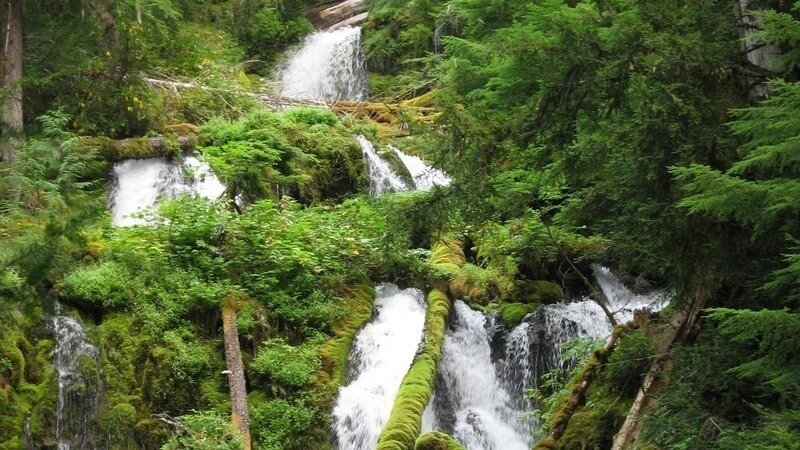
Protect U.S. Public Lands as Biodiversity, Watershed & Climate Refugia
The Issue
We, the undersigned residents of the United States, are facing an unprecedented eco-crisis which previous actions have failed to slow, much less reverse.
The eco-crisis includes but isn’t limited to: forest, grassland, desert, riparian, and ocean degradation; threatened, endangered, and extinct species; water, air, and soil depletion and pollution; regional and global climate destabilization.
Despite the best efforts of a valiant environmental movement, not only haven’t we moved the needle on these existential threats, the consensus of peer-reviewed science shows us spiraling down in the opposite direction.
Therefore, we believe it’s time for a bold new vision for our last best ecosystems and wildlife populations on public lands.
Just about forty percent of the U.S.—900 million acres—is public land (federal, state, county, and municipal). These commonly held tracts both contain some of the most intact wildlands and wildlife populations and have the legal and cultural framework we need to protect them. In other words, public lands are both our ripest and lowest-hanging fruit.
If we’re serious about confronting the eco crisis, we must prioritize genuinely and permanently protecting public lands. With that long-term goal in mind, we endorse safeguarding all public lands in the U.S. as Biodiversity, Watershed, and Climate Refugia.
Refugia are places where flora and fauna can take sanctuary “during a period of continental climatic change” to maintain populations and, once things stabilize, regenerate across the landscape.
Right now, we’re not up against glaciers nor simply a runaway climate crisis, but the relentless onslaught of human appetite. Which means to make this work, instead of tiny islands of refugia, we’ll need the almost billion acres of public lands in the U.S.
The two greatest threats to public lands are “selling off” and “selling out.” Selling off means turning over public lands to private industry for development and/or extraction. Selling out means allowing many of those same industries to cheaply lease public lands for extraction by logging, mining, livestock ranching, and drilling.
If Biodiversity, Watershed, and Climate Refugia are to have any value, we must end all extraction on public lands.
(Currently, less than 4 percent of U.S. “timber” and 2 percent of U.S. beef comes from public land. The main reason one-third of mining is on public land is that corporations lease claims for only $2.50 to $5 per acre. What’s more, if we’re going to wean ourselves off fossil fuels—“keep it in the ground”—eliminating the 25 percent of our oil and gas pollution that originates on public land would make a great start.)
Biodiversity, Watershed, and Climate Refugia have local, regional, national and global relevance.
The Global Biodiversity Framework proposes that every nation work together to protect thirty percent of the world’s terrestrial and aquatic ecosystems by 2030. Taking a step further, the Half-Earth vision (popularized by the late, great evolutionary biologist E.O. Wilson) would permanently protect half of the world’s ecosystems.
The easiest and only way the U.S. can meet these obligations—as well as abide by any climate agreements—is by protecting public lands as Biodiversity, Watershed, and Climate Refugia.
Perhaps the concept of letting nature’s ancient processes guide our future can best be summed up the Native American proverb: “When the blood in your veins returns to the sea, and the earth in your bones returns to the ground, perhaps then you will remember that this land does not belong to you, it is you who belong to the land.”

139
The Issue
We, the undersigned residents of the United States, are facing an unprecedented eco-crisis which previous actions have failed to slow, much less reverse.
The eco-crisis includes but isn’t limited to: forest, grassland, desert, riparian, and ocean degradation; threatened, endangered, and extinct species; water, air, and soil depletion and pollution; regional and global climate destabilization.
Despite the best efforts of a valiant environmental movement, not only haven’t we moved the needle on these existential threats, the consensus of peer-reviewed science shows us spiraling down in the opposite direction.
Therefore, we believe it’s time for a bold new vision for our last best ecosystems and wildlife populations on public lands.
Just about forty percent of the U.S.—900 million acres—is public land (federal, state, county, and municipal). These commonly held tracts both contain some of the most intact wildlands and wildlife populations and have the legal and cultural framework we need to protect them. In other words, public lands are both our ripest and lowest-hanging fruit.
If we’re serious about confronting the eco crisis, we must prioritize genuinely and permanently protecting public lands. With that long-term goal in mind, we endorse safeguarding all public lands in the U.S. as Biodiversity, Watershed, and Climate Refugia.
Refugia are places where flora and fauna can take sanctuary “during a period of continental climatic change” to maintain populations and, once things stabilize, regenerate across the landscape.
Right now, we’re not up against glaciers nor simply a runaway climate crisis, but the relentless onslaught of human appetite. Which means to make this work, instead of tiny islands of refugia, we’ll need the almost billion acres of public lands in the U.S.
The two greatest threats to public lands are “selling off” and “selling out.” Selling off means turning over public lands to private industry for development and/or extraction. Selling out means allowing many of those same industries to cheaply lease public lands for extraction by logging, mining, livestock ranching, and drilling.
If Biodiversity, Watershed, and Climate Refugia are to have any value, we must end all extraction on public lands.
(Currently, less than 4 percent of U.S. “timber” and 2 percent of U.S. beef comes from public land. The main reason one-third of mining is on public land is that corporations lease claims for only $2.50 to $5 per acre. What’s more, if we’re going to wean ourselves off fossil fuels—“keep it in the ground”—eliminating the 25 percent of our oil and gas pollution that originates on public land would make a great start.)
Biodiversity, Watershed, and Climate Refugia have local, regional, national and global relevance.
The Global Biodiversity Framework proposes that every nation work together to protect thirty percent of the world’s terrestrial and aquatic ecosystems by 2030. Taking a step further, the Half-Earth vision (popularized by the late, great evolutionary biologist E.O. Wilson) would permanently protect half of the world’s ecosystems.
The easiest and only way the U.S. can meet these obligations—as well as abide by any climate agreements—is by protecting public lands as Biodiversity, Watershed, and Climate Refugia.
Perhaps the concept of letting nature’s ancient processes guide our future can best be summed up the Native American proverb: “When the blood in your veins returns to the sea, and the earth in your bones returns to the ground, perhaps then you will remember that this land does not belong to you, it is you who belong to the land.”
The Decision Makers


Petition Updates
Share this petition
Petition created on May 7, 2026