
Protect Our Most Vulnerable Students: Bring Tyler's Law Nationwide
The Issue
Every child deserves safety. Every educator deserves protection. Every family deserves answers.
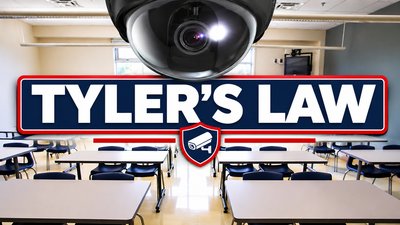
My name is Kimberly McFadden. I am a mother of seven children, five of whom have special needs. I am also the mother of Tyler, the child for whom Alabama’s Tyler’s Law was named. I am asking Congress to require secure audio and video recording in self-contained special education classrooms nationwide, with strong privacy protections and federal funding.
No child’s safety should depend on their ZIP code or their ability to explain what happened.
Why Tyler’s Law matters
Tyler was harmed by a teacher while attending school in South Carolina. As a result of his disabilities and communication limitations, he could not participate in a traditional forensic interview. Although therapists reported concerns after he demonstrated what had happened during therapy, criminal charges were not pursued. Our family was left without the independent evidence needed to move the case forward.
Many children who are nonspeaking or have significant communication disabilities cannot describe an incident in the way investigators expect. Others communicate through assistive technology, gestures, or behavior. Their difficulty reporting abuse must never become a barrier to safety, documentation, and a fair investigation.
What the most recent available school data show
The U.S. Department of Education’s 2023–24 Civil Rights Data Collection, released in 2026, reports 263,376 incidents of physical restraint, 16,037 incidents of mechanical restraint, and 127,381 incidents of seclusion nationwide: 406,794 reported incidents combined. These are incidents, not unique students, and they are not all instances of abuse. Source [1], with a national data explorer based on the federal dataset [2].
The Department of Education’s 2021–22 national report found that students served under IDEA were approximately
14% of enrollment, but 76% of students physically restrained, 68% of students secluded, and 28% of students mechanically restrained. These figures describe the proportion of affected students, not the number of incidents. Source [3].
Research also documents elevated victimization risks among children with disabilities, but there is no complete, reliable national annual count of abuse of students with disabilities specifically by school employees. School restraint and seclusion statistics must not be mislabeled as abuse statistics. Source [4] provides federal background on the disparities and risks.
Cameras can protect teachers and staff, too
This proposal is not an accusation against special education educators. Dedicated teachers, aides, therapists, and support staff deserve to be protected by objective evidence. Recordings may clarify accidental injuries, behavioral emergencies, student-to-student incidents, and disputes about what happened; they may also help resolve false or mistaken allegations fairly. Cameras should support sound investigations, not replace training, staffing, behavioral supports, or professional judgment.
Privacy safeguards already modeled by Alabama’s Tyler’s Law
Alabama Code §16-39-13 provides a starting point. The state law permits cameras in certain self-contained classrooms when funding is available and makes installation mandatory following a qualifying specific donation. It requires audio and video recording when students are present, written parental notice, and confidentiality. Source [5].
• Who may access footage: When qualifying allegations are reported, relevant recordings must be provided on request to an involved employee, a parent or guardian of an involved student, and a designated school investigator. Other access must comply with FERPA and applicable law.
• How footage may be used: Recordings cannot be used for routine teacher evaluations, regular or continuous classroom monitoring, or livestreaming.
• Protecting children’s privacy: Schools must conceal the identity of uninvolved students when needed, including by blurring faces. Restrooms and changing areas cannot be monitored except for limited incidental coverage allowed by the statute.
• Preserving evidence: Recordings generally must be kept for at least three months, with special retention rules for reported incidents and investigations.
What we are asking Congress to pass
• A nationwide requirement for secure video and audio recording in public-school self-contained special education classrooms and appropriate connected instructional and calming spaces.
• Dedicated federal funding for installation, secure storage, maintenance, and oversight, so compliance does not depend on donations or local wealth.
• Strong FERPA-compliant confidentiality, notice, redaction, restricted access, audit trails, and penalties for improper disclosure.
• Clear rights for involved parents, educators, authorized investigators, and law enforcement to obtain or review relevant footage under appropriate safeguards.
• Mandatory preservation of recordings following allegations of abuse, neglect, inappropriate restraint or seclusion, serious injury, or other significant incidents.
• A prohibition on continuous livestream monitoring and use of footage for routine employee performance evaluations.
• Enforceable implementation deadlines, reporting procedures, and meaningful accountability for noncompliance.
A mother’s plea
I cannot change what happened to Tyler. But I can fight for children who need protections he did not have. I am not asking Congress to choose between protecting students and supporting teachers. I am asking Congress to protect both.
Please sign and share this petition. Ask your members of Congress to bring Tyler’s Law to the federal level.
For Tyler. For every child who cannot tell us what happened. For every teacher who deserves the truth.
Kimberly McFadden — Tyler’s Mom | Disability Advocate
Research and Official Sources
1. U.S. Department of Education — 2023–24 Civil Rights Data Collection
2. Alliance Against Seclusion and Restraint — 2023–24 federal data explorer
3. U.S. Department of Education — 2021–22 CRDC First Look report (PDF)
https://www.ed.gov/media/document/2021-22-crdc-first-look-report-109194.pdf
4. U.S. Department of Education — Disability discrimination, discipline, restraint, and seclusion
5. Alabama Legislature — Tyler’s Law, Code §16-39-13
https://alison.legislature.state.al.us/code-of-alabama?section=16-39-13
6. U.S. Government Accountability Office — restraint and seclusion reporting concerns
https://www.gao.gov/products/gao-19-551r
Tyler's Law in the News
412
The Issue
Every child deserves safety. Every educator deserves protection. Every family deserves answers.
My name is Kimberly McFadden. I am a mother of seven children, five of whom have special needs. I am also the mother of Tyler, the child for whom Alabama’s Tyler’s Law was named. I am asking Congress to require secure audio and video recording in self-contained special education classrooms nationwide, with strong privacy protections and federal funding.
No child’s safety should depend on their ZIP code or their ability to explain what happened.
Why Tyler’s Law matters
Tyler was harmed by a teacher while attending school in South Carolina. As a result of his disabilities and communication limitations, he could not participate in a traditional forensic interview. Although therapists reported concerns after he demonstrated what had happened during therapy, criminal charges were not pursued. Our family was left without the independent evidence needed to move the case forward.
Many children who are nonspeaking or have significant communication disabilities cannot describe an incident in the way investigators expect. Others communicate through assistive technology, gestures, or behavior. Their difficulty reporting abuse must never become a barrier to safety, documentation, and a fair investigation.
What the most recent available school data show
The U.S. Department of Education’s 2023–24 Civil Rights Data Collection, released in 2026, reports 263,376 incidents of physical restraint, 16,037 incidents of mechanical restraint, and 127,381 incidents of seclusion nationwide: 406,794 reported incidents combined. These are incidents, not unique students, and they are not all instances of abuse. Source [1], with a national data explorer based on the federal dataset [2].
The Department of Education’s 2021–22 national report found that students served under IDEA were approximately
14% of enrollment, but 76% of students physically restrained, 68% of students secluded, and 28% of students mechanically restrained. These figures describe the proportion of affected students, not the number of incidents. Source [3].
Research also documents elevated victimization risks among children with disabilities, but there is no complete, reliable national annual count of abuse of students with disabilities specifically by school employees. School restraint and seclusion statistics must not be mislabeled as abuse statistics. Source [4] provides federal background on the disparities and risks.
Cameras can protect teachers and staff, too
This proposal is not an accusation against special education educators. Dedicated teachers, aides, therapists, and support staff deserve to be protected by objective evidence. Recordings may clarify accidental injuries, behavioral emergencies, student-to-student incidents, and disputes about what happened; they may also help resolve false or mistaken allegations fairly. Cameras should support sound investigations, not replace training, staffing, behavioral supports, or professional judgment.
Privacy safeguards already modeled by Alabama’s Tyler’s Law
Alabama Code §16-39-13 provides a starting point. The state law permits cameras in certain self-contained classrooms when funding is available and makes installation mandatory following a qualifying specific donation. It requires audio and video recording when students are present, written parental notice, and confidentiality. Source [5].
• Who may access footage: When qualifying allegations are reported, relevant recordings must be provided on request to an involved employee, a parent or guardian of an involved student, and a designated school investigator. Other access must comply with FERPA and applicable law.
• How footage may be used: Recordings cannot be used for routine teacher evaluations, regular or continuous classroom monitoring, or livestreaming.
• Protecting children’s privacy: Schools must conceal the identity of uninvolved students when needed, including by blurring faces. Restrooms and changing areas cannot be monitored except for limited incidental coverage allowed by the statute.
• Preserving evidence: Recordings generally must be kept for at least three months, with special retention rules for reported incidents and investigations.
What we are asking Congress to pass
• A nationwide requirement for secure video and audio recording in public-school self-contained special education classrooms and appropriate connected instructional and calming spaces.
• Dedicated federal funding for installation, secure storage, maintenance, and oversight, so compliance does not depend on donations or local wealth.
• Strong FERPA-compliant confidentiality, notice, redaction, restricted access, audit trails, and penalties for improper disclosure.
• Clear rights for involved parents, educators, authorized investigators, and law enforcement to obtain or review relevant footage under appropriate safeguards.
• Mandatory preservation of recordings following allegations of abuse, neglect, inappropriate restraint or seclusion, serious injury, or other significant incidents.
• A prohibition on continuous livestream monitoring and use of footage for routine employee performance evaluations.
• Enforceable implementation deadlines, reporting procedures, and meaningful accountability for noncompliance.
A mother’s plea
I cannot change what happened to Tyler. But I can fight for children who need protections he did not have. I am not asking Congress to choose between protecting students and supporting teachers. I am asking Congress to protect both.
Please sign and share this petition. Ask your members of Congress to bring Tyler’s Law to the federal level.
For Tyler. For every child who cannot tell us what happened. For every teacher who deserves the truth.
Kimberly McFadden — Tyler’s Mom | Disability Advocate
Research and Official Sources
1. U.S. Department of Education — 2023–24 Civil Rights Data Collection
2. Alliance Against Seclusion and Restraint — 2023–24 federal data explorer
3. U.S. Department of Education — 2021–22 CRDC First Look report (PDF)
https://www.ed.gov/media/document/2021-22-crdc-first-look-report-109194.pdf
4. U.S. Department of Education — Disability discrimination, discipline, restraint, and seclusion
5. Alabama Legislature — Tyler’s Law, Code §16-39-13
https://alison.legislature.state.al.us/code-of-alabama?section=16-39-13
6. U.S. Government Accountability Office — restraint and seclusion reporting concerns
https://www.gao.gov/products/gao-19-551r
Tyler's Law in the News
The Decision Makers





Supporter Voices
Petition Updates
Share this petition
Petition created on November 18, 2026