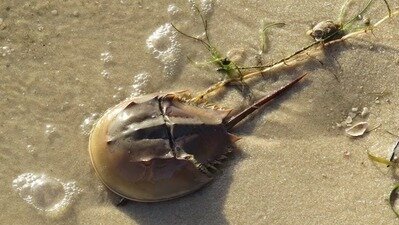

Protect Florida’s Ancient Horseshoe Crabs Before It’s Too Late
The Issue
For nearly half a billion years, horseshoe crabs have survived asteroid impacts, volcanic eruptions, and mass extinction events. But in 2026, it’s not nature that threatens them — it’s us.
Despite being older than the dinosaurs and critical to modern medicine, horseshoe crab populations have declined by more than 70% in recent decades. In Florida, these “living fossils” once crawled abundantly along nearly every coastline. Now, even in their strongholds — places like Indian River Lagoon, Cedar Key, and Apalachee Bay — they’re vanishing due to habitat loss, overharvesting, and climate change.
Why? Their blue, copper-rich blood contains a compound that makes medical equipment safe — something anyone who’s had a vaccine has benefited from. But over 1 million horseshoe crabs were harvested in 2024 alone, and safer synthetic alternatives already exist. Meanwhile, many are still taken for bait or the aquarium trade, especially in Florida.
Citizen scientists across the state are trying to help. Through programs like Florida Horseshoe Crab Watch, volunteers measure, tag, and release crabs to help researchers track them. But without stronger legal protections, even their dedicated efforts may not be enough.
A lawsuit by the Center for Biological Diversity now demands what the federal government has delayed for too long: real Endangered Species Act protections for horseshoe crabs. It’s time for Florida’s leaders and federal wildlife agencies to stop stalling.
We, the undersigned, urge:
- The National Marine Fisheries Service to immediately grant Endangered Species Act protections to horseshoe crabs.
- The Florida Fish and Wildlife Conservation Commission (FWC) to halt commercial harvests for bait and aquarium trade until population stability is confirmed.
- State and federal agencies to invest in non-extractive medical alternatives already proven effective in other countries.
These animals have saved human lives — now we must save theirs.
Sign to demand urgent protections for one of Florida’s most ancient and essential species before it’s too late.
159
The Issue
For nearly half a billion years, horseshoe crabs have survived asteroid impacts, volcanic eruptions, and mass extinction events. But in 2026, it’s not nature that threatens them — it’s us.
Despite being older than the dinosaurs and critical to modern medicine, horseshoe crab populations have declined by more than 70% in recent decades. In Florida, these “living fossils” once crawled abundantly along nearly every coastline. Now, even in their strongholds — places like Indian River Lagoon, Cedar Key, and Apalachee Bay — they’re vanishing due to habitat loss, overharvesting, and climate change.
Why? Their blue, copper-rich blood contains a compound that makes medical equipment safe — something anyone who’s had a vaccine has benefited from. But over 1 million horseshoe crabs were harvested in 2024 alone, and safer synthetic alternatives already exist. Meanwhile, many are still taken for bait or the aquarium trade, especially in Florida.
Citizen scientists across the state are trying to help. Through programs like Florida Horseshoe Crab Watch, volunteers measure, tag, and release crabs to help researchers track them. But without stronger legal protections, even their dedicated efforts may not be enough.
A lawsuit by the Center for Biological Diversity now demands what the federal government has delayed for too long: real Endangered Species Act protections for horseshoe crabs. It’s time for Florida’s leaders and federal wildlife agencies to stop stalling.
We, the undersigned, urge:
- The National Marine Fisheries Service to immediately grant Endangered Species Act protections to horseshoe crabs.
- The Florida Fish and Wildlife Conservation Commission (FWC) to halt commercial harvests for bait and aquarium trade until population stability is confirmed.
- State and federal agencies to invest in non-extractive medical alternatives already proven effective in other countries.
These animals have saved human lives — now we must save theirs.
Sign to demand urgent protections for one of Florida’s most ancient and essential species before it’s too late.
The Decision Makers

Petition Updates
Share this petition
Petition created on January 8, 2026