

Protect and Preserve the Amazon Rainforest
The Issue
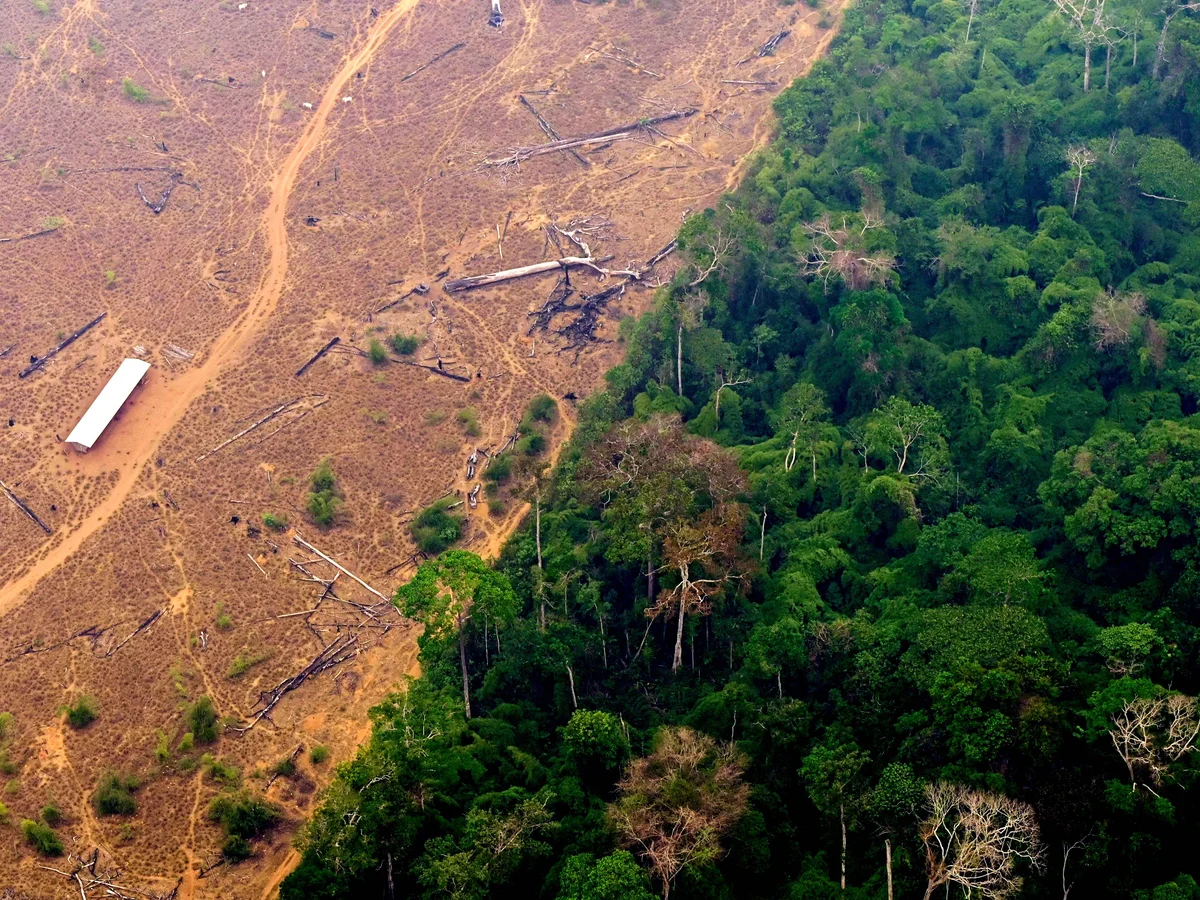
We, the undersigned students, urgently call for the protection and preservation of the Amazon rainforest, which is essential for our planet's ecosystem. Known as the "lungs of the Earth," the Amazon absorbs carbon dioxide and produces oxygen, playing a crucial role in regulating global climate. It is the world’s richest and most-varied biological reservoir, containing several million species of insects, plants, birds, and other forms of life, many still unrecorded by science.
But over the last 60 years, this great verdant tract has been increasingly threatened by deforestation. Clearing of the forest began in the 1960s and reached a peak in the 90s when an area the size of Spain was cleared. Between 2001 and 2020, the Amazon lost over 54.2 million hectares, or almost 9% of its forests, an area the size of France.
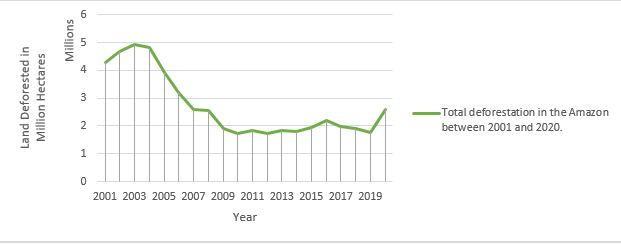
These deforestations are primarily to make space for livestock pasture and soybean production. However, the soils in the Amazon are productive for just a short period of time, so farmers are constantly moving to new areas and clearing more land. These farming practices led to deforestation and caused extensive environmental damage. Mining is also a major driver of deforestation. 17% of the area of the Amazon Rainforest is affected by mining. Although deforestation rates have now declined the forest is still gradually disappearing, reducing the region’s scale and biodiversity.
These deforestations lead to more carbon dioxide emissions than the forest can absorb. This not only contributes to global warming but also harms the health of surrounding communities due to air pollution.
We urge world leaders, particularly in Brazil, to enforce stricter regulations to combat deforestation, protect Indigenous lands, preserve the wildlife, and promote sustainable practices. By signing this petition, we commit to safeguarding the Amazon rainforest for a sustainable future free from global warming and air pollution.
Sources:
Britannica, The Editors of Encyclopaedia. "Amazon Rainforest". Encyclopedia Britannica, 6 Oct. 2024, https://www.britannica.com/place/Amazon-Rainforest
https://infoamazonia.org/en/2023/03/21/deforestation-in-the-amazon-past-present-and-future/
Rede Amazônica de Informação Socioambiental Georreferenciada ["Amazon Network of Georeferenced Socio-Environmental Information"] (RAISG)
Margulis, Sergio (2004). Causes of Deforestation of the Brazilian Amazon (PDF). World Bank Working Paper No. 22. Washington, DC: The World Bank. ISBN 978-0-8213-5691-3.
Sierra Praeli, Yvette. "The Amazon will reach tipping point if current trend of deforestation continues". Mongabay. Amazon Network of Georeferenced Socio-Environmental Information (RAISG).
Watkins and Griffiths, J. (2000). Forest Destruction and Sustainable Agriculture in the Brazilian Amazon: a Literature Review (Doctoral dissertation, The University of Reading, 2000). Dissertation Abstracts International, 15–17
Williams, M. (2006). Deforesting the Earth: From Prehistory to Global Crisis (Abridged ed.). Chicago: The University of Chicago Press. ISBN 978-0-226-89947-3.

834
The Issue
We, the undersigned students, urgently call for the protection and preservation of the Amazon rainforest, which is essential for our planet's ecosystem. Known as the "lungs of the Earth," the Amazon absorbs carbon dioxide and produces oxygen, playing a crucial role in regulating global climate. It is the world’s richest and most-varied biological reservoir, containing several million species of insects, plants, birds, and other forms of life, many still unrecorded by science.
But over the last 60 years, this great verdant tract has been increasingly threatened by deforestation. Clearing of the forest began in the 1960s and reached a peak in the 90s when an area the size of Spain was cleared. Between 2001 and 2020, the Amazon lost over 54.2 million hectares, or almost 9% of its forests, an area the size of France.
These deforestations are primarily to make space for livestock pasture and soybean production. However, the soils in the Amazon are productive for just a short period of time, so farmers are constantly moving to new areas and clearing more land. These farming practices led to deforestation and caused extensive environmental damage. Mining is also a major driver of deforestation. 17% of the area of the Amazon Rainforest is affected by mining. Although deforestation rates have now declined the forest is still gradually disappearing, reducing the region’s scale and biodiversity.
These deforestations lead to more carbon dioxide emissions than the forest can absorb. This not only contributes to global warming but also harms the health of surrounding communities due to air pollution.
We urge world leaders, particularly in Brazil, to enforce stricter regulations to combat deforestation, protect Indigenous lands, preserve the wildlife, and promote sustainable practices. By signing this petition, we commit to safeguarding the Amazon rainforest for a sustainable future free from global warming and air pollution.
Sources:
Britannica, The Editors of Encyclopaedia. "Amazon Rainforest". Encyclopedia Britannica, 6 Oct. 2024, https://www.britannica.com/place/Amazon-Rainforest
https://infoamazonia.org/en/2023/03/21/deforestation-in-the-amazon-past-present-and-future/
Rede Amazônica de Informação Socioambiental Georreferenciada ["Amazon Network of Georeferenced Socio-Environmental Information"] (RAISG)
Margulis, Sergio (2004). Causes of Deforestation of the Brazilian Amazon (PDF). World Bank Working Paper No. 22. Washington, DC: The World Bank. ISBN 978-0-8213-5691-3.
Sierra Praeli, Yvette. "The Amazon will reach tipping point if current trend of deforestation continues". Mongabay. Amazon Network of Georeferenced Socio-Environmental Information (RAISG).
Watkins and Griffiths, J. (2000). Forest Destruction and Sustainable Agriculture in the Brazilian Amazon: a Literature Review (Doctoral dissertation, The University of Reading, 2000). Dissertation Abstracts International, 15–17
Williams, M. (2006). Deforesting the Earth: From Prehistory to Global Crisis (Abridged ed.). Chicago: The University of Chicago Press. ISBN 978-0-226-89947-3.
Supporter Voices
Petition Updates
Share this petition
Petition created on October 7, 2024