

Protect Agricultural Heartland: Halt Oil/Gas Exploration in the Freestate
The Issue
Protect Our Agricultural Heartland!
Stand Against Oil and Gas Exploration in the Northeast Free State!
(sien ook vertaling in Afrikaans)
(Please request translation for Sotho and Xhosa)
Join us in safeguarding the livelihood that defines South Africa's food basket.
Please consider keeping us in the fight by contributing. We are up against corrupt government officials and big oil/gas companies paying bribes for exploration liscenses. We need all the support we can get: (Follow the link below)
https://www.backabuddy.co.za/campaign/halt-oilgas-exploration-in-the-freestate
Your voice matters—sign our petition today!
This is a petition to bring awareness about intended and damaging gas exploration in the hub of agriculture in the Free State.
The Government has approved exploration licensing without posing any renewable alternative solutions, all whilst the world shifting away from fossil fuels.
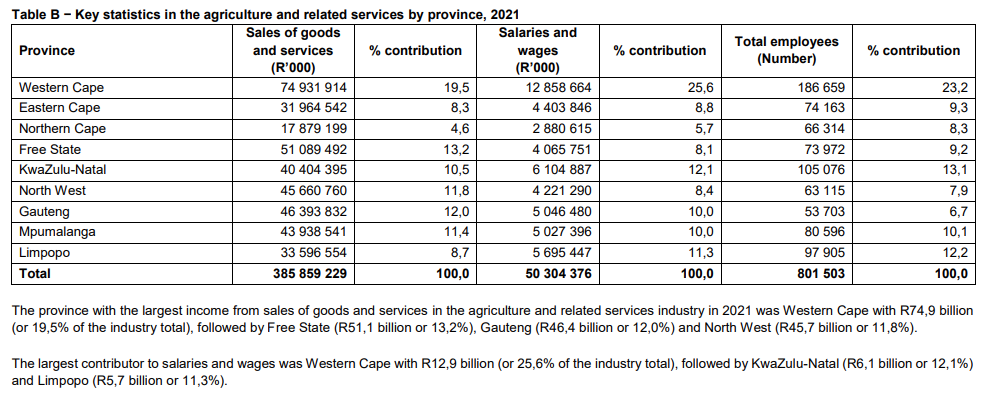
We demand proof and research that all alternative renewable avenues have been researched and weighed against the potential economic, social, agricultural, and food security threats. The Free State is considered a savannah with a semi-arid climate. Scarce water tributaries and groundwater systems provide crucial water to farming, feedstock, commercial drinking water and eventually major irrigation farming on the Vaal and Oranje rivers. Even with the current environmental factors the Farming industry in the Freestate is considered the "bread basket" of South Africa with approximately 30 000 farms contributing to R51.1 billion of agricultural and related services only surpassed by the Western Cape in 2021.
Main points of discussion:
Geology and drilling effects
JETP- Just energy transition partners
Food basket
Environment
Involvement
Goal
The THREAT:
If we don’t act now the chances are that we will transform our food-producing heartland into a chemical wasteland.
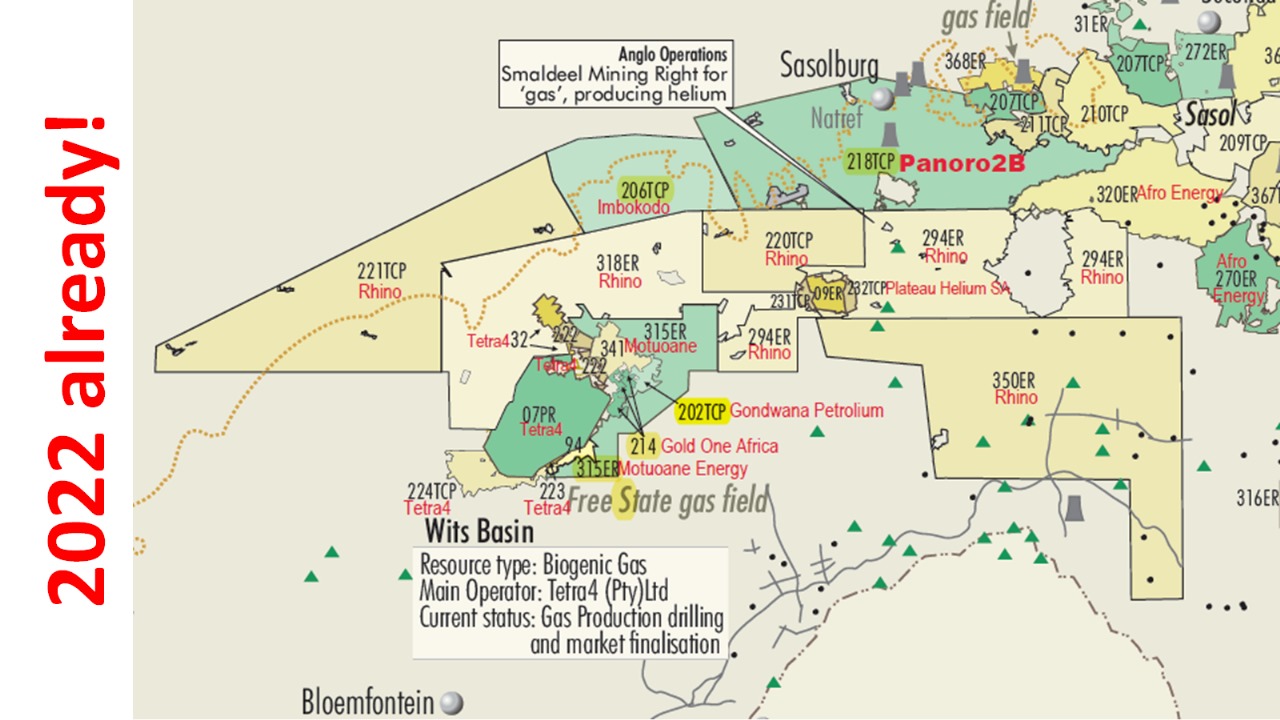
Various exploration companies have earmarked more than 5 million ha (12.355 million acres) for gas exploration in the northeast Free State. Oil corporations, using advanced drilling technology, can drill one hole and thereby contaminate entire regions in various directions. This is because methane and other gasses can leak into the streams and rivers that feed the big dams in our area.
The potential damage is not just to our lands, but as mentioned the water as well, an already precious commodity in our region. Each exploration hole that will be drilled will need between 2 million and 4.5 million litres of water and the holes can cause widespread contamination of our district's water tables. The largest portion of the 12.355-acre (5 million ha) exploration area surrounds the Vaal dam which supplies water to 46% of the economy in South Africa. Can you imagine what will happen to the water supply to Johannesburg and the RAND? Emissions of CO₂ when methane is used as fuel, is another negative factor and this is at a time when the whole world is trying to combat these emissions. The Karoo sediments that host these gasses are some 200 million years old and consist of numerous sedimentary rocks and sequences. These relatively soft rocks have been highly deformed during the destruction of the ancient Gondwanaland continent. It is highly brecciated and hardly a safe place to try and tap gas due to the high leakage that will occur in the Karoo rocks.
JUST ENERGY TRANSITION PARTNERSHIP
In November 2021, South Africa became a member of the JETP (Just Energy Transition Partnership), which includes the USA, UK, EU, France & Germany. This was in an attempt to drastically decrease South Africa’s dependency on both coal & fossil fuels. The total purse of the JETP agreement is US $8.5 billion. Despite the RSA agreeing to embark on a course of cleaner fuel and decreased CO₂ emissions, the Dept of Minerals & Energy and the Petroleum Agency of South Africa (PASA), thought it may be a good idea to present investors with a lucrative target area in the Free State to explore for methane gas and also make some illegal profit. The Dept of Minerals and Energy (and sub-ordinate PASA) have been involved in many legal tussles, regarding fraud, corruption and bribery of which Gwede Mantashe is the responsible Minister. (The Bengwenyama Trilogy: Constitutional Rights and the Fight for Prospecting on Community Land [2012] PER 44). Representatives of gas exploration companies have allegedly admitted to paying bribes for license approvals.
Food basket:
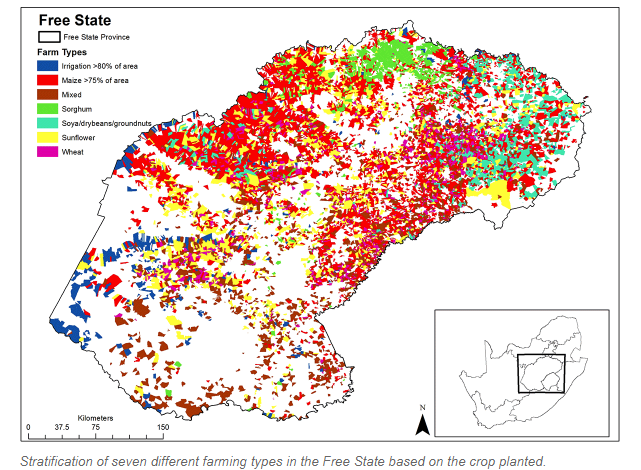
This area, however, is the country’s top producer of maize, soya, beans, sorghum and sunflower. Beef, mutton and potato production is also ranked very high. If so much food is produced here, not only for South Africa but for many of our neighbouring countries, how can we allow this area to go to waste? Is the possibility of gas production and destruction of arable land more important than food?
The Environment:
The lush savanna is not just a sight to behold but forms an ecosystem together with valuable, and sometimes, scarce groundwater.
Mammals
Based on the Red Data List, 1 species is categorised as critically endangered (Black Rhino), 4 endangered, 7 vulnerable and 9 near threatened. Guideline figures have been developed for the carrying capacity for mammal species in each provincial reserve to inform the decision on the number of animals to be removed. The issues concerning the impact of predation by caracal and black jackal on the total biodiversity of the area are probably the most urgent but most neglected conservation issue in Southern Africa.
Birds
There are sixteen Important Bird Areas in the Free State. Based on the Red Data List, 3 bird species are categorised as critically endangered (Rudd’s Lark, White-winged Flufftail and the Wattled Crane), 3 endangered, 24 vulnerable and 22 near threatened. Currently, most conservation work involving birds is of a monitoring nature. There are 26 species that are dependent either on grasslands, wetlands, or both habitats, which are currently inadequately conserved in protected areas.
Reptiles and Amphibians
Within the Free State there are six species of reptiles and one species of amphibian that on the IUCN Red Data list. Two species of reptiles are categorised as vulnerable and 4 species as near threatened. One species of amphibians is categorised as near threatened. No monitoring programmes are being undertaken at this time on any amphibians or reptiles in the Free State. Consequently, no specific information is available with respect to changes in population numbers or the disappearance of species from particular areas.
Arachnids
Although a Red Data list has not been compiled for Arachnida, three family groups are vulnerable in the Free State. The Arachnids of the Free State is still largely unknown, as little work has so far been done on these animals in this Province.
Fish
Only one species of fish is listed on the Red Data List and is categorised as threatened.
Plants
Conservation of grassland habitats is important for the protection of the listed Red Data plant species. Based on the Red Data List, 2 species are categorised as endangered, 7 vulnerable and 4 near threatened. (Source: Free State Province State of the Environment Report, 2009)
Involvement:
At the Free State Agriculture Congress (August 2024) various members gave their opinions on this matter. Fortunately, the agriculture industry’s leaders are united regarding this matter. In a recent publication of the
Network24/Netwerk24, the commercial manager of Free State Agriculture
(Vrystaat Landbou- VL), Dr. Jack Armour, assured the audience that VL will be against major gas and oil exploration and they are strongly supporting wind and solar energy. In the same article, Mr. Bennie van Zyl commented that there should be a balance between mining and agriculture. Mr. van Zyl, the general manager of the TLU SA (Transvaal Landbou Unie) recently also announced that the permits 2 issued for exploration are barely meeting the requirements and illegal mining activities are rife across South Africa. John Steenhuisen, Minister of Agriculture, has warned that the loss of farming land is a threat to sustainability. Clear requirements and strict control of mining activities are needed and must verified and checked by relevant authorities and frequent checks should be administered. Moreover, the agriculture in this area should not suffer due to mining initiatives. Rather, it should be documented that agriculture in the northeast Freestate takes precedence over any mining.
Different organisations are looking to start gas exploration in these areas:
Sasolburg, Heilbron, Cornelia, Frankfort, Villiers, Standerton, Vrede, Hartswater, Christiana, Bloemhof, Hoopstad, Hertzogville, Bultfontein, Odendaalsrus, Wesselsdorp, Bothaville, Viljoenskroon, Koppies, Mafokeng, Allanridge, Virginia, Maokeng, Lindley, Bethlehem Harrismith, Warden, Reitz etc.
The prime initiators of mining in our heartland these areas are listed below:
- Afro Energy
- Rhino Resources
- Panorao 2B Bpk
- Norwegian company listed on the London Stock Exchange.
- Tetra4
- SA Gas
Some of these companies have indicated that their gas production is for export only. Where is the benefit for South Africa then?
OUR GOAL:
I, Francois Martens, (M.Sc, Geology) act as the representative of various farmers’ unions, spanning 2.5 million ha in the districts from Standerton, Vrede, Cornelia, Villiers, Frankfort, Reitz, Heilbron, Sasolburg (including Riversdal, Moedersdeel, Hoogte, Gottenburg farmer unions, etc.). I also farm in said area. Our aim is to use the money of this campaign to oppose the Department of Minerals and Energy, as well as the Pasa Petroleum Agency of South Africa) in court. I have been opposing mining companies in said area since 2010 (5 different companies) and have never received any grants as I paid all travel and professional fees from my own pocket. Many of the previous companies were trying to obtain mining permits without following legal procedures.
Research has shown that even minimal petroleum activities can lead to drastic environmental changes. It is not just our living environment that would be impacted; the after-effects would certainly knock down the intricate agricultural, ecological, and social structure built over centuries (Source: Environmental Science & Technology Journal).
We must sustain what we have, rather than trade it away for short-term profits.
Sign this petition to support the safeguarding of our environment, livelihoods, and future generations.
RECENT PUBLICATIONS
1. https://www.netwerk24.com/netwerk24/nuus/omgewing/boereverset-teenontginning-van-aardgas-in-vrystaat-20240811
2. https://www.tlu.co.za/en/declare-agricultural-land-as-protected-areas-urges-tlusa/
3. https://afriforum.co.za/afriforum-kap-eksplorasiepermitte-virskaliegasontginning/
4. https://www.businesslive.co.za/bd/politics/2024-08-21-agricultural-land-at-riskfrom-property-and-mining-steenhuisen-says/
5. https://cer.org.za/news/environmental-authorisation-for-massive-gasextraction-expansion-set-aside-tetra4-renergen-sent-back-to-the-drawing-board
6. https://cer.org.za/news/shareholder-activism-questioning-the-financial-andenvironmental-sustainability-of-renergens-gas-projects
7. Numerous letters written to companies to address this dilemma
Afrikaans Translation
Verset in die Hart van die Noordoos-Vrystaat: 'n Oproep tot Aksie**
‘n Oproep tot Aksie teen gas en olie eksplorasie in die Vrystaat.
Jou ondersteuning maak saak – teken asb die petisie!
Meer as 5 miljoen hektaar (12.355 akker) is deur verkeie amaatskappye ge-oormerk vir gas eksplorasie in die Vrystaat. Hierdie maatskappye kan, met die boor van 1 gat, groot gebiede besoedel met gas wat lek uit pype….
Wat hierdie problem so ernstig maak, is die feit dat eksplorasie beoog word vir die gebied waar die meeste mielies, sorghum, soja, bone en sonneblom in Suid Afrika verbou word. Die produksie van bees- en skaapvleis en aartappels is ook baie hoog in hierdie area. Die geil savanna van die gebied is nie net sag op die oog nie, maar vorm ‘n ekosisteem wat in balans moet wees met die grondwater en damme waarin unieke voël- en dierspesies voorkom:
- Blou Korhaan (Bedreigde Lys),
- Grys Gekroonde Kraanvoël,
- Groengrug-Reier ,
- Swart Gekroonde Nagreier
- Reusagtige Gegordelde Son-Kyker (Bedreigde Lys)
- Suider Egel (skaars)
- Kaapse Vos (afnemende getalle).
Water is ‘n kosbare kommoditeit in hierdie gebied en delke boorgat wat geboor word, kan wye kontaminasie van watertafels veroorsaak. Die grootste deel van die (5 miljoen ha) ontginninggebied omring die Vaaldam wat water aan 46% van die ekonomie in Suid-Afrika verskaf. Emissies van CO₂ is nog 'n negatiewe faktor en dit in 'n tyd waar die hele wêreld probeer om hierdie emissies te bekamp.
**JUST ENERGY TRANSITION PARTNERSHIP**
In November 2021 het Suid-Afrika 'n lid van JETP (Just Energy Transition Partnership) geword, (wat die VSA, VK, EU, Frankryk en Duitsland insluit), in 'n poging om Suid-Afrika se afhanklikheid van beide steenkool en fossielbrandstowwe drasties te verminder. Die total bedrag van die JETP-ooreenkoms is US $8.5 miljard. Ondanks die RSA se ooreenkoms om 'n koers van skoner brandstof en verminderde CO₂-emissies te volg, het die Departement van Minerale en Energie en die Petroleumagentskap van Suid-Afrika (PASA) gedink dit mag 'n goeie idee wees om beleggers 'n winsgewende teikengebied in die Vrystaat aan te bied om na metaan-gas te ondersoek en ook 'n paar onwettige winste te maak.Dit blyk dat die Departement van Minerale en Energie (en die ondergeskikte PASA) betrokke was by onwettige lisensies.
(Die Bengwenyama-trilogie: Grondwetlike Regte en die Stryd vir prospeksie op Gemeenskapsgrond [2012] PER 44).
Verteenwoordigers van gasontginningsmaatskappye het eerlik erken dat hulle “onder die tafel vir hul lisensies betaal het”.
**ONS DOEL**
Ek, Francois Martens, (M.Sc. Geologie) verteenwoordig die boere unies wat Riversdal Boerevereniging, Moedersdeel B.V., Hoogte B.V., Gottenburg B.V. ensovoorts insluit en strek oor 'n gebied van sowat 2.5 miljoen ha, wat die distrikte van Standerton in die ooste tot Vrede, Cornelia, Villiers, Frankfort, Reitz, Heilbron en Sasolburg na die weste insluit. Ek boer ook in die genoemde gebied. Ons doel is om die geld van hierdie veldtog te gebruik om die Departement van Minerale en Energie, sowel as PASA (Petroleum Agentskap van Suid-Afrika) in die hof te teenstaan. Ek het sedert 2010 teen mynmaatskappye in die gebied opgetree (5 verskillende maatskappye) en het nog nooit enige toelaes ontvang nie, aangesien ekself vir my reiskoste en professionele kostes verantwoordelik was.

2,133
The Issue
Protect Our Agricultural Heartland!
Stand Against Oil and Gas Exploration in the Northeast Free State!
(sien ook vertaling in Afrikaans)
(Please request translation for Sotho and Xhosa)
Join us in safeguarding the livelihood that defines South Africa's food basket.
Please consider keeping us in the fight by contributing. We are up against corrupt government officials and big oil/gas companies paying bribes for exploration liscenses. We need all the support we can get: (Follow the link below)
https://www.backabuddy.co.za/campaign/halt-oilgas-exploration-in-the-freestate
Your voice matters—sign our petition today!
This is a petition to bring awareness about intended and damaging gas exploration in the hub of agriculture in the Free State.
The Government has approved exploration licensing without posing any renewable alternative solutions, all whilst the world shifting away from fossil fuels.
We demand proof and research that all alternative renewable avenues have been researched and weighed against the potential economic, social, agricultural, and food security threats. The Free State is considered a savannah with a semi-arid climate. Scarce water tributaries and groundwater systems provide crucial water to farming, feedstock, commercial drinking water and eventually major irrigation farming on the Vaal and Oranje rivers. Even with the current environmental factors the Farming industry in the Freestate is considered the "bread basket" of South Africa with approximately 30 000 farms contributing to R51.1 billion of agricultural and related services only surpassed by the Western Cape in 2021.
Main points of discussion:
Geology and drilling effects
JETP- Just energy transition partners
Food basket
Environment
Involvement
Goal
The THREAT:
If we don’t act now the chances are that we will transform our food-producing heartland into a chemical wasteland.
Various exploration companies have earmarked more than 5 million ha (12.355 million acres) for gas exploration in the northeast Free State. Oil corporations, using advanced drilling technology, can drill one hole and thereby contaminate entire regions in various directions. This is because methane and other gasses can leak into the streams and rivers that feed the big dams in our area.
The potential damage is not just to our lands, but as mentioned the water as well, an already precious commodity in our region. Each exploration hole that will be drilled will need between 2 million and 4.5 million litres of water and the holes can cause widespread contamination of our district's water tables. The largest portion of the 12.355-acre (5 million ha) exploration area surrounds the Vaal dam which supplies water to 46% of the economy in South Africa. Can you imagine what will happen to the water supply to Johannesburg and the RAND? Emissions of CO₂ when methane is used as fuel, is another negative factor and this is at a time when the whole world is trying to combat these emissions. The Karoo sediments that host these gasses are some 200 million years old and consist of numerous sedimentary rocks and sequences. These relatively soft rocks have been highly deformed during the destruction of the ancient Gondwanaland continent. It is highly brecciated and hardly a safe place to try and tap gas due to the high leakage that will occur in the Karoo rocks.
JUST ENERGY TRANSITION PARTNERSHIP
In November 2021, South Africa became a member of the JETP (Just Energy Transition Partnership), which includes the USA, UK, EU, France & Germany. This was in an attempt to drastically decrease South Africa’s dependency on both coal & fossil fuels. The total purse of the JETP agreement is US $8.5 billion. Despite the RSA agreeing to embark on a course of cleaner fuel and decreased CO₂ emissions, the Dept of Minerals & Energy and the Petroleum Agency of South Africa (PASA), thought it may be a good idea to present investors with a lucrative target area in the Free State to explore for methane gas and also make some illegal profit. The Dept of Minerals and Energy (and sub-ordinate PASA) have been involved in many legal tussles, regarding fraud, corruption and bribery of which Gwede Mantashe is the responsible Minister. (The Bengwenyama Trilogy: Constitutional Rights and the Fight for Prospecting on Community Land [2012] PER 44). Representatives of gas exploration companies have allegedly admitted to paying bribes for license approvals.
Food basket:
This area, however, is the country’s top producer of maize, soya, beans, sorghum and sunflower. Beef, mutton and potato production is also ranked very high. If so much food is produced here, not only for South Africa but for many of our neighbouring countries, how can we allow this area to go to waste? Is the possibility of gas production and destruction of arable land more important than food?
The Environment:
The lush savanna is not just a sight to behold but forms an ecosystem together with valuable, and sometimes, scarce groundwater.
Mammals
Based on the Red Data List, 1 species is categorised as critically endangered (Black Rhino), 4 endangered, 7 vulnerable and 9 near threatened. Guideline figures have been developed for the carrying capacity for mammal species in each provincial reserve to inform the decision on the number of animals to be removed. The issues concerning the impact of predation by caracal and black jackal on the total biodiversity of the area are probably the most urgent but most neglected conservation issue in Southern Africa.
Birds
There are sixteen Important Bird Areas in the Free State. Based on the Red Data List, 3 bird species are categorised as critically endangered (Rudd’s Lark, White-winged Flufftail and the Wattled Crane), 3 endangered, 24 vulnerable and 22 near threatened. Currently, most conservation work involving birds is of a monitoring nature. There are 26 species that are dependent either on grasslands, wetlands, or both habitats, which are currently inadequately conserved in protected areas.
Reptiles and Amphibians
Within the Free State there are six species of reptiles and one species of amphibian that on the IUCN Red Data list. Two species of reptiles are categorised as vulnerable and 4 species as near threatened. One species of amphibians is categorised as near threatened. No monitoring programmes are being undertaken at this time on any amphibians or reptiles in the Free State. Consequently, no specific information is available with respect to changes in population numbers or the disappearance of species from particular areas.
Arachnids
Although a Red Data list has not been compiled for Arachnida, three family groups are vulnerable in the Free State. The Arachnids of the Free State is still largely unknown, as little work has so far been done on these animals in this Province.
Fish
Only one species of fish is listed on the Red Data List and is categorised as threatened.
Plants
Conservation of grassland habitats is important for the protection of the listed Red Data plant species. Based on the Red Data List, 2 species are categorised as endangered, 7 vulnerable and 4 near threatened. (Source: Free State Province State of the Environment Report, 2009)
Involvement:
At the Free State Agriculture Congress (August 2024) various members gave their opinions on this matter. Fortunately, the agriculture industry’s leaders are united regarding this matter. In a recent publication of the
Network24/Netwerk24, the commercial manager of Free State Agriculture
(Vrystaat Landbou- VL), Dr. Jack Armour, assured the audience that VL will be against major gas and oil exploration and they are strongly supporting wind and solar energy. In the same article, Mr. Bennie van Zyl commented that there should be a balance between mining and agriculture. Mr. van Zyl, the general manager of the TLU SA (Transvaal Landbou Unie) recently also announced that the permits 2 issued for exploration are barely meeting the requirements and illegal mining activities are rife across South Africa. John Steenhuisen, Minister of Agriculture, has warned that the loss of farming land is a threat to sustainability. Clear requirements and strict control of mining activities are needed and must verified and checked by relevant authorities and frequent checks should be administered. Moreover, the agriculture in this area should not suffer due to mining initiatives. Rather, it should be documented that agriculture in the northeast Freestate takes precedence over any mining.
Different organisations are looking to start gas exploration in these areas:
Sasolburg, Heilbron, Cornelia, Frankfort, Villiers, Standerton, Vrede, Hartswater, Christiana, Bloemhof, Hoopstad, Hertzogville, Bultfontein, Odendaalsrus, Wesselsdorp, Bothaville, Viljoenskroon, Koppies, Mafokeng, Allanridge, Virginia, Maokeng, Lindley, Bethlehem Harrismith, Warden, Reitz etc.
The prime initiators of mining in our heartland these areas are listed below:
- Afro Energy
- Rhino Resources
- Panorao 2B Bpk
- Norwegian company listed on the London Stock Exchange.
- Tetra4
- SA Gas
Some of these companies have indicated that their gas production is for export only. Where is the benefit for South Africa then?
OUR GOAL:
I, Francois Martens, (M.Sc, Geology) act as the representative of various farmers’ unions, spanning 2.5 million ha in the districts from Standerton, Vrede, Cornelia, Villiers, Frankfort, Reitz, Heilbron, Sasolburg (including Riversdal, Moedersdeel, Hoogte, Gottenburg farmer unions, etc.). I also farm in said area. Our aim is to use the money of this campaign to oppose the Department of Minerals and Energy, as well as the Pasa Petroleum Agency of South Africa) in court. I have been opposing mining companies in said area since 2010 (5 different companies) and have never received any grants as I paid all travel and professional fees from my own pocket. Many of the previous companies were trying to obtain mining permits without following legal procedures.
Research has shown that even minimal petroleum activities can lead to drastic environmental changes. It is not just our living environment that would be impacted; the after-effects would certainly knock down the intricate agricultural, ecological, and social structure built over centuries (Source: Environmental Science & Technology Journal).
We must sustain what we have, rather than trade it away for short-term profits.
Sign this petition to support the safeguarding of our environment, livelihoods, and future generations.
RECENT PUBLICATIONS
1. https://www.netwerk24.com/netwerk24/nuus/omgewing/boereverset-teenontginning-van-aardgas-in-vrystaat-20240811
2. https://www.tlu.co.za/en/declare-agricultural-land-as-protected-areas-urges-tlusa/
3. https://afriforum.co.za/afriforum-kap-eksplorasiepermitte-virskaliegasontginning/
4. https://www.businesslive.co.za/bd/politics/2024-08-21-agricultural-land-at-riskfrom-property-and-mining-steenhuisen-says/
5. https://cer.org.za/news/environmental-authorisation-for-massive-gasextraction-expansion-set-aside-tetra4-renergen-sent-back-to-the-drawing-board
6. https://cer.org.za/news/shareholder-activism-questioning-the-financial-andenvironmental-sustainability-of-renergens-gas-projects
7. Numerous letters written to companies to address this dilemma
Afrikaans Translation
Verset in die Hart van die Noordoos-Vrystaat: 'n Oproep tot Aksie**
‘n Oproep tot Aksie teen gas en olie eksplorasie in die Vrystaat.
Jou ondersteuning maak saak – teken asb die petisie!
Meer as 5 miljoen hektaar (12.355 akker) is deur verkeie amaatskappye ge-oormerk vir gas eksplorasie in die Vrystaat. Hierdie maatskappye kan, met die boor van 1 gat, groot gebiede besoedel met gas wat lek uit pype….
Wat hierdie problem so ernstig maak, is die feit dat eksplorasie beoog word vir die gebied waar die meeste mielies, sorghum, soja, bone en sonneblom in Suid Afrika verbou word. Die produksie van bees- en skaapvleis en aartappels is ook baie hoog in hierdie area. Die geil savanna van die gebied is nie net sag op die oog nie, maar vorm ‘n ekosisteem wat in balans moet wees met die grondwater en damme waarin unieke voël- en dierspesies voorkom:
- Blou Korhaan (Bedreigde Lys),
- Grys Gekroonde Kraanvoël,
- Groengrug-Reier ,
- Swart Gekroonde Nagreier
- Reusagtige Gegordelde Son-Kyker (Bedreigde Lys)
- Suider Egel (skaars)
- Kaapse Vos (afnemende getalle).
Water is ‘n kosbare kommoditeit in hierdie gebied en delke boorgat wat geboor word, kan wye kontaminasie van watertafels veroorsaak. Die grootste deel van die (5 miljoen ha) ontginninggebied omring die Vaaldam wat water aan 46% van die ekonomie in Suid-Afrika verskaf. Emissies van CO₂ is nog 'n negatiewe faktor en dit in 'n tyd waar die hele wêreld probeer om hierdie emissies te bekamp.
**JUST ENERGY TRANSITION PARTNERSHIP**
In November 2021 het Suid-Afrika 'n lid van JETP (Just Energy Transition Partnership) geword, (wat die VSA, VK, EU, Frankryk en Duitsland insluit), in 'n poging om Suid-Afrika se afhanklikheid van beide steenkool en fossielbrandstowwe drasties te verminder. Die total bedrag van die JETP-ooreenkoms is US $8.5 miljard. Ondanks die RSA se ooreenkoms om 'n koers van skoner brandstof en verminderde CO₂-emissies te volg, het die Departement van Minerale en Energie en die Petroleumagentskap van Suid-Afrika (PASA) gedink dit mag 'n goeie idee wees om beleggers 'n winsgewende teikengebied in die Vrystaat aan te bied om na metaan-gas te ondersoek en ook 'n paar onwettige winste te maak.Dit blyk dat die Departement van Minerale en Energie (en die ondergeskikte PASA) betrokke was by onwettige lisensies.
(Die Bengwenyama-trilogie: Grondwetlike Regte en die Stryd vir prospeksie op Gemeenskapsgrond [2012] PER 44).
Verteenwoordigers van gasontginningsmaatskappye het eerlik erken dat hulle “onder die tafel vir hul lisensies betaal het”.
**ONS DOEL**
Ek, Francois Martens, (M.Sc. Geologie) verteenwoordig die boere unies wat Riversdal Boerevereniging, Moedersdeel B.V., Hoogte B.V., Gottenburg B.V. ensovoorts insluit en strek oor 'n gebied van sowat 2.5 miljoen ha, wat die distrikte van Standerton in die ooste tot Vrede, Cornelia, Villiers, Frankfort, Reitz, Heilbron en Sasolburg na die weste insluit. Ek boer ook in die genoemde gebied. Ons doel is om die geld van hierdie veldtog te gebruik om die Departement van Minerale en Energie, sowel as PASA (Petroleum Agentskap van Suid-Afrika) in die hof te teenstaan. Ek het sedert 2010 teen mynmaatskappye in die gebied opgetree (5 verskillende maatskappye) en het nog nooit enige toelaes ontvang nie, aangesien ekself vir my reiskoste en professionele kostes verantwoordelik was.
Petition Updates
Share this petition
Petition created on 15 August 2024