
Prevent the Ban on Carpet Fibres for use in Equestrian Surfaces in the UK
The Issue
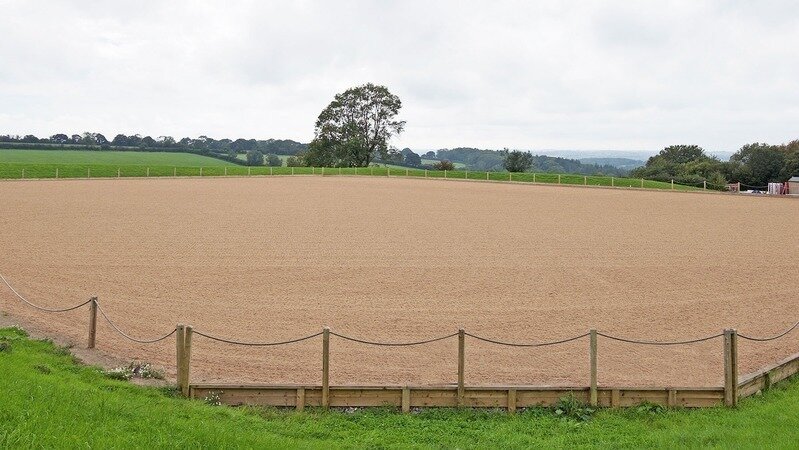
The use of carpet fibres in Equine Surfacing is an essential ingredient for equine surfacing in the UK. The fibres lock a surface together and provide a structural support for the horse to safely stay on top of the surface. It is essential that this material remains an option for the Industry to ensure all equine surfacing is the safest it can be.
The Environment Agency is currently considering a ban on the use of carpet material within equestrian surfacing. This change would not only significantly impact the safety of horses using equine surfaces but also pose a greater environmental threat. The proposed alternative is landfill/incineration which releases harmful gases into our atmosphere, causing more damage than any potential leaching of microplastics from a riding arena surface. Presently, landfill of carpet is banned in Wales and is likely to stretch out into the rest of UK within a number of years, therefore the 'alternate' which the Environment Agency are proposing is not sustainable.
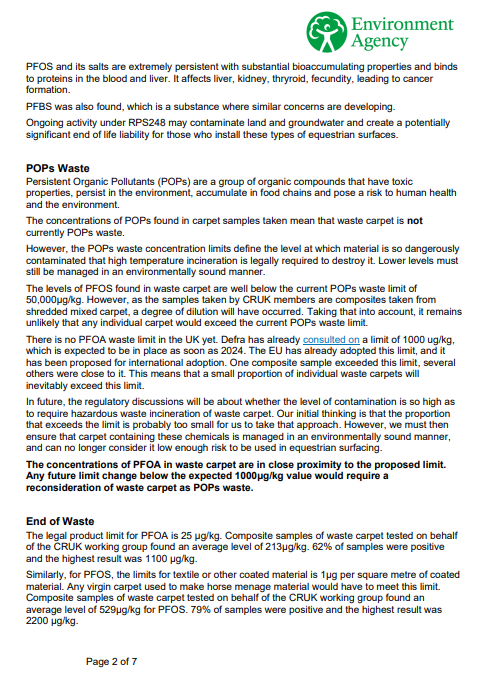
The reasoning against the ban is for the microplastics contained within the 'carpet fibre' material. The enviornment agency forced companies to provide testing of their own material to ensure this came under the recommended limit, set by Defra of 1,000 ug/kg, the testing which we undertook was returning results of between 500-600 ug/kg. Since presenting these results to the Environment Agency, they have changed the recommended limit to 25 ug/kg, which is significantly less than when the carpet is manufactured from source, therefore no material is ever going to be under this limit.
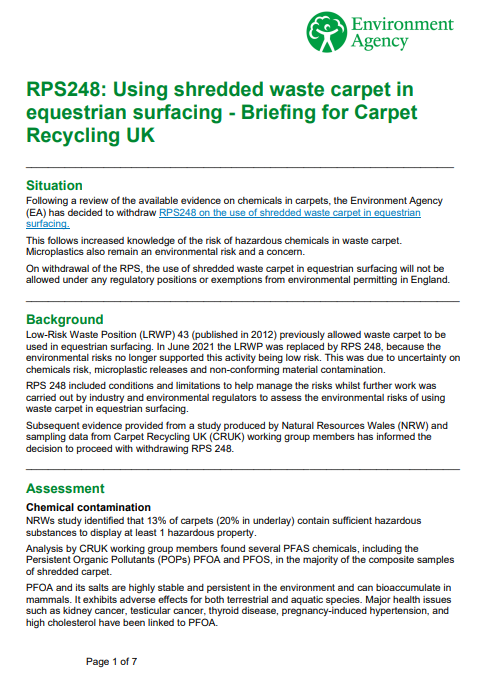
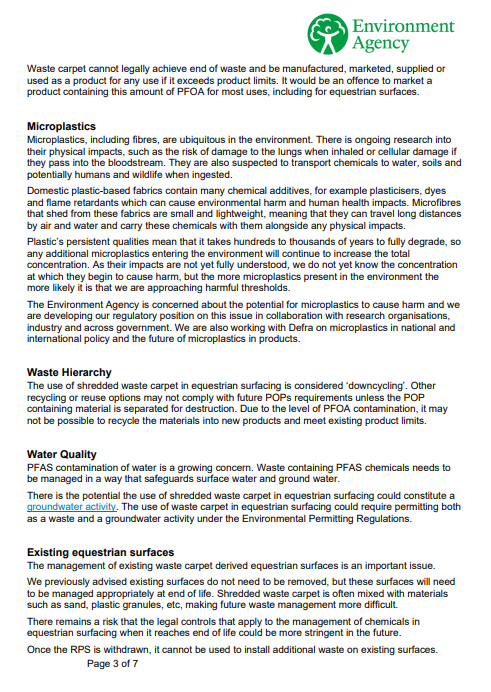
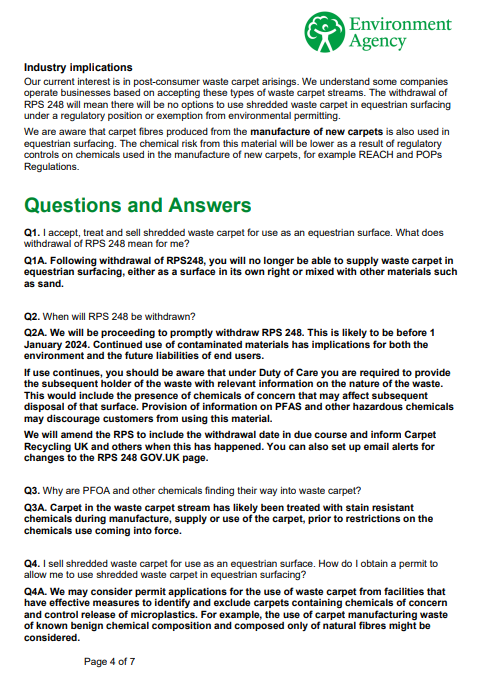
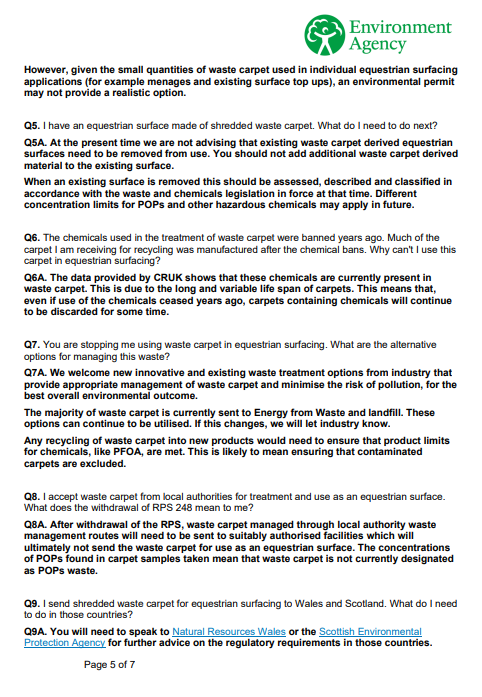
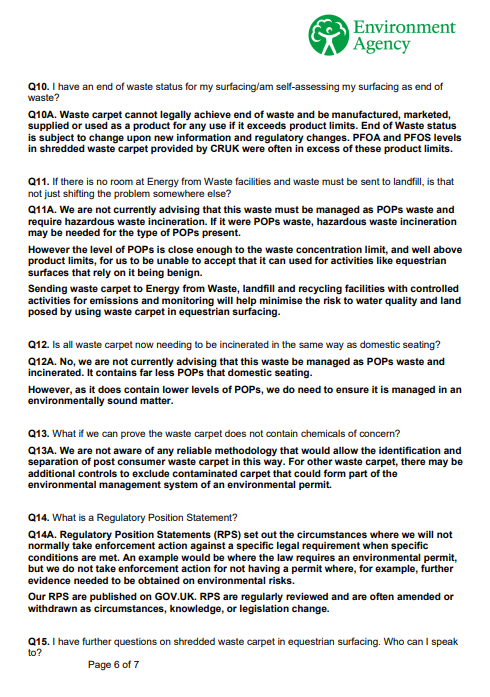
Along with this, the Environment Agency will not recognise any form of testing if presented with results showing a material is under the initial limit. As per their document included below, their wording is: "We are not aware of any reliable methodology that would allow the identification and separation of post consumer waste carpet in this way".
We understand and respect the need for environmental protection, however, we believe there must be a balanced approach that considers all aspects - including animal safety and industry needs. We urge the Environment Agency to reconsider this ban and work with the Industry towards finding sustainable solutions that will benefit both our environment and equestrians across the UK.
From the 1st of January 2024, the Environment Agency are stating no carpet fibres are to be used in equine surfacing going forward. This will be on the withdrawal of the RPS248. NO SUPPLIER will be able to supply an equine surface with the ingredient known as 'carpet fibre' included, whether this be waxed, non-waxed, virgin carpet or used carpet.
If this material is banned from being used, the alternate is a Sand and Rubber surface or just a sand surface. From a safety point of view, both of these surfaces would be incapable of coping with the rigourous training regimes in which the modern day horse has to perform. Whether this be in Showjumping, Dressage, the Racing Industry or any other Equine Discipine.
From a maintenance point of view, the fibre not only provides structure for the surface put provides a vital moisture retention tool for the surface. Without this, the surface would require a lot more water throughout the year to ensure some form of rideability. Using the racing insutry as an example, an all weather Racecourse would be forced to use in excess of 15,000 gallons of water every day to keep this surface moist enough for horses to use. At present, the surfaces on all weather tracks are no watered at all. Given there are 7 all weather tracks in the UK, we have serious reservations whether there is enough Water available to keep these tracks fit for purpose throughout the year for the racing industry.
As well as the water, the surface would need to be maintained (rolled / graded) 6 times per day, depending on the amount of horses using it. At present, it is done 2 times per day. The additional use of water, fuel, machinery, labour on this example alone has not been considered in terms of which option is going to be best for the environment.
On this example alone, at present there are 14,000 horses in training throughout the UK who all train on a surface which includes the use of 'carpet fibre' within that surface. From brief discussions with a number of trainers, they would not Gallop / Train their horses on a sand only surface.
Please sign this petition to support us in challenging this policy change by the Environment Agency to ensure the industry can continue to provide Safe equine surfacing for the Equestrian industry.

1,060
The Issue
The use of carpet fibres in Equine Surfacing is an essential ingredient for equine surfacing in the UK. The fibres lock a surface together and provide a structural support for the horse to safely stay on top of the surface. It is essential that this material remains an option for the Industry to ensure all equine surfacing is the safest it can be.
The Environment Agency is currently considering a ban on the use of carpet material within equestrian surfacing. This change would not only significantly impact the safety of horses using equine surfaces but also pose a greater environmental threat. The proposed alternative is landfill/incineration which releases harmful gases into our atmosphere, causing more damage than any potential leaching of microplastics from a riding arena surface. Presently, landfill of carpet is banned in Wales and is likely to stretch out into the rest of UK within a number of years, therefore the 'alternate' which the Environment Agency are proposing is not sustainable.
The reasoning against the ban is for the microplastics contained within the 'carpet fibre' material. The enviornment agency forced companies to provide testing of their own material to ensure this came under the recommended limit, set by Defra of 1,000 ug/kg, the testing which we undertook was returning results of between 500-600 ug/kg. Since presenting these results to the Environment Agency, they have changed the recommended limit to 25 ug/kg, which is significantly less than when the carpet is manufactured from source, therefore no material is ever going to be under this limit.
Along with this, the Environment Agency will not recognise any form of testing if presented with results showing a material is under the initial limit. As per their document included below, their wording is: "We are not aware of any reliable methodology that would allow the identification and separation of post consumer waste carpet in this way".
We understand and respect the need for environmental protection, however, we believe there must be a balanced approach that considers all aspects - including animal safety and industry needs. We urge the Environment Agency to reconsider this ban and work with the Industry towards finding sustainable solutions that will benefit both our environment and equestrians across the UK.
From the 1st of January 2024, the Environment Agency are stating no carpet fibres are to be used in equine surfacing going forward. This will be on the withdrawal of the RPS248. NO SUPPLIER will be able to supply an equine surface with the ingredient known as 'carpet fibre' included, whether this be waxed, non-waxed, virgin carpet or used carpet.
If this material is banned from being used, the alternate is a Sand and Rubber surface or just a sand surface. From a safety point of view, both of these surfaces would be incapable of coping with the rigourous training regimes in which the modern day horse has to perform. Whether this be in Showjumping, Dressage, the Racing Industry or any other Equine Discipine.
From a maintenance point of view, the fibre not only provides structure for the surface put provides a vital moisture retention tool for the surface. Without this, the surface would require a lot more water throughout the year to ensure some form of rideability. Using the racing insutry as an example, an all weather Racecourse would be forced to use in excess of 15,000 gallons of water every day to keep this surface moist enough for horses to use. At present, the surfaces on all weather tracks are no watered at all. Given there are 7 all weather tracks in the UK, we have serious reservations whether there is enough Water available to keep these tracks fit for purpose throughout the year for the racing industry.
As well as the water, the surface would need to be maintained (rolled / graded) 6 times per day, depending on the amount of horses using it. At present, it is done 2 times per day. The additional use of water, fuel, machinery, labour on this example alone has not been considered in terms of which option is going to be best for the environment.
On this example alone, at present there are 14,000 horses in training throughout the UK who all train on a surface which includes the use of 'carpet fibre' within that surface. From brief discussions with a number of trainers, they would not Gallop / Train their horses on a sand only surface.
Please sign this petition to support us in challenging this policy change by the Environment Agency to ensure the industry can continue to provide Safe equine surfacing for the Equestrian industry.
Petition Updates
Share this petition
Petition created on 16 October 2023