
Preserve the BBC Dari Service for Afghanistan
The Issue
To the BBC Dari Service,
Recent media reports indicate that some individuals have urged the BBC to reconsider its 2017 decision distinguishing between the BBC Dari Service and the BBC Farsi Service. These individuals advocate instead for retaining only a BBC Farsi Service, on the grounds that the two terms refer to the same language. While Dari, Farsi, and Tajiki are closely related dialects within a shared linguistic continuum, this issue is not merely linguistic; it is fundamentally a matter of national identity and constitutional law.
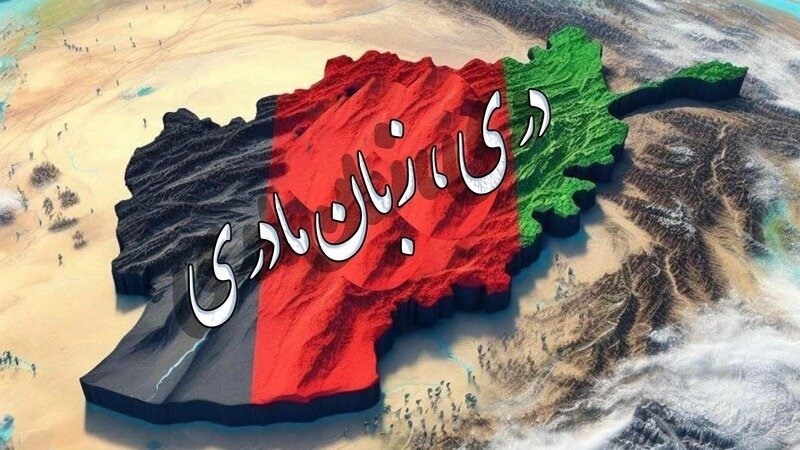
Afghanistan is a sovereign state with a clearly defined official name, national identity, and legal framework. Its people are Afghans, and under the Constitution of Afghanistan, Dari and Pashto are the country’s national and official languages. Any reference to Afghanistan, its nation, or its official languages that employs terminology other than that enshrined in the Constitution misrepresents Afghanistan’s legally defined identity.
Although Dari, Farsi, and Tajiki are widely recognized as closely related dialects within a single linguistic continuum, Dari differs significantly from both Farsi and Tajiki in phonetics, phonology, syntax, and idiomatic features. Farsi has undergone a century of de-Arabization, producing neologisms that include archaic grammatical constructs, innovative orthography, punctuation, and ligatures, thereby widening the gap between modern Farsi and the classical Dari of Rumi, Sanaee, and Ferdowsi. As a result, present-day written Iranian Farsi has increasingly diverged from Afghan Dari, and spoken Farsi is only marginally intelligible to the average Afghan. Conversely, classical Dari is understood only by well-educated Iranians. While some Afghan writers adopt these unfamiliar terms, such usage remains largely incomprehensible and unacceptable to the broader Afghan public.
Historically, Dari is the more accurate designation for the original literary koine that emerged from Parthian. This fact is documented, among others, by Ibn Muqana’, an eighth-century scholar from the Arabistan-e Khurasan region. Over the following two centuries, Arab settlers and armies who moved into Afghanistan and greater Central Asia adopted the Dari language under its Arabic misnomer, Farsi.
Literary works that are hallmarks of Islamic civilization were written in Dari, the language common to the land and people of Afghanistan. Not only were early poets such as Hazala Badghisi and Assad Soghdei from this region, but great masterpieces such as the Afarin-Namah of Abu Shukur Balkhi and the Goshtasp-Namah of Daqiqi Balkhi were also composed in Balkh, Afghanistan. Needless to say, the Shahnamah of Ferdowsi was likewise written in Dari and presented at the court of Mahmud of Ghazni.
Why, then, is Farsi a misnomer? In general, the first non-Arab ethnic group encountered by the Arabs of Mesopotamia was the Persians, whom they called Farsi in Arabic. Because the first non-Arab population encountered by Arabs in Mesopotamia was Persian, a broad and imprecise convention developed, labeling lands east of the Euphrates and their languages as Farsi (“Persian”). This convenience-based generalization was later extended to Dari and persisted despite its inaccuracy.
The politicization of linguistic identity in the twentieth century further entrenched this misnomer. Soviet policies in Central Asia led to the creation of Tajikistan as a linguistically defined state in 1929. In present-day Iran, a brief attempt in 1938 to restore the historically accurate name Dari was abandoned in favor of retaining Farsi for political reasons. In contrast, Afghanistan’s 1964 Constitution formally eliminated the term Farsi and restored Dari as one of the country’s official languages.
Accordingly, we respectfully request that the BBC acknowledge and adhere to Afghanistan’s constitutional and legal terminology in its broadcasts. Doing so would uphold accuracy, respect national sovereignty and cultural heritage, and reflect the BBC’s professional responsibility. We remain prepared to provide scholarly documentation in support of this position.
Very sincerely,
Ahmad

194
The Issue
To the BBC Dari Service,
Recent media reports indicate that some individuals have urged the BBC to reconsider its 2017 decision distinguishing between the BBC Dari Service and the BBC Farsi Service. These individuals advocate instead for retaining only a BBC Farsi Service, on the grounds that the two terms refer to the same language. While Dari, Farsi, and Tajiki are closely related dialects within a shared linguistic continuum, this issue is not merely linguistic; it is fundamentally a matter of national identity and constitutional law.
Afghanistan is a sovereign state with a clearly defined official name, national identity, and legal framework. Its people are Afghans, and under the Constitution of Afghanistan, Dari and Pashto are the country’s national and official languages. Any reference to Afghanistan, its nation, or its official languages that employs terminology other than that enshrined in the Constitution misrepresents Afghanistan’s legally defined identity.
Although Dari, Farsi, and Tajiki are widely recognized as closely related dialects within a single linguistic continuum, Dari differs significantly from both Farsi and Tajiki in phonetics, phonology, syntax, and idiomatic features. Farsi has undergone a century of de-Arabization, producing neologisms that include archaic grammatical constructs, innovative orthography, punctuation, and ligatures, thereby widening the gap between modern Farsi and the classical Dari of Rumi, Sanaee, and Ferdowsi. As a result, present-day written Iranian Farsi has increasingly diverged from Afghan Dari, and spoken Farsi is only marginally intelligible to the average Afghan. Conversely, classical Dari is understood only by well-educated Iranians. While some Afghan writers adopt these unfamiliar terms, such usage remains largely incomprehensible and unacceptable to the broader Afghan public.
Historically, Dari is the more accurate designation for the original literary koine that emerged from Parthian. This fact is documented, among others, by Ibn Muqana’, an eighth-century scholar from the Arabistan-e Khurasan region. Over the following two centuries, Arab settlers and armies who moved into Afghanistan and greater Central Asia adopted the Dari language under its Arabic misnomer, Farsi.
Literary works that are hallmarks of Islamic civilization were written in Dari, the language common to the land and people of Afghanistan. Not only were early poets such as Hazala Badghisi and Assad Soghdei from this region, but great masterpieces such as the Afarin-Namah of Abu Shukur Balkhi and the Goshtasp-Namah of Daqiqi Balkhi were also composed in Balkh, Afghanistan. Needless to say, the Shahnamah of Ferdowsi was likewise written in Dari and presented at the court of Mahmud of Ghazni.
Why, then, is Farsi a misnomer? In general, the first non-Arab ethnic group encountered by the Arabs of Mesopotamia was the Persians, whom they called Farsi in Arabic. Because the first non-Arab population encountered by Arabs in Mesopotamia was Persian, a broad and imprecise convention developed, labeling lands east of the Euphrates and their languages as Farsi (“Persian”). This convenience-based generalization was later extended to Dari and persisted despite its inaccuracy.
The politicization of linguistic identity in the twentieth century further entrenched this misnomer. Soviet policies in Central Asia led to the creation of Tajikistan as a linguistically defined state in 1929. In present-day Iran, a brief attempt in 1938 to restore the historically accurate name Dari was abandoned in favor of retaining Farsi for political reasons. In contrast, Afghanistan’s 1964 Constitution formally eliminated the term Farsi and restored Dari as one of the country’s official languages.
Accordingly, we respectfully request that the BBC acknowledge and adhere to Afghanistan’s constitutional and legal terminology in its broadcasts. Doing so would uphold accuracy, respect national sovereignty and cultural heritage, and reflect the BBC’s professional responsibility. We remain prepared to provide scholarly documentation in support of this position.
Very sincerely,
Ahmad
The Decision Makers
Supporter Voices
Petition Updates
Share this petition
Petition created on January 21, 2026