Please support our Hebridean islands: say no to MachairWind
The Issue
Hebridean Horizon is an islander-led campaign speaking up for our seas, landscapes, wildlife and communities. We are objecting to the proposed MachairWind offshore wind farm because we believe this exceptional place deserves careful, responsible protection, not industrialisation.
HOW TO TAKE ACTION
The opportunity to submit an objection to the Scottish Government has now closed, but the campaign will continue. To learn more about our campaign, and how to support us visit www.hebrideanhorizon.co.uk. The petition will continue to express public opinion until the MachairWind development is stopped.
Together we can protect the seas and islands we love. If you agree that the MachairWind wind farm should not go ahead, please add your voice by signing our petition.
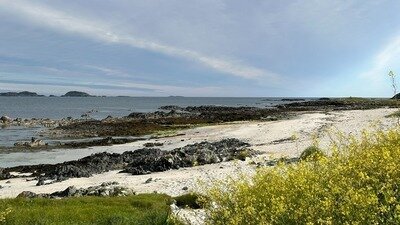
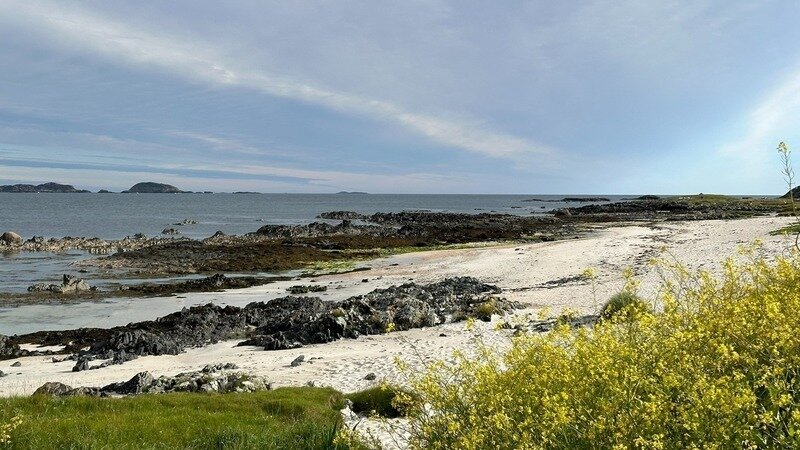
Our Inner Hebridean islands — Mull, Iona, Islay, Tiree, Ulva, Jura and Colonsay — are places where landscape, culture, wildlife and community life are deeply connected and shaped by the sea. These rich and beautiful seascapes sustain our communities, define our heritage and draw visitors from around the world. Our islands now face a major threat.
The proposed MachairWind development by Iberdrola — the Spanish energy company that owns ScottishPower Renewables — is an industrial development on a scale never before seen in the Inner Hebrides.
The wind farm would cover 448 km² of sea, with at least 91 turbines standing up to 340 metres high, within 6 miles of Colonsay, 10 miles of Islay and 13 miles of Mull and Iona. Each turbine would stand taller than the Eiffel Tower. MachairWind would industrialise an undeveloped nationally and internationally significant cultural and natural heritage. Offshore wind farm construction, together with turbine blades rotating at high speed, poses risks to bird and fish migratory routes, marine mammal habitats and behaviour, and the health of the seabed and its ecology.
If MachairWind is given consent in one of the most globally recognised, precious and wild landscapes, what meaningful protection will remain for our west coast environment and cultural heritage elsewhere?
Our islands have a very strong track record on renewables and net zero. Renewable energy matters, but location matters too. There is a profound difference between responsible renewable energy and sacrificing internationally important landscapes and ecosystems for industrial profit. According to ScottishPower Renewables, the MachairWind site was selected from 20 because of “ease of development”.
It is also important to ask whether this wind farm is needed. A very high percentage of energy currently generated in Scotland is being curtailed because there is not enough grid infrastructure to distribute it. Consumers pay more than £350 million each year to turn off turbines, and a further £1.1 billion to produce electricity from gas-fired power stations to meet demand elsewhere in the UK.
Protecting nature is central to truly green energy. MachairWind would bring economic, social and ecological harm, while offering no clear benefit to the host islands or to Scotland’s grid capacity.
10,905
The Issue
Hebridean Horizon is an islander-led campaign speaking up for our seas, landscapes, wildlife and communities. We are objecting to the proposed MachairWind offshore wind farm because we believe this exceptional place deserves careful, responsible protection, not industrialisation.
HOW TO TAKE ACTION
The opportunity to submit an objection to the Scottish Government has now closed, but the campaign will continue. To learn more about our campaign, and how to support us visit www.hebrideanhorizon.co.uk. The petition will continue to express public opinion until the MachairWind development is stopped.
Together we can protect the seas and islands we love. If you agree that the MachairWind wind farm should not go ahead, please add your voice by signing our petition.
Our Inner Hebridean islands — Mull, Iona, Islay, Tiree, Ulva, Jura and Colonsay — are places where landscape, culture, wildlife and community life are deeply connected and shaped by the sea. These rich and beautiful seascapes sustain our communities, define our heritage and draw visitors from around the world. Our islands now face a major threat.
The proposed MachairWind development by Iberdrola — the Spanish energy company that owns ScottishPower Renewables — is an industrial development on a scale never before seen in the Inner Hebrides.
The wind farm would cover 448 km² of sea, with at least 91 turbines standing up to 340 metres high, within 6 miles of Colonsay, 10 miles of Islay and 13 miles of Mull and Iona. Each turbine would stand taller than the Eiffel Tower. MachairWind would industrialise an undeveloped nationally and internationally significant cultural and natural heritage. Offshore wind farm construction, together with turbine blades rotating at high speed, poses risks to bird and fish migratory routes, marine mammal habitats and behaviour, and the health of the seabed and its ecology.
If MachairWind is given consent in one of the most globally recognised, precious and wild landscapes, what meaningful protection will remain for our west coast environment and cultural heritage elsewhere?
Our islands have a very strong track record on renewables and net zero. Renewable energy matters, but location matters too. There is a profound difference between responsible renewable energy and sacrificing internationally important landscapes and ecosystems for industrial profit. According to ScottishPower Renewables, the MachairWind site was selected from 20 because of “ease of development”.
It is also important to ask whether this wind farm is needed. A very high percentage of energy currently generated in Scotland is being curtailed because there is not enough grid infrastructure to distribute it. Consumers pay more than £350 million each year to turn off turbines, and a further £1.1 billion to produce electricity from gas-fired power stations to meet demand elsewhere in the UK.
Protecting nature is central to truly green energy. MachairWind would bring economic, social and ecological harm, while offering no clear benefit to the host islands or to Scotland’s grid capacity.
Supporter Voices
Petition Updates
Share this petition
Petition created on 28 June 2026