
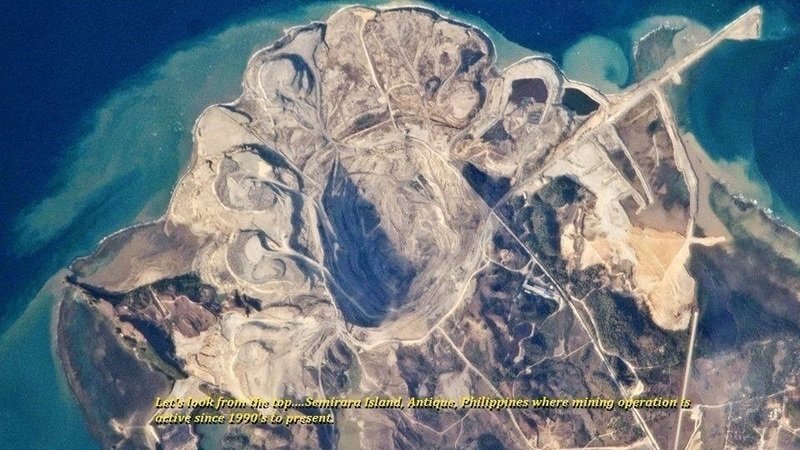
Please help Save Semirara Island and the rest of Antique Province: stop mining operations and junk all mining applications. Scrap or amend Philippine Mining Act of 1995 and the mining liberalization of the government.
Please help Save Semirara Island and the rest of Antique Province: stop mining operations and junk all mining applications. Scrap or amend Philippine Mining Act of 1995 and the mining liberalization of the government.
The Issue
Antique is a province rich in historical and cultural landmarks. As a matter of fact, it has distinctively obtained the recognition of being a long-lived monument of the Hispanic lifestyle acculturated by the Spaniards when they conquered the province in the 16th century. Whenever you are in the midst of the province, there is no way that you cannot feel the nostalgia of a time long gone.
At the heart of the Western Visayas region of the Philippines, that’s where the province of Antique (pronounced “ahn-tee-keh). The province is boarded by Aklan, Capiz and Iloilo to the east and the Sulu Sea to the west. The whole province of Antique consists of 18 municipalities, 14 of which are found along the coast, three are inland/upland and one island municipality.
The province of Antique is otherwise known as the “Land Where the Mountains Meet the Sea.” Agriculture is the primary industry of the province. Rice and copra is the two major agricultural commodities while fishing is the major source of livelihood of the households of the 14 coastal municipalities. Likewise, livestock and poultry raising as well as forest products like bamboo, rattan and buri (palm leaves) that are sold as raw materials in construction, furniture and handicraft industry are sources of livelihood of those in the inland municipalities.
The major products of Antique shipped out of the province are palay, rice, copra, muscovado sugar, legumes, fruits and vegetables, livestock, fish and fish preparations, and seaweeds. Manufactured items like native gifts, toys, and housewares have found their way in major cities of the country and abroad. Principal mined products exported include coal, marble, silica, copper, and gemstone. Lastly, Antique is among the seven top producer of seaweed in the Philippines. Seaweed farming generates employment to families in coastal areas and in allied services.
When Semirara Mining Corporation took over sometime in the 90’s the management and operation of coal mining from Semirara Coal Corp. in Semirara, a component island of the Muicipality of Caluya, Antique, residents started to feel disturbed of the presence of mining in their area. The community started to be bothered by the haze of coal dust.
After years of muffled grievance on haze of coal dust, the community finally had enough. A hundred or so of residents of Sitio Bigo, Alegria, one of the barrios in Semirara Island, in September 2008 signed a petition against coal mining pollution in their community. The petition, addressed to secretary of the Department of Environment and Natural Resources, complained not only about the contamination of the beach but also the destruction of mangrove forest coming from the coal washing plant of the Semirara Mining Co. The sources of livelihood of coastal communities, which are fishing and seaweed farming, have been badly affected due to the contamination. The pollution caused by coal dust likewise endangered the health of communities. More residents could have signed if they had not felt threatened by the presence of armed men and their mayor who was so fast in SMC’s defense. Despite of investigations of the Environment Management Bureau of the Department of Environment and Natural Resources and the Pollution Investigation Board, the SMC was able to flex its influence that it never been fined or stopped from operating for blatant disregard of the law but the company was just directed for compliance. We know that not only guns mute the weeping on this island. Cash clinks loud to silence from the local government units and concerned government agencies, even the media. “Mining breeds corruption.”
A group of marine biologists and representatives from the academe declared that a water is contaminated in most of the shorelines of Semirara Island.
This problem on pollution is recurrent and even gets worse as days go, however, the SMC is smart enough to find solution by securing a permit to reclaim the area, by dumping to the ocean tons of soil hauled from its open pit. Mangrove areas are affected, silted coming from the dumped soil in reclamation area.
The company seems to be the owner of Semirara Island that “it easily gets whatever it wants.” It keeps on extending its “reclamation area” but actually a dumping ground. The farther the SMC extends its dumping ground the more mangrove area, sea grass and coral reefs are destroyed, and more residents are divested of their source of living.
The Coal Operating Contract of Semirara Mining Corporation was set to expire in 2012, but as early as 2008 the Department of Energy extended the contract until 2027. In 2009, SMC was granted the right to explore for new operation sites on Caluya and Sibay Islands.This is too much already, that means new mining sites will be open by Semirara Mining Corporation.
On February 13, 2013, a massive landslide occurred in the Panian pit of Semirara Mining Corporation brought by continuous rain for almost a week. This claimed 10 lives. Of the 13 miners trapped, three were rescued alive, five were retrieved dead, and five were not recovered after over two weeks of rescue and retrieval operations. Some sources claim there were more casualties but were not declared by the company nor by the families of victims in consideration of a cash settlement of not less than PhP1,000,000.00 each and scholarship grants to their children. Even then that was the biggest number of casualties the company ever had in a landslide and the first time the incident was reported in public. Sources claim that there were landslides in the past which killed some workers but families of the victims were settled to silence.
Save Antique Movement, Inc (SAM), the concerned residents of Semirara Island and other non-government organizations condemned the irresponsible mining in Semirara Island. It was found out that SMC had no resident mining engineer to supervise the operations, a violation of mining law. The association and concerned residents of Semirara Island mull over the destructions, loss of lives and the social injustice caused by the SMC as a palpable violation of environmental laws, mining laws and human rights. This culpability warrants legal sanctions but the government still accorded SMC with all favors and mining incentives.
At present, SMC already started to open the Himalian mine. There are two events that drove the opening of Himalian mine: the demand for local coal exceeds 5 million MTs per year and the demand for cement went up especially after typhoon Yolanda which justified putting up a cement plant. The company see very ideal setting-up in opening Himalian mine to put up a cement plant right beside the pit since the overburden of Himalian is mainly limestone and silica, two major components of cement. The opening of Himalian mine will translate to more destructions, hundreds more of trees will be cut down, more displacement of communities and more pollution to take place.
There is now an intersection of industries – the mining, the seaweed farming, the agriculture farming and fishing. Tensions have risen as SMC is at its best to corner the island for its economic advancement. Community members foresee expansion of the SMC to other islands in the Municipality of Caluya will greatly affect their livelihood activities. There is widespread confusion about the status of lands they occupy, the mining rights of SMC and the development plans of the LGU, as well as the process to be followed to decide future mining developments.
Based on past experiences, many farmers and fishers feel that they have much to fear from the opaque nature of decisions in Caluya and the perceived ‘too-close’ partnership between the LGU and the Company. The LGU and company are linked very closely and at times it is difficult to tell whether projects, relocations, plans, and policies are being led by the government or the company. Many residents express that they feel disenfranchised by their municipal government since there are rarely public consultations and plans seem to come out of the blue.
On February 28, 2014, Semirara Mining Corporation sent its equipment and security force sent to Sitio Poocan of Barangay Tinogboc in Semirara Island to clear 5 hectares of farmland. There was no prior notice sent to farmers and residents that they have to vacate the land they occupied for over 30 years. All the more so, there was no prior consultation or offers of compensation to the improvements made by residents. Either the barangay officials were not notified of the eviction. Farmers and residents then set up a barricade when the equipment arrived and there was a standoff. Three days later, the town mayor came and presented a “Deed of Sale” stating that she personally, in behalf of the local government of Caluya, purchased the property. The town mayor failed to show any document to support her claim that the local government is putting up a housing project for residents from a nearby village, Sitio Sabang. The people of Sabang were likewise unaware of the alleged housing project as no project proposal was presented to them. Barangay (barrio) officials confessed they were not informed nor given of written relocation proposals and development plans for their respective villages from the office of the town mayor.The barricade of residents dispersed with the arrest of their leaders and the threat of arresting other protesters for illegal assembly. Those arrested were detained at the town’s prison cell on instructions by the mayor. After the arrest of two farmer-leaders, the demolition team succeeded in clearing the farmland without giving the farmers time to harvest their crops and salvage some materials of their houses. On the record of farmers and residents the demolition has flattened four hectares of rice field with crops about to be harvested; uprooted 245 coconut trees, 306 banana trees and over 600 fruit trees.
Also in the municipality of Libertad, Antique a small-scale silica mining has been operating for almost 20 years now and residents clamor on the effects of this mining activity to their health and the environment. Mining waste spilled to the river and to the ocean which destroyed the resident’s source of livelihood. The tailings go through the national road and dust fill the air when mud gets dry.
In the Municipality of Barbaza, Antique, the governor of the province of Antique granted a large-scale quarrying of sand and gravel, which are being shipped to other islands in the country. Residents are opposed to this quarrying operation as this does not only pose threat of floods in the future to their town but likewise consider this commercial quarry a daylight robbery as their town gets no share of revenues from the provincial governor’s office where permit holder directly pays its license fees and ore transport permits every time sand and gravel are shipped out.
At present, there are still pending applications for mining rights in the province of Antique and the MGB-DENR still accepts applications.
Mineral Industries Profile in Panay Island
Metallic Gold - Barbaza, Patnongon and Valderrama
Manganese - Belison, Pandan and Sibalom
Iron - Libertad
Non-Metallic
Marble - Libertad and Pandan
Silica - Libertad
Red-burning Clay - Tibiao and Caluya
Limestone - Culasi, Pandan and Libertad
Semi-Precious Gemstones - San Remegio and Sibalom

The Issue
Antique is a province rich in historical and cultural landmarks. As a matter of fact, it has distinctively obtained the recognition of being a long-lived monument of the Hispanic lifestyle acculturated by the Spaniards when they conquered the province in the 16th century. Whenever you are in the midst of the province, there is no way that you cannot feel the nostalgia of a time long gone.
At the heart of the Western Visayas region of the Philippines, that’s where the province of Antique (pronounced “ahn-tee-keh). The province is boarded by Aklan, Capiz and Iloilo to the east and the Sulu Sea to the west. The whole province of Antique consists of 18 municipalities, 14 of which are found along the coast, three are inland/upland and one island municipality.
The province of Antique is otherwise known as the “Land Where the Mountains Meet the Sea.” Agriculture is the primary industry of the province. Rice and copra is the two major agricultural commodities while fishing is the major source of livelihood of the households of the 14 coastal municipalities. Likewise, livestock and poultry raising as well as forest products like bamboo, rattan and buri (palm leaves) that are sold as raw materials in construction, furniture and handicraft industry are sources of livelihood of those in the inland municipalities.
The major products of Antique shipped out of the province are palay, rice, copra, muscovado sugar, legumes, fruits and vegetables, livestock, fish and fish preparations, and seaweeds. Manufactured items like native gifts, toys, and housewares have found their way in major cities of the country and abroad. Principal mined products exported include coal, marble, silica, copper, and gemstone. Lastly, Antique is among the seven top producer of seaweed in the Philippines. Seaweed farming generates employment to families in coastal areas and in allied services.
When Semirara Mining Corporation took over sometime in the 90’s the management and operation of coal mining from Semirara Coal Corp. in Semirara, a component island of the Muicipality of Caluya, Antique, residents started to feel disturbed of the presence of mining in their area. The community started to be bothered by the haze of coal dust.
After years of muffled grievance on haze of coal dust, the community finally had enough. A hundred or so of residents of Sitio Bigo, Alegria, one of the barrios in Semirara Island, in September 2008 signed a petition against coal mining pollution in their community. The petition, addressed to secretary of the Department of Environment and Natural Resources, complained not only about the contamination of the beach but also the destruction of mangrove forest coming from the coal washing plant of the Semirara Mining Co. The sources of livelihood of coastal communities, which are fishing and seaweed farming, have been badly affected due to the contamination. The pollution caused by coal dust likewise endangered the health of communities. More residents could have signed if they had not felt threatened by the presence of armed men and their mayor who was so fast in SMC’s defense. Despite of investigations of the Environment Management Bureau of the Department of Environment and Natural Resources and the Pollution Investigation Board, the SMC was able to flex its influence that it never been fined or stopped from operating for blatant disregard of the law but the company was just directed for compliance. We know that not only guns mute the weeping on this island. Cash clinks loud to silence from the local government units and concerned government agencies, even the media. “Mining breeds corruption.”
A group of marine biologists and representatives from the academe declared that a water is contaminated in most of the shorelines of Semirara Island.
This problem on pollution is recurrent and even gets worse as days go, however, the SMC is smart enough to find solution by securing a permit to reclaim the area, by dumping to the ocean tons of soil hauled from its open pit. Mangrove areas are affected, silted coming from the dumped soil in reclamation area.
The company seems to be the owner of Semirara Island that “it easily gets whatever it wants.” It keeps on extending its “reclamation area” but actually a dumping ground. The farther the SMC extends its dumping ground the more mangrove area, sea grass and coral reefs are destroyed, and more residents are divested of their source of living.
The Coal Operating Contract of Semirara Mining Corporation was set to expire in 2012, but as early as 2008 the Department of Energy extended the contract until 2027. In 2009, SMC was granted the right to explore for new operation sites on Caluya and Sibay Islands.This is too much already, that means new mining sites will be open by Semirara Mining Corporation.
On February 13, 2013, a massive landslide occurred in the Panian pit of Semirara Mining Corporation brought by continuous rain for almost a week. This claimed 10 lives. Of the 13 miners trapped, three were rescued alive, five were retrieved dead, and five were not recovered after over two weeks of rescue and retrieval operations. Some sources claim there were more casualties but were not declared by the company nor by the families of victims in consideration of a cash settlement of not less than PhP1,000,000.00 each and scholarship grants to their children. Even then that was the biggest number of casualties the company ever had in a landslide and the first time the incident was reported in public. Sources claim that there were landslides in the past which killed some workers but families of the victims were settled to silence.
Save Antique Movement, Inc (SAM), the concerned residents of Semirara Island and other non-government organizations condemned the irresponsible mining in Semirara Island. It was found out that SMC had no resident mining engineer to supervise the operations, a violation of mining law. The association and concerned residents of Semirara Island mull over the destructions, loss of lives and the social injustice caused by the SMC as a palpable violation of environmental laws, mining laws and human rights. This culpability warrants legal sanctions but the government still accorded SMC with all favors and mining incentives.
At present, SMC already started to open the Himalian mine. There are two events that drove the opening of Himalian mine: the demand for local coal exceeds 5 million MTs per year and the demand for cement went up especially after typhoon Yolanda which justified putting up a cement plant. The company see very ideal setting-up in opening Himalian mine to put up a cement plant right beside the pit since the overburden of Himalian is mainly limestone and silica, two major components of cement. The opening of Himalian mine will translate to more destructions, hundreds more of trees will be cut down, more displacement of communities and more pollution to take place.
There is now an intersection of industries – the mining, the seaweed farming, the agriculture farming and fishing. Tensions have risen as SMC is at its best to corner the island for its economic advancement. Community members foresee expansion of the SMC to other islands in the Municipality of Caluya will greatly affect their livelihood activities. There is widespread confusion about the status of lands they occupy, the mining rights of SMC and the development plans of the LGU, as well as the process to be followed to decide future mining developments.
Based on past experiences, many farmers and fishers feel that they have much to fear from the opaque nature of decisions in Caluya and the perceived ‘too-close’ partnership between the LGU and the Company. The LGU and company are linked very closely and at times it is difficult to tell whether projects, relocations, plans, and policies are being led by the government or the company. Many residents express that they feel disenfranchised by their municipal government since there are rarely public consultations and plans seem to come out of the blue.
On February 28, 2014, Semirara Mining Corporation sent its equipment and security force sent to Sitio Poocan of Barangay Tinogboc in Semirara Island to clear 5 hectares of farmland. There was no prior notice sent to farmers and residents that they have to vacate the land they occupied for over 30 years. All the more so, there was no prior consultation or offers of compensation to the improvements made by residents. Either the barangay officials were not notified of the eviction. Farmers and residents then set up a barricade when the equipment arrived and there was a standoff. Three days later, the town mayor came and presented a “Deed of Sale” stating that she personally, in behalf of the local government of Caluya, purchased the property. The town mayor failed to show any document to support her claim that the local government is putting up a housing project for residents from a nearby village, Sitio Sabang. The people of Sabang were likewise unaware of the alleged housing project as no project proposal was presented to them. Barangay (barrio) officials confessed they were not informed nor given of written relocation proposals and development plans for their respective villages from the office of the town mayor.The barricade of residents dispersed with the arrest of their leaders and the threat of arresting other protesters for illegal assembly. Those arrested were detained at the town’s prison cell on instructions by the mayor. After the arrest of two farmer-leaders, the demolition team succeeded in clearing the farmland without giving the farmers time to harvest their crops and salvage some materials of their houses. On the record of farmers and residents the demolition has flattened four hectares of rice field with crops about to be harvested; uprooted 245 coconut trees, 306 banana trees and over 600 fruit trees.
Also in the municipality of Libertad, Antique a small-scale silica mining has been operating for almost 20 years now and residents clamor on the effects of this mining activity to their health and the environment. Mining waste spilled to the river and to the ocean which destroyed the resident’s source of livelihood. The tailings go through the national road and dust fill the air when mud gets dry.
In the Municipality of Barbaza, Antique, the governor of the province of Antique granted a large-scale quarrying of sand and gravel, which are being shipped to other islands in the country. Residents are opposed to this quarrying operation as this does not only pose threat of floods in the future to their town but likewise consider this commercial quarry a daylight robbery as their town gets no share of revenues from the provincial governor’s office where permit holder directly pays its license fees and ore transport permits every time sand and gravel are shipped out.
At present, there are still pending applications for mining rights in the province of Antique and the MGB-DENR still accepts applications.
Mineral Industries Profile in Panay Island
Metallic Gold - Barbaza, Patnongon and Valderrama
Manganese - Belison, Pandan and Sibalom
Iron - Libertad
Non-Metallic
Marble - Libertad and Pandan
Silica - Libertad
Red-burning Clay - Tibiao and Caluya
Limestone - Culasi, Pandan and Libertad
Semi-Precious Gemstones - San Remegio and Sibalom
Petition Closed
Share this petition
The Decision Makers

Petition Updates
Share this petition
Petition created on 16 November 2014