Pave Leffert Road

Pave Leffert Road
The Issue
Leffert Road has remained unpaved since at least 2000. According to the town’s Pavement Conditions Map based on a 2021 evaluation, Leffert Road was considered in very poor condition, scoring 26-39 on a 0-100 scale. Despite this scoring, and repeated requests from us for many years, this hazardous condition has been allowed to persist, leaving our residents, pets, children, bicycles, and vehicles, susceptible to damage and injury.
Maintaining smooth pavements in good condition lengthens their life, enhances safety, reduces road user operating costs, reduces vehicle delays, reduces fuel consumption, reduces air pollution, and minimizes pavement maintenance costs. (Connecticut Annual Pavement Report, 2021).
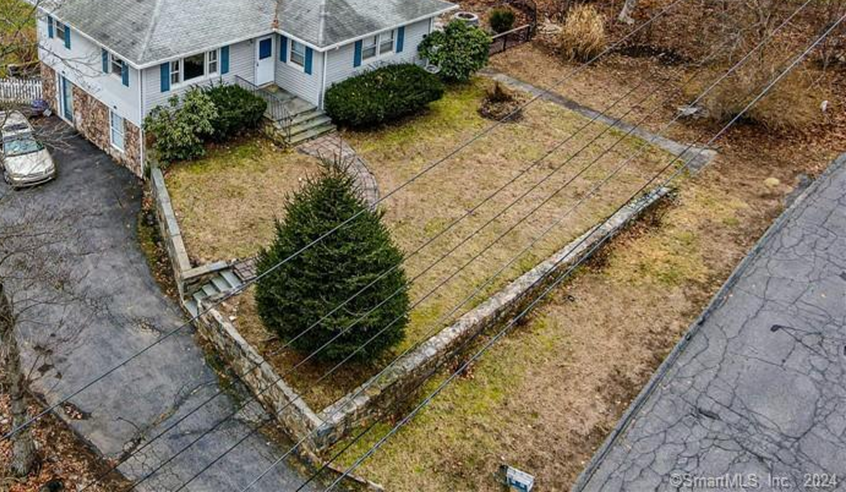
This is an aerial view of Leffert Road from 8 years ago, in 2017. Note the Alligator Cracks, Potholes and Block cracks that are easily observed here.
Following are photographs taken on Leffert Road in June of 2025, depicting the following issues close up that are of concern to us – alligator cracks, block cracking, potholes and upheavals.
This area shows quite a bit of upheaval, and severe alligator cracking.
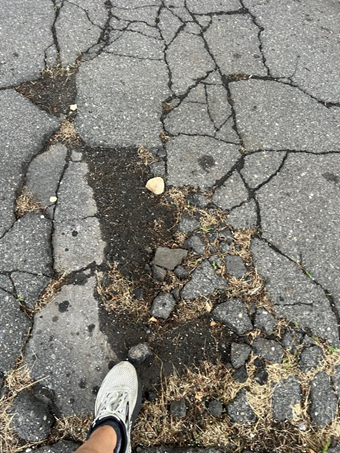
This photo illustrates the block cracking on Leffert Road.
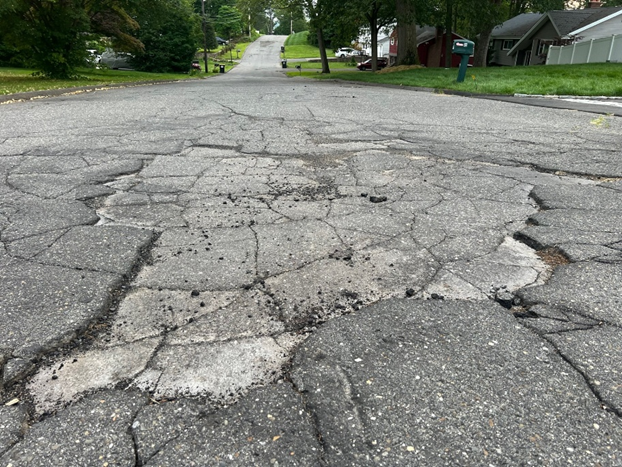
This image (below) shows cracking through multiple layers of asphalt, loose debris, and edges, all of which cause hazards to our residents, guests and travelers on Leffert Road, whether traveling on foot, bicycle, or motor vehicle.
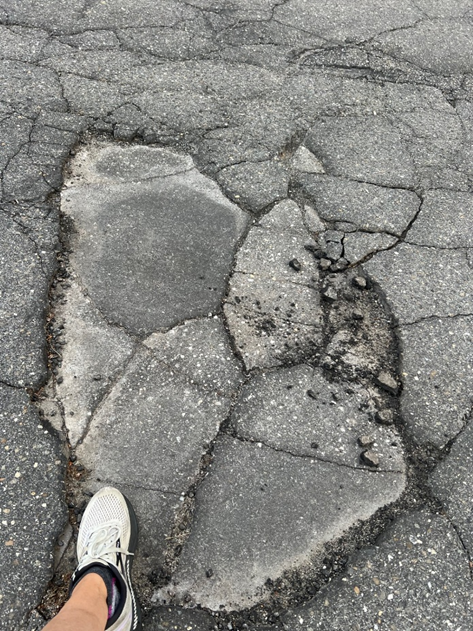
The image to the right shows the cracks going full thickness through the road, revealing the dirt beneath the road. The severe alligator cracking through the thickness of the road, creating hazardous conditions.
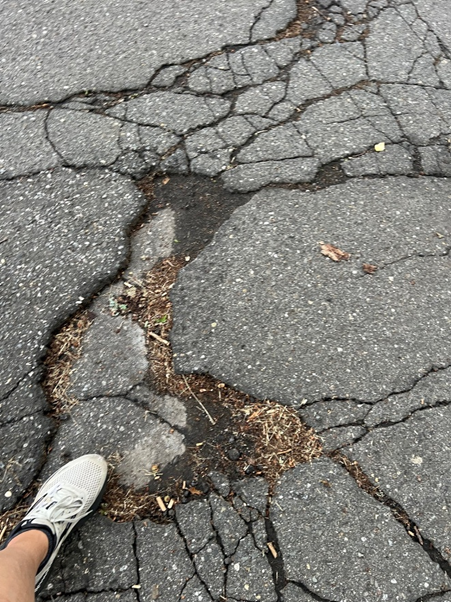
This past winter, one of your plow drivers slammed the plow into one of the edges of the cracks and upheavals, bringing his plow to a complete halt. Debris was left everywhere.
Below is information regarding these issues, and the sources that are being referenced.
Alligator Cracking
The type of crack observed in asphalt, which resembles the skin or back of an alligator, is commonly referred to as “alligator crack” or “crocodile cracking.” This name is derived from its resemblance to the pattern found on alligator skin. Alligator crack is characterized by interconnected cracks that form a series of small blocks on the surface of the asphalt pavement. The alligator cracking is due to a structural failure and the only possible solution to alligator cracking is to perform a full-depth patch. Source: https://civilengpro.com/12-types-of-cracks-in-asphalt-pavement/
Block Cracking
Block cracking is the formation of cracks on the pavement in a rectangular pattern in either direction of the flow of traffic. Source: https://civilengpro.com/12-types-of-cracks-in-asphalt-pavement/
Potholes
Small bowl-shaped depressions in the pavement surface penetrate all the way through the asphalt layer down to the base course. They generally have sharp edges and vertical sides near the top of the hole. (Source: 12 Types Of Cracks In Asphalt Pavement: Symptoms, Causes And Treatment Of Defects — Civil Engineering Profile) Not only are potholes a nuisance, but they also pose a serious safety hazard, often leading to vehicle damage and costly repairs.
Potholes create dangers for all road users.
For drivers, hitting a pothole at high speed can cause a sudden loss of control. Many drivers swerve to avoid them, which can lead to collisions. Potholes also cause tire blowouts and damage to vehicle suspension. These issues make cars harder to handle, increasing crash risks. (Source: How Poorly Maintained Roads Put Drivers at Risk - Safer America)
Motorcyclists face even greater danger. Unlike cars, motorcycles lack stability. Hitting a pothole can cause a rider to lose balance or be thrown off the bike. This leads to serious injuries or even fatalities. (Source: How Poorly Maintained Roads Put Drivers at Risk - Safer America)
Pedestrians and cyclists are also at risk. Potholes in crosswalks and sidewalks create tripping hazards. For cyclists, even a small pothole can cause a fall, leading to broken bones or collisions with vehicles. (Source: How Poorly Maintained Roads Put Drivers at Risk - Safer America)
Upheaval
Asphalt upheaval is caused when elements below the asphalt surface cause the soil underneath it to expand. The pressure from this movement not only leaves open space where water and moisture can enter the soil and freeze. As a result of moisture and freezing, the asphalt will often crack and become displaced. Because issues with asphalt upheaval stem in the pavement sub-grade, treatments like crack seal and seal coating are not sufficient. The best way to repair upheaval is to dig out the affected area of the pavement and base then replace with a full patch.
Trumbull has failed to analyze deficiencies and predict future needs of the transportation system, failed to allocate funding appropriately, and failed to schedule projects to address what is known as the ‘State of Good Repair’ (SOGR). CTDOT has adopted a set of Transportation Asset Management (TAM) objectives reflecting their objectives of:
• Attain the best asset conditions achievable given available resources, while striving towards a State of Good Repair
• Deliver an efficient and effective program to optimize the life of our infrastructure
• Improve communication and transparency regarding decisions and outcomes
• Achieve and maintain compliance with Federal requirements regarding asset management
We the undersigned demand that the residents of Leffert Road are provided with a properly paved road. They have paid taxes to the Town of Trumbull, like other residents, but have NOT been receiving the same benefits of SEWER, WATER and ROAD PAVING that the vast majority of the town receives. We demand to have a road that is safe to walk on, bicycle on, and travel on, a road that is safe for our local flora, fauna, and ecological system, and a road that no longer damages our tires, wheels, suspensions, vehicles, bicycles, and causes accidents.

154
The Issue
Leffert Road has remained unpaved since at least 2000. According to the town’s Pavement Conditions Map based on a 2021 evaluation, Leffert Road was considered in very poor condition, scoring 26-39 on a 0-100 scale. Despite this scoring, and repeated requests from us for many years, this hazardous condition has been allowed to persist, leaving our residents, pets, children, bicycles, and vehicles, susceptible to damage and injury.
Maintaining smooth pavements in good condition lengthens their life, enhances safety, reduces road user operating costs, reduces vehicle delays, reduces fuel consumption, reduces air pollution, and minimizes pavement maintenance costs. (Connecticut Annual Pavement Report, 2021).
This is an aerial view of Leffert Road from 8 years ago, in 2017. Note the Alligator Cracks, Potholes and Block cracks that are easily observed here.
Following are photographs taken on Leffert Road in June of 2025, depicting the following issues close up that are of concern to us – alligator cracks, block cracking, potholes and upheavals.
This area shows quite a bit of upheaval, and severe alligator cracking.
This photo illustrates the block cracking on Leffert Road.
This image (below) shows cracking through multiple layers of asphalt, loose debris, and edges, all of which cause hazards to our residents, guests and travelers on Leffert Road, whether traveling on foot, bicycle, or motor vehicle.
The image to the right shows the cracks going full thickness through the road, revealing the dirt beneath the road. The severe alligator cracking through the thickness of the road, creating hazardous conditions.
This past winter, one of your plow drivers slammed the plow into one of the edges of the cracks and upheavals, bringing his plow to a complete halt. Debris was left everywhere.
Below is information regarding these issues, and the sources that are being referenced.
Alligator Cracking
The type of crack observed in asphalt, which resembles the skin or back of an alligator, is commonly referred to as “alligator crack” or “crocodile cracking.” This name is derived from its resemblance to the pattern found on alligator skin. Alligator crack is characterized by interconnected cracks that form a series of small blocks on the surface of the asphalt pavement. The alligator cracking is due to a structural failure and the only possible solution to alligator cracking is to perform a full-depth patch. Source: https://civilengpro.com/12-types-of-cracks-in-asphalt-pavement/
Block Cracking
Block cracking is the formation of cracks on the pavement in a rectangular pattern in either direction of the flow of traffic. Source: https://civilengpro.com/12-types-of-cracks-in-asphalt-pavement/
Potholes
Small bowl-shaped depressions in the pavement surface penetrate all the way through the asphalt layer down to the base course. They generally have sharp edges and vertical sides near the top of the hole. (Source: 12 Types Of Cracks In Asphalt Pavement: Symptoms, Causes And Treatment Of Defects — Civil Engineering Profile) Not only are potholes a nuisance, but they also pose a serious safety hazard, often leading to vehicle damage and costly repairs.
Potholes create dangers for all road users.
For drivers, hitting a pothole at high speed can cause a sudden loss of control. Many drivers swerve to avoid them, which can lead to collisions. Potholes also cause tire blowouts and damage to vehicle suspension. These issues make cars harder to handle, increasing crash risks. (Source: How Poorly Maintained Roads Put Drivers at Risk - Safer America)
Motorcyclists face even greater danger. Unlike cars, motorcycles lack stability. Hitting a pothole can cause a rider to lose balance or be thrown off the bike. This leads to serious injuries or even fatalities. (Source: How Poorly Maintained Roads Put Drivers at Risk - Safer America)
Pedestrians and cyclists are also at risk. Potholes in crosswalks and sidewalks create tripping hazards. For cyclists, even a small pothole can cause a fall, leading to broken bones or collisions with vehicles. (Source: How Poorly Maintained Roads Put Drivers at Risk - Safer America)
Upheaval
Asphalt upheaval is caused when elements below the asphalt surface cause the soil underneath it to expand. The pressure from this movement not only leaves open space where water and moisture can enter the soil and freeze. As a result of moisture and freezing, the asphalt will often crack and become displaced. Because issues with asphalt upheaval stem in the pavement sub-grade, treatments like crack seal and seal coating are not sufficient. The best way to repair upheaval is to dig out the affected area of the pavement and base then replace with a full patch.
Trumbull has failed to analyze deficiencies and predict future needs of the transportation system, failed to allocate funding appropriately, and failed to schedule projects to address what is known as the ‘State of Good Repair’ (SOGR). CTDOT has adopted a set of Transportation Asset Management (TAM) objectives reflecting their objectives of:
• Attain the best asset conditions achievable given available resources, while striving towards a State of Good Repair
• Deliver an efficient and effective program to optimize the life of our infrastructure
• Improve communication and transparency regarding decisions and outcomes
• Achieve and maintain compliance with Federal requirements regarding asset management
We the undersigned demand that the residents of Leffert Road are provided with a properly paved road. They have paid taxes to the Town of Trumbull, like other residents, but have NOT been receiving the same benefits of SEWER, WATER and ROAD PAVING that the vast majority of the town receives. We demand to have a road that is safe to walk on, bicycle on, and travel on, a road that is safe for our local flora, fauna, and ecological system, and a road that no longer damages our tires, wheels, suspensions, vehicles, bicycles, and causes accidents.
154
The Decision Makers

Supporter Voices
Petition Updates
Share this petition
Petition created on June 27, 2025