

Pass the Pollinator Protection & Restoration Act
The Issue
Bees are vital for our survival, and I hold them dear to my heart. They play a crucial role in pollinating the crops that provide us with a vast majority of the food we consume. Without bees, our agricultural system and entire ecosystem could collapse, leading to catastrophic consequences for life as we know it. But, right now, bees are in danger due to the rampant use of harmful pesticides.
Many of these pesticides are highly toxic and have been directly linked to the decline in bee populations worldwide. Studies have shown that pesticides adversely affect bees' ability to forage, navigate, and reproduce. According to a report from the Center for Pollinator Research, in the last decade alone, bee populations have declined by over 30% due to pesticide exposure.
To tackle this pressing issue, we must hold pesticide companies accountable by instituting a financial charge similar to a 401(k) for their use. This fee would not only act as a deterrent against the overuse of harmful chemicals but also fund vital research to develop bee-friendly alternatives.
Implementing this charge can pave the way for more sustainable ecological practices that prioritize the health of our bee populations. Join me in urging environmental agencies and lawmakers to impose these necessary fees on pesticide use. Together, we can create a safer world for bees and, in turn, for ourselves.
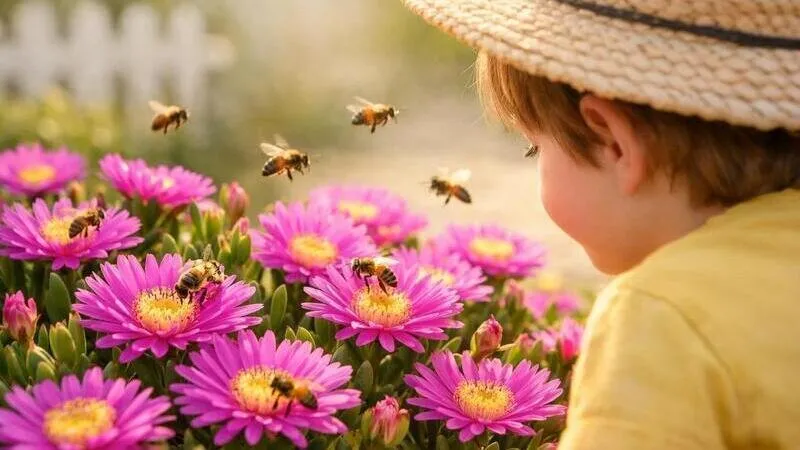
Growing up, I always loved bees. Some of my fondest memories are the iceplants in our front yard, always buzzing with life I'd watch the bees drift from flower to flower for hours, and sometimes gently catch one in a bottle just to see it up close before letting it fly off. That sound, that buzzing, meant the world was alive.
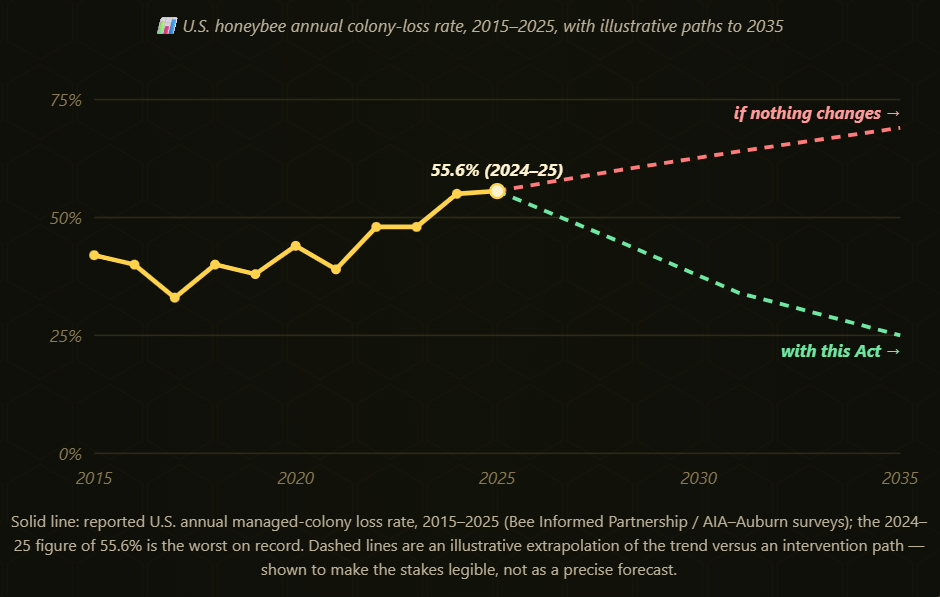
Today those bees are in trouble. U.S. beekeepers lose up to half their colonies in bad years, and more than 40% of wild pollinators are now at risk of extinction. A major driver is pesticides — the EPA's own restrictions on neonicotinoids reflect how damaging these chemicals are to bees. Pollinators are behind roughly one in three bites of our food, so this isn't only about bees; it's about our food and our future.
The Pollinator Protection and Restoration Act offers a simple, fair fix. It places a small 1% levy on the makers and sellers of bee-toxic pesticides — pennies per unit, barely felt — and puts that money into a locked national Pollinator Protection Fund. The people contributing to the problem help pay for the recovery.
That fund would restore native plants and habitat, build safe sanctuaries where bees can thrive, support bee breeding-and-release programs like the ones that brought back the bald eagle, and pay for ongoing research. This isn't a punishment or a new burden — it's the same model America already uses, from the Pittman-Robertson wildlife fund to the habitat offsets we already require for wetlands and power projects. We're simply adding pollinators.
This is about leaving something better for the next generation. I want my own kid — and every kid — to grow up in a world that still hums with bees, the way mine did. Please join me in supporting the Pollinator Protection and Restoration Act. Sign today, share it, and let's bring them back.

44
The Issue
Bees are vital for our survival, and I hold them dear to my heart. They play a crucial role in pollinating the crops that provide us with a vast majority of the food we consume. Without bees, our agricultural system and entire ecosystem could collapse, leading to catastrophic consequences for life as we know it. But, right now, bees are in danger due to the rampant use of harmful pesticides.
Many of these pesticides are highly toxic and have been directly linked to the decline in bee populations worldwide. Studies have shown that pesticides adversely affect bees' ability to forage, navigate, and reproduce. According to a report from the Center for Pollinator Research, in the last decade alone, bee populations have declined by over 30% due to pesticide exposure.
To tackle this pressing issue, we must hold pesticide companies accountable by instituting a financial charge similar to a 401(k) for their use. This fee would not only act as a deterrent against the overuse of harmful chemicals but also fund vital research to develop bee-friendly alternatives.
Implementing this charge can pave the way for more sustainable ecological practices that prioritize the health of our bee populations. Join me in urging environmental agencies and lawmakers to impose these necessary fees on pesticide use. Together, we can create a safer world for bees and, in turn, for ourselves.
Growing up, I always loved bees. Some of my fondest memories are the iceplants in our front yard, always buzzing with life I'd watch the bees drift from flower to flower for hours, and sometimes gently catch one in a bottle just to see it up close before letting it fly off. That sound, that buzzing, meant the world was alive.
Today those bees are in trouble. U.S. beekeepers lose up to half their colonies in bad years, and more than 40% of wild pollinators are now at risk of extinction. A major driver is pesticides — the EPA's own restrictions on neonicotinoids reflect how damaging these chemicals are to bees. Pollinators are behind roughly one in three bites of our food, so this isn't only about bees; it's about our food and our future.
The Pollinator Protection and Restoration Act offers a simple, fair fix. It places a small 1% levy on the makers and sellers of bee-toxic pesticides — pennies per unit, barely felt — and puts that money into a locked national Pollinator Protection Fund. The people contributing to the problem help pay for the recovery.
That fund would restore native plants and habitat, build safe sanctuaries where bees can thrive, support bee breeding-and-release programs like the ones that brought back the bald eagle, and pay for ongoing research. This isn't a punishment or a new burden — it's the same model America already uses, from the Pittman-Robertson wildlife fund to the habitat offsets we already require for wetlands and power projects. We're simply adding pollinators.
This is about leaving something better for the next generation. I want my own kid — and every kid — to grow up in a world that still hums with bees, the way mine did. Please join me in supporting the Pollinator Protection and Restoration Act. Sign today, share it, and let's bring them back.
The Decision Makers


Supporter Voices
Petition Updates
Share this petition
Petition created on June 13, 2026