Pass Danielle’s Law: Missing Children Cases Deserve Immediate Action
The Issue
Every Question and Second Count
When handling a missing child case, asking the right questions systematically is crucial to gather actionable information and immediately implement search efforts. Danielle’s Law requires that a missing person report be structured around a list of questions and reporting requirements to guide investigators to the quick recovery of missing children.
Danielle’s Story: A System’s Failure
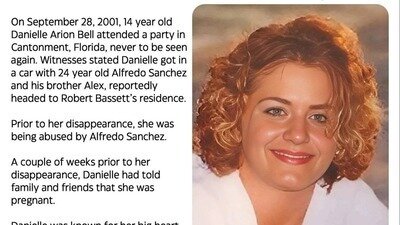
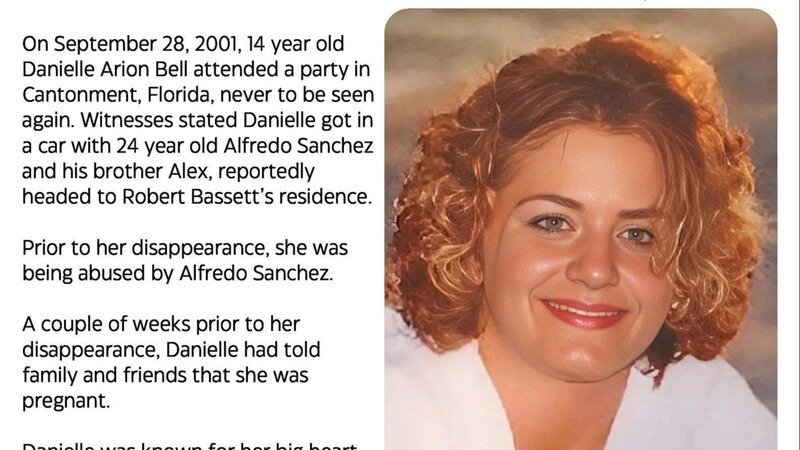
Hi, my name is Bonnie and my sister Danielle Arion Bell, a 14-year-old from Escambia County, Florida, vanished on September 28, 2001, after attending a party hosted by Robert Bassett, a felon linked to predatory adults like Alfredo Sanchez. Despite red flags—Danielle’s pregnancy, her being abused by 24-year-old Sanchez, and our mother’s neglect—authorities dismissed her as a “runaway”. Critical questions about her safety, social connections, and potential grooming were never asked. For 23 years, our family has fought for answers while battling systemic technicalities that have delayed answers in her case.
Key Failures in Danielle’s Case:
Police ignored reports of her “relationship” with an older predator.
No immediate search of the party location or suspects’ homes.
Misclassified as a “runaway,” delaying Amber Alerts and public alerts.
Critical evidence (phone records, witness statements) was overlooked.
Danielle’s case is not unique. Thousands of missing children are failed by outdated protocols that prioritize assumptions over facts.
Florida’s Current Alert System & The Gap
Florida currently has multiple alert systems, but they each have specific criteria that can exclude children like Danielle:
AMBER Alert: Requires law enforcement to have reasonable evidence that a child has been abducted and is in imminent danger of death or serious injury. The child must be under 18, and sufficient descriptive information must be available. In Florida, the FDLE issues these alerts in coordination with local agencies.
Missing Child Alert: Established in 2003, this applies to children under 18 who are missing and believed to be in danger of death or serious bodily injury, but where there is no indication of abduction. It requires: (1) child under 18, (2) well-founded belief of danger of death/serious injury, (3) detailed description/photo, and (4) local law enforcement recommendation. An Enhanced version can trigger wireless alerts if imminent danger is found.
Silver Alert: Applies to individuals 60+ with irreversible deterioration of intellectual faculties (e.g., Alzheimer's/dementia), or ages 18-59 who lack capacity to consent.
Purple Alert: Applies to missing adults suffering from mental, cognitive, intellectual, or developmental disabilities who do not meet Silver Alert criteria .
The Problem: Danielle was classified as a "runaway," which meant she did not qualify for any of these systems—no AMBER Alert, no Missing Child Alert. Her case illustrates the gap: a child can be in danger, yet fall through the cracks because of classification technicalities.
Why Danielle’s Law Matters
Danielle’s Law transforms how missing child cases are handled by mandating structured, urgent action to prevent tragedies like Danielle’s.
Key Provisions:
Eliminate the “Runaway” Label
A missing child is a missing child—no exceptions. The label “runaway” delays lifesaving resources.
Mandatory Investigative Questions
Require law enforcement to systematically gather:
Relationships: Was the child involved with older adults? (Like Danielle and Sanchez.)
Technology: Track devices/social media for grooming or threats.
Medical Needs: Does the child require medication?
Immediate Risks: Signs of abduction, trafficking, child neglect, or coercion.
Immediate Action
Deploy a search team (K-9, dive units) within 6 hours.
Secure electronic evidence (phones, social media, last known location) before it’s deleted.
Alert schools, transit hubs, and national databases (NCMEC/NAMUS) instantly.
Hold Guardians Accountable
Prosecute parents who delay reporting, as Danielle’s mother did for days.
Transparency & Training
Require officers to document all steps and receive annual training on trauma-informed interviews.
How Danielle’s Law Would Have Changed Her Story
Hour 6: Search teams would have searched nearby rivers and last known locations.
Day 1: Police would have asked our mother why she waited so long to call the police and pursued child neglect charges.
Day 2: Police would have questioned family and friends to find out that Danielle was being abused by 24 year old Alfredo Sanchez and would have pressed charges for his predatory behavior.
No “Runaway” Myth: Resources like Missing Child Alerts would have been triggered immediately based on danger, not abduction status.
Call to Action
Danielle’s Law honors her memory by ensuring no child is dismissed, no family ignored, and no predator protected. Sign this petition to demand legislators:
Pass Danielle’s Law to mandate urgent, structured protocols for missing children.
Expand Missing Child Alert eligibility to ensure all children reported missing qualify for local alerts, regardless of whether abduction is confirmed.
Fund training for law enforcement to recognize grooming, trafficking, and coercion.
Hold systems accountable for every lost minute and every unanswered question.
#PassDanielleLaw #EveryQuestionCounts #FindDanielleBell
Please sign the petition and share it out to your friends!!!!
Question Criteria
Initial Details About the Child
What is the child’s full name, age, physical description (height, weight, hair/eye color), and clothing when last seen?
Are there any distinguishing features (scars, birthmarks, tattoos, glasses)?
Does the child have medical conditions, allergies, or require medication?
Last Known Whereabouts
When and where was the child last seen? Who was with them?
Were there any witnesses? What have they reported?
Were there signs of struggle, forced entry, or suspicious activity at the scene?
Personal Background & Behavior
What is the child’s daily routine (school, hobbies, routes)?
Have there been recent changes in behavior (withdrawal, anxiety, conflicts at home/school)?
Has the child run away before? Do they have a history of mental health issues?
Technology & Social Media
Does the child have a phone, social media accounts, or gaming profiles? Can their devices be tracked?
Were there recent online interactions with strangers or concerning messages?
Have their accounts been checked for recent activity (posts, messages, location tags)?
Family & Social Dynamics
Are there custody disputes, familial conflicts, or persons of interest?
Who had access to the child prior to disappearance? Any family criminal history?
What are the contact details of friends, classmates, or acquaintances?
Environmental Factors
What are the weather/terrain conditions near the disappearance site?
Are there nearby hazards (water bodies, forests, construction sites)?
Have local surveillance cameras (traffic, residential, business) been reviewed?
Investigative Steps
When were authorities notified? Has a search team been deployed?
Have the child’s belongings (diary, phone, backpack) been examined for clues?
Are recent photos, dental records, or DNA samples available for identification?
Possible Scenarios
Abduction: Any suspicious vehicles/individuals reported? Signs of grooming?
Intentional: Are belongings missing? Did they take money/valuables?
Accident/Wandering: Could they be trapped or lost in a nearby area?
Community & Broader Context
Have local schools, shelters, or transit hubs been alerted?
Are there similar recent cases or patterns in the area?
Have Amber Alerts or public notifications been issued?
Child’s State of Mind
Were there recent traumatic events (bullying, loss, disciplinary action)?
Did the child express intentions to leave or mention fears?
Actionable Follow-Up
Prioritize disseminating the child’s description and last location.
The category “runaway” should be eliminated from reporting. A missing child is a missing child regardless of repeated reports.
The Missing Person Report should be documented and submitted to NCMEC and NAMUS with answers to the questions in conjunction with existing reporting criteria immediately.
Secure electronic evidence (phone records, social media logs).
Coordinate with specialized units (K-9, dive teams, cybercrime and outside resources) to establish thorough search efforts within 8 hours of receiving a missing child report.
Guardians and parents with knowledge of a missing child should immediately report it to law enforcement or face criminal prosecution.

584
The Issue
Every Question and Second Count
When handling a missing child case, asking the right questions systematically is crucial to gather actionable information and immediately implement search efforts. Danielle’s Law requires that a missing person report be structured around a list of questions and reporting requirements to guide investigators to the quick recovery of missing children.
Danielle’s Story: A System’s Failure
Hi, my name is Bonnie and my sister Danielle Arion Bell, a 14-year-old from Escambia County, Florida, vanished on September 28, 2001, after attending a party hosted by Robert Bassett, a felon linked to predatory adults like Alfredo Sanchez. Despite red flags—Danielle’s pregnancy, her being abused by 24-year-old Sanchez, and our mother’s neglect—authorities dismissed her as a “runaway”. Critical questions about her safety, social connections, and potential grooming were never asked. For 23 years, our family has fought for answers while battling systemic technicalities that have delayed answers in her case.
Key Failures in Danielle’s Case:
Police ignored reports of her “relationship” with an older predator.
No immediate search of the party location or suspects’ homes.
Misclassified as a “runaway,” delaying Amber Alerts and public alerts.
Critical evidence (phone records, witness statements) was overlooked.
Danielle’s case is not unique. Thousands of missing children are failed by outdated protocols that prioritize assumptions over facts.
Florida’s Current Alert System & The Gap
Florida currently has multiple alert systems, but they each have specific criteria that can exclude children like Danielle:
AMBER Alert: Requires law enforcement to have reasonable evidence that a child has been abducted and is in imminent danger of death or serious injury. The child must be under 18, and sufficient descriptive information must be available. In Florida, the FDLE issues these alerts in coordination with local agencies.
Missing Child Alert: Established in 2003, this applies to children under 18 who are missing and believed to be in danger of death or serious bodily injury, but where there is no indication of abduction. It requires: (1) child under 18, (2) well-founded belief of danger of death/serious injury, (3) detailed description/photo, and (4) local law enforcement recommendation. An Enhanced version can trigger wireless alerts if imminent danger is found.
Silver Alert: Applies to individuals 60+ with irreversible deterioration of intellectual faculties (e.g., Alzheimer's/dementia), or ages 18-59 who lack capacity to consent.
Purple Alert: Applies to missing adults suffering from mental, cognitive, intellectual, or developmental disabilities who do not meet Silver Alert criteria .
The Problem: Danielle was classified as a "runaway," which meant she did not qualify for any of these systems—no AMBER Alert, no Missing Child Alert. Her case illustrates the gap: a child can be in danger, yet fall through the cracks because of classification technicalities.
Why Danielle’s Law Matters
Danielle’s Law transforms how missing child cases are handled by mandating structured, urgent action to prevent tragedies like Danielle’s.
Key Provisions:
Eliminate the “Runaway” Label
A missing child is a missing child—no exceptions. The label “runaway” delays lifesaving resources.
Mandatory Investigative Questions
Require law enforcement to systematically gather:
Relationships: Was the child involved with older adults? (Like Danielle and Sanchez.)
Technology: Track devices/social media for grooming or threats.
Medical Needs: Does the child require medication?
Immediate Risks: Signs of abduction, trafficking, child neglect, or coercion.
Immediate Action
Deploy a search team (K-9, dive units) within 6 hours.
Secure electronic evidence (phones, social media, last known location) before it’s deleted.
Alert schools, transit hubs, and national databases (NCMEC/NAMUS) instantly.
Hold Guardians Accountable
Prosecute parents who delay reporting, as Danielle’s mother did for days.
Transparency & Training
Require officers to document all steps and receive annual training on trauma-informed interviews.
How Danielle’s Law Would Have Changed Her Story
Hour 6: Search teams would have searched nearby rivers and last known locations.
Day 1: Police would have asked our mother why she waited so long to call the police and pursued child neglect charges.
Day 2: Police would have questioned family and friends to find out that Danielle was being abused by 24 year old Alfredo Sanchez and would have pressed charges for his predatory behavior.
No “Runaway” Myth: Resources like Missing Child Alerts would have been triggered immediately based on danger, not abduction status.
Call to Action
Danielle’s Law honors her memory by ensuring no child is dismissed, no family ignored, and no predator protected. Sign this petition to demand legislators:
Pass Danielle’s Law to mandate urgent, structured protocols for missing children.
Expand Missing Child Alert eligibility to ensure all children reported missing qualify for local alerts, regardless of whether abduction is confirmed.
Fund training for law enforcement to recognize grooming, trafficking, and coercion.
Hold systems accountable for every lost minute and every unanswered question.
#PassDanielleLaw #EveryQuestionCounts #FindDanielleBell
Please sign the petition and share it out to your friends!!!!
Question Criteria
Initial Details About the Child
What is the child’s full name, age, physical description (height, weight, hair/eye color), and clothing when last seen?
Are there any distinguishing features (scars, birthmarks, tattoos, glasses)?
Does the child have medical conditions, allergies, or require medication?
Last Known Whereabouts
When and where was the child last seen? Who was with them?
Were there any witnesses? What have they reported?
Were there signs of struggle, forced entry, or suspicious activity at the scene?
Personal Background & Behavior
What is the child’s daily routine (school, hobbies, routes)?
Have there been recent changes in behavior (withdrawal, anxiety, conflicts at home/school)?
Has the child run away before? Do they have a history of mental health issues?
Technology & Social Media
Does the child have a phone, social media accounts, or gaming profiles? Can their devices be tracked?
Were there recent online interactions with strangers or concerning messages?
Have their accounts been checked for recent activity (posts, messages, location tags)?
Family & Social Dynamics
Are there custody disputes, familial conflicts, or persons of interest?
Who had access to the child prior to disappearance? Any family criminal history?
What are the contact details of friends, classmates, or acquaintances?
Environmental Factors
What are the weather/terrain conditions near the disappearance site?
Are there nearby hazards (water bodies, forests, construction sites)?
Have local surveillance cameras (traffic, residential, business) been reviewed?
Investigative Steps
When were authorities notified? Has a search team been deployed?
Have the child’s belongings (diary, phone, backpack) been examined for clues?
Are recent photos, dental records, or DNA samples available for identification?
Possible Scenarios
Abduction: Any suspicious vehicles/individuals reported? Signs of grooming?
Intentional: Are belongings missing? Did they take money/valuables?
Accident/Wandering: Could they be trapped or lost in a nearby area?
Community & Broader Context
Have local schools, shelters, or transit hubs been alerted?
Are there similar recent cases or patterns in the area?
Have Amber Alerts or public notifications been issued?
Child’s State of Mind
Were there recent traumatic events (bullying, loss, disciplinary action)?
Did the child express intentions to leave or mention fears?
Actionable Follow-Up
Prioritize disseminating the child’s description and last location.
The category “runaway” should be eliminated from reporting. A missing child is a missing child regardless of repeated reports.
The Missing Person Report should be documented and submitted to NCMEC and NAMUS with answers to the questions in conjunction with existing reporting criteria immediately.
Secure electronic evidence (phone records, social media logs).
Coordinate with specialized units (K-9, dive teams, cybercrime and outside resources) to establish thorough search efforts within 8 hours of receiving a missing child report.
Guardians and parents with knowledge of a missing child should immediately report it to law enforcement or face criminal prosecution.


Supporter Voices
Petition Updates
Share this petition
Petition created on July 24, 2026