
Put Pay it Forward, Pay it Back up for a Vote in PA
The Issue
Countless plans have been proposed to address the rising college tuition costs, along with student debt, however, the best way to solve this problem is by implementing the Pay it Forward, Pay it Back plan on a national scale. The Pay it Forward, Pay it Back plan was created by students from Portland State University. It calls for students to attend public universities tuition-free and loan-free. This is how the plan works: students pay no upfront tuition costs, but promise to later pay .75 percent of their yearly income for every year they attended school. That money would then go into a fund to pay for future students. A typical four-year degree would come with a 3 percent rate. The graduates would make fixed payments, waived in times of unemployment, for 20-25 years (Kingkade). The income of students after graduation would not affect how they pay back the cost of their education. It simply determines how long they will be paying it off. Students would not receive any interest on their tuition cost if they are in a minimum wage or low paying job. This also prevents students from developing a bad credit score early on in life.
In an article from USA today, a communication studies senior at Sam Houston State University named Morgan Benham said “3 percent of my income doesn't seem bad when I am salaried. Hourly work during college sometimes does not cover all living expenses. Between being a poor college student now or paying off the same amount over time and being able to live more comfortably, I would choose living more comfortably now and paying off college over time" (Psencik). The Pay it Forward, Pay it Back plan is currently being implemented this year in the State of Oregon as a pilot program. Its success there will be grounds for its implementation on a national level. To make Pay it Forward a national program, initially federal and state governments would need to invest in the program in order to cover the estimated $9 billion in startup costs. When compared to other potential solutions to the college tuition crisis, like Obama’s free community college plan, this government investment is surprisingly small and will eventually be regenerated as more students graduate through the program. This plan will help graduates get out of student loan debt estimated to be more than $1.1 trillion (Psencik).
This plan also caters to the wants of both political parties because it provides an equal opportunity for all Americans to get a higher education without proposing a “hand-out” that would be a burden placed on American tax payers. The Pay it Forward, Pay it Back plan is based in part on a model that is already being used in Australia, so we can be sure that it can and will work to address the student debt and rising college cost problem in this country (Kingkade). The beauty of this program is that it is effective and can be tested on a small scale or implemented on a large scale and still have the same effects. According to an article in the Huffington Post, legislators in other states, including Washington, Vermont, New York, Pennsylvania and Wisconsin, have already expressed an interest in the program. John Burbank, executive director of the Economic Opportunity Institute said, “This is not a loan. You're paying forward, essentially, so your contributions would enable the next generational cohort of students the same free access.”
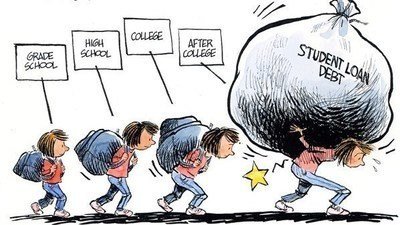
All state legislators should put the Pay it Forward, Pay it Back plan up for a vote. The Pay it Forward, Pay it Back plan would help bring America back to a state where a college education is not reserved for the very rich, or those willing to carry the weight of crippling loan debt. Average families would be able to afford to send their kids to college without worrying if there is enough money to make it through. Students would be able to focus their energy on their studies, rather than trying to juggle school and three jobs. If college costs continue to rise, while median family income remains stagnant, there is no way to say for sure what will happen to the United States workforce, however it is certain that the outcome will be destructive. Prevent a crisis by putting Pay it Forward, Pay it Back up for vote in Pennsylvania.

Petition Closed
The Issue
Countless plans have been proposed to address the rising college tuition costs, along with student debt, however, the best way to solve this problem is by implementing the Pay it Forward, Pay it Back plan on a national scale. The Pay it Forward, Pay it Back plan was created by students from Portland State University. It calls for students to attend public universities tuition-free and loan-free. This is how the plan works: students pay no upfront tuition costs, but promise to later pay .75 percent of their yearly income for every year they attended school. That money would then go into a fund to pay for future students. A typical four-year degree would come with a 3 percent rate. The graduates would make fixed payments, waived in times of unemployment, for 20-25 years (Kingkade). The income of students after graduation would not affect how they pay back the cost of their education. It simply determines how long they will be paying it off. Students would not receive any interest on their tuition cost if they are in a minimum wage or low paying job. This also prevents students from developing a bad credit score early on in life.
In an article from USA today, a communication studies senior at Sam Houston State University named Morgan Benham said “3 percent of my income doesn't seem bad when I am salaried. Hourly work during college sometimes does not cover all living expenses. Between being a poor college student now or paying off the same amount over time and being able to live more comfortably, I would choose living more comfortably now and paying off college over time" (Psencik). The Pay it Forward, Pay it Back plan is currently being implemented this year in the State of Oregon as a pilot program. Its success there will be grounds for its implementation on a national level. To make Pay it Forward a national program, initially federal and state governments would need to invest in the program in order to cover the estimated $9 billion in startup costs. When compared to other potential solutions to the college tuition crisis, like Obama’s free community college plan, this government investment is surprisingly small and will eventually be regenerated as more students graduate through the program. This plan will help graduates get out of student loan debt estimated to be more than $1.1 trillion (Psencik).
This plan also caters to the wants of both political parties because it provides an equal opportunity for all Americans to get a higher education without proposing a “hand-out” that would be a burden placed on American tax payers. The Pay it Forward, Pay it Back plan is based in part on a model that is already being used in Australia, so we can be sure that it can and will work to address the student debt and rising college cost problem in this country (Kingkade). The beauty of this program is that it is effective and can be tested on a small scale or implemented on a large scale and still have the same effects. According to an article in the Huffington Post, legislators in other states, including Washington, Vermont, New York, Pennsylvania and Wisconsin, have already expressed an interest in the program. John Burbank, executive director of the Economic Opportunity Institute said, “This is not a loan. You're paying forward, essentially, so your contributions would enable the next generational cohort of students the same free access.”
All state legislators should put the Pay it Forward, Pay it Back plan up for a vote. The Pay it Forward, Pay it Back plan would help bring America back to a state where a college education is not reserved for the very rich, or those willing to carry the weight of crippling loan debt. Average families would be able to afford to send their kids to college without worrying if there is enough money to make it through. Students would be able to focus their energy on their studies, rather than trying to juggle school and three jobs. If college costs continue to rise, while median family income remains stagnant, there is no way to say for sure what will happen to the United States workforce, however it is certain that the outcome will be destructive. Prevent a crisis by putting Pay it Forward, Pay it Back up for vote in Pennsylvania.
The Decision Makers


Petition Updates
Share this petition
Petition created on December 6, 2015