
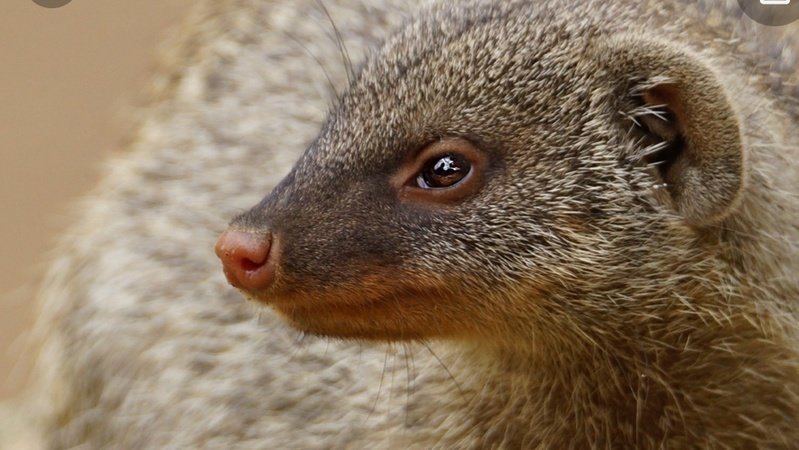
Change the plural of Mongoose from ‘Mongooses’ to ‘Mongeese’
Change the plural of Mongoose from ‘Mongooses’ to ‘Mongeese’
The Issue
Currently, the Oxford English Dictionary states that the plural of the proper noun ‘Mongoose’ is Mongooses. However, it is not out of the ordinary to avoid adding /s/ onto the ends of certain nouns when pluralising: take for example tooth, that becomes teeth, not tooths. Another example would be foot, becoming feet and not foots.
Furthermore, why is goose- a noun with fewer characters than mongoose- pluralised as geese, whereas mongoose is awkwardly turned into mongooses? This petition recognised that words that went under strong declension (like goose to geese) are of Ancient Germanic origin: but as a language shaped by words of countries across the world, we should feel constrained by the classic /s/ English pluralisation.
I just want to use this petition to gain more attention to the way we use language, through this example. The English language is notoriously flexible and the OED surprises many each year with interesting new entries. Words like codpiece and coxcomb have become obsolete in our daily dialogues.
Language changes with time. New words like selfie show the power of changing societies: new technologies and lifestyles influence our way of speech. The fact is that English remains very much at the disposal of its speakers.
It makes no sense to pluralise Mongoose by adding /s/: Mongeese would not only be more appropriate, but reflects broadly the need to allow English to remain a language open to change.

37
The Issue
Currently, the Oxford English Dictionary states that the plural of the proper noun ‘Mongoose’ is Mongooses. However, it is not out of the ordinary to avoid adding /s/ onto the ends of certain nouns when pluralising: take for example tooth, that becomes teeth, not tooths. Another example would be foot, becoming feet and not foots.
Furthermore, why is goose- a noun with fewer characters than mongoose- pluralised as geese, whereas mongoose is awkwardly turned into mongooses? This petition recognised that words that went under strong declension (like goose to geese) are of Ancient Germanic origin: but as a language shaped by words of countries across the world, we should feel constrained by the classic /s/ English pluralisation.
I just want to use this petition to gain more attention to the way we use language, through this example. The English language is notoriously flexible and the OED surprises many each year with interesting new entries. Words like codpiece and coxcomb have become obsolete in our daily dialogues.
Language changes with time. New words like selfie show the power of changing societies: new technologies and lifestyles influence our way of speech. The fact is that English remains very much at the disposal of its speakers.
It makes no sense to pluralise Mongoose by adding /s/: Mongeese would not only be more appropriate, but reflects broadly the need to allow English to remain a language open to change.
37
The Decision Makers
Petition Updates
Share this petition
Petition created on 15 June 2020