
Oregon Residential Privacy and Anti-Surveillance Act
The Issue
It's NOT just Flock Cameras! It's Your Neighbor!
Technological advances have transformed home security cameras from simple crime-prevention tools into sophisticated surveillance systems capable of continuously monitoring neighboring homes like my neighbors' recording high-definition video and audio, operating day and night, storing footage indefinitely, and then distributing recordings to millions of viewers through social media.
While surveillance technologies can serve legitimate security purposes, Oregon law has not kept pace with their use for persistent surveillance of neighboring residential property like my case. Every Oregonian should be free to work in the backyard, relax on a patio, garden, repair equipment in a workshop, play with children, or simply walk across their own property without being subjected to continuous targeted surveillance by a neighboring private individual.
I argue that in Oregon ORS 187 should apply to all surveillance cameras that are installed to harass your neighbor - predominantly surveilles your neighbor and not for security like my neighbor Tiffany Berg . I argue this because the intent of ORS 187, which makes it illegal for a neighbor to fly a drone over your property with the intent to harass - in other words video tape your property to harass. Thus, since the intent is to make it illegal for a neighbor to videotape you to harass, then a stationary camera should also be held to be applicable under ORS 187.
The Legislative Gap
Oregon law recognizes important privacy interests through statutes governing unlawful interception of communications, harassment, stalking, and other privacy-related offenses. For example, ORS 165.540 regulates the recording of many in-person conversations and generally requires participants to be informed that a conversation is being recorded, subject to statutory exceptions.
Oregon's stalking and harassment statutes provide remedies when surveillance is part of a broader course of intimidating or threatening conduct. Oregon also recognizes civil privacy interests in several contexts. These laws remain important, but they were largely enacted before inexpensive, permanently recording surveillance systems became commonplace.
Today, Oregon law does not clearly prohibit a private citizen from intentionally installing and operating a camera whose primary purpose is to continuously monitor a neighboring residence rather than protect the operator's own property. Nor does Oregon law clearly address the publication of recordings obtained through persistent targeted residential surveillance when used to harass, humiliate, intimidate, or invade another person's privacy. The result is a significant gap between modern surveillance technology and existing statutory protection.
Why This Matters
Traditional privacy law developed when surveillance generally required a person's physical presence. Today's surveillance systems can include High-definition video, Elevated mounting locations, Optical zoom, Night vision, Continuous recording, Cloud storage, Artificial intelligence, Facial recognition, and Instant publication on social media
These capabilities fundamentally change the nature of private surveillance. A homeowner should not lose practical privacy simply because another private citizen installs advanced surveillance equipment directed primarily toward the homeowner's property.
Existing Law Provides a Foundation
The Oregon Legislature has already demonstrated its commitment to protecting privacy. For example, ORS 165.540 protects many private conversations from undisclosed recording. Oregon has enacted laws protecting against stalking, harassment, and unlawful invasions of privacy, and Oregon courts have long recognized that privacy is an important personal interest deserving legal protection. This proposal builds upon, not replaces, those protections by addressing technology that did not exist when many of these statutes were enacted.
Comparison with California
California's Invasion of Privacy Act reflects a legislative policy that confidential communications deserve robust statutory protection. California generally requires the consent of all parties before recording confidential communications under California Penal Code §632, subject to statutory exceptions.
Although Oregon also protects many in-person conversations through ORS 165.540, neither state's laws fully address persistent visual surveillance directed at neighboring residential property. Oregon can become a national leader by modernizing its privacy laws to address twenty-first-century residential surveillance while preserving legitimate home security.
Proposed Legislation
1. Define Targeted Residential Surveillance. Create a statutory definition of Targeted Residential Surveillance such as: The intentional installation, positioning, or operation of a surveillance device for the primary purpose of continuously monitoring another person's residential property when that monitoring substantially exceeds what is reasonably necessary to protect the operator's own property. This definition would distinguish abusive surveillance from ordinary home security.
2. Prohibit Targeted Residential Surveillance. Provide that a person may not intentionally install, position, or operate a surveillance device for the primary purpose of continuously monitoring another person's residential property when that surveillance substantially exceeds what is reasonably necessary to protect the operator's own residence or property. Factors a court may consider include camera placement, camera height, viewing angle, zoom capability, duration of monitoring, whether the camera primarily captures neighboring property rather than the operator's property, and whether reasonable alternative camera placement exists.
3. Protect Residential Curtilage: Recognize that the following areas deserve heightened statutory privacy protections: front yards, backyards, gardens, patios, workshops, detached garages. Outbuildings, driveways, and other rareas traditionally associated with the home.
4. Strengthen Audio Privacy. Clarify that intentionally recording conversations occurring on neighboring residential property without the notice required by ORS 165.540—or, if the Legislature elects to expand protections, without affirmative consent in specified residential circumstances—creates a civil cause of action, while preserving appropriate exceptions for emergencies, crimes in progress, and lawful governmental activity.
5. Restrict Publication of Unlawfully Obtained Surveillance. Permit courts to impose civil liability for knowingly publishing recordings obtained through unlawful targeted residential surveillance when the publication serves primarily to harass, intimidate, or invade another person's privacy, while preserving constitutional protections for legitimate public concern.
6. Create Civil Remedies. Authorize courts to order cameras repositioned, issue injunctions, award statutory damages, award attorney fees in appropriate cases, and order removal of recordings obtained through unlawful targeted surveillance.
7. Consider Persistent Surveillance as Evidence. Allow persistent targeted residential surveillance to be considered evidence supporting claims involving harassment, stalking, or intentional infliction of emotional distress when combined with other relevant conduct.
Exceptions: Nothing in this Act should prohibit ordinary home security cameras protecting one's own property, doorbell cameras used legitimate security purposes, incidental recording of neighboring property, recording criminal activity, lawfully authorized law enforcement activities, and journalism concerning matters of legitimate public concern. The Act targets intentional surveillance of neighboring homes—not reasonable security measures.
Constitutional Principles
Although the United States Constitution primarily restricts governmental action, state legislatures possess broad authority to enact statutes governing private conduct. This Act advances the constitutional values of liberty, personal security, and privacy reflected in the Fourteenth Amendment and complements Oregon's longstanding statutory protections for individual privacy.
An Oregon Story
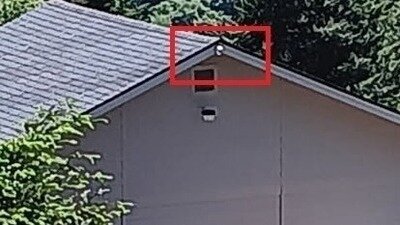
This proposal is inspired by my experience where my neighbor has surveillance camera intentionally positioned 24 feet on her garage, which means I can't block them, to monitor substantial portions of my property that includes a working shed and enclosed patio, The Berg's camera cannot capture any of their own property for security purposes. It is too high. For more information visit my website at www.thejudgesoath.com
Then, video of me while on my own property, taken without my knowledge, were published online by my neighbor with over 1,500,000 views of defamation. When I discovered I was being videotaped, I installed a few cameras along the property line - a small section of her back driveway - that were blocked, to alert me of when I was being videotaped. Other harassment has included drones flown at me and more.
No Oregonian should have to wonder whether stepping into a backyard, workshop, or garden means becoming the subject of continuous monitoring or online publication by a neighbor.
Protect Homes. Protect Privacy. Protect Oregonians.

12
The Issue
It's NOT just Flock Cameras! It's Your Neighbor!
Technological advances have transformed home security cameras from simple crime-prevention tools into sophisticated surveillance systems capable of continuously monitoring neighboring homes like my neighbors' recording high-definition video and audio, operating day and night, storing footage indefinitely, and then distributing recordings to millions of viewers through social media.
While surveillance technologies can serve legitimate security purposes, Oregon law has not kept pace with their use for persistent surveillance of neighboring residential property like my case. Every Oregonian should be free to work in the backyard, relax on a patio, garden, repair equipment in a workshop, play with children, or simply walk across their own property without being subjected to continuous targeted surveillance by a neighboring private individual.
I argue that in Oregon ORS 187 should apply to all surveillance cameras that are installed to harass your neighbor - predominantly surveilles your neighbor and not for security like my neighbor Tiffany Berg . I argue this because the intent of ORS 187, which makes it illegal for a neighbor to fly a drone over your property with the intent to harass - in other words video tape your property to harass. Thus, since the intent is to make it illegal for a neighbor to videotape you to harass, then a stationary camera should also be held to be applicable under ORS 187.
The Legislative Gap
Oregon law recognizes important privacy interests through statutes governing unlawful interception of communications, harassment, stalking, and other privacy-related offenses. For example, ORS 165.540 regulates the recording of many in-person conversations and generally requires participants to be informed that a conversation is being recorded, subject to statutory exceptions.
Oregon's stalking and harassment statutes provide remedies when surveillance is part of a broader course of intimidating or threatening conduct. Oregon also recognizes civil privacy interests in several contexts. These laws remain important, but they were largely enacted before inexpensive, permanently recording surveillance systems became commonplace.
Today, Oregon law does not clearly prohibit a private citizen from intentionally installing and operating a camera whose primary purpose is to continuously monitor a neighboring residence rather than protect the operator's own property. Nor does Oregon law clearly address the publication of recordings obtained through persistent targeted residential surveillance when used to harass, humiliate, intimidate, or invade another person's privacy. The result is a significant gap between modern surveillance technology and existing statutory protection.
Why This Matters
Traditional privacy law developed when surveillance generally required a person's physical presence. Today's surveillance systems can include High-definition video, Elevated mounting locations, Optical zoom, Night vision, Continuous recording, Cloud storage, Artificial intelligence, Facial recognition, and Instant publication on social media
These capabilities fundamentally change the nature of private surveillance. A homeowner should not lose practical privacy simply because another private citizen installs advanced surveillance equipment directed primarily toward the homeowner's property.
Existing Law Provides a Foundation
The Oregon Legislature has already demonstrated its commitment to protecting privacy. For example, ORS 165.540 protects many private conversations from undisclosed recording. Oregon has enacted laws protecting against stalking, harassment, and unlawful invasions of privacy, and Oregon courts have long recognized that privacy is an important personal interest deserving legal protection. This proposal builds upon, not replaces, those protections by addressing technology that did not exist when many of these statutes were enacted.
Comparison with California
California's Invasion of Privacy Act reflects a legislative policy that confidential communications deserve robust statutory protection. California generally requires the consent of all parties before recording confidential communications under California Penal Code §632, subject to statutory exceptions.
Although Oregon also protects many in-person conversations through ORS 165.540, neither state's laws fully address persistent visual surveillance directed at neighboring residential property. Oregon can become a national leader by modernizing its privacy laws to address twenty-first-century residential surveillance while preserving legitimate home security.
Proposed Legislation
1. Define Targeted Residential Surveillance. Create a statutory definition of Targeted Residential Surveillance such as: The intentional installation, positioning, or operation of a surveillance device for the primary purpose of continuously monitoring another person's residential property when that monitoring substantially exceeds what is reasonably necessary to protect the operator's own property. This definition would distinguish abusive surveillance from ordinary home security.
2. Prohibit Targeted Residential Surveillance. Provide that a person may not intentionally install, position, or operate a surveillance device for the primary purpose of continuously monitoring another person's residential property when that surveillance substantially exceeds what is reasonably necessary to protect the operator's own residence or property. Factors a court may consider include camera placement, camera height, viewing angle, zoom capability, duration of monitoring, whether the camera primarily captures neighboring property rather than the operator's property, and whether reasonable alternative camera placement exists.
3. Protect Residential Curtilage: Recognize that the following areas deserve heightened statutory privacy protections: front yards, backyards, gardens, patios, workshops, detached garages. Outbuildings, driveways, and other rareas traditionally associated with the home.
4. Strengthen Audio Privacy. Clarify that intentionally recording conversations occurring on neighboring residential property without the notice required by ORS 165.540—or, if the Legislature elects to expand protections, without affirmative consent in specified residential circumstances—creates a civil cause of action, while preserving appropriate exceptions for emergencies, crimes in progress, and lawful governmental activity.
5. Restrict Publication of Unlawfully Obtained Surveillance. Permit courts to impose civil liability for knowingly publishing recordings obtained through unlawful targeted residential surveillance when the publication serves primarily to harass, intimidate, or invade another person's privacy, while preserving constitutional protections for legitimate public concern.
6. Create Civil Remedies. Authorize courts to order cameras repositioned, issue injunctions, award statutory damages, award attorney fees in appropriate cases, and order removal of recordings obtained through unlawful targeted surveillance.
7. Consider Persistent Surveillance as Evidence. Allow persistent targeted residential surveillance to be considered evidence supporting claims involving harassment, stalking, or intentional infliction of emotional distress when combined with other relevant conduct.
Exceptions: Nothing in this Act should prohibit ordinary home security cameras protecting one's own property, doorbell cameras used legitimate security purposes, incidental recording of neighboring property, recording criminal activity, lawfully authorized law enforcement activities, and journalism concerning matters of legitimate public concern. The Act targets intentional surveillance of neighboring homes—not reasonable security measures.
Constitutional Principles
Although the United States Constitution primarily restricts governmental action, state legislatures possess broad authority to enact statutes governing private conduct. This Act advances the constitutional values of liberty, personal security, and privacy reflected in the Fourteenth Amendment and complements Oregon's longstanding statutory protections for individual privacy.
An Oregon Story
This proposal is inspired by my experience where my neighbor has surveillance camera intentionally positioned 24 feet on her garage, which means I can't block them, to monitor substantial portions of my property that includes a working shed and enclosed patio, The Berg's camera cannot capture any of their own property for security purposes. It is too high. For more information visit my website at www.thejudgesoath.com
Then, video of me while on my own property, taken without my knowledge, were published online by my neighbor with over 1,500,000 views of defamation. When I discovered I was being videotaped, I installed a few cameras along the property line - a small section of her back driveway - that were blocked, to alert me of when I was being videotaped. Other harassment has included drones flown at me and more.
No Oregonian should have to wonder whether stepping into a backyard, workshop, or garden means becoming the subject of continuous monitoring or online publication by a neighbor.
Protect Homes. Protect Privacy. Protect Oregonians.
The Decision Makers


Petition Updates
Share this petition
Petition created on August 4, 2026