

Optimization improvements in modern games as well as operating systems
La causa
Many PC gamers suffer from poorly optimized games that rely heavily on technologies like Frame Generation (FG) to mask performance issues.
In recent years, this problem has increased significantly, especially with games that unnecessarily render enormous distances, load resources the player can't even see, or skip essential optimization stages such as:
- Shader precompilation
- Proper Level of Detail (LOD) management
- Proper occlusion culling
- Efficient CPU/GPU utilization
- Reasonable VRAM and RAM allocation
- Performance testing on mid-range and older hardware
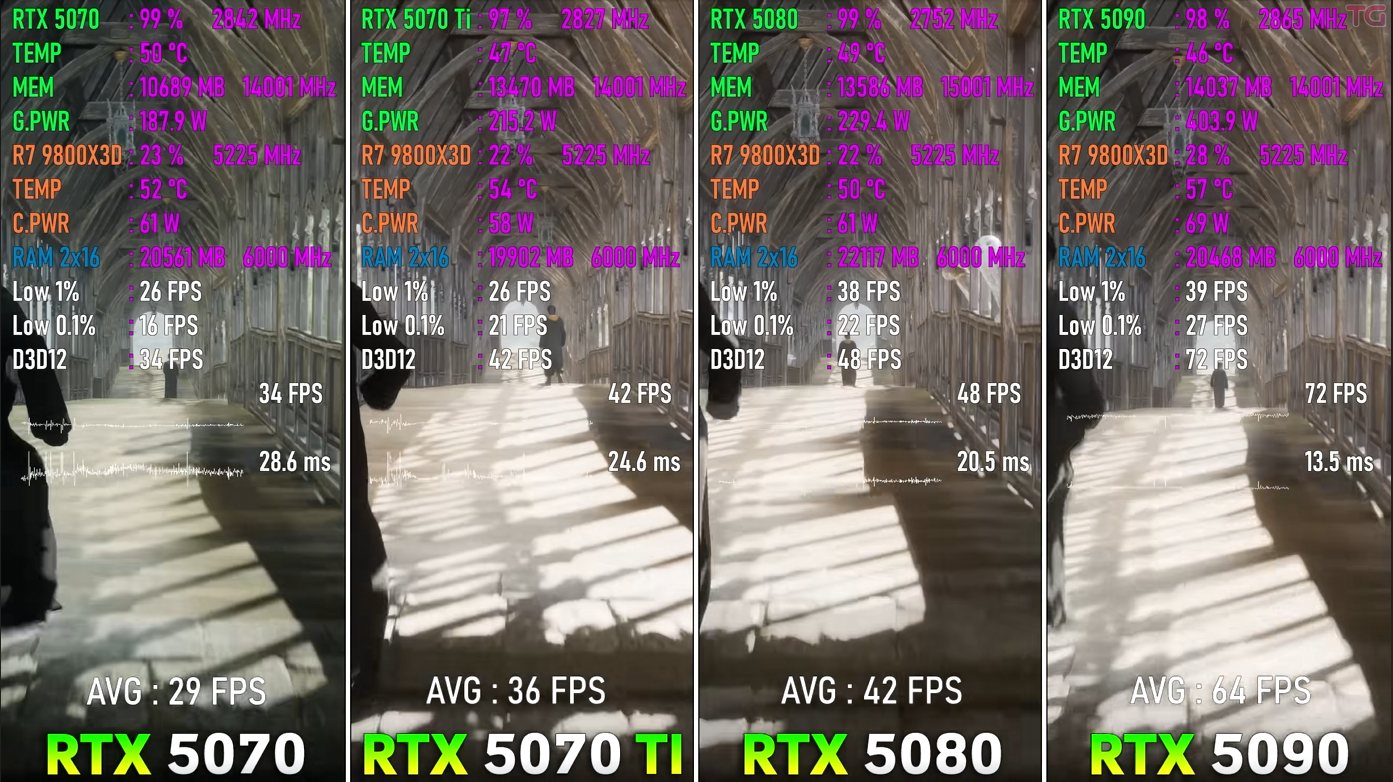
While some studios, such as Santa Monica Studio (God of War Ragnarok) and Guerrilla Games (Horizon Forbidden West), have demonstrated that high-quality visual fidelity can coexist with excellent performance, averaging 70 and 55 FPS in 4K with a RTX 5070 and no Frame Generation, many others release games in a state where even high-end GPUs struggle to maintain stable frame rates.
A clear example of the problem: Alan Wake 2
A recent example is the latest release of Alan Wake 2. The game renders buildings, textures, and objects in full 4K, full 4K at extreme distances, and even behind obstacles where the player can't see them. This negatively impacts performance.
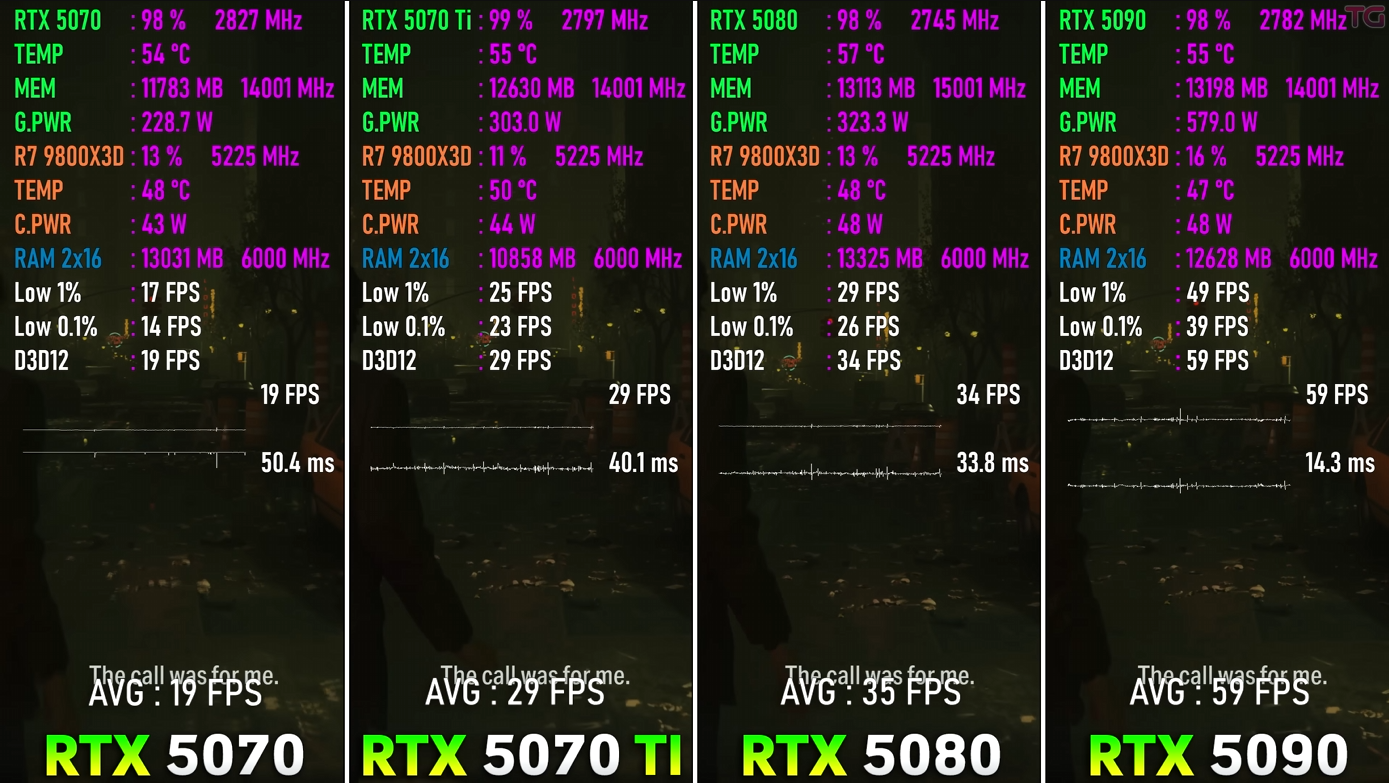
As a personal example: I have an RTX 5070, and it's completely unreasonable that I have to rely on frame generation just to overcome the meager 20 FPS the game offers natively at 4K. Frame generation should enhance an already stable experience, not be necessary for a game to be playable. No gamer with a modern GPU should have to deal with such poor optimization.
I'm sure many will say it's a problem with my GPU, but it's not just with the RTX 5070, no my friend. Tests have been done with an RTX 5090, and it doesn't exceed 60 FPS natively without FG. We're talking about a practically professional graphics card, costing up to $3,000 and consuming 600W. This was without any bottleneck, as it was paired with a Ryzen 7 9800X3D and 32GB of DDR5 RAM at 6000MHz. All because the game renders the entire map regardless of whether it's visible because you're behind a building. It makes no sense.
This is also a call to action for Microsoft and its Windows 11 operating system, which is getting worse and worse. It's gotten to the point where Nvidia had to fix performance issues with this very operating system in one of its most recent drivers. Nvidia shouldn't be fixing the problems of another company due to its poorly designed or unpolished optimization system.
Nvidia should focus on improving the performance of its own products with its drivers, not try to fix someone else's problems, worsening its own performance by fixing incompatibilities of a separate company that manufactures billions of dollars worth of products annually.
What we ask for:
We urge game developers, publishers, and regulatory bodies, especially in the European Union, to consider implementing guidelines that guarantee:
Mandatory shader precompilation or shader caching to prevent stuttering.
Consistent performance patches after launch, especially during the first few weeks.
Reasonable default settings for level of detail and occlusion removal, with options for players to adjust them.
Transparent communication regarding performance issues and planned solutions.
Avoiding over-reliance on frame rate generation as a substitute for proper optimization.
Performance benchmarks on mid-range hardware, not just high-end GPUs.
Improved operating system compatibility (Windows 11), instead of adding more and more features that 90% of users don't use, all in the name of "innovation."
Why is this important?:
Poor optimization affects millions of gamers. It results in wasted electricity, reduced hardware lifespan, decreased accessibility, and a simply unpleasant gaming experience. Frame rate generation is not a solution; it's a band-aid trying to cover a bullet wound. It works, but sooner rather than later it will cease to be useful because it can't stop the bleeding. Surgery is needed to fix that.
This is not an attack on developers, but a call for responsible development practices and industry standards that protect consumers and maintain the integrity and quality of PC games.
With enough public pressure, visibility, and signatures, this issue can reach the attention of the media, major studios, and even European institutions that assess the fairness of the digital market.
By signing this petition, you support better performance, higher standards, and better gaming experiences for everyone.

9
La causa
Many PC gamers suffer from poorly optimized games that rely heavily on technologies like Frame Generation (FG) to mask performance issues.
In recent years, this problem has increased significantly, especially with games that unnecessarily render enormous distances, load resources the player can't even see, or skip essential optimization stages such as:
- Shader precompilation
- Proper Level of Detail (LOD) management
- Proper occlusion culling
- Efficient CPU/GPU utilization
- Reasonable VRAM and RAM allocation
- Performance testing on mid-range and older hardware
While some studios, such as Santa Monica Studio (God of War Ragnarok) and Guerrilla Games (Horizon Forbidden West), have demonstrated that high-quality visual fidelity can coexist with excellent performance, averaging 70 and 55 FPS in 4K with a RTX 5070 and no Frame Generation, many others release games in a state where even high-end GPUs struggle to maintain stable frame rates.
A clear example of the problem: Alan Wake 2
A recent example is the latest release of Alan Wake 2. The game renders buildings, textures, and objects in full 4K, full 4K at extreme distances, and even behind obstacles where the player can't see them. This negatively impacts performance.
As a personal example: I have an RTX 5070, and it's completely unreasonable that I have to rely on frame generation just to overcome the meager 20 FPS the game offers natively at 4K. Frame generation should enhance an already stable experience, not be necessary for a game to be playable. No gamer with a modern GPU should have to deal with such poor optimization.
I'm sure many will say it's a problem with my GPU, but it's not just with the RTX 5070, no my friend. Tests have been done with an RTX 5090, and it doesn't exceed 60 FPS natively without FG. We're talking about a practically professional graphics card, costing up to $3,000 and consuming 600W. This was without any bottleneck, as it was paired with a Ryzen 7 9800X3D and 32GB of DDR5 RAM at 6000MHz. All because the game renders the entire map regardless of whether it's visible because you're behind a building. It makes no sense.
This is also a call to action for Microsoft and its Windows 11 operating system, which is getting worse and worse. It's gotten to the point where Nvidia had to fix performance issues with this very operating system in one of its most recent drivers. Nvidia shouldn't be fixing the problems of another company due to its poorly designed or unpolished optimization system.
Nvidia should focus on improving the performance of its own products with its drivers, not try to fix someone else's problems, worsening its own performance by fixing incompatibilities of a separate company that manufactures billions of dollars worth of products annually.
What we ask for:
We urge game developers, publishers, and regulatory bodies, especially in the European Union, to consider implementing guidelines that guarantee:
Mandatory shader precompilation or shader caching to prevent stuttering.
Consistent performance patches after launch, especially during the first few weeks.
Reasonable default settings for level of detail and occlusion removal, with options for players to adjust them.
Transparent communication regarding performance issues and planned solutions.
Avoiding over-reliance on frame rate generation as a substitute for proper optimization.
Performance benchmarks on mid-range hardware, not just high-end GPUs.
Improved operating system compatibility (Windows 11), instead of adding more and more features that 90% of users don't use, all in the name of "innovation."
Why is this important?:
Poor optimization affects millions of gamers. It results in wasted electricity, reduced hardware lifespan, decreased accessibility, and a simply unpleasant gaming experience. Frame rate generation is not a solution; it's a band-aid trying to cover a bullet wound. It works, but sooner rather than later it will cease to be useful because it can't stop the bleeding. Surgery is needed to fix that.
This is not an attack on developers, but a call for responsible development practices and industry standards that protect consumers and maintain the integrity and quality of PC games.
With enough public pressure, visibility, and signatures, this issue can reach the attention of the media, major studios, and even European institutions that assess the fairness of the digital market.
By signing this petition, you support better performance, higher standards, and better gaming experiences for everyone.
Los tomadores de decisiones


Actualizaciones de la petición
Compartir esta petición
Petición creada en 1 de diciembre de 2025