

NO TO JUNK FOODS
NO TO JUNK FOODS
The Issue
Junk food' is food that contains high levels of fats, salt and sugar and lacks nutrients such as fibre, vitamins and minerals. Junk food is used to describe food and drinks low in nutrients (e.g. vitamins, minerals and fibre) and high in kilojoules, saturated fat, added sugar and/or added salt. They are also known as discretionary choices.
PROBLEM: Why is junk food bad?
Eating junk food on a regular basis can lead to an increased risk of obesity and chronic diseases like cardiovascular disease, type 2 diabetes, non-alcoholic fatty liver disease and some cancers.
We know Australian's eat too much junk food.
35% of adults’ daily energy intake (kilojoules) comes from junk food.
41% of children’s daily energy intake (kilojoules) comes from junk food.
This means junk food is taking the place of other more nutritious foods in our diets.
SOLUTION:
Drink plenty of water
Drinking plenty of water can help minimize your cravings. If you find yourself wanting to eat chips, sweets, or drink a sugary beverage, drink a glass of water instead. It may wash away your cravings for junk food.
Distract yourself from your cravings
Aside from drinking water, you can also take your attention away from your cravings by making yourself preoccupied with other things. For example, taking a walk can take your mind away from eating unhealthy snacks. Even doing simple household chores or rearranging your workspace can do wonders in keeping your cravings at bay.
Have proper and healthy meals
Starving yourself is never a good idea and will only increase your cravings. Instead, you can have proper meals with high proteins like fish and beans. These foods can make you feel full and keep you from overeating. Additionally, you can add more fruits like berries, bananas, and watermelons to your diet if you’re craving sweets. They have natural sugars, full of vitamins, and are free of preservatives.
Manage your stress levels
Stress eating can get out of hand if you just accept it. You’ll find yourself eating chips or buying a tub of ice cream more often because you’re upset or stressed about work. When this happens, you might find yourself eating more unhealthy foods or overeating.
To avoid stress eating, try redirecting your stress to doing other healthier activities. There are many ways to cope with stress. For example, you can do breathing or meditation exercises to calm your nerves and focus on what needs to be done. You can also try writing in your journal, talking to a loved one, or seeking the help of a mental health professional instead of stress eating as a way of coping.
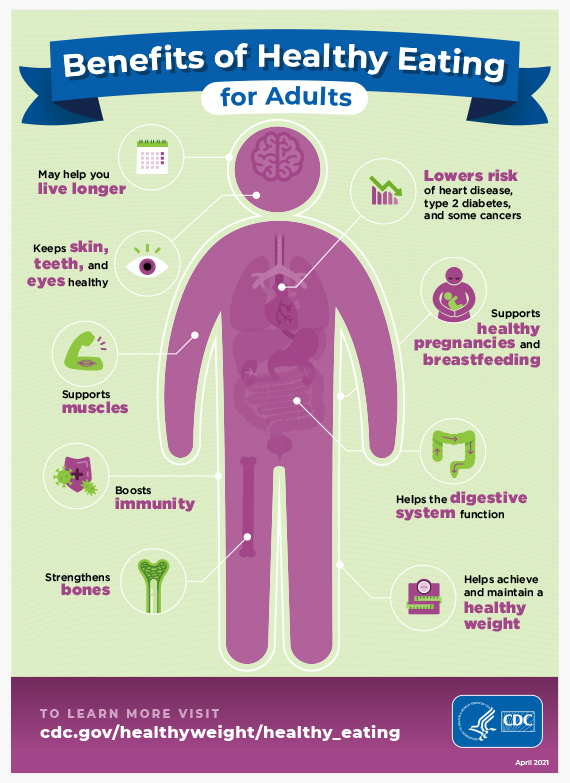
BENEFITS
REFERENCE:
https://www.cdc.gov/nutrition/resources-publications/benefits-of-healthy-eating.html

22
The Issue
Junk food' is food that contains high levels of fats, salt and sugar and lacks nutrients such as fibre, vitamins and minerals. Junk food is used to describe food and drinks low in nutrients (e.g. vitamins, minerals and fibre) and high in kilojoules, saturated fat, added sugar and/or added salt. They are also known as discretionary choices.
PROBLEM: Why is junk food bad?
Eating junk food on a regular basis can lead to an increased risk of obesity and chronic diseases like cardiovascular disease, type 2 diabetes, non-alcoholic fatty liver disease and some cancers.
We know Australian's eat too much junk food.
35% of adults’ daily energy intake (kilojoules) comes from junk food.
41% of children’s daily energy intake (kilojoules) comes from junk food.
This means junk food is taking the place of other more nutritious foods in our diets.
SOLUTION:
Drink plenty of water
Drinking plenty of water can help minimize your cravings. If you find yourself wanting to eat chips, sweets, or drink a sugary beverage, drink a glass of water instead. It may wash away your cravings for junk food.
Distract yourself from your cravings
Aside from drinking water, you can also take your attention away from your cravings by making yourself preoccupied with other things. For example, taking a walk can take your mind away from eating unhealthy snacks. Even doing simple household chores or rearranging your workspace can do wonders in keeping your cravings at bay.
Have proper and healthy meals
Starving yourself is never a good idea and will only increase your cravings. Instead, you can have proper meals with high proteins like fish and beans. These foods can make you feel full and keep you from overeating. Additionally, you can add more fruits like berries, bananas, and watermelons to your diet if you’re craving sweets. They have natural sugars, full of vitamins, and are free of preservatives.
Manage your stress levels
Stress eating can get out of hand if you just accept it. You’ll find yourself eating chips or buying a tub of ice cream more often because you’re upset or stressed about work. When this happens, you might find yourself eating more unhealthy foods or overeating.
To avoid stress eating, try redirecting your stress to doing other healthier activities. There are many ways to cope with stress. For example, you can do breathing or meditation exercises to calm your nerves and focus on what needs to be done. You can also try writing in your journal, talking to a loved one, or seeking the help of a mental health professional instead of stress eating as a way of coping.
BENEFITS
REFERENCE:
https://www.cdc.gov/nutrition/resources-publications/benefits-of-healthy-eating.html
22
Petition Updates
Share this petition
Petition created on May 14, 2023