

No Buses, No Parks: Postpone the June 1st Under-16 Social Media Ban!
No Buses, No Parks: Postpone the June 1st Under-16 Social Media Ban!
The Issue
💡 This is not political opposition. This is a cold, hard engineering evaluation of an imminent system failure.
We are a collective of Malaysian digital natives born into the internet era (the initiator of this petition was born in 2006). While we fully support the government’s core intention to protect minors from cyberbullying and online scams, any national policy that abruptly cuts off "Digital Input" without auditing the country's "Physical Output" will cause a catastrophic system deadlock and a severe social crash-landing for Malaysian families.
1. Total Absence of National Public Transit (The Outstation & Rural Blackhole)
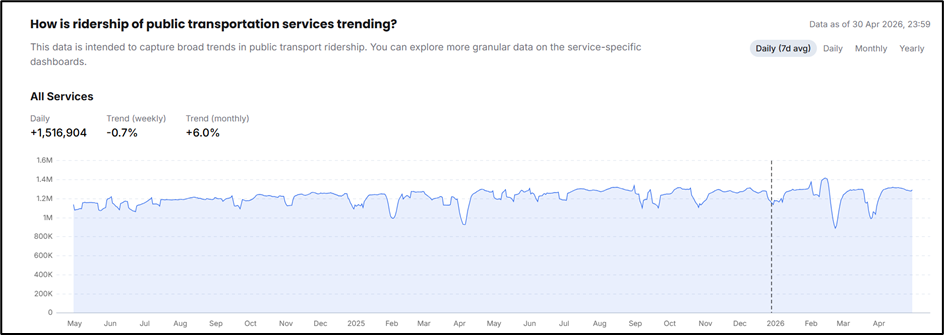
The government operates heavily within a "Klang Valley bubble," seemingly under the illusion that all of Malaysia is connected by MRT and LRT lines. Outside major metropolitan pockets, in secondary towns and rural areas (Kampung) across states like Kedah, Perak, Johor, Pahang, Kelantan, Sarawak, and Sabah, public transit is virtually non-existent.
Forcing millions of teenagers out of digital spaces and into physical socialization means they either face absolute social isolation or are forced to risk their lives commuting on unlit federal roads using unlicensed motorbikes or bicycles. Until a safe, reliable National Public Transport Network is established, this ban physically traps rural and suburban youth.
2. Monopolistic Inflation of the Physical Entertainment & Toy Market
Online entertainment operates at a marginal cost of near zero, making it accessible to all income classes. Forcing children back into the physical world under current high-inflation conditions in Malaysia will trigger a severe monopolistic price surge for educational physical toys (Lego, board games, models) and indoor playground admissions due to an overnight supply-demand imbalance. This effectively penalizes middle-to-low-income B40 and M40 families with a heavy monthly "physical socialization tax."
3. The Total Meltdown of Double-Income Parents (The "Meat Shield" Effect)
In reality, exhausted working parents rely heavily on digital content as a low-cost tool for children's emotional regulation after school. When this system goes completely offline, the emotional and mental strain will rebound entirely onto the parents.
Worse, because Deputy Minister Teo Nie Ching explicitly stated that "penalties will only target social platforms (up to RM10 million), not parents," the government has left an obvious structural backdoor. To maintain peace at home, desperate parents will actively use their own official IDs (MyID/MyKad) to bypass eKYC for their kids. This forces children to operate under completely unrestricted, unmonitored adult accounts, completely defeating the purpose of the law.
4. Severe Lack of Free, Safe Public Communal Spaces
Unlike neighbouring countries like Singapore, which provide high-density networks of free public libraries, active community centres, and highly walkable parks, Malaysia's youth infrastructure is almost exclusively "caged" inside commercial shopping malls. This means, in Malaysia, to socialise physically, you are forced to spend commercial money. This policy will rapidly accelerate a toxic social class divide between families who can afford weekend mall outings and those who cannot.
5. Technical Migration into Underground Channels and Broken Trust Chains
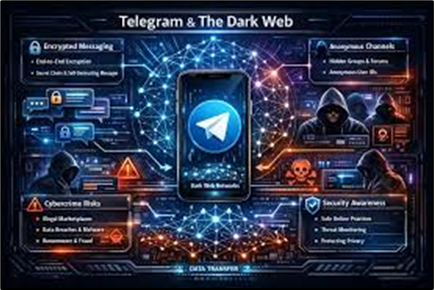
When official doors are shut through crude, top-down filtering, tech-savvy Malaysian minors will not suddenly start playing in non-existent neighbourhood fields. Instead, they will inevitably pivot to unmonitored Peer-to-Peer (P2P) networks, encrypted messaging apps, or identity fraud markets to purchase forged credentials. Instead of protecting them, this pushes children entirely out of public sight and into dangerous, unmonitored dark-web ecosystems.
📊 Appendix: The Hard System Data (The Mathematical Reality)
Before forcing this ban, we challenge the Ministry of Communications and MCMC to run their policy through these verified national data metrics:
1. The Public Transport Void (Klang Valley vs. The Rest of Malaysia)
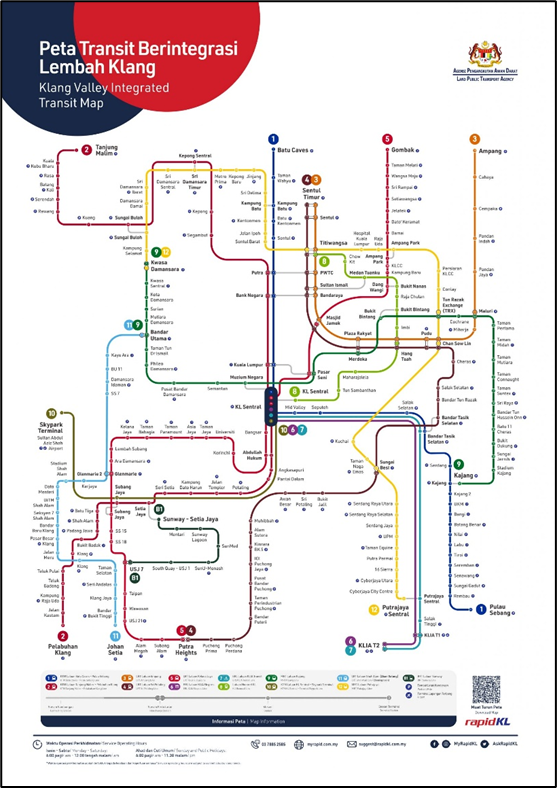
The Bubble: According to Prasarana's operational data, over 90% of Malaysia's rail-based public transit (LRT/MRT/Monorail) is heavily concentrated exclusively within the Klang Valley (Kuala Lumpur and Selangor).
The Reality: For the remaining 13 states and federal territories, the public transit coverage drops drastically. In secondary towns and rural districts, the Stage Bus Service Transformation (SBST) program is severely underfunded or non-existent. Minors outside of KL have a literal 0% access rate to safe, high-frequency, affordable physical transit to meet peers.
2. The Commercial Walkability Deficit
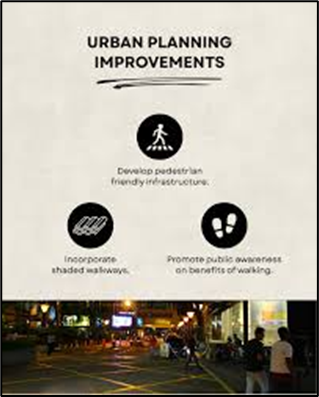
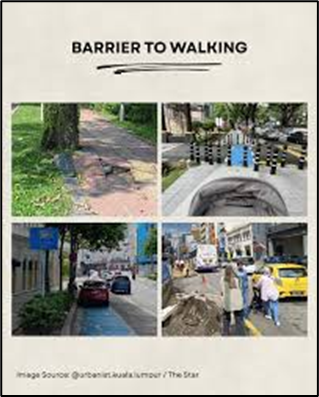
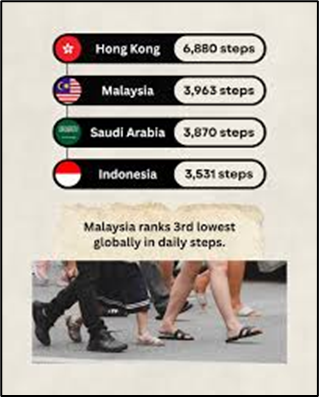
Safety Rating: According to global urban walkability metrics, Malaysia's pedestrian infrastructure ranks among the lowest for child safety. Most residential areas (Taman) lack continuous, barrier-free sidewalks.
The Risk: Forcing an under-16 teenager to walk just 1.5 kilometres to a local library or park in a secondary town means forcing them to navigate open monsoon drains, non-existent zebra crossings, and high-speed motor vehicle lanes. The physical risk shift is a mathematical certainty.
3. The Physical "Socialization Tax" Inflation Rate
Digital Marginal Cost: RM 0.00 per hour (standard home WiFi / mobile data).
Physical Commuting & Commercial Cost: If a parent is forced to substitute digital socialization with physical weekend activities under current Malaysian inflation (KPDN Consumer Price Index 2026):
§ Average Grab Fare (Round Trip for a minor): RM 15 - RM 30
§ Mall Indoor Playground / Arcade Entry: RM 40 - RM 80 per entry
§ Basic Educational Board Game / Lego Set: RM 120 - RM 350+
The Verdict: For a middle-income M40 family with 2 children, shifting just 30% of their social time from digital to physical commercial spaces will inflate family monthly expenses by an estimated RM 400 to RM 800. In a climate of high living costs, this is an unsustainable economic shock.
4. The eKYC Structural Backdoor Failure Rate
Global Precedent: Data from the UK (Ofcom) and France regarding mandatory age verification shows that when rigid digital bans are imposed without parental consent, over 45% to 60% of minors successfully bypass restrictions within the first 90 days.
The Loophole: Since Malaysia's ban targets platforms and explicitly spares parents from penalties, the system failure rate will approach 100%. Parents will willingly scan their own MyKad to stop their children from throwing tantrums, meaning the entire RM 10 million platform compliance framework will register a net-zero policy efficiency.
🎙️ The Voice of the Digital Generation: Speaking for Those Who Cannot
"Children under 16 cannot draft infrastructure economic policies, nor do they vote. When the government abruptly strips away their digital community, their natural response is emotional distress—a response that older politicians quickly dismiss as 'immature tantrums' or 'internet addiction.'
As their immediate seniors (born in 2006), we refuse to let the government gaslight the younger generation. We are writing this petition because our younger siblings lack the technical vocabulary to audit your policies. Their anger is not mere rebellion; it is a direct, intuitive reaction to a systematically flawed policy that traps them in a physically offline country that is simply not built to support them. We are translating their real-world struggles into cold, irrefutable data. If the government will not listen to their cries, you will have to answer to our logic."
🏛️ Our Demands:
We strongly urge the Ministry of Communications and MCMC to suspend the June 1st ban until they collaborate with the Ministry of Transport (MOT), the Ministry of Domestic Trade and Living Costs (KPDN), and the Ministry of Women, Family and Community Development to fulfill these physical infrastructure prerequisites.
- Match Developed Transit Standards: Ensure safe, walkable, and high-density public transit within 1km of all residential areas so minors can meet safely and affordably.
- Build Free Physical Buffers: Establish free, air-conditioned public libraries and community centres to absorb the massive volume of offline traffic.
- Price Control Mechanisms: Prevent punitive monopolistic price inflation in the offline youth entertainment and educational toy markets.
🛡️ Section 5: The Ultimate Counter-Condition: "No Enforcement Without Fiscal Indemnification"
If the Ministry of Communications insists on executing the June 1st Ban blindly, the Malaysian Government must bear 100% of the derived physical, economic, and operational costs imposed on families.
Metric 1: The National Physical Entertainment Subsidy (RM500/Month Per Household)
Since the government is removing the 'digital gateway' for youth socialization, the state must internalize the alternative costs. We demand a RM500 monthly structural allowance for every household with children under 16 to offset the mandatory inflation of physical entertainment (Lego, board games, and commercial indoor park entrance fees).
Metric 2: Complete Spatial Mobilization Framework (The Zero-Cost Transit Blueprint)
To prevent complete structural isolation and severe mental health degradation, the Ministry of Transport (MOT) must deploy a nationwide, free-of-charge, 15-minute interval Youth Shuttle Bus Network (Bas Belia Percuma) routing from every secondary housing area (Taman) directly to public parks, sports complexes, and libraries, operational by June 1st.
Metric 3: State-Backed Identity Theft Indemnity Fund (100% Liability Guarantee)
As the ban forces minors to bypass the eKYC architecture using parental credentials, the government assumes absolute liability for the systemic risks. A state-backed fund must be established to 100% reimburse any parental banking loss or identity theft derived from eKYC loopholes and underground digital workarounds.
🌐 Anachronistic Policy vs 2026 Reality
The Ministry is regulating 2026 Digital Natives using 1980s Kampung Mindsets. This is not governance; this is systemic blindness
Policy-makers are suffering from a chronic nostalgia bias. In 2026, digital space is not a luxury; it is the infrastructure of youth socialisation. Due to defensive architecture and hyper-urbanisation in Malaysia, physical alternative spaces have been systematically eliminated. Forcing a digital native into a non-existent physical public space is a logical dead-end that will only trigger unprecedented teenager mental health crises and severe domestic friction.
📌 Conclusion
We, the taxpayers and citizens of Malaysia, are ready to cooperate with the ban. However, physics and economics do not lie. If the treasury is not ready to deploy billions by June 1st to fund these physical counter-measures, the Ministry must immediately declare a minimum 24-month postponement of the policy.
✊Sign your name to reject blind, top-down policies and demand structured, first-principles governance!

13
The Issue
💡 This is not political opposition. This is a cold, hard engineering evaluation of an imminent system failure.
We are a collective of Malaysian digital natives born into the internet era (the initiator of this petition was born in 2006). While we fully support the government’s core intention to protect minors from cyberbullying and online scams, any national policy that abruptly cuts off "Digital Input" without auditing the country's "Physical Output" will cause a catastrophic system deadlock and a severe social crash-landing for Malaysian families.
1. Total Absence of National Public Transit (The Outstation & Rural Blackhole)
The government operates heavily within a "Klang Valley bubble," seemingly under the illusion that all of Malaysia is connected by MRT and LRT lines. Outside major metropolitan pockets, in secondary towns and rural areas (Kampung) across states like Kedah, Perak, Johor, Pahang, Kelantan, Sarawak, and Sabah, public transit is virtually non-existent.
Forcing millions of teenagers out of digital spaces and into physical socialization means they either face absolute social isolation or are forced to risk their lives commuting on unlit federal roads using unlicensed motorbikes or bicycles. Until a safe, reliable National Public Transport Network is established, this ban physically traps rural and suburban youth.
2. Monopolistic Inflation of the Physical Entertainment & Toy Market
Online entertainment operates at a marginal cost of near zero, making it accessible to all income classes. Forcing children back into the physical world under current high-inflation conditions in Malaysia will trigger a severe monopolistic price surge for educational physical toys (Lego, board games, models) and indoor playground admissions due to an overnight supply-demand imbalance. This effectively penalizes middle-to-low-income B40 and M40 families with a heavy monthly "physical socialization tax."
3. The Total Meltdown of Double-Income Parents (The "Meat Shield" Effect)
In reality, exhausted working parents rely heavily on digital content as a low-cost tool for children's emotional regulation after school. When this system goes completely offline, the emotional and mental strain will rebound entirely onto the parents.
Worse, because Deputy Minister Teo Nie Ching explicitly stated that "penalties will only target social platforms (up to RM10 million), not parents," the government has left an obvious structural backdoor. To maintain peace at home, desperate parents will actively use their own official IDs (MyID/MyKad) to bypass eKYC for their kids. This forces children to operate under completely unrestricted, unmonitored adult accounts, completely defeating the purpose of the law.
4. Severe Lack of Free, Safe Public Communal Spaces
Unlike neighbouring countries like Singapore, which provide high-density networks of free public libraries, active community centres, and highly walkable parks, Malaysia's youth infrastructure is almost exclusively "caged" inside commercial shopping malls. This means, in Malaysia, to socialise physically, you are forced to spend commercial money. This policy will rapidly accelerate a toxic social class divide between families who can afford weekend mall outings and those who cannot.
5. Technical Migration into Underground Channels and Broken Trust Chains
When official doors are shut through crude, top-down filtering, tech-savvy Malaysian minors will not suddenly start playing in non-existent neighbourhood fields. Instead, they will inevitably pivot to unmonitored Peer-to-Peer (P2P) networks, encrypted messaging apps, or identity fraud markets to purchase forged credentials. Instead of protecting them, this pushes children entirely out of public sight and into dangerous, unmonitored dark-web ecosystems.
📊 Appendix: The Hard System Data (The Mathematical Reality)
Before forcing this ban, we challenge the Ministry of Communications and MCMC to run their policy through these verified national data metrics:
1. The Public Transport Void (Klang Valley vs. The Rest of Malaysia)
The Bubble: According to Prasarana's operational data, over 90% of Malaysia's rail-based public transit (LRT/MRT/Monorail) is heavily concentrated exclusively within the Klang Valley (Kuala Lumpur and Selangor).
The Reality: For the remaining 13 states and federal territories, the public transit coverage drops drastically. In secondary towns and rural districts, the Stage Bus Service Transformation (SBST) program is severely underfunded or non-existent. Minors outside of KL have a literal 0% access rate to safe, high-frequency, affordable physical transit to meet peers.
2. The Commercial Walkability Deficit
Safety Rating: According to global urban walkability metrics, Malaysia's pedestrian infrastructure ranks among the lowest for child safety. Most residential areas (Taman) lack continuous, barrier-free sidewalks.
The Risk: Forcing an under-16 teenager to walk just 1.5 kilometres to a local library or park in a secondary town means forcing them to navigate open monsoon drains, non-existent zebra crossings, and high-speed motor vehicle lanes. The physical risk shift is a mathematical certainty.
3. The Physical "Socialization Tax" Inflation Rate
Digital Marginal Cost: RM 0.00 per hour (standard home WiFi / mobile data).
Physical Commuting & Commercial Cost: If a parent is forced to substitute digital socialization with physical weekend activities under current Malaysian inflation (KPDN Consumer Price Index 2026):
§ Average Grab Fare (Round Trip for a minor): RM 15 - RM 30
§ Mall Indoor Playground / Arcade Entry: RM 40 - RM 80 per entry
§ Basic Educational Board Game / Lego Set: RM 120 - RM 350+
The Verdict: For a middle-income M40 family with 2 children, shifting just 30% of their social time from digital to physical commercial spaces will inflate family monthly expenses by an estimated RM 400 to RM 800. In a climate of high living costs, this is an unsustainable economic shock.
4. The eKYC Structural Backdoor Failure Rate
Global Precedent: Data from the UK (Ofcom) and France regarding mandatory age verification shows that when rigid digital bans are imposed without parental consent, over 45% to 60% of minors successfully bypass restrictions within the first 90 days.
The Loophole: Since Malaysia's ban targets platforms and explicitly spares parents from penalties, the system failure rate will approach 100%. Parents will willingly scan their own MyKad to stop their children from throwing tantrums, meaning the entire RM 10 million platform compliance framework will register a net-zero policy efficiency.
🎙️ The Voice of the Digital Generation: Speaking for Those Who Cannot
"Children under 16 cannot draft infrastructure economic policies, nor do they vote. When the government abruptly strips away their digital community, their natural response is emotional distress—a response that older politicians quickly dismiss as 'immature tantrums' or 'internet addiction.'
As their immediate seniors (born in 2006), we refuse to let the government gaslight the younger generation. We are writing this petition because our younger siblings lack the technical vocabulary to audit your policies. Their anger is not mere rebellion; it is a direct, intuitive reaction to a systematically flawed policy that traps them in a physically offline country that is simply not built to support them. We are translating their real-world struggles into cold, irrefutable data. If the government will not listen to their cries, you will have to answer to our logic."
🏛️ Our Demands:
We strongly urge the Ministry of Communications and MCMC to suspend the June 1st ban until they collaborate with the Ministry of Transport (MOT), the Ministry of Domestic Trade and Living Costs (KPDN), and the Ministry of Women, Family and Community Development to fulfill these physical infrastructure prerequisites.
- Match Developed Transit Standards: Ensure safe, walkable, and high-density public transit within 1km of all residential areas so minors can meet safely and affordably.
- Build Free Physical Buffers: Establish free, air-conditioned public libraries and community centres to absorb the massive volume of offline traffic.
- Price Control Mechanisms: Prevent punitive monopolistic price inflation in the offline youth entertainment and educational toy markets.
🛡️ Section 5: The Ultimate Counter-Condition: "No Enforcement Without Fiscal Indemnification"
If the Ministry of Communications insists on executing the June 1st Ban blindly, the Malaysian Government must bear 100% of the derived physical, economic, and operational costs imposed on families.
Metric 1: The National Physical Entertainment Subsidy (RM500/Month Per Household)
Since the government is removing the 'digital gateway' for youth socialization, the state must internalize the alternative costs. We demand a RM500 monthly structural allowance for every household with children under 16 to offset the mandatory inflation of physical entertainment (Lego, board games, and commercial indoor park entrance fees).
Metric 2: Complete Spatial Mobilization Framework (The Zero-Cost Transit Blueprint)
To prevent complete structural isolation and severe mental health degradation, the Ministry of Transport (MOT) must deploy a nationwide, free-of-charge, 15-minute interval Youth Shuttle Bus Network (Bas Belia Percuma) routing from every secondary housing area (Taman) directly to public parks, sports complexes, and libraries, operational by June 1st.
Metric 3: State-Backed Identity Theft Indemnity Fund (100% Liability Guarantee)
As the ban forces minors to bypass the eKYC architecture using parental credentials, the government assumes absolute liability for the systemic risks. A state-backed fund must be established to 100% reimburse any parental banking loss or identity theft derived from eKYC loopholes and underground digital workarounds.
🌐 Anachronistic Policy vs 2026 Reality
The Ministry is regulating 2026 Digital Natives using 1980s Kampung Mindsets. This is not governance; this is systemic blindness
Policy-makers are suffering from a chronic nostalgia bias. In 2026, digital space is not a luxury; it is the infrastructure of youth socialisation. Due to defensive architecture and hyper-urbanisation in Malaysia, physical alternative spaces have been systematically eliminated. Forcing a digital native into a non-existent physical public space is a logical dead-end that will only trigger unprecedented teenager mental health crises and severe domestic friction.
📌 Conclusion
We, the taxpayers and citizens of Malaysia, are ready to cooperate with the ban. However, physics and economics do not lie. If the treasury is not ready to deploy billions by June 1st to fund these physical counter-measures, the Ministry must immediately declare a minimum 24-month postponement of the policy.
✊Sign your name to reject blind, top-down policies and demand structured, first-principles governance!
13
The Decision Makers
Petition Updates
Share this petition
Petition created on 25 May 2026