
No Aurora Uranium Project—stop harmful uranium mining in Oregon
No Aurora Uranium Project—stop harmful uranium mining in Oregon
The Issue
Your petition signature signals your strong opposition to the Aurora Uranium Project and the mining of Oregon's public lands. Sign to send a clear message to Eagle Nuclear Energy, nuclear energy proponents, permitting agencies, legislators, mining executives, data center owners, and tech billionaires that we do not want uranium mining on our public lands. Not in McDermitt Caldera. Not in Oregon. Not on our watch.
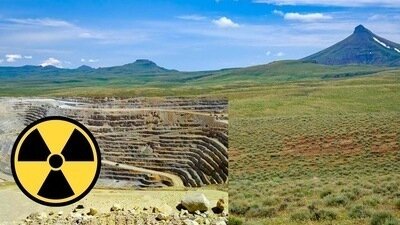
In 2026, Eagle Nuclear Energy acquired mining claims to 7,500 acres of public land in Oregon's McDermitt Caldera, advancing the Aurora Uranium Project. As soon as permits are issued, this land—spanning an area the size of 5,600+ football fields—will become the nation’s largest uranium mine in the United States.
Aurora is not an effort to solve our nation's energy, climate, or affordability crises: this is the Trump administration and tech companies' solution to powering data center expansion. With no consultation with voters, local communities, or Oregon's tribal nations, Aurora Uranium Project will destroy public lands, irreparably alter the high desert sagebrush ecosystems, and place all living beings in harm's way for generations to come.
As a petition supporter, you will stay updated on AUP so you can jump into action when we need you (ex. submit testimony, call your rep). Please share with your networks, spread the word, and learn more below.
Who's behind the Aurora Uranium Project?
Eagle Nuclear Energy Corps, the company behind AUP, went public on February 25, 2026. They used their investor funding to obtain mining claims to the largest known uranium deposit in the US. They do not own the land—they would be mining on federally-managed Bureau of Land Management lands.
Eagle's leadership team is made up of career mining executives and investment bankers. Along with AUP, Eagle is developing proprietary small modular reactor (SMR) technology they say will be sold to companies like Amazon to power data centers. They stand to profit billions of dollars from pit mining uranium on public lands.
What is uranium?
Uranium is a naturally-occurring radioactive metal often found in rocks, soils, and underground deposits. Low levels of naturally-occurring uranium are found in our food, air, water, soil, etc. and generally do not adversely impact health or the environment. Mining uranium, however, exposes land and living creatures to higher levels of radiation that cannot be controlled once introduced to flora and fauna, groundwater, and the atmosphere. The safest place for uranium is where it occurs naturally, buried beneath the surface and deep within rock formations. Disrupting uranium deposits through mining puts industry employees, wildlife, and communities at high risk.
Uranium mines produce uranium ore ("yellowcake"), which must be transported and enriched to become fuel for nuclear power plants. Mines and transportation leave behind exposed uranium, which decays into radium. Radium, a dangerous radionuclide, further decays into radon gas, a colorless, odorless, cancer-causing element that travels through air and gets trapped within homes and buildings.
What are the environmental impacts of uranium mining?
"Wind can blow radioactive dust from the wastes into populated areas and the wastes can contaminate surface water used for drinking. Some sites also have considerable groundwater contamination." —United States Environmental Protection Agency (EPA)
"Contamination of water can exist for hundreds of years and threaten a variety of species, including humans, various types of fish, and other wildlife." —Environment America
"Contamination from uranium mining activity will persist for generations... With a half-life of 76,000 years, it will produce radon for millennia. In the atmosphere, radon decays into the radioactive solids polonium, bismuth, and lead, which enter water, crops, trees, soil, and animals, including humans." —The College of Family Physicians of Canada
What are the human health risks of uranium mining?
Uranium, radium, radon, and all of their byproducts are classified as Group 1 Carcinogens by the International Agency for Research on Cancer.
Exposure to uranium and radioactive mining waste/byproducts through air, food, and water leads to higher risk of:
- Kidney disease
- Lung cancer
- Bone cancers
- High blood pressure
- Autoimmune disfunction
- Reproductive function and infertility
- Premature birth and birth defects
Oregonians are already living with and dying from the impacts of uranium mining. In Uranium: The Lakeview Story (1980), residents of Lake County, Oregon share about the lasting health impacts their community faces after 1950s uranium mining near their community.
United States Environmental Protection Agency
"Studies show that women and children face disproportionately higher health risks from radiation exposure, with pregnant women and developing fetuses being particularly vulnerable." —The Canadian Association of Physicians for the Environment (CAPE)
What happens to the uranium after it has been used as fuel for nuclear power plants?
The United States has no permanent solution for storing highly radioactive waste, including spent uranium fuel rods. Nuclear waste from power plants and small modular reactors (SMRs) is piling up at 70 sites in 35 states. There are an estimated 90,000+ metric tons (almost 200 million pounds) of used radioactive fuel in the United States, either stored in cooling pools or enclosed within steel and concrete storage casks. Aurora Mining Project will add another 30–40 million pounds of uranium to the problem.
Are there nuclear power plants in Oregon?
No—thanks to years of anti-nuclear resistance and multiple ballot initiatives, Oregon passed a nuclear power moratorium in 1980 that has been in place for 46 years. 2025 saw 13 pro-nuclear bills introduced into the Oregon state legislature. Despite recent efforts to chip away at the moratorium, it is still in effect.

419
The Issue
Your petition signature signals your strong opposition to the Aurora Uranium Project and the mining of Oregon's public lands. Sign to send a clear message to Eagle Nuclear Energy, nuclear energy proponents, permitting agencies, legislators, mining executives, data center owners, and tech billionaires that we do not want uranium mining on our public lands. Not in McDermitt Caldera. Not in Oregon. Not on our watch.
In 2026, Eagle Nuclear Energy acquired mining claims to 7,500 acres of public land in Oregon's McDermitt Caldera, advancing the Aurora Uranium Project. As soon as permits are issued, this land—spanning an area the size of 5,600+ football fields—will become the nation’s largest uranium mine in the United States.
Aurora is not an effort to solve our nation's energy, climate, or affordability crises: this is the Trump administration and tech companies' solution to powering data center expansion. With no consultation with voters, local communities, or Oregon's tribal nations, Aurora Uranium Project will destroy public lands, irreparably alter the high desert sagebrush ecosystems, and place all living beings in harm's way for generations to come.
As a petition supporter, you will stay updated on AUP so you can jump into action when we need you (ex. submit testimony, call your rep). Please share with your networks, spread the word, and learn more below.
Who's behind the Aurora Uranium Project?
Eagle Nuclear Energy Corps, the company behind AUP, went public on February 25, 2026. They used their investor funding to obtain mining claims to the largest known uranium deposit in the US. They do not own the land—they would be mining on federally-managed Bureau of Land Management lands.
Eagle's leadership team is made up of career mining executives and investment bankers. Along with AUP, Eagle is developing proprietary small modular reactor (SMR) technology they say will be sold to companies like Amazon to power data centers. They stand to profit billions of dollars from pit mining uranium on public lands.
What is uranium?
Uranium is a naturally-occurring radioactive metal often found in rocks, soils, and underground deposits. Low levels of naturally-occurring uranium are found in our food, air, water, soil, etc. and generally do not adversely impact health or the environment. Mining uranium, however, exposes land and living creatures to higher levels of radiation that cannot be controlled once introduced to flora and fauna, groundwater, and the atmosphere. The safest place for uranium is where it occurs naturally, buried beneath the surface and deep within rock formations. Disrupting uranium deposits through mining puts industry employees, wildlife, and communities at high risk.
Uranium mines produce uranium ore ("yellowcake"), which must be transported and enriched to become fuel for nuclear power plants. Mines and transportation leave behind exposed uranium, which decays into radium. Radium, a dangerous radionuclide, further decays into radon gas, a colorless, odorless, cancer-causing element that travels through air and gets trapped within homes and buildings.
What are the environmental impacts of uranium mining?
"Wind can blow radioactive dust from the wastes into populated areas and the wastes can contaminate surface water used for drinking. Some sites also have considerable groundwater contamination." —United States Environmental Protection Agency (EPA)
"Contamination of water can exist for hundreds of years and threaten a variety of species, including humans, various types of fish, and other wildlife." —Environment America
"Contamination from uranium mining activity will persist for generations... With a half-life of 76,000 years, it will produce radon for millennia. In the atmosphere, radon decays into the radioactive solids polonium, bismuth, and lead, which enter water, crops, trees, soil, and animals, including humans." —The College of Family Physicians of Canada
What are the human health risks of uranium mining?
Uranium, radium, radon, and all of their byproducts are classified as Group 1 Carcinogens by the International Agency for Research on Cancer.
Exposure to uranium and radioactive mining waste/byproducts through air, food, and water leads to higher risk of:
- Kidney disease
- Lung cancer
- Bone cancers
- High blood pressure
- Autoimmune disfunction
- Reproductive function and infertility
- Premature birth and birth defects
Oregonians are already living with and dying from the impacts of uranium mining. In Uranium: The Lakeview Story (1980), residents of Lake County, Oregon share about the lasting health impacts their community faces after 1950s uranium mining near their community.
United States Environmental Protection Agency
"Studies show that women and children face disproportionately higher health risks from radiation exposure, with pregnant women and developing fetuses being particularly vulnerable." —The Canadian Association of Physicians for the Environment (CAPE)
What happens to the uranium after it has been used as fuel for nuclear power plants?
The United States has no permanent solution for storing highly radioactive waste, including spent uranium fuel rods. Nuclear waste from power plants and small modular reactors (SMRs) is piling up at 70 sites in 35 states. There are an estimated 90,000+ metric tons (almost 200 million pounds) of used radioactive fuel in the United States, either stored in cooling pools or enclosed within steel and concrete storage casks. Aurora Mining Project will add another 30–40 million pounds of uranium to the problem.
Are there nuclear power plants in Oregon?
No—thanks to years of anti-nuclear resistance and multiple ballot initiatives, Oregon passed a nuclear power moratorium in 1980 that has been in place for 46 years. 2025 saw 13 pro-nuclear bills introduced into the Oregon state legislature. Despite recent efforts to chip away at the moratorium, it is still in effect.
419
The Decision Makers


Supporter Voices
Petition Updates
Share this petition
Petition created on May 17, 2026