No Artificial Turf at PiET
The Issue
The field at PiET (École élémentaire Pierre-Elliott-Trudeau) will be redone in the summer of 2026. The CS Viamonde Conseil Scolaire is looking at installing artificial turf. There has been no public consultation.
Petition
The PiET field should remain natural and be redone with real grass only.
Children should not be exposed to dangerous known carcinogens and conditions causing heat-related injury and illness.
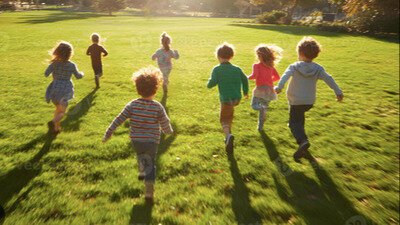
Children need natural green space for their physical and mental health.
PLEASE DO NOT REDO THE SOCCER FIELD AT PIET WITH ARTIFICIAL TURF. PLEASE CONSIDER SPENDING THAT BUDGET ON IMPROVING OUR GREENSPACE INSTEAD.
Summary
Per Mount Sinai (2025), artificial turf poses a demonstrated health hazard due to chemical exposure and heat exposure. Children are uniquely vulnerable to both.
Chemicals of concern and known carcinogens are present in rubber crumb infill, alternative infill materials, plastic grass blades, turf pads and matting.
Artificial turf can be dangerously hot, with a very real risk of burns, dehydration, heat stress, or heat stroke.
It is impossible to implement artificial turf safety guidelines in a school setting.
Real grass combats heat and offers health benefits (improved immune function, gut health, stress reduction, overall well-being).
Artificial turf is incredibly expensive and has a negative envionmental impact. Artificial turf requires regular maintenance, chemical cleaning, and periodic replacement. It does not eliminate the need for ongoing field maintenance.
Supporting Contents
1) Reliable Scientific Data
2) Children Uniquely Vulnerable
3) Artificial Turf – Chemical Exposure & Impossibility of Safe Use
4) Artificial Turf – Heat Exposure
5) Real Grass – Benefits of Exposure
6) Cost & Environment
Notes
1) Reliable Scientific Data
The Health Impact Assessment of artificial turf issued by Toronto Public Health (2015) is fully 10 years old and totally ignores the mounting evidence of the health hazards of artificial turf.
The report from Mount Sinai (one of the world’s top research hospitals) dated May 2025 highlights health hazards due to chemical exposure and heat exposure [1]. See:
https://mountsinaiexposomics.org/artificial-turf/
and
https://mountsinaiexposomics.org/position-statement-on-the-use-of-artificial-turf-surfaces/
Use of the rubber infill in artificial turf has already been made illegal in the EU (September 2023).
2) Children Uniquely Vulnerable
Children are uniquely vulnerable to harmful exposures from artificial turf surfaces because of their unique physiology and behaviours, rapidly developing organ systems, and immature detoxification mechanisms. Children may be exposed to artificial turf chemicals through ingestion, inhalation, skin absorption, and open wounds or broken skin. Children breathe faster than adults, putting them at greater risk for inhalation of chemicals that off-gas from turf fields. Youth have a higher surface area to body mass ratio, produce more body heat per unit mass, and sweat less than adults, all factors that increase susceptibility to heat injuries that have been observed on artificial turf fields. Vulnerability to turf chemicals persists through the teen years as the reproductive and nervous systems continue to develop beyond the first two decades of life. Children have more future years of life over which chronic diseases linked to the chemicals in turf develop. (Children’s Environmental Health Center of Mount Sinai)
3) Artificial Turf – Chemical Exposure & Impossibility of Safe Use
Artificial turf contains 14 known carcinogens, neurotoxiants, and reproductive toxicants. Every component of an artificial field is potentially dangerous, and there is no demonstrably safe alternative to rubber crumb infill. Chemicals of concern are also present in plastic grass blades, turf pads and matting. Alternative infill materials contain known carcinogens and neurotoxins including polycyclic aromatic hydrocarbons (PAHs), lead, zinc, and black carbon. (Mount Sinai)
The instructions on how to limit (not eliminate) exposure to artificial turf include:
while playing,
o never touch your mouth
o never sit down
o never be barefoot
This is not at all conducive to safe use and enjoyment by children.
And after playing,
o immediately shower
o brush hair thoroughly
o remove shoes and gear outside and shake them out over the garbage can
o immediately disinfect any scrape or abrasion
Every part of this is completely impossible in a school[2].
4) Artificial Turf – Heat Exposure
Heat is a danger. Temperatures continue to rise. PiET students have already reported feeling ill due to high temperatures at recess and in the classroom, causing some parents to keep them home from school until temperatures cooled.
On even mildly hot days, the artificial field could be dangerously hot and unusable. It would also contribute to high temperatures in the surrounding area and inside the school.
Artificial turf significantly increases heat, with temperatures up to 60 degrees higher than natural grass and as high as 200 degrees Fahrenheit on a summer day with the air at head height much hotter than with natural grass increasing the risk of skin burns and heat illness. Vigorous play in these conditions conveys a very real risk of burns, dehydration, heat stress, or heat stroke (Mount Sinai).
5) Real Grass – Benefits of Exposure
There is abundant scientific documentation of the physical and psychological health benefits of daily contact with green space and soil (improved immune function, gut health, stress reduction, overall well-being). Real grass and green spaces also combat the heat island effect.
The soccer field represents a large portion of the remaining greenspace to which our children have access at recess. Much of the exterior of the school is already paved and the recent expansion of the day-care has further decreased the outdoor space.
6) Cost & Environment
Artificial turf is fantastically expensive compared to real grass (including installation, maintenance, and replacement). It requires regular maintenance, chemical cleaning, and periodic replacement. It does not eliminate the need for ongoing field maintenance and has very high installation and carrying costs.
Many countries in Europe and Asia are pursuing policies to improve human health, lower temperatures, and combat flood risks by removing artificial surfaces and replacing them with grass or gardens (just a few examples are the “sponge city” architecture implemented in China and France and the Netherland’s “depaving” campaign since 2021). The prevailing wisdom is to increase green spaces, not remove them.
Environment and cost each merit lengthy discussion that is beyond the scope of this petition. The health hazards alone are overwhelming and more than sufficient to conclude that artificial turf should not be an option for our field.
Notes
All health data is referenced from the above-mentioned Mount Sinai reports. For ease of reading, academic referencing, paraphrasing, and quoting rules have not been applied here.
1 Health risks have been confirmed by the Ontario Association of Landscape Architects, McMaster University (citing Yale, 2024), and the UK National Institute of Health (2022), to name just a few:
https://www.oala.ca/ground-49-health-toxic-turf
https://pmc.ncbi.nlm.nih.gov/articles/PMC10262297/
https://peach.healthsci.mcmaster.ca/the-hidden-truth-behind-artificial-turf/
2 Even the outdated Toronto Public Health report recommends: 1) washing hands after play; 2) preventing exposed skin from coming in contact with artificial turf on hot days; and 3) cleaning, disinfecting, and covering abrasions immediately, all of which is impossible to implement for every child during and after each recess period.

290
The Issue
The field at PiET (École élémentaire Pierre-Elliott-Trudeau) will be redone in the summer of 2026. The CS Viamonde Conseil Scolaire is looking at installing artificial turf. There has been no public consultation.
Petition
The PiET field should remain natural and be redone with real grass only.
Children should not be exposed to dangerous known carcinogens and conditions causing heat-related injury and illness.
Children need natural green space for their physical and mental health.
PLEASE DO NOT REDO THE SOCCER FIELD AT PIET WITH ARTIFICIAL TURF. PLEASE CONSIDER SPENDING THAT BUDGET ON IMPROVING OUR GREENSPACE INSTEAD.
Summary
Per Mount Sinai (2025), artificial turf poses a demonstrated health hazard due to chemical exposure and heat exposure. Children are uniquely vulnerable to both.
Chemicals of concern and known carcinogens are present in rubber crumb infill, alternative infill materials, plastic grass blades, turf pads and matting.
Artificial turf can be dangerously hot, with a very real risk of burns, dehydration, heat stress, or heat stroke.
It is impossible to implement artificial turf safety guidelines in a school setting.
Real grass combats heat and offers health benefits (improved immune function, gut health, stress reduction, overall well-being).
Artificial turf is incredibly expensive and has a negative envionmental impact. Artificial turf requires regular maintenance, chemical cleaning, and periodic replacement. It does not eliminate the need for ongoing field maintenance.
Supporting Contents
1) Reliable Scientific Data
2) Children Uniquely Vulnerable
3) Artificial Turf – Chemical Exposure & Impossibility of Safe Use
4) Artificial Turf – Heat Exposure
5) Real Grass – Benefits of Exposure
6) Cost & Environment
Notes
1) Reliable Scientific Data
The Health Impact Assessment of artificial turf issued by Toronto Public Health (2015) is fully 10 years old and totally ignores the mounting evidence of the health hazards of artificial turf.
The report from Mount Sinai (one of the world’s top research hospitals) dated May 2025 highlights health hazards due to chemical exposure and heat exposure [1]. See:
https://mountsinaiexposomics.org/artificial-turf/
and
https://mountsinaiexposomics.org/position-statement-on-the-use-of-artificial-turf-surfaces/
Use of the rubber infill in artificial turf has already been made illegal in the EU (September 2023).
2) Children Uniquely Vulnerable
Children are uniquely vulnerable to harmful exposures from artificial turf surfaces because of their unique physiology and behaviours, rapidly developing organ systems, and immature detoxification mechanisms. Children may be exposed to artificial turf chemicals through ingestion, inhalation, skin absorption, and open wounds or broken skin. Children breathe faster than adults, putting them at greater risk for inhalation of chemicals that off-gas from turf fields. Youth have a higher surface area to body mass ratio, produce more body heat per unit mass, and sweat less than adults, all factors that increase susceptibility to heat injuries that have been observed on artificial turf fields. Vulnerability to turf chemicals persists through the teen years as the reproductive and nervous systems continue to develop beyond the first two decades of life. Children have more future years of life over which chronic diseases linked to the chemicals in turf develop. (Children’s Environmental Health Center of Mount Sinai)
3) Artificial Turf – Chemical Exposure & Impossibility of Safe Use
Artificial turf contains 14 known carcinogens, neurotoxiants, and reproductive toxicants. Every component of an artificial field is potentially dangerous, and there is no demonstrably safe alternative to rubber crumb infill. Chemicals of concern are also present in plastic grass blades, turf pads and matting. Alternative infill materials contain known carcinogens and neurotoxins including polycyclic aromatic hydrocarbons (PAHs), lead, zinc, and black carbon. (Mount Sinai)
The instructions on how to limit (not eliminate) exposure to artificial turf include:
while playing,
o never touch your mouth
o never sit down
o never be barefoot
This is not at all conducive to safe use and enjoyment by children.
And after playing,
o immediately shower
o brush hair thoroughly
o remove shoes and gear outside and shake them out over the garbage can
o immediately disinfect any scrape or abrasion
Every part of this is completely impossible in a school[2].
4) Artificial Turf – Heat Exposure
Heat is a danger. Temperatures continue to rise. PiET students have already reported feeling ill due to high temperatures at recess and in the classroom, causing some parents to keep them home from school until temperatures cooled.
On even mildly hot days, the artificial field could be dangerously hot and unusable. It would also contribute to high temperatures in the surrounding area and inside the school.
Artificial turf significantly increases heat, with temperatures up to 60 degrees higher than natural grass and as high as 200 degrees Fahrenheit on a summer day with the air at head height much hotter than with natural grass increasing the risk of skin burns and heat illness. Vigorous play in these conditions conveys a very real risk of burns, dehydration, heat stress, or heat stroke (Mount Sinai).
5) Real Grass – Benefits of Exposure
There is abundant scientific documentation of the physical and psychological health benefits of daily contact with green space and soil (improved immune function, gut health, stress reduction, overall well-being). Real grass and green spaces also combat the heat island effect.
The soccer field represents a large portion of the remaining greenspace to which our children have access at recess. Much of the exterior of the school is already paved and the recent expansion of the day-care has further decreased the outdoor space.
6) Cost & Environment
Artificial turf is fantastically expensive compared to real grass (including installation, maintenance, and replacement). It requires regular maintenance, chemical cleaning, and periodic replacement. It does not eliminate the need for ongoing field maintenance and has very high installation and carrying costs.
Many countries in Europe and Asia are pursuing policies to improve human health, lower temperatures, and combat flood risks by removing artificial surfaces and replacing them with grass or gardens (just a few examples are the “sponge city” architecture implemented in China and France and the Netherland’s “depaving” campaign since 2021). The prevailing wisdom is to increase green spaces, not remove them.
Environment and cost each merit lengthy discussion that is beyond the scope of this petition. The health hazards alone are overwhelming and more than sufficient to conclude that artificial turf should not be an option for our field.
Notes
All health data is referenced from the above-mentioned Mount Sinai reports. For ease of reading, academic referencing, paraphrasing, and quoting rules have not been applied here.
1 Health risks have been confirmed by the Ontario Association of Landscape Architects, McMaster University (citing Yale, 2024), and the UK National Institute of Health (2022), to name just a few:
https://www.oala.ca/ground-49-health-toxic-turf
https://pmc.ncbi.nlm.nih.gov/articles/PMC10262297/
https://peach.healthsci.mcmaster.ca/the-hidden-truth-behind-artificial-turf/
2 Even the outdated Toronto Public Health report recommends: 1) washing hands after play; 2) preventing exposed skin from coming in contact with artificial turf on hot days; and 3) cleaning, disinfecting, and covering abrasions immediately, all of which is impossible to implement for every child during and after each recess period.
The Decision Makers

Supporter Voices
Petition Updates
Share this petition
Petition created on October 15, 2025