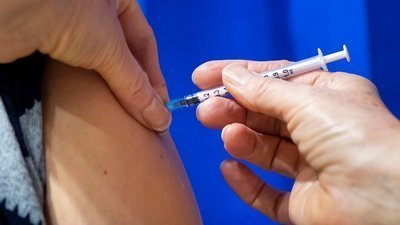
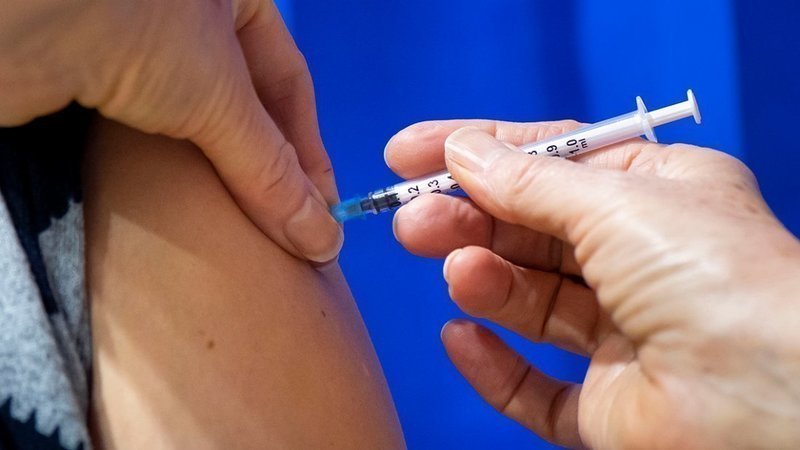
Oxford Vaccine injections should be ASPIRATED first to avoid rare blood clotting events.
Oxford Vaccine injections should be ASPIRATED first to avoid rare blood clotting events.
The Issue
There is tons of evidence, both new and old, that accidental intravenous injection of adenovirus vector vaccines triggers immune thrombocytopenia and other complications. All that is needed to avoid such incidents, however rare, is simple aspiration the moment after insertion of the needle. This is another ridiculous blind spot for the UK's vaccine rollout, seeing as many are hesitant precisely because of the rare complications.
A study just released specifically looked at this. Not peer reviewed yet (but hopefully soon). Here are some excerpts, and their summary:
Thrombocytopenia and splenic platelet directed immune responses after intravenous ChAdOx1 nCov-19 (aka adenovirus vector vaccine) administration
https://www.biorxiv.org/content/10.11
•Recently a rare and novel complication of SARS-CoV-2 targeted adenovirus vaccines has emerged: thrombosis with thrombocytopenia syndrome (TTS)
*Low platelets, clot formation at unusual sites and platelet-activating PF4-polyanion antibodies (reminiscent of heparin-induced thrombocytopenia).
*In vitro and in vivo models Platelet-targeted autoimmunity.
*We show that intravenous but not intramuscular injection of ChAdOx1 nCov-19 triggers platelet-adenovirus aggregate formation and platelet activation. After intravenous injection, these aggregates are phagocytosed by macrophages in the spleen This is followed by a pronounced B-cell response with the emergence of circulating antibodies binding to platelets.
*Our work contributes to the understanding of TTS and highlights accidental intravenous injection as potential mechanism for post-vaccination TTS.
*Hence, safe intramuscular injection, with aspiration prior to injection, could be a potential preventive measure when administering adenovirus-based vaccines. Consistent results with mice and human platelets Vaccines are routinely administered intramuscularly (i.m.) and trigger immune responses mainly in the draining lymph nodes.
*Based on our finding that adenoviral vaccine binds to blood platelets, we hypothesized that accidental intravenous injection of adenoviral vaccine might lead to platelet-adenovirus aggregate formation with platelet activation.
*The decline in platelet count was dose-dependent and correlated directly with adenovirus-positive platelets circulating in the blood one hour after i.v. injection. *Intravenous but not i.m. injection of ChAdOx1 nCov-19 resulted in a strong increase in platelet-adenovirus aggregates.
Authors:
Medizinische Klinik und Poliklinik I University Hospital Ludwig-Maximilian University Munich, Germany DZHK (German Centre for Cardiovascular Research), partner site Munich Heart Alliance, Germany Medizinische Klinik und Poliklinik III University Hospital Ludwig-Maximilian University Munich, Germany Division of Immunology, Transplantation and Infectious Diseases, IRCCS San Raffaele Scientific, Institute, Milan, Italy.
And here is a small sample of previous peer reviewed evidence:
*Intravenous administration of recombinant adenoviruses causes thrombocytopenia, anemia and erythroblastosis in rabbits, (Journal of Gene Medicine, 1999)
https://pubmed.ncbi.nlm.nih.gov/10738
*The systemic administration of a therapeutic dose of 5 x 10(11) infectious particles/kg (infusion time 20 min) led to an average reduction of 80-90% in the platelet count within 48 h. Adenovirus-induced thrombocytopenia: the role of von Willebrand factor and P-selectin in mediating accelerated platelet clearance, (Blood, 2007)
https://pubmed.ncbi.nlm.nih.gov/17148
*Thrombocytopenia has been consistently reported following the administration of adenoviral gene transfer vectors. The virus activates platelets and induces platelet-leukocyte aggregate formation. Polyethylene glycol modification of adenovirus reduces platelet activation, endothelial cell activation, and thrombocytopenia, (Human gene therapy, 2007)
https://pubmed.ncbi.nlm.nih.gov/17767
*Thrombocytopenia is one of the complications for in vivo administration of adenovirus serotype 5 (Ad5) vectors after intravenous injection. Platelet-adenovirus vs. inert particles interaction: effect on aggregation and the role of platelet membrane receptors, (Platelets, 2013)
https://pubmed.ncbi.nlm.nih.gov/22812
*Virus mediated gene therapy applications are still challenged by the resultant thrombocytopenia and the mechanism(s) of platelet-foreign particles interaction remains unclear. Pseudotyping Serotype 5 Adenovirus with the Fiber from Other Serotypes Uncovers a Key Role of the Fiber Protein in Adenovirus 5-Induced Thrombocytopenia, (Human gene therapy, 2016) https://pubmed.ncbi.nlm.nih.gov/26757
We need Nadhim Zahawi's full attention - to look at this properly, and QUICKLY, so that how the vaccine is administered is recalibrated accordingly across the UK, and no more lives are lost unnecessarily.

The Issue
There is tons of evidence, both new and old, that accidental intravenous injection of adenovirus vector vaccines triggers immune thrombocytopenia and other complications. All that is needed to avoid such incidents, however rare, is simple aspiration the moment after insertion of the needle. This is another ridiculous blind spot for the UK's vaccine rollout, seeing as many are hesitant precisely because of the rare complications.
A study just released specifically looked at this. Not peer reviewed yet (but hopefully soon). Here are some excerpts, and their summary:
Thrombocytopenia and splenic platelet directed immune responses after intravenous ChAdOx1 nCov-19 (aka adenovirus vector vaccine) administration
https://www.biorxiv.org/content/10.11
•Recently a rare and novel complication of SARS-CoV-2 targeted adenovirus vaccines has emerged: thrombosis with thrombocytopenia syndrome (TTS)
*Low platelets, clot formation at unusual sites and platelet-activating PF4-polyanion antibodies (reminiscent of heparin-induced thrombocytopenia).
*In vitro and in vivo models Platelet-targeted autoimmunity.
*We show that intravenous but not intramuscular injection of ChAdOx1 nCov-19 triggers platelet-adenovirus aggregate formation and platelet activation. After intravenous injection, these aggregates are phagocytosed by macrophages in the spleen This is followed by a pronounced B-cell response with the emergence of circulating antibodies binding to platelets.
*Our work contributes to the understanding of TTS and highlights accidental intravenous injection as potential mechanism for post-vaccination TTS.
*Hence, safe intramuscular injection, with aspiration prior to injection, could be a potential preventive measure when administering adenovirus-based vaccines. Consistent results with mice and human platelets Vaccines are routinely administered intramuscularly (i.m.) and trigger immune responses mainly in the draining lymph nodes.
*Based on our finding that adenoviral vaccine binds to blood platelets, we hypothesized that accidental intravenous injection of adenoviral vaccine might lead to platelet-adenovirus aggregate formation with platelet activation.
*The decline in platelet count was dose-dependent and correlated directly with adenovirus-positive platelets circulating in the blood one hour after i.v. injection. *Intravenous but not i.m. injection of ChAdOx1 nCov-19 resulted in a strong increase in platelet-adenovirus aggregates.
Authors:
Medizinische Klinik und Poliklinik I University Hospital Ludwig-Maximilian University Munich, Germany DZHK (German Centre for Cardiovascular Research), partner site Munich Heart Alliance, Germany Medizinische Klinik und Poliklinik III University Hospital Ludwig-Maximilian University Munich, Germany Division of Immunology, Transplantation and Infectious Diseases, IRCCS San Raffaele Scientific, Institute, Milan, Italy.
And here is a small sample of previous peer reviewed evidence:
*Intravenous administration of recombinant adenoviruses causes thrombocytopenia, anemia and erythroblastosis in rabbits, (Journal of Gene Medicine, 1999)
https://pubmed.ncbi.nlm.nih.gov/10738
*The systemic administration of a therapeutic dose of 5 x 10(11) infectious particles/kg (infusion time 20 min) led to an average reduction of 80-90% in the platelet count within 48 h. Adenovirus-induced thrombocytopenia: the role of von Willebrand factor and P-selectin in mediating accelerated platelet clearance, (Blood, 2007)
https://pubmed.ncbi.nlm.nih.gov/17148
*Thrombocytopenia has been consistently reported following the administration of adenoviral gene transfer vectors. The virus activates platelets and induces platelet-leukocyte aggregate formation. Polyethylene glycol modification of adenovirus reduces platelet activation, endothelial cell activation, and thrombocytopenia, (Human gene therapy, 2007)
https://pubmed.ncbi.nlm.nih.gov/17767
*Thrombocytopenia is one of the complications for in vivo administration of adenovirus serotype 5 (Ad5) vectors after intravenous injection. Platelet-adenovirus vs. inert particles interaction: effect on aggregation and the role of platelet membrane receptors, (Platelets, 2013)
https://pubmed.ncbi.nlm.nih.gov/22812
*Virus mediated gene therapy applications are still challenged by the resultant thrombocytopenia and the mechanism(s) of platelet-foreign particles interaction remains unclear. Pseudotyping Serotype 5 Adenovirus with the Fiber from Other Serotypes Uncovers a Key Role of the Fiber Protein in Adenovirus 5-Induced Thrombocytopenia, (Human gene therapy, 2016) https://pubmed.ncbi.nlm.nih.gov/26757
We need Nadhim Zahawi's full attention - to look at this properly, and QUICKLY, so that how the vaccine is administered is recalibrated accordingly across the UK, and no more lives are lost unnecessarily.
Petition Closed
Share this petition
The Decision Makers

Petition Updates
Share this petition
Petition created on 30 June 2021