Menai Data Centre - SAY NO!
The Issue
In November 2025, Westminster announced the Menai area as an "AI Datacentre Growth Zone".
Now, an English company called Gwelyfenai Ltd., plan to build a major 333,440sqm data centre campus on the former Ferodo factory site in Caernarfon AND it's surrounding areas. Right on the shore of the beautiful Menai Strait.
The application is C25/0740/20/EIA and is currently pending with Cyngor Gwynedd.
As local residents, our concerns about this project amount to the following:
1 – Landscape
The tallest buildings would be 100 feet high, compared to the 29 foot height of the former Ferodo factory. That's 3 metres higher than the Marquis statue on Anglesey!
The site will also cover approximately 41 hectares (around 100 acres, or roughly 57 football pitches), compared to a mere 2.2 hectares for the former Ferodo factory. The developer says approximately 8 hectares will be used for ecological enhancement.
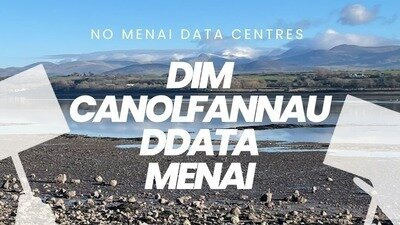
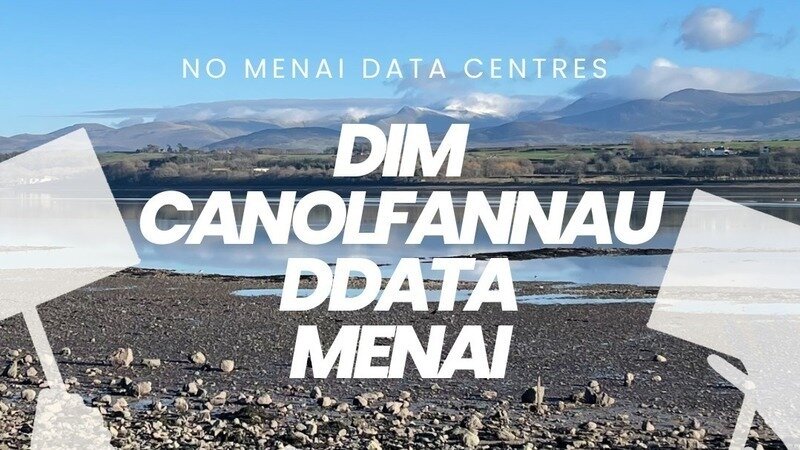
This is a HUGE data centre that will significantly change the local landscape. The site is situated on an open and visible coastal site which forms the front elevation of extensive views of Snowdonia from the Anglesey AONB and falls within the LCA01 (Bangor Coastal Plain) Landscape Character. Previous development proposals (holiday site) on the same land have been rejected in part because of the detrimental visual impact it would have on the landscape. Gwynedd council advised that only "well-designed" and "small to very small holiday lodges" would be appropriate on the site.
2 - Electricity supply
The development is proposed with an enormous 450 MW electricity connection. For comparison, the Welsh Government recently described 400 MW of new wind generation as enough to meet the annual average electricity needs of around 350,000 Welsh homes — roughly a quarter of all Welsh households.
When there is insufficient supply, the data centre will rely on diesel generators. This data centre will run 24/7, 365 days a year.
Previous data centres have resulted in the surrounding areas being hit with a sharp increase in their electricity bills as the local demand skyrockets.
3 - Water supply and pollution
The environmental assessment identifies a potential maximum water demand of almost 12 million litres per day, while the developer says the most likely demand would be around 700,000 litres per day.
They propose to take this from the local clean drinking water supply from Dŵr Cymru. They then plan to either dump this into the nearby Waterloo pump station. They say they will filter this water, but we do not know if this will be done sufficiently and not effect local wildlife. They have also provided no information on how they intend to cool it. Waste water from data centres is known to be hot, an increase of temperature in the Menai, should they end up dumping water in there, would have disastrous consequences for the ecosystem.
Dŵr Cymru (Welsh Water) has responded to the planning application by issuing a holding objection. They were concerned by a lack of information about what cooling technology they will use, or the amount of water required. They also said there in not enough capacity in the local public sewerage network, which locals already know too well from the repeated dumping of raw sewage into our waterways.
One of the directors of Gwelyfenai – the new company that has been established to provide this data centre – is Peter O'Dowd. His company, Maybrook Developments (Appley Bridge) Ltd, pleaded guilty for six environmental offences on other sites they managed: including failing to comply with the conditions of an environmental permit, storing waste that wasn’t covered by the permit, and failing to conduct proper landfill-gas, groundwater and surface-water monitoring . Peter O’Dowd was personally charged for the same offences, but has pleaded not guilty.
So we should be asking: what independent environmental monitoring, financial safeguards and enforceable remediation conditions would apply to a project of this scale?
4 - Diesel and air pollution?
When there is insufficient electricity supply, the data centre will rely solely on diesel generators. This data centre will run 24/7, 365 days a year. Even a brief interruption can cause serious problems.
The proposed development includes substantial backup-generation infrastructure, and the environmental assessment models approximately 5.7 million litres of diesel per year in connection with this generation.
The Environment Agency notes that unabated diesel engines can emit high levels of nitrogen oxides (NOx), and that significant installed capacity can breach short-term air-quality standards within a few hours of operation.
They say this is only to be used as back-up, but the electricity grid is currently struggling to connect the rapidly expanding number of proposed data centres in Britain. The Government has said some projects face waits of up to 15 years for a grid connection.
What happens if this data centre is built before its full grid connection is available?
5 - Impact on local wildlife and ecosystems
Just the vast scale of construction will destroy the habitat of local wildlife, but the continuous operation is also set to displace countless species that call this area home. Data centres generate mechanical noise, including a constant low-frequency hum noise from cooling systems, fans, pumps, and other equipment. People living near these facilities have raised concerns about this type of noise and its impact on quality of life and sleep; the impact on insects, bees and other animals that rely on the area would be huge, especially considering that many species can hear frequencies that we can’t.
The ecosystem of the Menai - a Marine Special Area of Conservation (SAC) which also contains seven different adjoining Sites of Significant Interest (SSSI) - is also a major concern. The local Anglesey Sea Zoo, which is opposite the proposed site on the other side of the Menai, are involved in conservation work for various species in the Menai. They currently pump salt water directly from the Menai into their tanks to create natural habitats for the creatures in their care. They only found out about this proposal 2 days ago! They weren't even consulted.
Instead of allowing this project to proceed, Gwelyfenai Ltd. should be asked to explore alternative locations and better technologies that would mitigate its impact. Disused quarries could be explored, for example. Closed-loop water cooling systems that do not take from the local drinking water supply. Investing in and then harnessing renewable energy sources. A higher cost and more planning for the multi-millionaire company directors, but far less of a negative impact on our land, our people and our wildlife here in North Wales.
The deadline for the planning application is on 22nd September 2026.
The stakes are high, and time is pressing. We need your support to make our voices heard. Help us convince the local council to reject the plans for the mega data-centre in Caernarfon and prioritise the preservation of what makes our home so special.
By signing this petition, you are standing up for our community, our environment, our wildlife and our future.

1,074
The Issue
In November 2025, Westminster announced the Menai area as an "AI Datacentre Growth Zone".
Now, an English company called Gwelyfenai Ltd., plan to build a major 333,440sqm data centre campus on the former Ferodo factory site in Caernarfon AND it's surrounding areas. Right on the shore of the beautiful Menai Strait.
The application is C25/0740/20/EIA and is currently pending with Cyngor Gwynedd.
As local residents, our concerns about this project amount to the following:
1 – Landscape
The tallest buildings would be 100 feet high, compared to the 29 foot height of the former Ferodo factory. That's 3 metres higher than the Marquis statue on Anglesey!
The site will also cover approximately 41 hectares (around 100 acres, or roughly 57 football pitches), compared to a mere 2.2 hectares for the former Ferodo factory. The developer says approximately 8 hectares will be used for ecological enhancement.
This is a HUGE data centre that will significantly change the local landscape. The site is situated on an open and visible coastal site which forms the front elevation of extensive views of Snowdonia from the Anglesey AONB and falls within the LCA01 (Bangor Coastal Plain) Landscape Character. Previous development proposals (holiday site) on the same land have been rejected in part because of the detrimental visual impact it would have on the landscape. Gwynedd council advised that only "well-designed" and "small to very small holiday lodges" would be appropriate on the site.
2 - Electricity supply
The development is proposed with an enormous 450 MW electricity connection. For comparison, the Welsh Government recently described 400 MW of new wind generation as enough to meet the annual average electricity needs of around 350,000 Welsh homes — roughly a quarter of all Welsh households.
When there is insufficient supply, the data centre will rely on diesel generators. This data centre will run 24/7, 365 days a year.
Previous data centres have resulted in the surrounding areas being hit with a sharp increase in their electricity bills as the local demand skyrockets.
3 - Water supply and pollution
The environmental assessment identifies a potential maximum water demand of almost 12 million litres per day, while the developer says the most likely demand would be around 700,000 litres per day.
They propose to take this from the local clean drinking water supply from Dŵr Cymru. They then plan to either dump this into the nearby Waterloo pump station. They say they will filter this water, but we do not know if this will be done sufficiently and not effect local wildlife. They have also provided no information on how they intend to cool it. Waste water from data centres is known to be hot, an increase of temperature in the Menai, should they end up dumping water in there, would have disastrous consequences for the ecosystem.
Dŵr Cymru (Welsh Water) has responded to the planning application by issuing a holding objection. They were concerned by a lack of information about what cooling technology they will use, or the amount of water required. They also said there in not enough capacity in the local public sewerage network, which locals already know too well from the repeated dumping of raw sewage into our waterways.
One of the directors of Gwelyfenai – the new company that has been established to provide this data centre – is Peter O'Dowd. His company, Maybrook Developments (Appley Bridge) Ltd, pleaded guilty for six environmental offences on other sites they managed: including failing to comply with the conditions of an environmental permit, storing waste that wasn’t covered by the permit, and failing to conduct proper landfill-gas, groundwater and surface-water monitoring . Peter O’Dowd was personally charged for the same offences, but has pleaded not guilty.
So we should be asking: what independent environmental monitoring, financial safeguards and enforceable remediation conditions would apply to a project of this scale?
4 - Diesel and air pollution?
When there is insufficient electricity supply, the data centre will rely solely on diesel generators. This data centre will run 24/7, 365 days a year. Even a brief interruption can cause serious problems.
The proposed development includes substantial backup-generation infrastructure, and the environmental assessment models approximately 5.7 million litres of diesel per year in connection with this generation.
The Environment Agency notes that unabated diesel engines can emit high levels of nitrogen oxides (NOx), and that significant installed capacity can breach short-term air-quality standards within a few hours of operation.
They say this is only to be used as back-up, but the electricity grid is currently struggling to connect the rapidly expanding number of proposed data centres in Britain. The Government has said some projects face waits of up to 15 years for a grid connection.
What happens if this data centre is built before its full grid connection is available?
5 - Impact on local wildlife and ecosystems
Just the vast scale of construction will destroy the habitat of local wildlife, but the continuous operation is also set to displace countless species that call this area home. Data centres generate mechanical noise, including a constant low-frequency hum noise from cooling systems, fans, pumps, and other equipment. People living near these facilities have raised concerns about this type of noise and its impact on quality of life and sleep; the impact on insects, bees and other animals that rely on the area would be huge, especially considering that many species can hear frequencies that we can’t.
The ecosystem of the Menai - a Marine Special Area of Conservation (SAC) which also contains seven different adjoining Sites of Significant Interest (SSSI) - is also a major concern. The local Anglesey Sea Zoo, which is opposite the proposed site on the other side of the Menai, are involved in conservation work for various species in the Menai. They currently pump salt water directly from the Menai into their tanks to create natural habitats for the creatures in their care. They only found out about this proposal 2 days ago! They weren't even consulted.
Instead of allowing this project to proceed, Gwelyfenai Ltd. should be asked to explore alternative locations and better technologies that would mitigate its impact. Disused quarries could be explored, for example. Closed-loop water cooling systems that do not take from the local drinking water supply. Investing in and then harnessing renewable energy sources. A higher cost and more planning for the multi-millionaire company directors, but far less of a negative impact on our land, our people and our wildlife here in North Wales.
The deadline for the planning application is on 22nd September 2026.
The stakes are high, and time is pressing. We need your support to make our voices heard. Help us convince the local council to reject the plans for the mega data-centre in Caernarfon and prioritise the preservation of what makes our home so special.
By signing this petition, you are standing up for our community, our environment, our wildlife and our future.
Supporter Voices
Petition Updates
Share this petition
Petition created on 15 September 2026