Rescind Marion County School Closure Order
The Issue
Mayor Joe Hogsett and Marion County Public Health Department
Director Dr. Virginia Caine should rescind the portions of the November 12, 2020 order related to school closure.
It is true that cases and hospitalization are rising in Marion County. However, as of the date of the order the current rate of hospital admissions is still ~50% of the level reached in the early spring, and likewise there are currently 207 ICU beds occupied by COVID-19 patients in ISDH district 5 (Marion and immediately surrounding counties) compared to 437 on April 8. While no one wants to reach those levels again, closing all schools is not an effective step in reducing the spread.
Activities where masks can be worn and distancing can be maintained do not contribute to infection levels. Infection is caused by close contact - at least 15 minutes within six feet of another person while not masked. In-person elementary and middle-school has been demonstrated not to be a source of spread.
The November 12 order from Indianapolis and Marion County officials will close all schools, which are not a source of spread, while allowing bars to remain open at 25% capacity, and indoor restaurant dining at 50% capacity, and concerts and event venues to operate at the lesser of 25% capacity or 50 people. Unlike schools and other venues where masks are worn and distancing can be maintained, bars, restaurants and social gatherings are a VERY significant source of spread.
With the benefit of hindsight, the closure orders by the state last spring were overly broad. They covered activities that were not a risk, and parts of the state where the virus was not prevalent. At the time, very little was known about how the virus was spread, and what were the risks of infection. While the mistake of the blanket closures in the past are understandable based on the lack of information when they were made, those overly strict orders in the past are contributing to a lack of compliance with the guidelines today that are based on what we know works.
Right now, the virus is spreading because too many people are engaging in close-contact activity without masks. The fact that this behavior is risky is not a secret, and not disputed by any medical authority. People are ignoring the advice and/or disobeying the orders to do it, in part because previous advice and orders proved to be wrong.
Today's order, by restricting an essential activity that we know is not a risk, will have the effect of further undermining compliance, only this time we will not have the excuse that we didn't know any better.
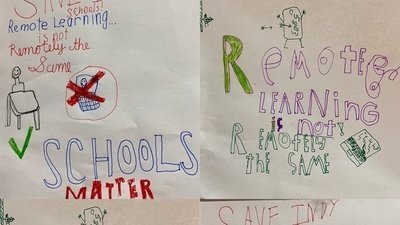
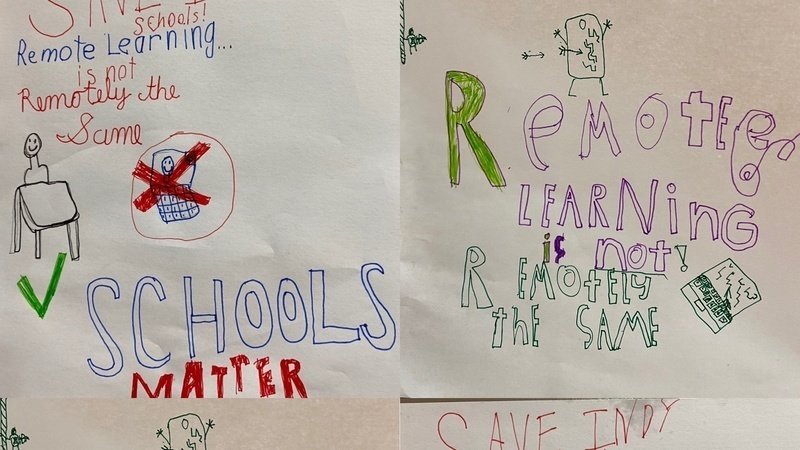
While doing little to nothing to reduce the spread, the cost of school closure is enormous. In every family with elementary and middle school children where both parents work outside the home, a parent will have to defer professional obligations, hire outside help, or place the children in a group setting, the latter of which, of course would offset any spread reduction that might have been achieved by closing the school. Furthermore, for many families, none of these options are viable - the parent cannot afford not to work, but the cost of child-care exceeds disposable income. From a learning standpoint, for many children, particularly elementary school ages, virtual school/remote learning is simply not effective. The time away from the classroom will set these children back, potentially for the rest of their lives. In poorer communities, schools also serve as a key source of nutrition and access to social services.
While the Indianapolis area is not yet experiencing hospitalization at rates equal to the spring here or other parts of the state currently, some government measures to ensure that we do not reach those levels again may be prudent. However the steps taken should be evaluated based on the direct efficacy in reducing the spread in the activity being regulated, the costs involved, and the secondary effects on overall compliance. Blanket school closure fails in all three areas.
If Indianapolis and Marion County are serious about reducing spread, they should be targeting the activities know to be high risk. Before taking away anyone's freedoms, they should consider if the rule imposed will be followed and/or cause non-compliance in other areas that will overwhelm any benefits achieved by the restrictions.
We are sympathetic to the owners and employees of the hospitality industry, and whatever steps are taken should include help to make sure people are not losing their jobs and businesses. However, right now, we are prioritizing letting people go to bars over having kids in schools. If we have to shut something down, a temporary ban on indoor dining and bars would have a much greater impact on case levels and hospitalization while negatively impacting a much smaller number of people than school closure. Government support for those effected by closing those businesses would be a fraction of the costs imposed by school shutdowns. A thoughtful policy that explains the risk that is being targeted and including concrete benchmarks for reopening could increase compliance and reduce the 'speak-easy' effect.
Whatever steps may prove necessary, closing schools should be the last on the list. The mayor and the director should rescind the part of the order relating to schools immediately.

The Issue
Mayor Joe Hogsett and Marion County Public Health Department
Director Dr. Virginia Caine should rescind the portions of the November 12, 2020 order related to school closure.
It is true that cases and hospitalization are rising in Marion County. However, as of the date of the order the current rate of hospital admissions is still ~50% of the level reached in the early spring, and likewise there are currently 207 ICU beds occupied by COVID-19 patients in ISDH district 5 (Marion and immediately surrounding counties) compared to 437 on April 8. While no one wants to reach those levels again, closing all schools is not an effective step in reducing the spread.
Activities where masks can be worn and distancing can be maintained do not contribute to infection levels. Infection is caused by close contact - at least 15 minutes within six feet of another person while not masked. In-person elementary and middle-school has been demonstrated not to be a source of spread.
The November 12 order from Indianapolis and Marion County officials will close all schools, which are not a source of spread, while allowing bars to remain open at 25% capacity, and indoor restaurant dining at 50% capacity, and concerts and event venues to operate at the lesser of 25% capacity or 50 people. Unlike schools and other venues where masks are worn and distancing can be maintained, bars, restaurants and social gatherings are a VERY significant source of spread.
With the benefit of hindsight, the closure orders by the state last spring were overly broad. They covered activities that were not a risk, and parts of the state where the virus was not prevalent. At the time, very little was known about how the virus was spread, and what were the risks of infection. While the mistake of the blanket closures in the past are understandable based on the lack of information when they were made, those overly strict orders in the past are contributing to a lack of compliance with the guidelines today that are based on what we know works.
Right now, the virus is spreading because too many people are engaging in close-contact activity without masks. The fact that this behavior is risky is not a secret, and not disputed by any medical authority. People are ignoring the advice and/or disobeying the orders to do it, in part because previous advice and orders proved to be wrong.
Today's order, by restricting an essential activity that we know is not a risk, will have the effect of further undermining compliance, only this time we will not have the excuse that we didn't know any better.
While doing little to nothing to reduce the spread, the cost of school closure is enormous. In every family with elementary and middle school children where both parents work outside the home, a parent will have to defer professional obligations, hire outside help, or place the children in a group setting, the latter of which, of course would offset any spread reduction that might have been achieved by closing the school. Furthermore, for many families, none of these options are viable - the parent cannot afford not to work, but the cost of child-care exceeds disposable income. From a learning standpoint, for many children, particularly elementary school ages, virtual school/remote learning is simply not effective. The time away from the classroom will set these children back, potentially for the rest of their lives. In poorer communities, schools also serve as a key source of nutrition and access to social services.
While the Indianapolis area is not yet experiencing hospitalization at rates equal to the spring here or other parts of the state currently, some government measures to ensure that we do not reach those levels again may be prudent. However the steps taken should be evaluated based on the direct efficacy in reducing the spread in the activity being regulated, the costs involved, and the secondary effects on overall compliance. Blanket school closure fails in all three areas.
If Indianapolis and Marion County are serious about reducing spread, they should be targeting the activities know to be high risk. Before taking away anyone's freedoms, they should consider if the rule imposed will be followed and/or cause non-compliance in other areas that will overwhelm any benefits achieved by the restrictions.
We are sympathetic to the owners and employees of the hospitality industry, and whatever steps are taken should include help to make sure people are not losing their jobs and businesses. However, right now, we are prioritizing letting people go to bars over having kids in schools. If we have to shut something down, a temporary ban on indoor dining and bars would have a much greater impact on case levels and hospitalization while negatively impacting a much smaller number of people than school closure. Government support for those effected by closing those businesses would be a fraction of the costs imposed by school shutdowns. A thoughtful policy that explains the risk that is being targeted and including concrete benchmarks for reopening could increase compliance and reduce the 'speak-easy' effect.
Whatever steps may prove necessary, closing schools should be the last on the list. The mayor and the director should rescind the part of the order relating to schools immediately.
The Decision Makers

Petition Updates
Share this petition
Petition created on November 13, 2020