

Manila International Airport
Manila International Airport
The Issue
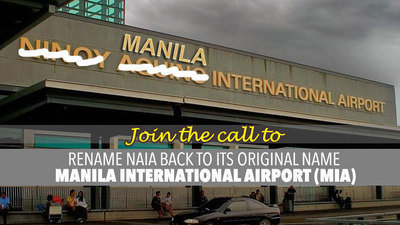
Back in 1987, Manila International Airport (MIA) was renamed to Ninoy Aquino International Airport (NAIA) through Republic Act No. 6639 which was enacted without executive approval on November 27, 1987.
Reading RA 6639, one can't find a valid reason why the country's main airport should be named after Ninoy Aquino, Jr., who was a former senator and convicted in 1977 by a military court of subversion and murder. Thus, Ninoy Aquino is not a hero/patriot for inspiration and emulation of this generation and generations still unborn. He was clearly a POLITICIAN and by naming the Philippine's main airport to his name is an insult to all Filipino heroes who died for the country and not for political ambition.
Now, we, the People of the Republic of the Philippines is urging the Philippine Congress, through Senators Imee Marcos and Manny Pacquiao as co-authors, to repeal RA 6639 and rename NAIA back to its original name Manila International Airport (MIA).
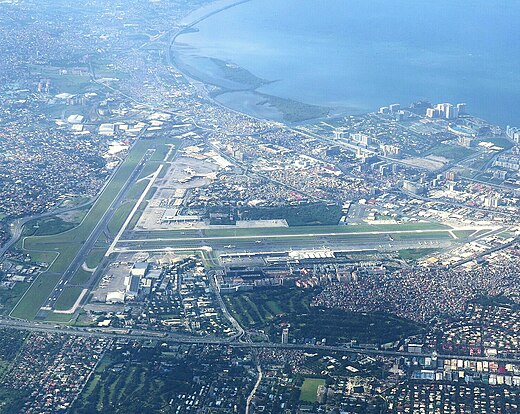
Ninoy Aquino International Airport locally Filipino Paliparang Pandaigdig ng Ninoy Aquino originally known as Manila International Airport (MIA), is the main international airport serving the city of Manila and the metropolitan area of the same name. Located between the cities of Pasay and Parañaque, about 7 kilometers (4.3 mi) south of Manila proper and southwest of Makati, NAIA is the main gateway for travelers to the Philippines and serves as a hub for AirSWIFT, Cebgo, Cebu Pacific, PAL Express, and Philippine Airlines; it is also the main operating base for Philippines AirAsia. Named after Senator Ninoy Aquino (1932–1983), who was assassinated at the airport on August 21, 1983, it is managed by the Manila International Airport Authority (MIAA), an agency of the Department of Transportation.
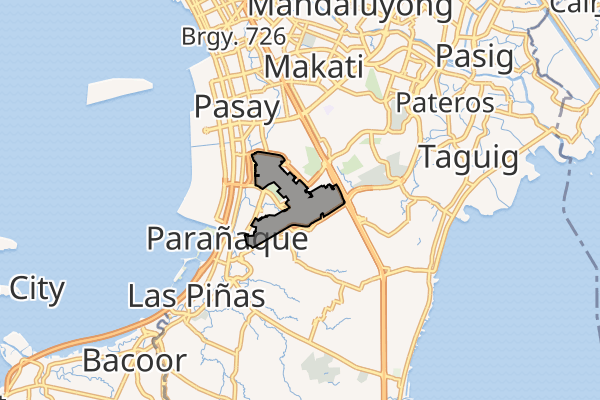
Ninoy Aquino International Airport
Paliparang Pandaigdig ng Ninoy Aquino
Ninoy Aquino International Airport logo.svg
Airport type
Public / Military
Owner/Operator
Manila International Airport Authority
Serves
Greater Manila Area
Location
Parañaque and Pasay, Metro Manila, Philippines
Opened
1948; 75 years ago
Hub for
AirSWIFT
Cebgo
Cebu Pacific
PAL Express
Philippine Airlines
Focus city for
Philippines AirAsia
Time zone
PHT (UTC+08:00)
Elevation AMSL
23 m / 75 ft
Coordinates
14°30′30″N 121°01′11″E
Website
www.miaa.gov.ph
Maps
Airport type
Public / Military
Owner/Operator
Manila International Airport Authority
Serves
Greater Manila Area
Location
Parañaque and Pasay, Metro Manila, Philippines
Opened
1948; 75 years ago
Hub for
AirSWIFT
Cebgo
Cebu Pacific
PAL Express
Philippine Airlines
Focus city for
Philippines AirAsia
Time zone
PHT (UTC+08:00)
Elevation AMSL
23 m / 75 ft
Coordinates
14°30′30″N 121°01′11″E
Website
www.miaa.gov.ph
Maps
Officially, NAIA is the only airport serving the Metro Manila area. However, in practice, both NAIA and Clark International Airport serve the metropolis in the Clark Freeport Zone in Pampanga. However, Clark caters mainly to low-cost carriers because of its lower landing fees compared to the higher fees at NAIA. Recently, there have been calls for Clark to replace NAIA as the primary airport of the Philippines eventually.[3] Two new airports are being constructed to reduce congestion at the airport: New Manila International Airport, located in Bulacan, and Sangley Point Airport, located on reclaimed land in Cavite City.[4]
NAIA is operating beyond its designed capacity of 35 million passengers, causing air traffic congestion and flight delays. [5] The airport has been tagged by The Guide to Sleeping In Airports,[6] luggage storage app Bounce,[7] and travel blog Hawaiian Islands as one of the worst airports in both Asia-Pacific, if not the world.[8] Since 2018, plans to privatize and improve the airport have been pitched and were revived again in 2023 following a major malfunction in the airport's air traffic control system.[9]

24
The Issue
Back in 1987, Manila International Airport (MIA) was renamed to Ninoy Aquino International Airport (NAIA) through Republic Act No. 6639 which was enacted without executive approval on November 27, 1987.
Reading RA 6639, one can't find a valid reason why the country's main airport should be named after Ninoy Aquino, Jr., who was a former senator and convicted in 1977 by a military court of subversion and murder. Thus, Ninoy Aquino is not a hero/patriot for inspiration and emulation of this generation and generations still unborn. He was clearly a POLITICIAN and by naming the Philippine's main airport to his name is an insult to all Filipino heroes who died for the country and not for political ambition.
Now, we, the People of the Republic of the Philippines is urging the Philippine Congress, through Senators Imee Marcos and Manny Pacquiao as co-authors, to repeal RA 6639 and rename NAIA back to its original name Manila International Airport (MIA).
Ninoy Aquino International Airport locally Filipino Paliparang Pandaigdig ng Ninoy Aquino originally known as Manila International Airport (MIA), is the main international airport serving the city of Manila and the metropolitan area of the same name. Located between the cities of Pasay and Parañaque, about 7 kilometers (4.3 mi) south of Manila proper and southwest of Makati, NAIA is the main gateway for travelers to the Philippines and serves as a hub for AirSWIFT, Cebgo, Cebu Pacific, PAL Express, and Philippine Airlines; it is also the main operating base for Philippines AirAsia. Named after Senator Ninoy Aquino (1932–1983), who was assassinated at the airport on August 21, 1983, it is managed by the Manila International Airport Authority (MIAA), an agency of the Department of Transportation.
Ninoy Aquino International Airport
Paliparang Pandaigdig ng Ninoy Aquino
Ninoy Aquino International Airport logo.svg
Airport type
Public / Military
Owner/Operator
Manila International Airport Authority
Serves
Greater Manila Area
Location
Parañaque and Pasay, Metro Manila, Philippines
Opened
1948; 75 years ago
Hub for
AirSWIFT
Cebgo
Cebu Pacific
PAL Express
Philippine Airlines
Focus city for
Philippines AirAsia
Time zone
PHT (UTC+08:00)
Elevation AMSL
23 m / 75 ft
Coordinates
14°30′30″N 121°01′11″E
Website
www.miaa.gov.ph
Maps
Airport type
Public / Military
Owner/Operator
Manila International Airport Authority
Serves
Greater Manila Area
Location
Parañaque and Pasay, Metro Manila, Philippines
Opened
1948; 75 years ago
Hub for
AirSWIFT
Cebgo
Cebu Pacific
PAL Express
Philippine Airlines
Focus city for
Philippines AirAsia
Time zone
PHT (UTC+08:00)
Elevation AMSL
23 m / 75 ft
Coordinates
14°30′30″N 121°01′11″E
Website
www.miaa.gov.ph
Maps
Officially, NAIA is the only airport serving the Metro Manila area. However, in practice, both NAIA and Clark International Airport serve the metropolis in the Clark Freeport Zone in Pampanga. However, Clark caters mainly to low-cost carriers because of its lower landing fees compared to the higher fees at NAIA. Recently, there have been calls for Clark to replace NAIA as the primary airport of the Philippines eventually.[3] Two new airports are being constructed to reduce congestion at the airport: New Manila International Airport, located in Bulacan, and Sangley Point Airport, located on reclaimed land in Cavite City.[4]
NAIA is operating beyond its designed capacity of 35 million passengers, causing air traffic congestion and flight delays. [5] The airport has been tagged by The Guide to Sleeping In Airports,[6] luggage storage app Bounce,[7] and travel blog Hawaiian Islands as one of the worst airports in both Asia-Pacific, if not the world.[8] Since 2018, plans to privatize and improve the airport have been pitched and were revived again in 2023 following a major malfunction in the airport's air traffic control system.[9]
24
Petition Updates
Share this petition
Petition created on May 10, 2023