

Make the Brooklyn Bridge Park Marina More Than a Yacht Parking Lot Run By A PE Firm
The Issue
By all measurements, Brooklyn Bridge Park is a success. It is incredibly popular, brings together a diverse population, and connects the community to the waterfront through a variety of types of access.
Since well before any part of the park south of the Brooklyn Bridge even opened to the public, the team behind the Brooklyn Bridge Park Boathouse has been a part of this story.
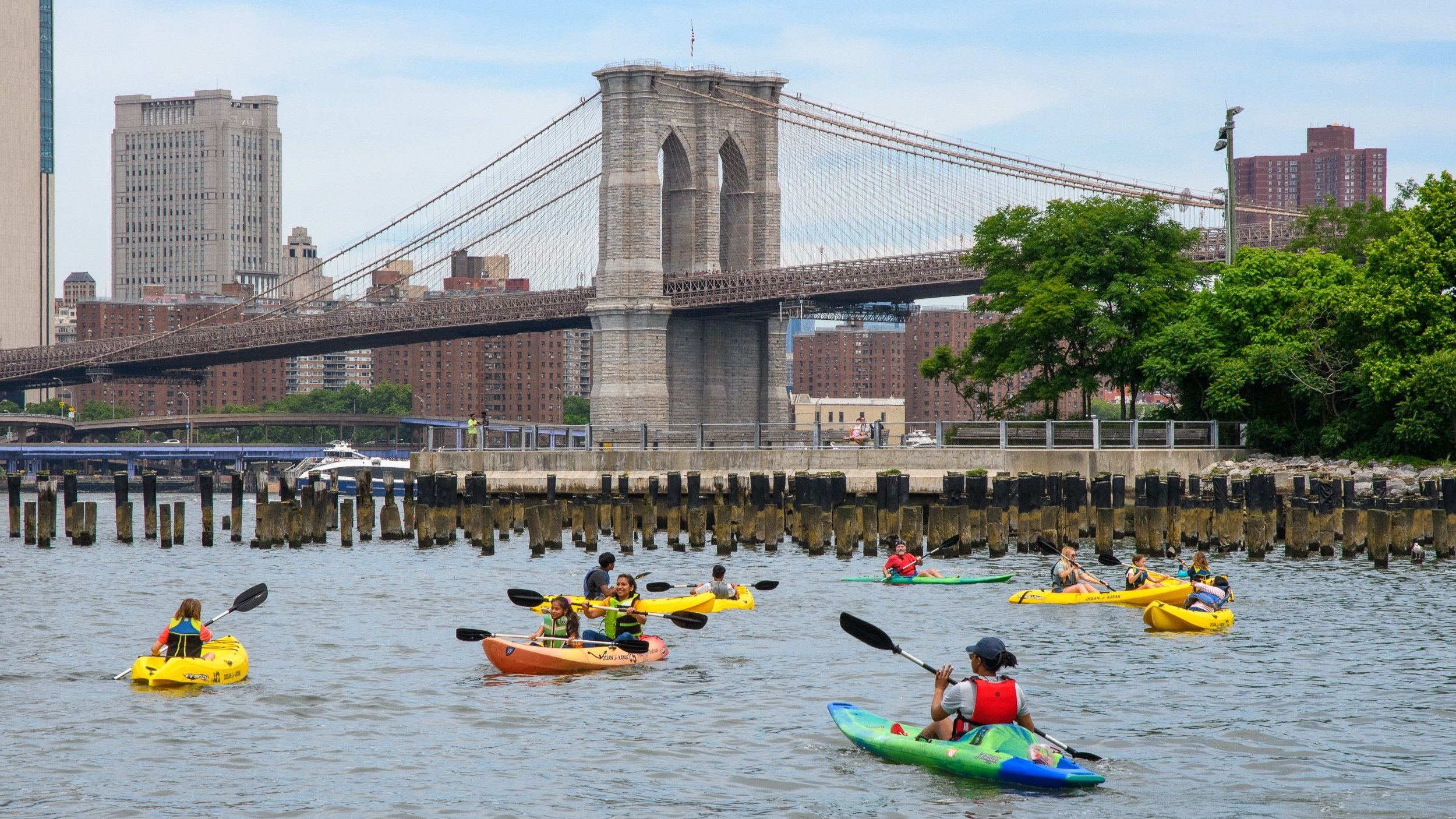
We are the independent non-profit public kayaking program that has put nearly one hundred thousand people on the water—starting from very humble beginnings in 2008. We began running just a few days of programming at the pebble beach in Dumbo with borrowed kayaks stored in a nearby parking garage. Since then, we have expanded to facilitate almost daily programming during the summer between our public kayaking programs, kayak polo, the youth camps we support with The Kayak Foundation and the Brooklyn Bridge Park Conservancy, and various harbor trips.
We are part of a collaborative and tight-knit community of groups and programs that help create access to the harbor through multiple types of human-powered craft—from small sailboats built by kids to stand-up paddle boards. These programs mainly operate in two locations: the Pier 2 floating dock—which was not an original feature of the park but arrived thanks to collaboration between the Boathouse, the Metropolitan Waterfront Alliance, the Brooklyn Bridge Park Corporation, the Brooklyn Bridge Park Conservancy, and City Council Member Stephen Levin—and the Pier 4 boathouse (“little b”), beach, and small community dock at the marina.
As you may have heard, the ONE°15 Brooklyn Marina, citing insurmountable debt dating back to the construction of the facility—including nearly half a million dollars in debt owed to the Park itself—has filed for bankruptcy.
The marina has been the part of the park that is the least reflective of all of the achievements above. It doesn’t see nearly as much traffic as the rest of the park—which would come as no surprise to any boat owner whose assumptions about how many times they would get out on the water in a given season turn out to be wildly optimistic.
Plus, unlike the free picnic areas and grills that overlook the marina, the free kayaking programs the Boathouse provides, and the numerous free programs put on in the park by the Conservancy, the cost of access to the marina amenities is incredibly high for the average Brooklyn resident.
This wasn’t supposed to be the case.
The multiple marina operators that have tried and failed to run it since it opened have made numerous public and private statements about community space allocations and funding for public programs, but they simply haven't followed through on their commitments. Park officials and nonprofit groups operating kayaking and sailing programs in the park originally sought to ensure that the marina would feature free or low-cost public boating activities as well as docking facilities for luxury yachts. Under the terms of the Park contract awarding the lease to build and run the new marina, the owner-operators agreed to provide a modest two percent of their annual gross revenues for “community boating programs,” as well as a significant allocation of dock space, but neither the financial nor non-financial obligations were ever fulfilled.
Rather than rehash how that came to be or who was at fault, we, as representatives and supporters of public access to the waterfront and the water itself, would like to encourage the Park Corporation to make sure the next phase of this portion of the park properly supports the community through increased transparency and accountability.
The bankruptcy can and should usher in a "next phase."
While the bankruptcy court process has a duty to look out for creditors and do its best to get stakeholders repaid, we believe the Park and local officials have an opportunity to leverage this legal process and potential future relationship with the marina’s next owner to imagine something better and more community oriented in a collaborative way.
The Park, as the largest creditor, may have the opportunity to shape the terms of the bankruptcy settlement and its aftermath, which could go one of two ways.
A private equity firm or high-net-worth individual with no ties to community access programs or interest in such things can swoop in fast and try to monetize our Brooklyn waterfront for their own benefit or that of their investors. They could buy the assets of the marina for a quick flip or run a commercial marina with even more non-public amenities for a small number of wealthy boat owners.
Or, the Park and potentially the new owner of the marina if it comes to pass, can sit down with a variety of waterfront access programs run by the community and co-design a space and a model that reflects the rest of the park and the surrounding community--emphasizing public access.
This need not preclude a smaller but vibrant marina operation. Lots of local residents have fond memories of summers on lakes with family that involve small craft—perhaps learning to fish or exploring wildlife. We think there could be a place for that, balanced with a variety of other activities, like safe stand-up paddling, small sailboats for kids in a protected area, increased kayaking activity, hands-on estuary educational activities, etc.
The space between Pier 3 and Pier 5 doesn't have to be a parking lot for yachts. Instead, it could be a playground: an active, vibrant jewel of a community maritime space offering public access to the water itself.
The financial failure of the previous marina model gives us an urgent opportunity for the community to discuss whether a different approach should be taken—and we call on the Park and local elected officials to form a better plan for this now, before a buyer with only financial incentives flips the assets and continues this area on its decade-long path of missed potential, gated access, and most likely repeated future bankruptcies.

668
The Issue
By all measurements, Brooklyn Bridge Park is a success. It is incredibly popular, brings together a diverse population, and connects the community to the waterfront through a variety of types of access.
Since well before any part of the park south of the Brooklyn Bridge even opened to the public, the team behind the Brooklyn Bridge Park Boathouse has been a part of this story.
We are the independent non-profit public kayaking program that has put nearly one hundred thousand people on the water—starting from very humble beginnings in 2008. We began running just a few days of programming at the pebble beach in Dumbo with borrowed kayaks stored in a nearby parking garage. Since then, we have expanded to facilitate almost daily programming during the summer between our public kayaking programs, kayak polo, the youth camps we support with The Kayak Foundation and the Brooklyn Bridge Park Conservancy, and various harbor trips.
We are part of a collaborative and tight-knit community of groups and programs that help create access to the harbor through multiple types of human-powered craft—from small sailboats built by kids to stand-up paddle boards. These programs mainly operate in two locations: the Pier 2 floating dock—which was not an original feature of the park but arrived thanks to collaboration between the Boathouse, the Metropolitan Waterfront Alliance, the Brooklyn Bridge Park Corporation, the Brooklyn Bridge Park Conservancy, and City Council Member Stephen Levin—and the Pier 4 boathouse (“little b”), beach, and small community dock at the marina.
As you may have heard, the ONE°15 Brooklyn Marina, citing insurmountable debt dating back to the construction of the facility—including nearly half a million dollars in debt owed to the Park itself—has filed for bankruptcy.
The marina has been the part of the park that is the least reflective of all of the achievements above. It doesn’t see nearly as much traffic as the rest of the park—which would come as no surprise to any boat owner whose assumptions about how many times they would get out on the water in a given season turn out to be wildly optimistic.
Plus, unlike the free picnic areas and grills that overlook the marina, the free kayaking programs the Boathouse provides, and the numerous free programs put on in the park by the Conservancy, the cost of access to the marina amenities is incredibly high for the average Brooklyn resident.
This wasn’t supposed to be the case.
The multiple marina operators that have tried and failed to run it since it opened have made numerous public and private statements about community space allocations and funding for public programs, but they simply haven't followed through on their commitments. Park officials and nonprofit groups operating kayaking and sailing programs in the park originally sought to ensure that the marina would feature free or low-cost public boating activities as well as docking facilities for luxury yachts. Under the terms of the Park contract awarding the lease to build and run the new marina, the owner-operators agreed to provide a modest two percent of their annual gross revenues for “community boating programs,” as well as a significant allocation of dock space, but neither the financial nor non-financial obligations were ever fulfilled.
Rather than rehash how that came to be or who was at fault, we, as representatives and supporters of public access to the waterfront and the water itself, would like to encourage the Park Corporation to make sure the next phase of this portion of the park properly supports the community through increased transparency and accountability.
The bankruptcy can and should usher in a "next phase."
While the bankruptcy court process has a duty to look out for creditors and do its best to get stakeholders repaid, we believe the Park and local officials have an opportunity to leverage this legal process and potential future relationship with the marina’s next owner to imagine something better and more community oriented in a collaborative way.
The Park, as the largest creditor, may have the opportunity to shape the terms of the bankruptcy settlement and its aftermath, which could go one of two ways.
A private equity firm or high-net-worth individual with no ties to community access programs or interest in such things can swoop in fast and try to monetize our Brooklyn waterfront for their own benefit or that of their investors. They could buy the assets of the marina for a quick flip or run a commercial marina with even more non-public amenities for a small number of wealthy boat owners.
Or, the Park and potentially the new owner of the marina if it comes to pass, can sit down with a variety of waterfront access programs run by the community and co-design a space and a model that reflects the rest of the park and the surrounding community--emphasizing public access.
This need not preclude a smaller but vibrant marina operation. Lots of local residents have fond memories of summers on lakes with family that involve small craft—perhaps learning to fish or exploring wildlife. We think there could be a place for that, balanced with a variety of other activities, like safe stand-up paddling, small sailboats for kids in a protected area, increased kayaking activity, hands-on estuary educational activities, etc.
The space between Pier 3 and Pier 5 doesn't have to be a parking lot for yachts. Instead, it could be a playground: an active, vibrant jewel of a community maritime space offering public access to the water itself.
The financial failure of the previous marina model gives us an urgent opportunity for the community to discuss whether a different approach should be taken—and we call on the Park and local elected officials to form a better plan for this now, before a buyer with only financial incentives flips the assets and continues this area on its decade-long path of missed potential, gated access, and most likely repeated future bankruptcies.
Supporter Voices
Petition Updates
Share this petition
Petition created on November 11, 2024