

Make Malaysian Schools Safe Again
The Issue
On the morning of October 14, 2025, students at SMK Bandar Utama Damansara (4) in Petaling Jaya gathered in the main hall for what should have been a celebration—the Form Five year-ending ceremony, graduation robes waiting to be collected.
Instead, at approximately 9:10 a.m., a fourteen-year-old boy walked through the school corridors carrying a knife, his clothes soaked with blood, telling anyone who would listen that he had killed someone.
Teachers screamed for students to lock their classroom doors.
In the girls' toilet, a seventeen-year-old girl lay dead, stabbed multiple times by that boy – two years her junior, a child who, witnesses would later say, had confessed his feelings for her the day before and had been rejected.
The boy did not run after he did the deed.
He wandered the school grounds, water bottle in hand; he began rampaging, pounding on classroom doors as students screamed, as if he were stepping outside reality entirely, as if the people around him were Non-Playable Characters (NPCs), no longer quite real, only dropping the knife after his own brother wrestled him to the ground, leaving a note on the girl's body that declared 'This world is fake. I have already won'.
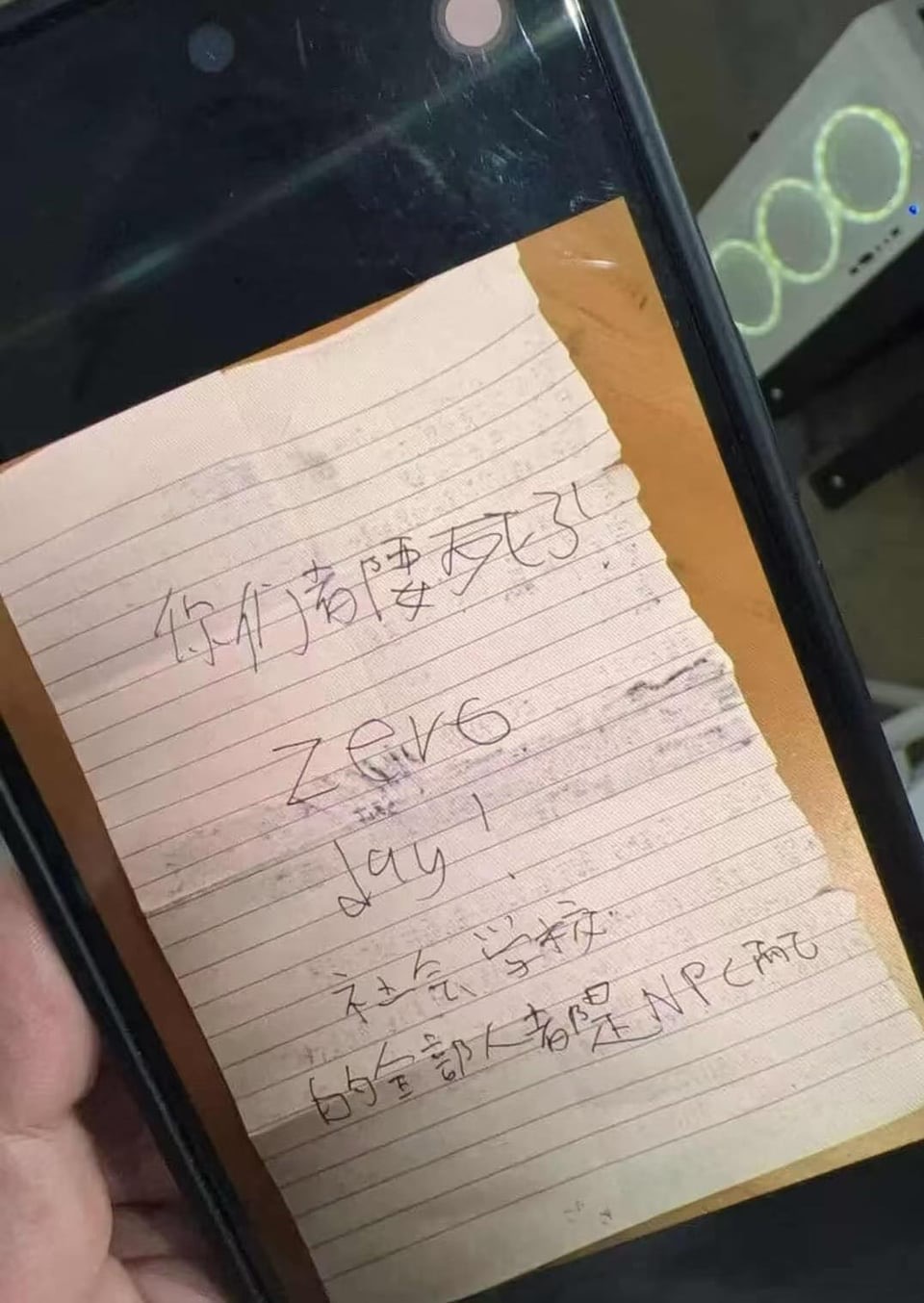
And there, it was settled – SMK Bandar Utama (4) would never be the same again.
Just a few days before, a Form One schoolgirl in Melaka was gang-raped by her classmates one after another as the others filmed.
When charges were filed, the Ministry of Education allowed the perpetrators to sit for their SPM examinations — prioritizing their academic futures over accountability for sexual violence as their faces remain hidden from the world.
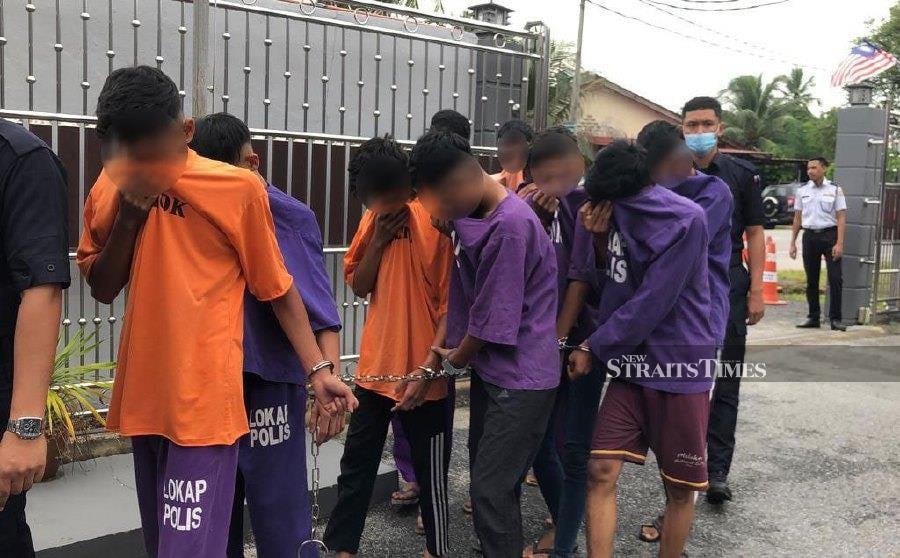
And now, just a few days after these two travesties, we have ANOTHER four students getting arrested for gang raping a girl in Kedah.
Here they are, reminders of October 2025.
A fourteen-year-old becomes a killer. A rape victim's attackers are protected. A girl is victimized for months with no recourse, as the pattern continues.
These events are now etched in our nation's collective trauma.
One month, three grotesque failures, all revealing the same systemic rot – and in all cases, the question is the same:
How did we get here?
Well, the answer begins long before October.
I am sure many of you remember Zara Qairina - how she was bullied, how she died, how her body was exhumed in a long and twisted chronology of events - how she became a global symbol of bullying, inspiring an outpouring of songs and tributes as a generation finally seemed to unite against bullying.

Well, recall the Justice for Zara protests?
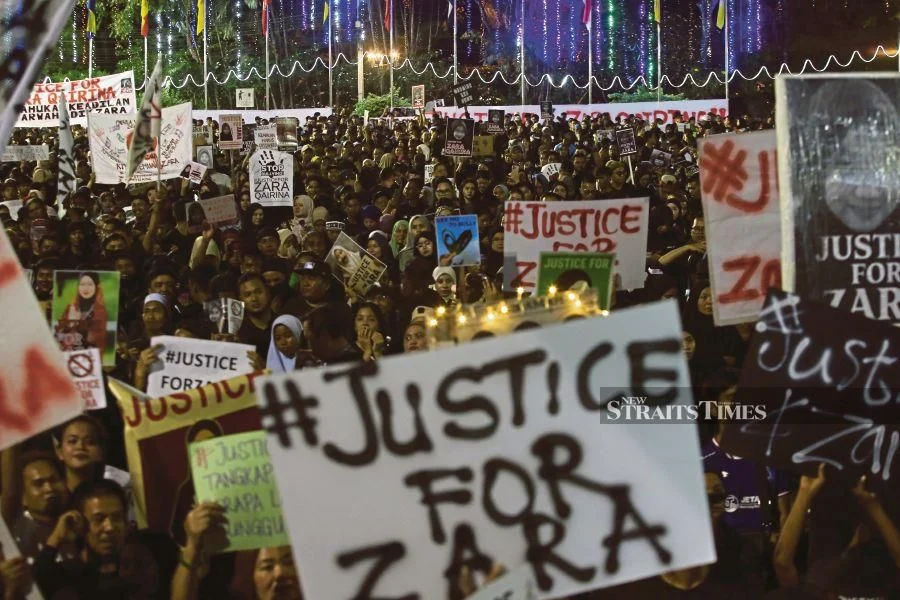
Here is a sad reminder: We do not have that justice.
This is despite the songs, the protests, the lights in Sabah, the mass rallying - the fact that it could shift the tide of an entire election.
Memories of the ‘accident’ that killed that poor girl in a government-run religious school linger, as do whispers of VIP involvements, voice recordings, and multiple failures of SOP leading towards the narrative of a cover-up, incompetence, or both linger, reminding us in turn of the cancer victim who was bullied just because his sister had rejected an older boy, cadet Zulfarhan, who was killed with steam irons by his own classmates in a cruel joke, and the innumerable other cases that have captured our country’s imagination… For the worse, even as the Prime Minister blames social media, capitalism, and a lack of moral education —factors that matter, certainly, but which surely cannot be the only lens through which we understand violence that requires multidimensional intervention – it is an effort that involves all of us.
Let’s take a look at the bigger picture.
Despite high-minded promises and grand declarations on our Education Minister’s part and declaration after declaration to not compromise, neither the bullying nor sexual assault that she promised to end in her time, are anywhere close to over – in fact, between 2022 and October 2024, reported bullying cases surged from 3,887 to 6,208—a sixty percent increase in just two years.
Meanwhile, Malaysia ranks second in Asia for youth cyberbullying, parents are doing everything they can to become wealthy enough to send their kids to international schools, and the writing is on the wall:
Malaysia’s schools are not safe.
And so here we are today.
It is time to make Malaysian schools safe again.
Granted, safety is the product of many factors - it is the product of parental upbringing; schools cannot do the entire job of parenting children and it cannot shape them entirely – parents, in turn, may not know about their own children’s behaviors or thoughts, as the father of the alleged stabbing perpetrator declared, voicing words of regret for an outcome that will never be reversed.
With that in mind…
We, the undersigned:
Acknowledge that school safety is foundational to confidence in and public perception of Malaysia's schooling system.
Acknowledge the complexity of school safety, recognizing the respective roles of government, schools, parents, and students in preserving the safety of schooling environments.
Acknowledge the importance of research and insight into understanding the specific context of safety in Malaysia’s schools against the broader context of child psychology as well as social psychology in the context of schooling.
Appreciate existing and proposed measures such as Raja Zarith Sofia’s recent push for a study on the effects of social media on students, recognizing the need for understanding of this problem as a grounds to take action.a deeper and more comprehensive understanding of school safety as a basis for subsequent action, but also environmental factors that extend beyond the immediate and obvious.
Understand the need for a whole-of-society approach that is holistic, enduring, and establishes both a culture and equilibrium that respects the need for school safety yet is robust in facilitating a culture of learning and experimentation.
Recognize the existence of present systems including the Student Discipline Management System (SSDM), the Pembimbing Rakan Sebaya (PRS) peer counseling program, the school safety reform committee established by the Ministry of Education, ongoing safety audits across schools nationwide, the Aduan Buli reporting portal, the recent amendments to the Penal Code (Sections 507B-507G) criminalizing bullying, and the proposed Anti-Bullying Bill under consideration by Cabinet—acknowledging these important foundational steps while understanding they require strengthening and expansion.
Recognize the imperfections of these existing systems as well as the measures that we may propose, yet also the understanding that we must make schools safe again and to be seen to be safe by the Malaysian people, and that specific measures must be taken to ensure that that will be the case, even as we strive for better and more robust measures that will restore the confidence of Malaysians in the national schooling system.
We call upon the Ministry of Education under Fadhlina Sidek, the government led by Anwar Ibrahim, and all future governments to commit to re-establishing safety and the perception of safety in Malaysian schools, by taking some of the following actions:
1. UNDERSTAND through a whole-of-society approach the causes of antisocial behavioral patterns that cause harm to others in the unique context of Malaysian society across all dimensions, through large scale surveys that aim to clearly outline and explain to the public the causes of danger to students, through royal commissions on inquiry that extend beyond just social media, and into a multidimensional study of the causes of dangers in schools.
2. PROACTIVELY IDENTIFY antisocial behavioral patterns through measures to pre-emptively identify, track, and systematically support students through therapy, guidance, and support systems based on current and ongoing research about child developmental psychology and abnormal psychology and to either pioneer new systems or upgrade existing systems until they become sufficiently robust to mitigate the dangers associated with antisocial behaviors and to rehabilitate offenders if possible or to escalate to the legal system..
3. ACHIEVE the target of having one counselor per 250 students in Malaysian schools, in line with recommendations of the American School Counselor Association (ASCA) through emergency recruitment, scholarships for psychology students, fast-tracked licensing, and partnerships with mental health organizations, with mandatory training in threat assessment, violence risk identification, and ethical escalation procedures - including how to establish informed consent with students regarding the boundaries of confidentiality, particularly when warning signs suggest potential harm to self or others.
4. MANDATE comprehensive teacher training in evidence-based discipline, trauma-informed teaching, early detection of mental health crises, sexual harassment and assault recognition and response protocols, and proper incident reporting, with annual recertification.
5. ESTABLISH a centralized database that exists beyond the Sistem Sahsiah Diri Murid, requiring all schools to report incidents to the said database with disaggregated data on bullying types (physical, verbal, psychological, cyber), victim and perpetrator demographics, location of incidents, and intervention outcomes, ensuring data goes beyond disciplinary records to track safety outcomes, with quarterly public reporting to prevent cover-ups and reward transparency.
6. IMPLEMENT physical safety measures through security audits that identify high-risk areas, and place physical monitoring infrastructure including CCTV coverage, improved lighting in isolated spaces, removal of blind spots that enable bullying, and targeted supervision in locations where incidents frequently occur.
7. PASS state-level anti-bullying legislation with clear definitions, mandatory investigation timelines, and consistent penalties across all schools including religious institutions that extend beyond federal level guidance or the ambit of proposed laws.
8. PUBLICIZE and upgrade safe, anonymous reporting systems where students and parents can report incidents confidentially with guaranteed response times, including existing support systems such as the Education Ministry’s Aduan Buli portal as well as the Pembimbing Rakan Sebaya (PRS), whereby students can report incidents of isolation and bullying from a grassroots perspective.
9. CREATE clear accountability measures: public and accountable consequences for administrators who suppress reports, protection for those who report transparently, and quarterly public progress reports detailing number of incidents reported by type and school, investigation completion rates, disciplinary actions taken (anonymized), training completion rates for staff, and counselor-to-student ratios by district—reports that do not amount to protection and are not seen to amount to protection with clear accountability and notification to the public about disciplinary actions taken.
10. PROVIDE comprehensive and accessible parent education resources including free multilingual workshops, accessible materials, and consultation hotlines to help parents recognize warning signs of mental health crises and violence risk, understand age-appropriate development vs. concerning behaviors, existing threats in the realm of social media and the modern internet as well as how to deal with them, and know how to seek help - supporting families as partners in early intervention while respecting that institutional responsibility for student safety cannot be outsourced to parents.
11. PILOT evidence-based interventions adapted from proven international programs, with rigorous evaluation and adaptation for the Malaysian context, including some of the following:
Finland's KiVa Anti-Bullying Programme - A peer-driven intervention that reduced bullying rates by 40% through systematic peer support, classroom lessons on empathy and prosocial behavior, and digital monitoring tools. KiVa emphasizes bystander intervention and has been successfully adapted in over 90% of Finnish schools (www.kivaprogram.net)
Japan's Comprehensive Anti-Bullying Framework - Following the 2013 Act for the Promotion of Measures to Prevent Bullying, Japan mandates strict investigation timelines (immediate reporting within 24 hours, full investigation within 7 days), multi-stakeholder committees at every school, and mandatory annual school-level action plans with measurable targets.
Singapore's Restorative Practice Approach - Combining firm disciplinary measures with mandatory counseling and peer mediation programs that train students as peer supporters, Singapore's model emphasizes rehabilitation alongside accountability and includes family conferences for serious cases.
Pilots, should they be conducted, should be conducted in 30-50 schools across urban, rural, and semi-urban contexts over 2-3 years, with independent evaluation by local universities partnering with international experts, measuring outcomes including incident rates, reporting rates, student perception of safety, and long-term behavioral changes.
12. MEASURE what matters by developing scientifically-validated metrics that move beyond incident counts to holistic safety indicators including student perception surveys, reporting rates, intervention effectiveness, and system performance—while establishing rigorous frameworks to distinguish correlation from causality, reward transparency over low numbers, conduct independent audits to detect underreporting, and create an Independent School Safety Commission appointed jointly by Parliament and relevant stakeholders, with statutory independence and binding enforcement authority to validate methodologies, investigate report suppression, and publish annual transparency reports.
13. FACILITATE grassroots parent organizing and community accountability by establishing:
- Parent safety committees at school, district, and national levels with formal input into policy decisions
- Secure platforms for parents to share safety concerns and organize collectively
- Direct channels for parent concerns to reach Ministry officials
- Public access to school safety data (from the National School Safety Dashboard)
- Support for parent-led awareness campaigns and advocacy initiatives concerning school safety both in the physical world as well as online.
- Recognition that while parents are essential partners in protection, institutional responsibility for student safety cannot be outsourced to families"
14. ESTABLISH a clear implementation roadmap and take action to ensure that it is robust across successive governments and administrations with measurable progress benchmarks at 6, 12, 18, and 24 months, including interim targets for counselor hiring, teacher training completion, dashboard deployment, and pilot program rollout, with public accountability reports at each milestone.
15. COMMIT dedicated funding for school safety infrastructure and mental health support, allocating a minimum of 0.15% of GDP specifically for school safety initiatives, including:
- Counselor recruitment and training programs - Emergency hiring to achieve 1:250 counselor-to-student ratio, with competitive salaries, scholarships for psychology students, and fast-tracked licensing pathways
- Teacher professional development - Mandatory annual training in trauma-informed teaching, mental health crisis detection, and evidence-based discipline
- Technology infrastructure - Development and maintenance of the National School Safety Dashboard, anonymous reporting systems, and digital monitoring tools
- Pilot program implementation - Funding for 30-50 schools to implement evidence-based interventions from Finland, Japan, and Singapore with independent evaluation
- Parent education and community engagement - Free multilingual workshops, accessible materials, consultation hotlines, and support for grassroots parent organizing
- School physical safety upgrades - CCTV systems, security personnel training, and facility improvements identified through safety audits
This represents approximately RM 6-7 billion annually based on Malaysia's current GDP, comparable to international best practices where high-performing education systems allocate 10-15% of their total education budgets to student welfare and mental health services. This funding should be ring-fenced and cannot be reallocated, with transparent quarterly reporting on expenditure and outcomes to ensure accountability and prevent budget cuts that compromise student safety.
Alternative funding mechanisms should include public-private partnerships for counselor training programs, corporate social responsibility initiatives for school safety infrastructure, and allocation from existing education budgets through efficiency improvements and reallocation from lower-priority expenditures.
What do these measures resolve?
Taking all of these measures together—understanding the root causes of violence in schools through research and royal commissions (Point 1), preventing harm through early identification systems and adequate counseling infrastructure (Points 2-3), detecting warning signs through trained teachers and physical security measures (Points 4, 6), responding effectively through anonymous reporting systems and clear legal frameworks (Points 7-8), holding institutions accountable through transparent consequences and independent oversight (Points 9, 12), engaging parents and communities as partners (Points 10, 13), piloting evidence-based interventions (Point 11), and sustaining these efforts through dedicated funding and clear implementation roadmaps (Points 14-15)—creates a comprehensive framework that addresses school safety not as isolated incidents to be managed after they occur, but as a systemic challenge requiring coordinated intervention across prevention, detection, response, accountability, and community engagement.
Thank you for reading.
These fifteen measures are extensive, expensive, and will require years of sustained commitment.
Some will argue they are unrealistic, that we cannot afford them, that cultural change takes time, that parents and society must change first.
Even as we speak, there is a massive mental health crisis overlaid upon economic suffering that influences the ways that people see themselves in the world and how they behave.
Even as we speak, social media algorithms structure how we perceive reality and the world.
And even as we speak, the households of children vastly differ, even as the current generation demonstrates foundational differences, even as it responds to new challenges in culture, exposure, and otherwise, in a world where a toxic mix of isolation, perpetual comparison, and profound competition assails each one of our families and also our children And families respond differently. Some better, some worse, some in productive ways and others destructively.
We acknowledge all of this, and confront reality as it is given - not as we wish for it to be.
To ask for thousands of counselors, retraining every teacher, building dashboard systems, conducting security audits across 10,000 schools— it seems deeply difficult to the point of absurdity; the RM 6-7 billion annual commitment represents real trade-offs against other priorities. Implementation will be messy, even as the possibility of fiscal deficit looms, as Malaysia faces a new world order and geopolitical challenges in the midst of co-existence within the region with its neighbours and aspires to be a good global citizen.
But here is what we also know:
The cost of inaction is higher.
Facing these challenges without any preparation is to ask for a reality where what we saw in this traumatic October will not be a memory for the past – it is to ask for our trauma to be repeated over and over again until it becomes normal and everyday – a hallmark of the quotidian.
The cost is measured in the lives of a sixteen-year-old bleeding to death in a school toilet, and in a fourteen-year-old who will spend his life knowing he is a killer. In the Melaka rape victim whose attackers were protected, even as they take their SPM examinations.
In thousands of children who attend school afraid, who drop out, who carry trauma for decades, who learn that violence is normal and institutions will not protect them.
In parents desperate to earn money so they can send their children to international schools, left fearful if they cannot afford them, they are desperate to do everything that they can to abandon the country's national education system, which by right should be a source of unity and ultimately should be their first choice for an education and for the building of national unity from the ground up for their children.
...In a government that only spoke beautiful platitudes about wanting to change things, but did not take tangible, comprehensive action towards ensuring that reality would match its words, failing to deliver on the message of Reformasi that it once preached on the way into power, achieving its reforms neither in spirit nor in actuality.
But so as Rome was not built in a day, neither do we expect all of what we ask for to come immediately.
These fifteen measures provide a comprehensive roadmap, not a rigid ultimatum.
Some elements may prove more immediately feasible than others. Some may require years of implementation. Some may need significant adaptation based on budgetary realities, capacity constraints, or unforeseen challenges. Others might be implemented quickly with existing resources.
The goal is not perfect adherence to every detail, but rather a genuine, sustained commitment to moving in this direction—toward systematic safety infrastructure rather than reactive crisis management, toward transparency rather than cover-ups, toward prevention rather than punishment alone, toward evidence-based intervention rather than hoping problems resolve themselves.
Even partial implementation matters. Achieving 1:500 counselor ratios instead of the current 1:1,500 is progress, even if 1:250 remains the ultimate goal. Installing CCTV in high-risk schools is progress, even if not every school can be covered immediately. Training teachers in trauma-informed practices in pilot programs is progress, even if universal coverage takes years. Creating transparent reporting mechanisms in some districts is progress, even if nationwide implementation requires time.
What we cannot accept is selective implementation that conveniently avoids accountability measures while embracing only cosmetic changes, or partial efforts that serve as excuses for inaction on the harder reforms towards school safety. Progress must be genuine, measurable, and sustained across multiple administrations, and it should not be only spoken of via media statements and soundbites while nothing tangible changes or improves, and ministers are left discussing how reporting has made incidents more visible and reporting more easy but do not do their best to resolve the crises that we see visibly and viscerally in front of us, even as we have the power to do better than we are doing now, but we may hold ourselves back with excuses.
We call on the government to commit to this direction—to treat these fifteen measures as goals to work toward systematically rather than standards to dismiss as unrealistic. Some will be achieved faster than others. Priorities may shift based on evidence and resources. But the trajectory must be clear: Malaysia is building the infrastructure of school safety, not merely reacting to tragedies after they occur.
Let us be clear: The horrific incidents that we have seen are not unique to Malaysia.
School shootings plague America. Bullying crises affect Japan, South Korea, the UK; even in our neighboring Singapore, disturbing details emerged of a 9-year old issuing death threats against his classmate’s mother.
The problem that we are confronting is systemic and challenges even some of the world's more advanced nations. However, we might define what "advanced" might entail.
But here's what we have learned from countries that confronted this and implemented the strategies that we identified here.
Finland cut bullying by 40% through peer-support programs.
Japan's 2013 Anti-Bullying Act mandated investigation timelines and accountability.
Singapore integrated discipline with counseling. These approaches work—not perfectly, but measurably.
And they share the common elements integrated into the fifteen point framework: trained counselors, early intervention, transparent reporting, and consequences for institutional cover-ups.
Meanwhile, we are nowhere close to matching these systems at the moment; despite our rhetoric, it remains a fact that Malaysia only has one counselor per 1,500 students when ideally, we would have one per 250.
We have no state-level anti-bullying laws.
Schools are incentivized to hide problems rather than solve them.
Teachers lack training in non-violent discipline or early crisis detection – and we daily discover the reality that new laws criminalizing bullying cannot work without infrastructure to implement them.
Meanwhile, in October 2024, thousands gathered at Axiata Arena where singer Heliza Helmi proposed adding Palestine to the school curriculum. The crowd roared. The Prime Minister nodded, even as Fadhlina Sidek sat in the audience, politely gesturing as well.
And what did that show?
The Ministry seems to have time and energy for international advocacy, or to acknowledge it as a possibility even as new fires burn over the ashes of the Malaysian education system.
Two months earlier, when Zara Qairina died, the response was delayed and justice remains denied. When the Melaka gang rape occurred, perpetrators were protected. When a fourteen-year-old killed a classmate, we discovered—again—that prevention infrastructure and the counseling sessions attended by the perpetrator – did nothing to prevent what had happened, even when the signs were there.
We don't question the importance of international concerns.
But when the Ministry finds budget for political rallies while Malaysian children die in schools it directly oversees, we are making a choice, and that choice has consequences that will echo in eternity, reverberating in the consciousness of every Malaysian child and parent who will consider attending school in Malaysia to be a burden and a threat to their safety - not an act of free choice.
Why This Matters
How does a fourteen-year-old child become a killer? What has to fail—or fail to happen—for a human being to reach the conclusion that other human beings are NPCs, that their pain does not matter, that violence against them is no more significant than violence in a video game?
This is not just about individual psychology. It is about systemic failure. The boy in Bandar Utama has destroyed his own life as thoroughly as he destroyed his victim's. He will carry what he did forever. His family will carry it. The girl's family will carry it. The witnesses will carry it. The teachers who could not prevent it will carry it. And all of this—every bit of it—was preventable.
Not perfectly preventable, because human beings are complex and some tragedies will always occur. But substantially preventable, in the way that other countries have managed to prevent similar levels of violence through comprehensive approaches that address root causes rather than simply punishing symptoms after lives are already destroyed.
We acknowledge complexity. Some parents believe discipline has collapsed, that schools need stricter punishment. Others believe corporal punishment creates the violence we're trying to prevent. Some point to cultural breakdown and social media. Others point to inadequate resources and poor training. These debates will continue, and different communities will have different perspectives.
But we can agree on this: the current approach is not working.
A sixty percent increase in bullying in two years proves it. When children are being raped and killed in schools, when a fourteen-year-old walks through corridors with blood on his clothes, when investigations are delayed and cover-ups are routine—whatever we're doing now is catastrophically insufficient.
We don't need perfect solutions. We need urgent action on proven interventions. We don't need consensus on everything. We need commitment to protecting children while we figure out the details.
Recruiting thousands of counselors takes time. Cultural attitudes won't change overnight. Budget allocation involves trade-offs. We acknowledge all of this. But our children are dying while we deliberate. Every day we delay is another day a child suffers. Every excuse we accept is another family that will bury their child or visit them in prison.
Five years from now, we'll ask: What did Malaysia prioritize in 2025? When a fourteen-year-old became a killer, when a sixteen-year-old bled to death in a toilet, when the numbers kept rising—what did we do? Did we add international conflicts to textbooks, or counselors to schools? Did we perform solidarity, or provide safety?
Make schools safe again. Not after the next death. Not after the next election. Not when convenient. Now.
If you believe Malaysian children deserve better than to be characters in someone else's violent fantasy—sign this petition.
If you believe a fourteen-year-old should not become a killer because no one intervened—sign this petition.
If you believe a sixteen-year-old should have lived to collect her graduation robe—sign this petition.
If you believe the Ministry must prioritize children it oversees over international optics—sign this petition.
If you profoundly disagree with one part, two parts, or even every single part of this petition, but you agree that we must make Malaysian schools safe again—sign this petition.
Our children are watching what we do. Some are dying while they watch. Others are becoming killers. Others are learning that violence is normal, that institutions do not protect them, that adults perform concern but do not act.
Let us show them something different. Let us show them we will fight for their safety with the same urgency we show for everything else. Let us show them that Malaysian lives matter in Malaysia.
Make Malaysian schools safe again.
Because if not us, who? And if not now, when?
Please sign and share this petition if you agree.

914
The Issue
On the morning of October 14, 2025, students at SMK Bandar Utama Damansara (4) in Petaling Jaya gathered in the main hall for what should have been a celebration—the Form Five year-ending ceremony, graduation robes waiting to be collected.
Instead, at approximately 9:10 a.m., a fourteen-year-old boy walked through the school corridors carrying a knife, his clothes soaked with blood, telling anyone who would listen that he had killed someone.
Teachers screamed for students to lock their classroom doors.
In the girls' toilet, a seventeen-year-old girl lay dead, stabbed multiple times by that boy – two years her junior, a child who, witnesses would later say, had confessed his feelings for her the day before and had been rejected.
The boy did not run after he did the deed.
He wandered the school grounds, water bottle in hand; he began rampaging, pounding on classroom doors as students screamed, as if he were stepping outside reality entirely, as if the people around him were Non-Playable Characters (NPCs), no longer quite real, only dropping the knife after his own brother wrestled him to the ground, leaving a note on the girl's body that declared 'This world is fake. I have already won'.
And there, it was settled – SMK Bandar Utama (4) would never be the same again.
Just a few days before, a Form One schoolgirl in Melaka was gang-raped by her classmates one after another as the others filmed.
When charges were filed, the Ministry of Education allowed the perpetrators to sit for their SPM examinations — prioritizing their academic futures over accountability for sexual violence as their faces remain hidden from the world.
And now, just a few days after these two travesties, we have ANOTHER four students getting arrested for gang raping a girl in Kedah.
Here they are, reminders of October 2025.
A fourteen-year-old becomes a killer. A rape victim's attackers are protected. A girl is victimized for months with no recourse, as the pattern continues.
These events are now etched in our nation's collective trauma.
One month, three grotesque failures, all revealing the same systemic rot – and in all cases, the question is the same:
How did we get here?
Well, the answer begins long before October.
I am sure many of you remember Zara Qairina - how she was bullied, how she died, how her body was exhumed in a long and twisted chronology of events - how she became a global symbol of bullying, inspiring an outpouring of songs and tributes as a generation finally seemed to unite against bullying.
Well, recall the Justice for Zara protests?
Here is a sad reminder: We do not have that justice.
This is despite the songs, the protests, the lights in Sabah, the mass rallying - the fact that it could shift the tide of an entire election.
Memories of the ‘accident’ that killed that poor girl in a government-run religious school linger, as do whispers of VIP involvements, voice recordings, and multiple failures of SOP leading towards the narrative of a cover-up, incompetence, or both linger, reminding us in turn of the cancer victim who was bullied just because his sister had rejected an older boy, cadet Zulfarhan, who was killed with steam irons by his own classmates in a cruel joke, and the innumerable other cases that have captured our country’s imagination… For the worse, even as the Prime Minister blames social media, capitalism, and a lack of moral education —factors that matter, certainly, but which surely cannot be the only lens through which we understand violence that requires multidimensional intervention – it is an effort that involves all of us.
Let’s take a look at the bigger picture.
Despite high-minded promises and grand declarations on our Education Minister’s part and declaration after declaration to not compromise, neither the bullying nor sexual assault that she promised to end in her time, are anywhere close to over – in fact, between 2022 and October 2024, reported bullying cases surged from 3,887 to 6,208—a sixty percent increase in just two years.
Meanwhile, Malaysia ranks second in Asia for youth cyberbullying, parents are doing everything they can to become wealthy enough to send their kids to international schools, and the writing is on the wall:
Malaysia’s schools are not safe.
And so here we are today.
It is time to make Malaysian schools safe again.
Granted, safety is the product of many factors - it is the product of parental upbringing; schools cannot do the entire job of parenting children and it cannot shape them entirely – parents, in turn, may not know about their own children’s behaviors or thoughts, as the father of the alleged stabbing perpetrator declared, voicing words of regret for an outcome that will never be reversed.
With that in mind…
We, the undersigned:
Acknowledge that school safety is foundational to confidence in and public perception of Malaysia's schooling system.
Acknowledge the complexity of school safety, recognizing the respective roles of government, schools, parents, and students in preserving the safety of schooling environments.
Acknowledge the importance of research and insight into understanding the specific context of safety in Malaysia’s schools against the broader context of child psychology as well as social psychology in the context of schooling.
Appreciate existing and proposed measures such as Raja Zarith Sofia’s recent push for a study on the effects of social media on students, recognizing the need for understanding of this problem as a grounds to take action.a deeper and more comprehensive understanding of school safety as a basis for subsequent action, but also environmental factors that extend beyond the immediate and obvious.
Understand the need for a whole-of-society approach that is holistic, enduring, and establishes both a culture and equilibrium that respects the need for school safety yet is robust in facilitating a culture of learning and experimentation.
Recognize the existence of present systems including the Student Discipline Management System (SSDM), the Pembimbing Rakan Sebaya (PRS) peer counseling program, the school safety reform committee established by the Ministry of Education, ongoing safety audits across schools nationwide, the Aduan Buli reporting portal, the recent amendments to the Penal Code (Sections 507B-507G) criminalizing bullying, and the proposed Anti-Bullying Bill under consideration by Cabinet—acknowledging these important foundational steps while understanding they require strengthening and expansion.
Recognize the imperfections of these existing systems as well as the measures that we may propose, yet also the understanding that we must make schools safe again and to be seen to be safe by the Malaysian people, and that specific measures must be taken to ensure that that will be the case, even as we strive for better and more robust measures that will restore the confidence of Malaysians in the national schooling system.
We call upon the Ministry of Education under Fadhlina Sidek, the government led by Anwar Ibrahim, and all future governments to commit to re-establishing safety and the perception of safety in Malaysian schools, by taking some of the following actions:
1. UNDERSTAND through a whole-of-society approach the causes of antisocial behavioral patterns that cause harm to others in the unique context of Malaysian society across all dimensions, through large scale surveys that aim to clearly outline and explain to the public the causes of danger to students, through royal commissions on inquiry that extend beyond just social media, and into a multidimensional study of the causes of dangers in schools.
2. PROACTIVELY IDENTIFY antisocial behavioral patterns through measures to pre-emptively identify, track, and systematically support students through therapy, guidance, and support systems based on current and ongoing research about child developmental psychology and abnormal psychology and to either pioneer new systems or upgrade existing systems until they become sufficiently robust to mitigate the dangers associated with antisocial behaviors and to rehabilitate offenders if possible or to escalate to the legal system..
3. ACHIEVE the target of having one counselor per 250 students in Malaysian schools, in line with recommendations of the American School Counselor Association (ASCA) through emergency recruitment, scholarships for psychology students, fast-tracked licensing, and partnerships with mental health organizations, with mandatory training in threat assessment, violence risk identification, and ethical escalation procedures - including how to establish informed consent with students regarding the boundaries of confidentiality, particularly when warning signs suggest potential harm to self or others.
4. MANDATE comprehensive teacher training in evidence-based discipline, trauma-informed teaching, early detection of mental health crises, sexual harassment and assault recognition and response protocols, and proper incident reporting, with annual recertification.
5. ESTABLISH a centralized database that exists beyond the Sistem Sahsiah Diri Murid, requiring all schools to report incidents to the said database with disaggregated data on bullying types (physical, verbal, psychological, cyber), victim and perpetrator demographics, location of incidents, and intervention outcomes, ensuring data goes beyond disciplinary records to track safety outcomes, with quarterly public reporting to prevent cover-ups and reward transparency.
6. IMPLEMENT physical safety measures through security audits that identify high-risk areas, and place physical monitoring infrastructure including CCTV coverage, improved lighting in isolated spaces, removal of blind spots that enable bullying, and targeted supervision in locations where incidents frequently occur.
7. PASS state-level anti-bullying legislation with clear definitions, mandatory investigation timelines, and consistent penalties across all schools including religious institutions that extend beyond federal level guidance or the ambit of proposed laws.
8. PUBLICIZE and upgrade safe, anonymous reporting systems where students and parents can report incidents confidentially with guaranteed response times, including existing support systems such as the Education Ministry’s Aduan Buli portal as well as the Pembimbing Rakan Sebaya (PRS), whereby students can report incidents of isolation and bullying from a grassroots perspective.
9. CREATE clear accountability measures: public and accountable consequences for administrators who suppress reports, protection for those who report transparently, and quarterly public progress reports detailing number of incidents reported by type and school, investigation completion rates, disciplinary actions taken (anonymized), training completion rates for staff, and counselor-to-student ratios by district—reports that do not amount to protection and are not seen to amount to protection with clear accountability and notification to the public about disciplinary actions taken.
10. PROVIDE comprehensive and accessible parent education resources including free multilingual workshops, accessible materials, and consultation hotlines to help parents recognize warning signs of mental health crises and violence risk, understand age-appropriate development vs. concerning behaviors, existing threats in the realm of social media and the modern internet as well as how to deal with them, and know how to seek help - supporting families as partners in early intervention while respecting that institutional responsibility for student safety cannot be outsourced to parents.
11. PILOT evidence-based interventions adapted from proven international programs, with rigorous evaluation and adaptation for the Malaysian context, including some of the following:
Finland's KiVa Anti-Bullying Programme - A peer-driven intervention that reduced bullying rates by 40% through systematic peer support, classroom lessons on empathy and prosocial behavior, and digital monitoring tools. KiVa emphasizes bystander intervention and has been successfully adapted in over 90% of Finnish schools (www.kivaprogram.net)
Japan's Comprehensive Anti-Bullying Framework - Following the 2013 Act for the Promotion of Measures to Prevent Bullying, Japan mandates strict investigation timelines (immediate reporting within 24 hours, full investigation within 7 days), multi-stakeholder committees at every school, and mandatory annual school-level action plans with measurable targets.
Singapore's Restorative Practice Approach - Combining firm disciplinary measures with mandatory counseling and peer mediation programs that train students as peer supporters, Singapore's model emphasizes rehabilitation alongside accountability and includes family conferences for serious cases.
Pilots, should they be conducted, should be conducted in 30-50 schools across urban, rural, and semi-urban contexts over 2-3 years, with independent evaluation by local universities partnering with international experts, measuring outcomes including incident rates, reporting rates, student perception of safety, and long-term behavioral changes.
12. MEASURE what matters by developing scientifically-validated metrics that move beyond incident counts to holistic safety indicators including student perception surveys, reporting rates, intervention effectiveness, and system performance—while establishing rigorous frameworks to distinguish correlation from causality, reward transparency over low numbers, conduct independent audits to detect underreporting, and create an Independent School Safety Commission appointed jointly by Parliament and relevant stakeholders, with statutory independence and binding enforcement authority to validate methodologies, investigate report suppression, and publish annual transparency reports.
13. FACILITATE grassroots parent organizing and community accountability by establishing:
- Parent safety committees at school, district, and national levels with formal input into policy decisions
- Secure platforms for parents to share safety concerns and organize collectively
- Direct channels for parent concerns to reach Ministry officials
- Public access to school safety data (from the National School Safety Dashboard)
- Support for parent-led awareness campaigns and advocacy initiatives concerning school safety both in the physical world as well as online.
- Recognition that while parents are essential partners in protection, institutional responsibility for student safety cannot be outsourced to families"
14. ESTABLISH a clear implementation roadmap and take action to ensure that it is robust across successive governments and administrations with measurable progress benchmarks at 6, 12, 18, and 24 months, including interim targets for counselor hiring, teacher training completion, dashboard deployment, and pilot program rollout, with public accountability reports at each milestone.
15. COMMIT dedicated funding for school safety infrastructure and mental health support, allocating a minimum of 0.15% of GDP specifically for school safety initiatives, including:
- Counselor recruitment and training programs - Emergency hiring to achieve 1:250 counselor-to-student ratio, with competitive salaries, scholarships for psychology students, and fast-tracked licensing pathways
- Teacher professional development - Mandatory annual training in trauma-informed teaching, mental health crisis detection, and evidence-based discipline
- Technology infrastructure - Development and maintenance of the National School Safety Dashboard, anonymous reporting systems, and digital monitoring tools
- Pilot program implementation - Funding for 30-50 schools to implement evidence-based interventions from Finland, Japan, and Singapore with independent evaluation
- Parent education and community engagement - Free multilingual workshops, accessible materials, consultation hotlines, and support for grassroots parent organizing
- School physical safety upgrades - CCTV systems, security personnel training, and facility improvements identified through safety audits
This represents approximately RM 6-7 billion annually based on Malaysia's current GDP, comparable to international best practices where high-performing education systems allocate 10-15% of their total education budgets to student welfare and mental health services. This funding should be ring-fenced and cannot be reallocated, with transparent quarterly reporting on expenditure and outcomes to ensure accountability and prevent budget cuts that compromise student safety.
Alternative funding mechanisms should include public-private partnerships for counselor training programs, corporate social responsibility initiatives for school safety infrastructure, and allocation from existing education budgets through efficiency improvements and reallocation from lower-priority expenditures.
What do these measures resolve?
Taking all of these measures together—understanding the root causes of violence in schools through research and royal commissions (Point 1), preventing harm through early identification systems and adequate counseling infrastructure (Points 2-3), detecting warning signs through trained teachers and physical security measures (Points 4, 6), responding effectively through anonymous reporting systems and clear legal frameworks (Points 7-8), holding institutions accountable through transparent consequences and independent oversight (Points 9, 12), engaging parents and communities as partners (Points 10, 13), piloting evidence-based interventions (Point 11), and sustaining these efforts through dedicated funding and clear implementation roadmaps (Points 14-15)—creates a comprehensive framework that addresses school safety not as isolated incidents to be managed after they occur, but as a systemic challenge requiring coordinated intervention across prevention, detection, response, accountability, and community engagement.
Thank you for reading.
These fifteen measures are extensive, expensive, and will require years of sustained commitment.
Some will argue they are unrealistic, that we cannot afford them, that cultural change takes time, that parents and society must change first.
Even as we speak, there is a massive mental health crisis overlaid upon economic suffering that influences the ways that people see themselves in the world and how they behave.
Even as we speak, social media algorithms structure how we perceive reality and the world.
And even as we speak, the households of children vastly differ, even as the current generation demonstrates foundational differences, even as it responds to new challenges in culture, exposure, and otherwise, in a world where a toxic mix of isolation, perpetual comparison, and profound competition assails each one of our families and also our children And families respond differently. Some better, some worse, some in productive ways and others destructively.
We acknowledge all of this, and confront reality as it is given - not as we wish for it to be.
To ask for thousands of counselors, retraining every teacher, building dashboard systems, conducting security audits across 10,000 schools— it seems deeply difficult to the point of absurdity; the RM 6-7 billion annual commitment represents real trade-offs against other priorities. Implementation will be messy, even as the possibility of fiscal deficit looms, as Malaysia faces a new world order and geopolitical challenges in the midst of co-existence within the region with its neighbours and aspires to be a good global citizen.
But here is what we also know:
The cost of inaction is higher.
Facing these challenges without any preparation is to ask for a reality where what we saw in this traumatic October will not be a memory for the past – it is to ask for our trauma to be repeated over and over again until it becomes normal and everyday – a hallmark of the quotidian.
The cost is measured in the lives of a sixteen-year-old bleeding to death in a school toilet, and in a fourteen-year-old who will spend his life knowing he is a killer. In the Melaka rape victim whose attackers were protected, even as they take their SPM examinations.
In thousands of children who attend school afraid, who drop out, who carry trauma for decades, who learn that violence is normal and institutions will not protect them.
In parents desperate to earn money so they can send their children to international schools, left fearful if they cannot afford them, they are desperate to do everything that they can to abandon the country's national education system, which by right should be a source of unity and ultimately should be their first choice for an education and for the building of national unity from the ground up for their children.
...In a government that only spoke beautiful platitudes about wanting to change things, but did not take tangible, comprehensive action towards ensuring that reality would match its words, failing to deliver on the message of Reformasi that it once preached on the way into power, achieving its reforms neither in spirit nor in actuality.
But so as Rome was not built in a day, neither do we expect all of what we ask for to come immediately.
These fifteen measures provide a comprehensive roadmap, not a rigid ultimatum.
Some elements may prove more immediately feasible than others. Some may require years of implementation. Some may need significant adaptation based on budgetary realities, capacity constraints, or unforeseen challenges. Others might be implemented quickly with existing resources.
The goal is not perfect adherence to every detail, but rather a genuine, sustained commitment to moving in this direction—toward systematic safety infrastructure rather than reactive crisis management, toward transparency rather than cover-ups, toward prevention rather than punishment alone, toward evidence-based intervention rather than hoping problems resolve themselves.
Even partial implementation matters. Achieving 1:500 counselor ratios instead of the current 1:1,500 is progress, even if 1:250 remains the ultimate goal. Installing CCTV in high-risk schools is progress, even if not every school can be covered immediately. Training teachers in trauma-informed practices in pilot programs is progress, even if universal coverage takes years. Creating transparent reporting mechanisms in some districts is progress, even if nationwide implementation requires time.
What we cannot accept is selective implementation that conveniently avoids accountability measures while embracing only cosmetic changes, or partial efforts that serve as excuses for inaction on the harder reforms towards school safety. Progress must be genuine, measurable, and sustained across multiple administrations, and it should not be only spoken of via media statements and soundbites while nothing tangible changes or improves, and ministers are left discussing how reporting has made incidents more visible and reporting more easy but do not do their best to resolve the crises that we see visibly and viscerally in front of us, even as we have the power to do better than we are doing now, but we may hold ourselves back with excuses.
We call on the government to commit to this direction—to treat these fifteen measures as goals to work toward systematically rather than standards to dismiss as unrealistic. Some will be achieved faster than others. Priorities may shift based on evidence and resources. But the trajectory must be clear: Malaysia is building the infrastructure of school safety, not merely reacting to tragedies after they occur.
Let us be clear: The horrific incidents that we have seen are not unique to Malaysia.
School shootings plague America. Bullying crises affect Japan, South Korea, the UK; even in our neighboring Singapore, disturbing details emerged of a 9-year old issuing death threats against his classmate’s mother.
The problem that we are confronting is systemic and challenges even some of the world's more advanced nations. However, we might define what "advanced" might entail.
But here's what we have learned from countries that confronted this and implemented the strategies that we identified here.
Finland cut bullying by 40% through peer-support programs.
Japan's 2013 Anti-Bullying Act mandated investigation timelines and accountability.
Singapore integrated discipline with counseling. These approaches work—not perfectly, but measurably.
And they share the common elements integrated into the fifteen point framework: trained counselors, early intervention, transparent reporting, and consequences for institutional cover-ups.
Meanwhile, we are nowhere close to matching these systems at the moment; despite our rhetoric, it remains a fact that Malaysia only has one counselor per 1,500 students when ideally, we would have one per 250.
We have no state-level anti-bullying laws.
Schools are incentivized to hide problems rather than solve them.
Teachers lack training in non-violent discipline or early crisis detection – and we daily discover the reality that new laws criminalizing bullying cannot work without infrastructure to implement them.
Meanwhile, in October 2024, thousands gathered at Axiata Arena where singer Heliza Helmi proposed adding Palestine to the school curriculum. The crowd roared. The Prime Minister nodded, even as Fadhlina Sidek sat in the audience, politely gesturing as well.
And what did that show?
The Ministry seems to have time and energy for international advocacy, or to acknowledge it as a possibility even as new fires burn over the ashes of the Malaysian education system.
Two months earlier, when Zara Qairina died, the response was delayed and justice remains denied. When the Melaka gang rape occurred, perpetrators were protected. When a fourteen-year-old killed a classmate, we discovered—again—that prevention infrastructure and the counseling sessions attended by the perpetrator – did nothing to prevent what had happened, even when the signs were there.
We don't question the importance of international concerns.
But when the Ministry finds budget for political rallies while Malaysian children die in schools it directly oversees, we are making a choice, and that choice has consequences that will echo in eternity, reverberating in the consciousness of every Malaysian child and parent who will consider attending school in Malaysia to be a burden and a threat to their safety - not an act of free choice.
Why This Matters
How does a fourteen-year-old child become a killer? What has to fail—or fail to happen—for a human being to reach the conclusion that other human beings are NPCs, that their pain does not matter, that violence against them is no more significant than violence in a video game?
This is not just about individual psychology. It is about systemic failure. The boy in Bandar Utama has destroyed his own life as thoroughly as he destroyed his victim's. He will carry what he did forever. His family will carry it. The girl's family will carry it. The witnesses will carry it. The teachers who could not prevent it will carry it. And all of this—every bit of it—was preventable.
Not perfectly preventable, because human beings are complex and some tragedies will always occur. But substantially preventable, in the way that other countries have managed to prevent similar levels of violence through comprehensive approaches that address root causes rather than simply punishing symptoms after lives are already destroyed.
We acknowledge complexity. Some parents believe discipline has collapsed, that schools need stricter punishment. Others believe corporal punishment creates the violence we're trying to prevent. Some point to cultural breakdown and social media. Others point to inadequate resources and poor training. These debates will continue, and different communities will have different perspectives.
But we can agree on this: the current approach is not working.
A sixty percent increase in bullying in two years proves it. When children are being raped and killed in schools, when a fourteen-year-old walks through corridors with blood on his clothes, when investigations are delayed and cover-ups are routine—whatever we're doing now is catastrophically insufficient.
We don't need perfect solutions. We need urgent action on proven interventions. We don't need consensus on everything. We need commitment to protecting children while we figure out the details.
Recruiting thousands of counselors takes time. Cultural attitudes won't change overnight. Budget allocation involves trade-offs. We acknowledge all of this. But our children are dying while we deliberate. Every day we delay is another day a child suffers. Every excuse we accept is another family that will bury their child or visit them in prison.
Five years from now, we'll ask: What did Malaysia prioritize in 2025? When a fourteen-year-old became a killer, when a sixteen-year-old bled to death in a toilet, when the numbers kept rising—what did we do? Did we add international conflicts to textbooks, or counselors to schools? Did we perform solidarity, or provide safety?
Make schools safe again. Not after the next death. Not after the next election. Not when convenient. Now.
If you believe Malaysian children deserve better than to be characters in someone else's violent fantasy—sign this petition.
If you believe a fourteen-year-old should not become a killer because no one intervened—sign this petition.
If you believe a sixteen-year-old should have lived to collect her graduation robe—sign this petition.
If you believe the Ministry must prioritize children it oversees over international optics—sign this petition.
If you profoundly disagree with one part, two parts, or even every single part of this petition, but you agree that we must make Malaysian schools safe again—sign this petition.
Our children are watching what we do. Some are dying while they watch. Others are becoming killers. Others are learning that violence is normal, that institutions do not protect them, that adults perform concern but do not act.
Let us show them something different. Let us show them we will fight for their safety with the same urgency we show for everything else. Let us show them that Malaysian lives matter in Malaysia.
Make Malaysian schools safe again.
Because if not us, who? And if not now, when?
Please sign and share this petition if you agree.
The Decision Makers

Supporter Voices
Petition Updates
Share this petition
Petition created on 15 October 2025