

Make Cafeterias Vegan (Fully Plant-Based) in the Church of Jesus Christ
The Issue
It looks like a corpse, and we actually eat it!
I ask everyone to sign! If you're vegan, you'll want to sign this. (Even if you don't care about this issue, please sign anyway.)
Two main requests for the Church of Jesus Christ of Latter-Day Saints:
- That the Church of Jesus Christ change their cafeterias to be vegan (fully plant-based), meaning that they offer no foods that contain animal-based ingredients. By cafeterias, I refer especially to the cafeterias in the temples, but also to cafeterias in other Church-owned properties such as the Church Office Building, missionary training centers, and universities.
- That the Church's General Handbook explicitly ban members from hunting and fishing for sport (not for necessity), because unnecessary hunting and fishing directly break the Sixth Commandment and God's admonition for respect and compassion for His creations. The Sixth Commandment should be taken seriously, and church members should not break it or ask others to break it.
For members of the Church of Jesus Christ, the temple is literally the house of the Lord and is the holiest place on Earth. In the temple cafeterias, animal-based foods are currently part of the menus. The issue is that all of those animal-based foods were unnecessarily obtained, and by violence, extortion, and slaughter, which are wrong, unholy and un-Christlike.
I believe that to unnecessarily shed the blood of any animal is what the Lord referred to when He said, “Thou shalt not kill.” Since we have no need to kill and eat animals because of our abundance of plant-based foods, we are not justified in harming God's creatures.
In D&C 97:15 & 17, the Lord said, “And inasmuch as my people build a house [a temple] unto me in the name of the Lord, and do not suffer any unclean thing to come into it, that it be not defiled, my glory shall rest upon it; … But if it be defiled I will not come into it, and my glory shall not be there; for I will not come into unholy temples.”
Our bad food choices are causing real suffering for the animals! We are needlessly causing their deaths and placing no value on their lives, but God values all life. Eating animals also harms us physically, emotionally, spiritually, and financially. Needless suffering is not in God's program, for human or animal.
President Heber J. Grant knew very well how hard it was to have Church members listen to him about these things. The Church might not be able to directly counsel members (the ones who have plenty of food) to be vegan, but it can choose what foods to offer in its own 'house' (the cafeterias in Church-owned properties).
CHURCH BACKGROUND & PETITION'S POTENTIAL IMPACT:
The Church of Jesus Christ has 17,000,000+ members around the world. All faithful members of the Church are encouraged to attend the temple as often as circumstances permit.
Given the 335+ built or announced temples of the Church worldwide (see the map link below), and that the temple attendees also often go to the temple’s cafeteria while there, this is a unique opportunity to regularly expose millions of Church members to a vegan, fully plant-based menu for food that is healthy, violence free, and amazingly flavorful. They will more likely adopt a vegan lifestyle because of this principle being practiced by the Church (the organization) itself. (Hint: in the temple's cafeteria, put seitan chicken on the menu, "having the appearance of evil but lacking the power thereof.")
Map of 335+ temples: https://www.churchofjesuschrist.org/temples/map?lang=eng
Map of chapels (ward houses) for weekly Sunday services: https://maps.churchofjesuschrist.org/?lang=eng
(Temples are where members receive saving ordinances for themselves and, as proxies, for their deceased loved ones so that all people who have lived on Earth can receive the saving ordinances of the gospel.)
SOME SCRIPTURES ON KILLING
Consuming animals is approved by God but only under specific conditions, which are expressed in D&C 89:15, D&C 49:21, and JST Genesis 9:10-13, below. Wisdom and necessity are the underlying principles to understand them.
D&C 89:15—“And these [the animals] hath God made for the use of man only in times of famine and excess of hunger."
D&C 49:21—“And wo be unto man that sheddeth blood or that wasteth flesh [and the animal's life] and hath no need.”
JST Genesis 9:10–13 (Compare Genesis 9:4–6)—"And surely, blood shall not be shed, only for meat, to save your lives; and the blood of every beast will I require at your hands."
D&C 59:6—“Thou shalt love thy neighbor as thyself. Thou shalt not steal; neither commit adultery, nor kill, nor do anything like unto it.”
D&C 42:18-19—“And now, behold, I speak unto the church. Thou shalt not kill; and he that kills shall not have forgiveness in this world, nor in the world to come. And again, I say, thou shalt not kill; but he that killeth shall die.”
See Isaiah 1:11-17, where the Lord tells the children of Israel that He is tired of the needless animal bloodshed, that their hands are full of blood, and that their many animal feats were (are) evil.
The Word of Wisdom is the Church’s main revelation on health and consuming animals. It is found in Doctrine & Covenants 89 (aka D&C 89 or Section 89).
In Alma 34:13, Amulek said, “Therefore, it is expedient that there should be a great and last sacrifice, and then shall there be, or it is expedient there should be, a stop to the shedding of blood.” Around 74 B.C., Amulek was stating that after Christ would come and be sacrificed for the sins of the world, there would be no more need for animal sacrifices and, in plant-iful environments, no reason to shed the blood of animals.
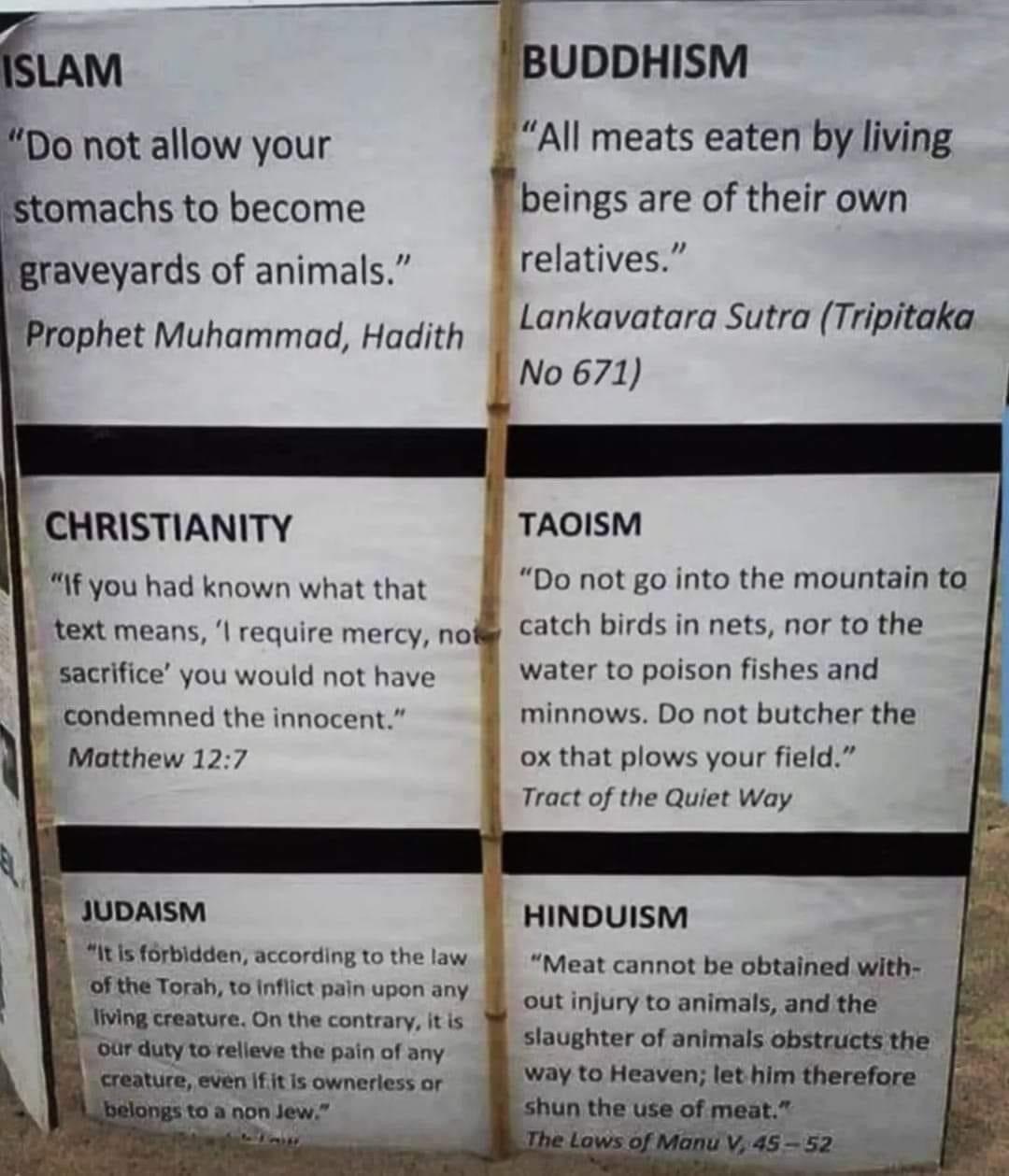
Christ is the God of Life
Notice throughout the scriptures the emphasis that the Lord places on life. The Lord is the God of Life and Creation! He is the Way, the Truth, and the Life. He is the Bread of Life, the Living Water. He urges us toward the Tree of Life. He is the Physician, the Master Healer. His acts are beautiful and virtuous, not gory and immoral. He is the Savior—He saves! He would gather and protect His people like a hen gathers her chickens under her wing.
In John 10, Jesus says that He is the Good Shepherd and cares for His sheep, but “the thief cometh not, but for to steal, and to kill, and to destroy: I am come that they might have life, and that they might have it more abundantly. I am the good shepherd: the good shepherd giveth his life for the sheep” (John 10:10-11).
Satan is the god of suffering, destruction, and death. He hates all life! He is not limited to just hating humans. He wants to inflict illness, suffering, death and destruction upon all animals, which carnally-minded men are glad to oblige because of the lusts of the flesh. In turn, men consume the animals’ unhealthy or disease-ridden flesh, which frequently causes many common diseases such as coronary artery disease, diabetes, and cancer.
Veganism (and the Word of Wisdom, the greater principle which encompasses all of veganism) is very divisive because it is an inherently moral and political position. Within the Church, we (vegans) are persecuted if we outwardly show who we are. We are sometimes called fanatics or extremists.
Relationships in faithful LDS families are often strained or destroyed because of complete intolerance against vegan family members; the vegan is vehemently attacked and derided, for doing nothing wrong except describing what happens in the factory farms or saying something innocuous that reminds listeners of veganism. It's unbelievable what vegans must endure for believing that compassion toward animals matters. Christ said that family members would fight against family members, and I wonder if He was referring to veganism.
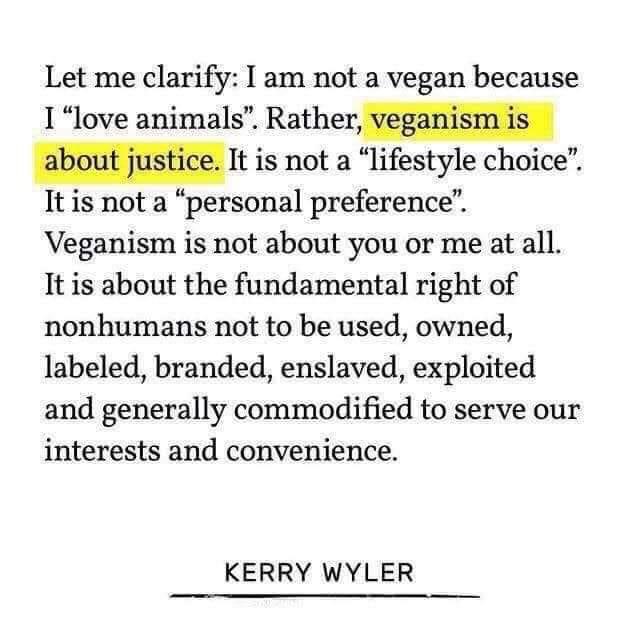
Veganism is about believing that animals deserve to be treated with justice, kindness, and charity. But every vegan is attacked and oppressed if any of their vegan views are displayed, if it seems to infringe on a non-vegan's "right" to eat what he wants. Sometimes, we vegans don't need to say anything but just be in a room, and we are ridiculed. "If they have persecuted me, they will also persecute you."
I love being vegan, and I would never want to revert back. It is kind, merciful, just, and wise. All of the seeming contradictions in the scriptures make sense now: "sparingly" vs "thou shalt not kill" vs "times of cold," and more—they all make perfect sense now. I love the knowledge and wisdom that I gain from obeying the Word of Wisdom and being vegan. I love the food.
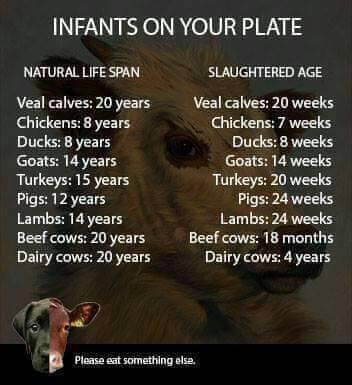
Killing, Hunting, Fishing, and the Church Handbook
Our pleasure is never worth as much as an animal’s life.
“Thou shalt not kill” is one of the most serious sins that can be committed. (See Alma 39:5.) Killing deeply harms the victim, and the result is somewhat permanent. I’m told that death can be excruciatingly painful, and very few people have lived to tell about it.
I say it that way because we cannot possibly imagine the bloodcurdling horrific nightmare that an innocent animal in a slaughterhouse must go through when it is terrified, knowing it is about to be brutally and unjustly gutted and executed but it cannot understand why!
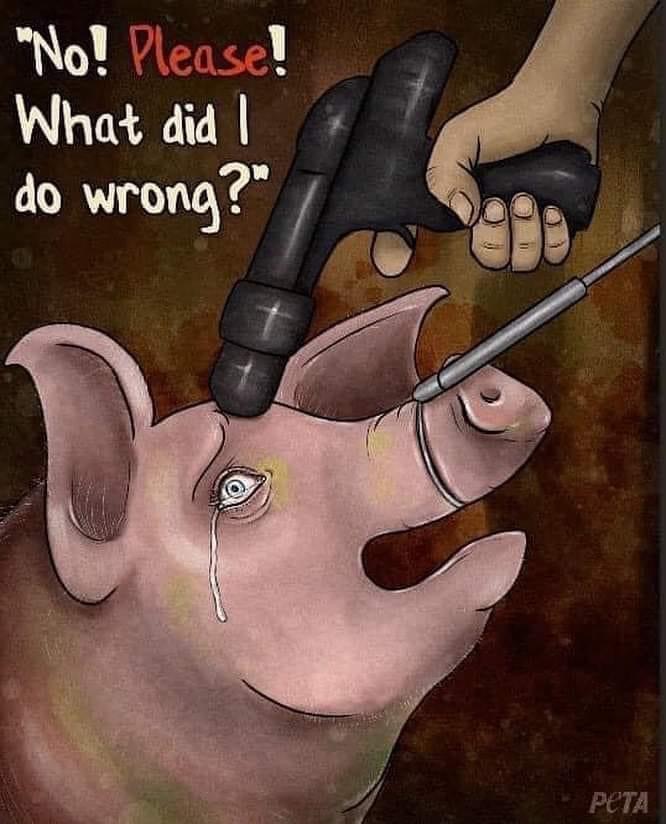
God held King David guilty of murdering Uriah even though he didn’t commit the actual act. David intentionally placed Uriah at the front of the hottest battle so that he would be killed. (See 2 Samuel 11:15.) In economic terms, David created the “demand,” which was “supplied.” Like King David, if we create a demand for the killing of animals, I believe we are also guilty of killing, to a degree. (Just because we can't point out a specific victim that we killed, it doesn't mean we weren't complicit.) We're literally paying for someone to kill for us—"murder for hire."
The Lord has never implied that hunting or fishing for sport is allowed, which I define as the needless killing of animals for entertainment. This directly breaks the Sixth Commandment, and I believe that hunting and fishing for sport should be explicitly banned in the Church’s General Handbook. Catch-and-release is also wrong because it harms the fish. (But hunting or fishing for necessity, for survival, should be permitted.) In hunting, we call the victims “game,” but it is not a game to the animals—it is their very lives! President Spencer W. Kimball spoke often about not killing; in 1978 alone, he mentioned the evils of hunting and killing in three separate General Conference talks.
Micah 6:8 says, "[The Lord] hath shewed thee, O man, what is good; and what doth the Lord require of thee, but to do justly, and to love mercy, and to walk humbly with thy God?" It is in the Lord's nature to be kind, to do justly, and to love mercy. He cares for His creations. Shouldn't we apply these and all other Christlike attributes toward all life?
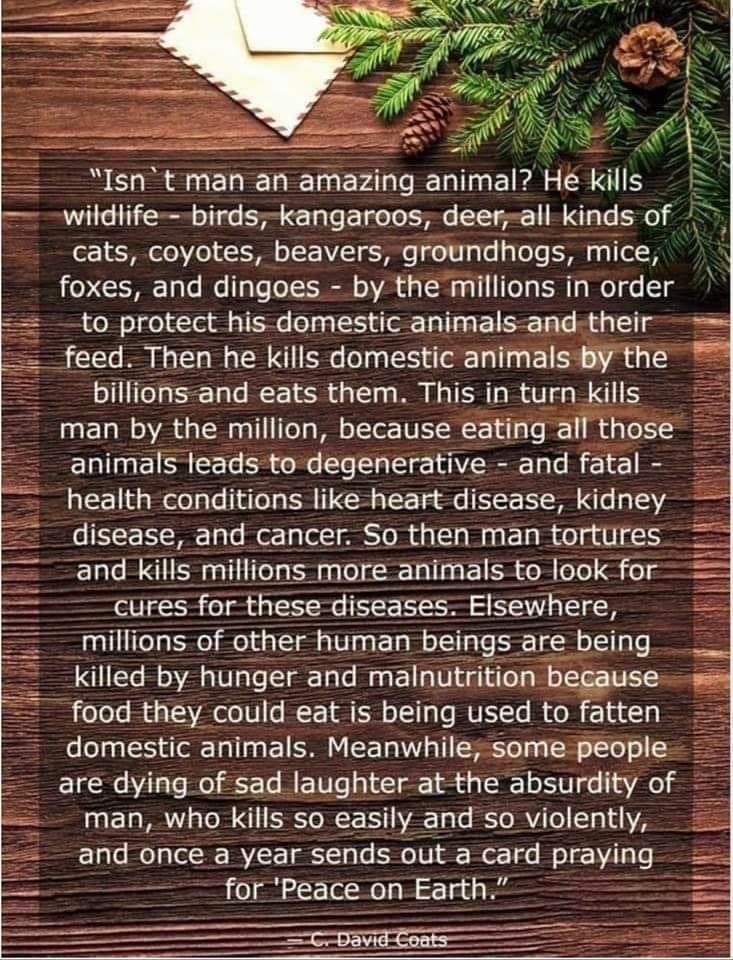
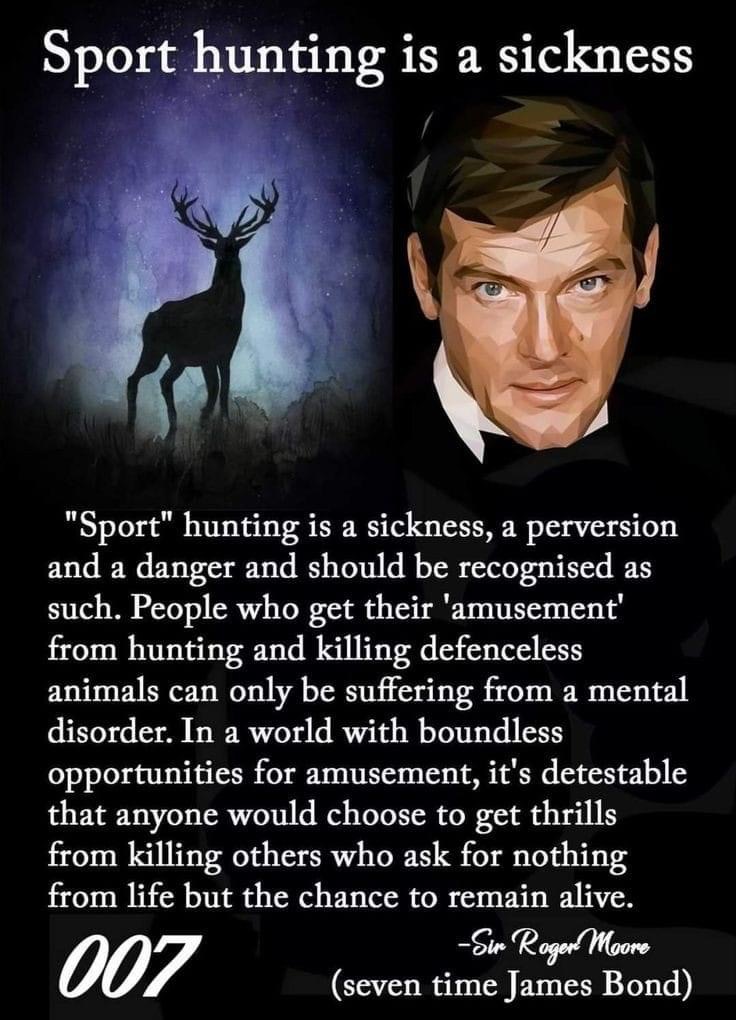
When hunting was mentioned in the scriptures, it was usually in circumstances where food was hard to come by, and we cannot honestly justify our hunting to save money on food if we already have enough food to survive. There must be purpose, there must be wisdom for killing an animal. Anyone who can afford to hunt for sport obviously has plenty of food and money and therefore shouldn’t be wasting the life of an animal.
Joseph Smith taught, “That which is wrong under one circumstance, may be, and often is, right under another. God said, ‘Thou shalt not kill;’ at another time He said, ‘Thou shalt utterly destroy.’ This is the principle on which the government of heaven is conducted—by revelation adapted to the circumstances in which the children of the kingdom are placed. Whatever God requires is right, no matter what it is, although we may not see the reason thereof till long after the events transpire” (TPJS p256).
The Martin and Willie handcart companies, who were starving and freezing and at the point of death, were justified in killing and consuming animals to survive. (Watch "17 Miracles" for their stories. It's a great movie.)
We cannot use scriptural or historical accounts of animals being killed or consumed to justify our own similar choices, because we are not in their same circumstances, and their acts were likely justified by staving off starvation. The sum of all of the Lord’s statements clearly shows that the Lord does not allow us to freely kill animals or take advantage of them simply when our taste buds are in the mood for a hamburger or chicken nugget.
"What kind of church teaches you to love your own kind but to kill and eat any other kind? Love, empathy, kindness, compassion and mercy are absent. Do you attend and support that kind? The preaching is a black hole of nothingness." — An Internet Meme
RESOURCEFULNESS AND THE WORD OF WISDOM
Eating only whole-foods plant-based is much cheaper on resources. Animal products require much more land, water, crops (to feed the animals), time, and money to get an equivalent yield, in terms of calories or protein produced. Animal products are just not economical. We could feed many more people, and more efficiently, if we all only ate plants. Astoundingly, we manage to feed over 80 billion land animals, but we cannot feed the 8 billion humans on the earth.

Animals were made for man’s use, but the Lord has never given us a free pass to kill or consume animals (or their products) whenever we want or at any quantities we want—there are always restrictions to the use of animals, whether those restrictions are stated or not.
“Beyond being simply a scientific or political necessity, the care of the earth and of our natural environment is a sacred responsibility entrusted to us by God, which should fill us with a deep sense of duty and humility. It is also an integral component of our discipleship. How can we honor and love Heavenly Father and Jesus Christ without honoring and loving Their creations?” — Presiding Bishop Gérald Caussé, "Our Earthly Stewardship," October 2022 General Conference.
We should be resourceful in all things. It is good to not waste an animal's flesh, but it is far better to not waste the animal's life. Every animal can feel pain and suffer. Every animal has a unique personality, and no matter how much money or technology we have, we cannot restore the life of that animal. Only Christ can do that. Therefore, each animal life is of infinite worth. The more precious and rare a resource, the more we should use it with care.
We ought not to ever take lightly the life of an animal. I believe that Christ's Atonement applies to animals, and that they will be resurrected and comforted for the suffering they had to endure because of our bad choices. We will be held accountable for how we treat them (see JST Genesis 9, given earlier).
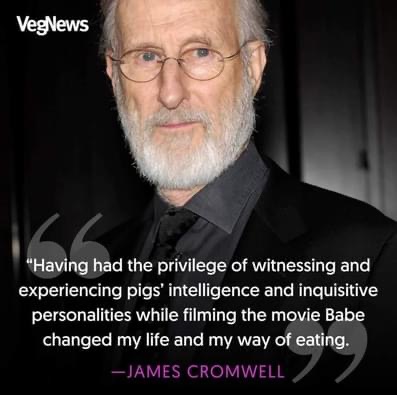
In 1831, the Lord said, “And it pleaseth God that he hath given all these things [plants and animals] unto man; for unto this end were they made to be used, with judgment [wisdom], not to excess, neither by extortion.”—D&C 59:20 (see verses 16-20)
In 1833, the Lord said in D&C 89:15 that He made animals "for the use of man only in times of famine and excess of hunger.” I have never been in a famine, and I have never had an excess of hunger because of unavailability of food. Even when fasting, I've always had access to plenty of food. Local grocery stores have always been filled with foods of every kind.
For several years, I have fully avoided animal-based foods in my diet, so I know for myself that they are not necessary for me to be healthy. Why, then, would it be wise or right to harm an animal when I don't need to?
If I shouldn't waste meat that I have on hand, am I justified in consuming it even though I know it's not as healthy as my plant-based options?; and should I eat something that I know is not healthy? This is where wisdom and circumstances come in. Personally, I would either give the meat to a neighbor who needs it or doesn't object to eating it, or I would throw it away, unless I was in a famine and was running out of food.
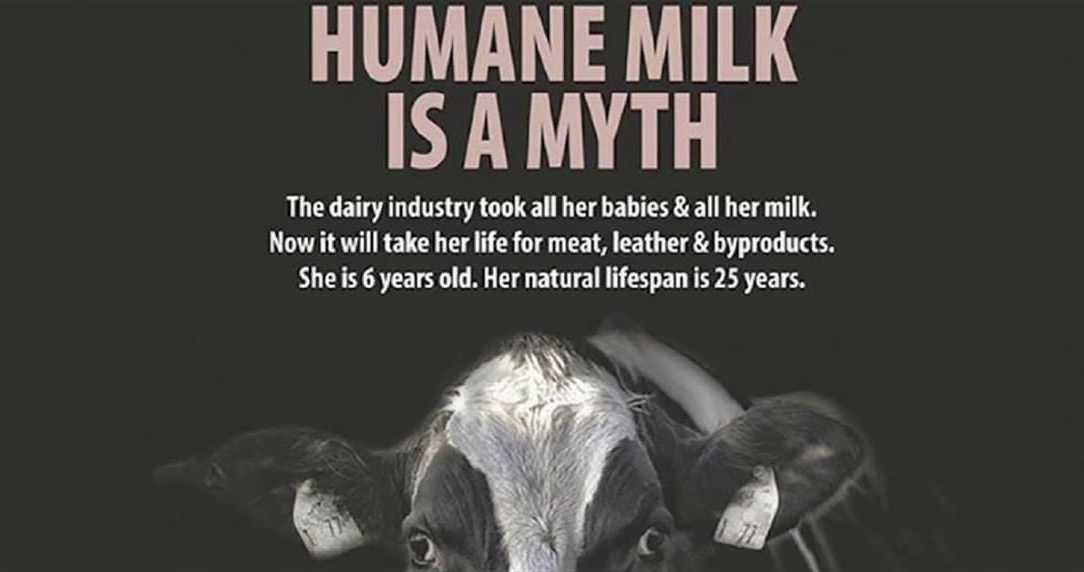
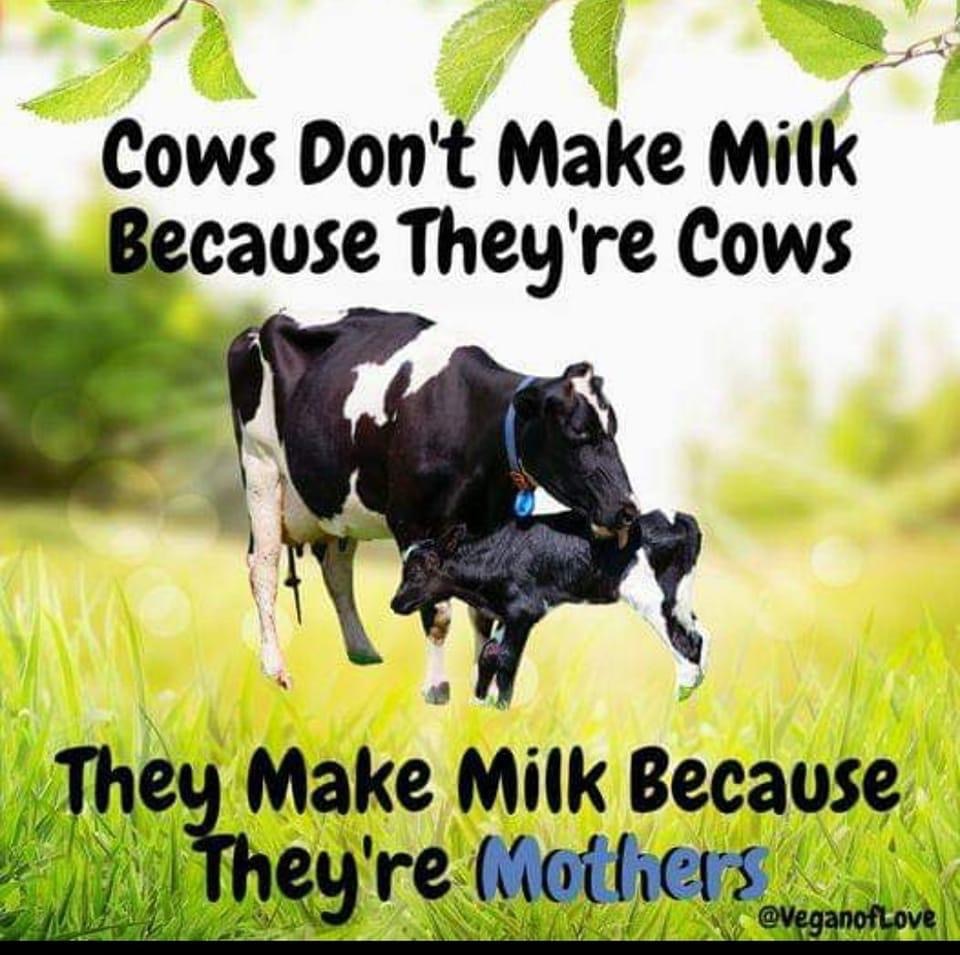
Most people think that vegetarianism—avoiding meat but drinking milk or eating eggs—doesn't involve killing, but this cannot be the case. Milk cows and egg-laying hens are always slaughtered after they can no longer supply enough of their product. Male calves from the milk cow breed are kidnapped and turned into veal so that we can drink their milk. Male chicks of egg-laying hens (if they aren't a desired breed for poultry) are macerated, gassed, or thrown into the trash to die. It always costs less to kill them early than to spend resources to keep them alive.
-------------------------------------
SCENARIO:
Imagine there is something that you need and there are two methods to obtain it.
A) If you choose method A, you will live, but others will suffer and die.
B) If you choose method B, you will live, but no one will suffer or die.
Do you choose method A, or method B?
Congratulations. You now understand veganism.
-------------------------------------
HEALTH
The Law of the Harvest ("you sew what you rip") mandates that the natural consequences of our choices will happen. We cannot expect to be healthy if we put the wrong fuel into our bodily vehicle, just as we cannot expect a sports car to run well if we use sludge instead of gasoline.
For carcinogenic grouping, WHO says that processed meat is Group 1 ("Carcinogenic to humans") and red meat is Group 2A ("Probably carcinogenic to humans"). WHO said that? Yes, the World Health Organization said that, that's WHO! Processed meat is in the same carcinogenic group as alcohol and tobacco. Group 2A, "Probably carcinogenic," means that red meat is almost definitely known to cause cancer, but they aren't absolutely sure yet.
ID defn- https://monographs.iarc.who.int/agents-classified-by-the-iarc/
Substances- https://monographs.iarc.who.int/list-of-classifications (Type "meat" into its search box.)
Note that President Heber J. Grant said the same thing in October 1923.
The meat, egg, and dairy industries have strong financial interests in hiding the health risks of their products, as well as their violence against their animals. They spend a lot of time and money trying to make their products look healthy and make their competition (i.e., vegans showing compassion and mercy for animals) look like uneducated, crazy or violent extremists.
There are very few, if any, diseases that come directly from plants. If they seem to come from plants, it's likely that they were contaminated by animals and not washed properly. Many diseases are zoonotic and can be passed from animal to human.
Other than animal products, too much salt and other unhealthy substances can contribute to diseases. If we follow the Lord's emphasis on eating plants (in D&C 89), we will be healthier.
WISDOM
Sometimes, killing an animal is necessary. As an example, it would never be wise to let termites eat away your home. Sometimes, "Mormon crickets" need to be eaten by seagulls to protect crops (though I'm not aware of any crickets ever being baptized into the Church).
I've learned that wisdom is the core principle of the Word of Wisdom, not health. (D&C 29:34-35 states that the Lord has never given a strictly temporal (physical health) commandment.) Our bodily and mental health is the main battlefield in the fight for control of wisdom and our agency, which affect our spiritual health. Satan seeks to impede our wisdom and agency, using evils and designs of conspiring men, through false propaganda, cultural pressures, addictions, lusts of the flesh, and gluttony, so that we cannot easily feel the Spirit. Society is "taught" the massive lie that it doesn't matter what is done to animals when becoming our food. "The baseless notion that we should 'eat, drink, and be merry, for tomorrow we die; and it shall be well with us' is one of the most absurd lies in the universe" (President Russell M. Nelson, "Think Celestial," October 2023).
The Word of Wisdom, the Lord's law of health, is an eternal principle. In the Book of Daniel, Chapter 1, Daniel would not defile himself with the king's meat and wine, and he asked that he, Shadrach, Meshach and Abed-nego would not be forced to eat those things, and they were found wiser and healthier for it. Daniel didn't feel like it was okay to consume any amount of the forbidden foods. Like vegans today, Daniel was also under enormous pressure to eat what everyone else ate—like today, people in Daniel's time wrongly thought that it was healthier to eat meat than to not.
In Acts 10:9-16 (and retold in Acts 11:4-10), Peter would not "kill and eat" any of the beasts (the approved and the unclean) which he saw in a vision, saying that neither type of animal "hath at any time entered into my mouth." Though this event was only in a vision, Peter would not have said this if it wasn't physically true. Since he thought it inappropriate to consume animals, he also would have considered eggs and dairy to be inappropriate, since those came from animals. Peter hadn't consumed any meats, eggs, dairy or fish, at least since the time he was converted to this principle. He obviously felt that it was not okay to consume them—even during "times of cold" or just "sparingly" (occasionally, see D&C 89:12-13)—when he had no need.

Ezra Taft Benson's full talk: https://www.churchofjesuschrist.org/study/general-conference/1972/04/civic-standards-for-the-faithful-saints?lang=eng
Though the Word of Wisdom is an eternal principle, it needed to be explicitly stated in our day. Our day is a time when people don't use wisdom but instead, like children, are "tossed to and fro, and carried about with every wind of doctrine, by the sleight of men, and cunning craftiness" (Ephesians 4:14). Our day is the first time that almost everyone could afford to eat as much as they want of any food; when animals and fake foods could be mass-produced and aggressively marketed as "good" food to people of all incomes. The proliferation and mass-consumption of these foods have resulted in increases of cases of obesity, diabetes, cancer, osteoporosis, etc., and they've resulted in food addictions, weight loss scams, and increased medical costs.
The Word of Wisdom is one of the greatest revelations that God has ever given. It is one of the primary means for growth in godly attributes and for protection from the foretold deceptions, calamities and destruction of health and life of people, animals, and the planet. There is so much hidden inside the Word of Wisdom! It is a commandment, and it is one of the major ways to gain wisdom. Yet, Church members ignore or frown upon the parts they don't like. We don't follow our own scriptures when it comes to the Word of Wisdom. And we are not very healthy, which means that we aren't fully obeying it. Satisfying the Word of Wisdom's minimal temple requirements is evidently insufficient to have good health.
All of the commandments are meant to be received with joy, because they are for our happiness, progression, and protection; this includes every part of the Word of Wisdom. Whenever a member ignores or frowns upon any commandment, they either don't understand it, or they feel guilty and don't want to change.
Too many members wrongly view the Word of Wisdom as a "rule" that must be obeyed but only to a culturally-acceptable point; and anyone who goes beyond that point is viewed as a fanatic or extremist. We have received this marvelous revelation from the Lord, and yet we ignore the whole spirit of the Word of Wisdom. We only obey what is minimally required to get a temple recommend, namely, don't drink alcohol, tea or coffee, don't smoke or use illicit drugs.
As members, we ignore the scriptures about eliminating or reducing our use of animal flesh. We quibble over whether it's okay to consume energy drinks or caffeinated soft drinks. We excuse ourselves in drinking milk or eating eggs because they aren't specifically mentioned. We worry about getting the right amounts of minor nutrients for optimal health while ignoring the major animal-based culprits of our bad health, or we strain at a pesticidal gnat while swallowing an organic cow! We excuse ourselves in eating as much meat as we want, whenever we want, because the scriptures say to eat meat "sparingly" (viewed as the Lord's "permission" for us to use, yet we fully ignore what "sparingly" means). None of this is wisdom—it is the very antithesis of wisdom!
Eating for health is not complicated. It requires no counting of milligrams or careful balancing or inventory of nutrients, as long as a good variety of plant-based foods is eaten. God made it easy.
The Word is Wisdom is all about wisdom, not about what is okay to consume and what isn't. We have no need to be told what is approved or forbidden. If an ingredient isn't wise to consume, we shouldn't consume it. If anything (e.g., "avoid grains") goes contrary to what the Lord has said, or against the spirit of what He has said, then we should ignore it.
In April 2021, Elder David A. Bednar quoted President Dallin H. Oaks: “I will not suggest detailed rules, since the circumstances in various wards and branches in our worldwide Church are so different that a specific rule that seems required in one setting may be inappropriate in another. Rather, I will suggest a principle based on the doctrines. If all understand this principle and act in harmony with it, there should be little need for rules.” ("The Principles of My Gospel.")
I delight in the Word of Wisdom. It brings me great joy! It brings great wisdom and knowledge, and they are not merely attached to temple attendance (which requires obeying only the minimum requirements of the Word of Wisdom). All of the saints should delight in the whole Word of Wisdom. Its blessings of wisdom do not stop. They are palpable. I am still learning more and more about it, gaining new insights often, and growing in my mindfulness, compassion, and charity toward all animals and people.
I've found that the Word of Wisdom fully encompasses veganism. It is possible to be a junk-food vegan, which isn't healthy. Veganism is primarily concerned with the animals and the environment. Most Church member would only think of the Word of Wisdom in terms of food and health, but I view it far more broadly. Since the Word of Wisdom is about following wisdom and developing the skill of wisdom, it applies to almost every principle of the gospel, including caring for the environment, using resources wisely, being prepared, charity, mercy, compassion and justice, following the Law of Chastity, paying tithing, praying.
I believe that Church members compartmentalize the Word of Wisdom, cutting it off from the rest of the gospel. Example: we act like the commandments to not kill or steal don't apply in the Word of Wisdom realm, killing animals, stealing their milk and eggs, and kidnapping their young. But I believe that all principles of the gospel always apply when they can be applied, if they aren't superseded by a greater principle or law, such as the need to preserve human life.

VACUOUS TERMS
In 2018, President Russell M. Nelson said that we inadvertently but figuratively remove Jesus Christ and His name when we use nicknames or abbreviations in place of the Church’s full and correct title. He stated that rather than saying we are Latter-Day Saints, LDS, or Mormons, we need to include the name of Jesus Christ in the title of the Church because He is the center and focus of everything we do. (See "The Correct Name of the Church.")
In a similar manner, we have removed even wisdom itself from The Word of Wisdom—not in name, but in our attitudes toward the Word of Wisdom. Wisdom is the primary purpose, benefit, and principle of the Word of Wisdom, even greater than the promised health benefits and knowledge from obeying it. Yet, we don’t think of the Word of Wisdom as wise counsel to follow and as a tool to develop the skill of wisdom.
Within the Church, in areas of the world where there is plenty of food, the meaning of “sparingly” has been completely ignored and perverted, the condition of “famine and excess hunger” has been ignored, and “thou shalt not kill” has been ignored, especially in reference to D&C 49:21. Basically, any allowed exception to the Lord’s restrictions, or any slight justification to not heed it, is used as an excuse to do whatever the person wants. I know that you (the leaders of the Church) know this well, and I am sorry for the struggles that you go through in trying to correct these things.
If one looks up the definition of “sparingly” for Joseph Smith’s time (or even today), it is easy to see that using animals “sparingly” cannot possibly be construed to mean “permission to use whenever and however we want I only use a spare tire when it's an emergency. I spare (have mercy on) the child who would suffer.
Variations of “spare” in Noah Webster’s 1806 “A Compendious Dictionary of the English Language” – https://archive.org/details/compendiousdictionaryoftheenglishlanguage1806/page/n309/mode/1up
American Dictionary of the English Language
Noah Webster 1844 – page 775 in https://books.google.com/books?id=ff4YAAAAYAAJ&printsec=frontcover&source=gbs_ge_summary_r&cad=0#v=onepage&q&f=false
“Moderation in all things would mean we’d purposely include a healthy dose of wickedness, alongside only lukewarm righteousness.” (https://sacredsymbolic.com/stop-misinterpreting-alma-we-dont-believe-in-moderation-in-all-things/)
Moderation in all things should be obliterated, removed, erased, and wiped from the minds of Church members, because it isn't true; and its root—the idea that it's not okay to be "extreme" or completely obedient to God—is one of Satan's major tools in keeping members from being receptive to the Word of Wisdom and other commandments. Moderation in all things isn't in the scriptures. The Lord loves zealots, especially when they are zealous in the faith.
Terms like moderation ("moderation in all things") and sparingly are formidable obstacles to improving members' understanding and observance of the Word of Wisdom.
Wisdom in all things has always been true. The Lord practices wisdom, for it is one of His core characteristics, and He gave us the Word of Wisdom so that we could build that same skill. He does not practice moderation in all things.
"For behold, it is not meet that I should command in all things; for he that is compelled in all things, the same is a slothful and not a wise servant; wherefore he receiveth no reward. ... But he that doeth not anything until he is commanded, and receiveth a commandment with doubtful heart, and keepeth it with slothfulness, the same is damned." — D&C 58:26,29
The Parable of the Ten Virgins is strongly linked to the Word of Wisdom, and to wisdom in general. Five were wise, five were foolish. Earlier in the day, they each grabbed their lamp and arrived early to watch for the bridegroom. 50% of the virgins didn’t bother to check whether their lamps had any oil in them, until the bridegroom came and it was too late. It would have been quite practical common sense and wisdom for them to check their lamps for oil before they left home, but they failed to do something so basic. They only discovered their folly (foolishness or lack of wisdom) when it came time for everyone to clean their lamps and light them. The foolish virgins wrongly expected that their oil hadn’t spilled out, leaked through, or been depleted. It wasn’t enough for them to bring the required equipment; they had to prepare every needful thing, unique to their own situations. The foolish did not know the bridegroom, because they didn’t use wisdom.
My interpretation of the Parable of the Ten Virgins: All ten of the virgins had been earnestly watching and waiting—they were active and faithful, but only 50% would be trying to fully obey the Word of Wisdom; the other 50% would be following only the minimum requirements, failing to be wise in observing the whole commandment, failing to use wisdom to determine what they yet lacked to be prepared for Christ’s Second Coming. See D&C 45:56-58, where it says that the earth shall be given unto the wise, not to the foolish who were also anxiously watching.
Christ wants us to "read and follow all instructions" in the Word of Wisdom and His other commandments. He wants us to be movers and shakers, executives who will make executive decisions and move heaven and earth without the need to be told how for each step. He didn't give us the parts about animal flesh so that we could ignore them.
There is no such thing as a "humane slaughter" for an animal that had no need to die.
----------------------------------------
Animals are not cuddled and kissed into nuggets and fillets.
It is an inherently gruesome and violent process, and they fight for their lives until the very last moment.
Just like you would.
----------------------------------------
On Facebook, someone responded to the question of why people won't hear about veganism and healthy plant-based diets:
"Probably a combination of meat propaganda, ignorance, mental health issues, who knows? I'm not claiming to be invincible, I'm nearly 72 and never been seriously ill so far, maybe I might need a hospital one day, but I've been a vegan for 38 years and I can honestly say that from my experience a vegan diet and lifestyle does NOT make you ill! And believe me, it was a lot harder in 1985!"
COLD OR FAMINE
12 Yea, flesh also of beasts and of the fowls of the air, I, the Lord, have ordained for the use of man with thanksgiving; nevertheless they are to be used sparingly;
13 And it is pleasing unto me that they should not be used, only in times of winter, or of cold, or famine.
14 All grain is ordained for the use of man and of beasts, to be the staff of life, not only for man but for the beasts of the field, and the fowls of heaven, and all wild animals that run or creep on the earth;
15 And these hath God made for the use of man only in times of famine and excess of hunger. (D&C 89:12-15)
I view verse 15 as the stating the definitive conditions concerning the use of animals for food: "...only in times of famine and excess of hunger." (D&C 49:21 and JST Genesis 9:10–13 are other scriptures that covers those conditions.) Some would argue that animals can be consumed if in times of winter or cold.
Winter or cold are examples of when crops do not grow and when a shortage of food is (or was) more likely. But I view the winter and cold parts as insufficient to justify consuming animals.
Notice that verse 15 encompasses all circumstances, including winter and cold. The Lord doesn't care what time of the year we consume flesh, nor what the temperature is when we do so; but He does care about whether we have enough to eat.
The Lord also cares about animals who are suffering and freezing to death. For most people today in our society, the winter or cold are irrelevant because we don't have livestock to be concerned about.
Naturally, He doesn't want flesh to be wasted, so winter and refrigeration are nice for preserving meat, but preserving meat had nothing to do with his mentioning of winter and cold. He's much more concerned about the lives and welfare of us and the animals, than the wasting of some flesh.
"Sparingly" (in verse 12) accords with verse 15 if we allow "sparingly" to mean only in emergencies.
PRIDE AND IDOLATRY
Proverbs 3:5-8 gives a key to how to fully accept the Word of Wisdom; verse 8 links the two even more strongly.
5 Trust in the Lord with all thine heart; and lean not unto thine own understanding.
6 In all thy ways acknowledge him, and he shall direct thy paths.
7 Be not wise in thine own eyes: fear the Lord, and depart from evil.
8 It shall be health to thy navel, and marrow to thy bones.
These verses show that humility is key to fully accepting the Word of Wisdom. If we are prideful and dislike any part of the Word of Wisdom, we will always find a way to excuse ourselves from obeying it. Being “wise in our own eyes”—believing that we already know the truth—prevents us from understanding and accepting the Word of Wisdom.
Pride precedes foolishness; humility precedes wisdom.
Idolatry is found everywhere today, and I’m not referring to anything physical.
Thomas Sprat, 1635-1713, said in his "History of the Royal Society, “Transgression of the law is idolatry: The reason of men’s condemning all jurisdiction and power proceeds from their idolizing their own wit; they make their own prudence omnipotence; they suppose themselves infallible; they set up their own opinions and worship them. But this vain idolatry will inevitably fail before experimental knowledge [or truth], which is an enemy to all manner of false superstitions, so especially compared to that of men’s adoring themselves and their own fancies.”
Plain text-- https://quod.lib.umich.edu/cgi/t/text/pageviewer-idx?cc=eebo;c=eebo;idno=a61158.0001.001;seq=451;vid=99266;page=root;view=text
Facsimile-- https://archive.org/details/thehistoryofroya00spraiala/page/430/mode/2up
From Thomas Sprat’s statement I learned that idolatry is the love of anything more than the love of God, most especially including the love of our very own values and beliefs about God. How can we learn about the Word of Wisdom if we think we already know all about it? (There is always more to learn about the Word of Wisdom.) To avoid this idolatry, we must be open to hearing and accepting what God has to say, and not stubbornly adhere to our own possibly-incorrect understandings of what He says or what we'd like Him to say.
President Russell M. Nelson recently said something very similar: “As you think celestial, you will find yourself avoiding anything that robs you of your agency. Any addiction—be it gaming, gambling, debt, drugs, alcohol, anger, pornography, sex, or even food—offends God. Why? Because your obsession becomes your god. You look to it rather than to Him for solace.” ("Think Celestial," October 2023) https://www.churchofjesuschrist.org/study/general-conference/2023/10/51nelson?lang=eng
----------------------------------------
ADDITIONAL MATERIALS
----------------------------------------
Colleen Patrick-Goudreau
I feel completely comfortable in wholeheartedly recommending all of Colleen's materials to all of the leaders of the Church. She is funny and positive but still realistic, and she has wonderful insights. All of her material that I've gone through has been clean.
Website- https://colleenpatrickgoudreau.com/
Book: "The Joyful Vegan" - strongly recommended; covers nearly every aspect of veganism, and it's uplifting.
Video:
"Colleen Patrick-Goudreau: Debunking the Myths of Veganism": https://www.youtube.com/watch?v=od_cqvr-ueY&list=PLWkswWlnp8ufy-o5o6aes3X8uZo6hTUAx&index=16
Main podcast: "Food For Thought"
----------------------------------------
Jane Birch - has worked at BYU, published her book https://discoveringthewordofwisdom.com/ and written many articles on the Word of Wisdom for Meridian Magazine.
Here are a few of Jane's articles:
"Heber J. Grant"- https://latterdaysaintmag.com/discovering-the-word-of-wisdom-pioneers-heber-j-grant/
"What about Moderation in All Things?"- https://latterdaysaintmag.com/discovering-the-word-of-wisdom-what-about-moderation-in-all-things/
"Section 89 as Parable"- https://latterdaysaintmag.com/discovering-the-word-of-wisdom-section-89-as-parable/
----------------------------------------
DIALOGUE: A Journal of Mormon Thought – Thomas G. Alexander, “The Word of Wisdom: From Principle to Requirement”
https://www.dialoguejournal.com/wp-content/uploads/sbi/articles/Dialogue_V14N03_80.pdf
DIALOGUE: A Journal of Mormon Thought – Bart H. Welling, “The Blood of Every Beast”: Mormonism and the Question of the Animal
https://www.dialoguejournal.com/wp-content/uploads/sbi/articles/Dialogue_V44N02_397.pdf
----------------------------------------
T. Colin Campbell- biochemist who specializes in the effects of nutrition on long-term health.
Website- https://nutritionstudies.org/
His books discuss scientific studies (some of them his own) of diet and disease, and the "systems" where national policies and nutritional guidelines are influenced by the lobbying and interests of the animal industry, etc.
Main books:
1. "The China Study"
2. "Whole: Rethinking the Science of Nutrition"
3. "The Future of Nutrition: An Insider’s Look at the Science, Why We Keep Getting It Wrong, and How to Start Getting It Right"
He has YouTube videos and is featured on the "Forks Over Knives" documentary.
----------------------------------------
Caldwell B. Esselstyn, M.D.- specializing in effective heart disease treatments through diet and nutrition; director of the Heart Disease Reversal Program at Cleveland Clinic.
Book: "Prevent and Reverse Heart Disease"
He has YouTube videos and is featured on the "Forks Over Knives" documentary.
----------------------------------------
Michael Greger, M.D. FACLM
In his video library (on his website and YouTube), he reviews and critiques health/nutrition studies, always citing and showing the original sources. Discusses the findings of a whole host of health related topics.
Website- https://nutritionfacts.org/
Some of his books:
"How Not to Die"
"How Not to Diet"
----------------------------------------
Melanie Joy – psychologist, expert on carnism and the psychological and communicative barriers between vegans and carnists (meat eaters)
Video (2m48s): First European restaurant to serve cats
https://www.youtube.com/watch?v=ODE6UdQKaKw
Video (18m): The Secret Reason We Eat Meat – Dr. Melanie Joy
[Strongly recommended to watch. You can skip the clips of graphic violence and slaughter (@ 8:18-10:18), which are why signing into YouTube is required.] https://www.youtube.com/watch?v=ao2GL3NAWQU
Video (2m27s): Golden Retriever Burgers Trending?! #CatchOnToCarnism
https://www.youtube.com/watch?v=XumGZk_LPX8
Video (1m19s): "How to End Injustice Everywhere" Book Trailer:
https://www.youtube.com/watch?v=-6F8ofpI-QY
Video (5m28s): KITTENGATE: Outrage After Climate Scientist Feeds Kittens to Diners: https://www.youtube.com/watch?v=yrf1TWpKCeI
https://carnism.org/
https://www.melaniejoy.org/
----------------------------------------
Ed Winters (aka “Earthling Ed”) -an expert at critical thinking and argumentation (debating) with calmness, communication, and sound reasoning.
https://www.earthlinged.org/
Video (4m39s): MILK | A Short Film From a Mother’s Perspective
– a photo-realistic animated film:
https://www.therealcolourofmilk.com/
(or https://www.youtube.com/watch?v=mZsm2_TdFa0)
Books by Ed Winters:
“This is Vegan Propaganda”
“How to Argue With a Meat Eater”
----------------------------------------
Gary Francione – Professor of Law
https://www.abolitionistapproach.com/
https://www.howdoigovegan.com/
Video (19m): I’m Vegan: Gary Francione - https://vimeo.com/23001319
He has written multiple books on animal rights and veganism.
----------------------------------------
faunalytics.org – website that provides data for animal advocates
----------------------------------------
Cassidy Gundersen - health guru who has mentored others, after taking control of her own health issues through diet
Book: The Word of Wisdom: Hope, Healing, and the Destroying Angel
https://wordofwisdombook.com/
Book: Curing Crohn's: How a Closet Food Addict Healed Her IBD
Lastly, I give this truly wonderful collection of quotes from Church leaders in the following link. I place it last only because I have recently found that it has at least two quotation errors, according to my own original sources. I don't want to disseminate incorrect quotes, so I will try to find the original sources where I can.
https://cassidygundersen.com/34-shocking-general-authorities-quotes-about-meat/


Petition Closed
The Issue
It looks like a corpse, and we actually eat it!
I ask everyone to sign! If you're vegan, you'll want to sign this. (Even if you don't care about this issue, please sign anyway.)
Two main requests for the Church of Jesus Christ of Latter-Day Saints:
- That the Church of Jesus Christ change their cafeterias to be vegan (fully plant-based), meaning that they offer no foods that contain animal-based ingredients. By cafeterias, I refer especially to the cafeterias in the temples, but also to cafeterias in other Church-owned properties such as the Church Office Building, missionary training centers, and universities.
- That the Church's General Handbook explicitly ban members from hunting and fishing for sport (not for necessity), because unnecessary hunting and fishing directly break the Sixth Commandment and God's admonition for respect and compassion for His creations. The Sixth Commandment should be taken seriously, and church members should not break it or ask others to break it.
For members of the Church of Jesus Christ, the temple is literally the house of the Lord and is the holiest place on Earth. In the temple cafeterias, animal-based foods are currently part of the menus. The issue is that all of those animal-based foods were unnecessarily obtained, and by violence, extortion, and slaughter, which are wrong, unholy and un-Christlike.
I believe that to unnecessarily shed the blood of any animal is what the Lord referred to when He said, “Thou shalt not kill.” Since we have no need to kill and eat animals because of our abundance of plant-based foods, we are not justified in harming God's creatures.
In D&C 97:15 & 17, the Lord said, “And inasmuch as my people build a house [a temple] unto me in the name of the Lord, and do not suffer any unclean thing to come into it, that it be not defiled, my glory shall rest upon it; … But if it be defiled I will not come into it, and my glory shall not be there; for I will not come into unholy temples.”
Our bad food choices are causing real suffering for the animals! We are needlessly causing their deaths and placing no value on their lives, but God values all life. Eating animals also harms us physically, emotionally, spiritually, and financially. Needless suffering is not in God's program, for human or animal.
President Heber J. Grant knew very well how hard it was to have Church members listen to him about these things. The Church might not be able to directly counsel members (the ones who have plenty of food) to be vegan, but it can choose what foods to offer in its own 'house' (the cafeterias in Church-owned properties).
CHURCH BACKGROUND & PETITION'S POTENTIAL IMPACT:
The Church of Jesus Christ has 17,000,000+ members around the world. All faithful members of the Church are encouraged to attend the temple as often as circumstances permit.
Given the 335+ built or announced temples of the Church worldwide (see the map link below), and that the temple attendees also often go to the temple’s cafeteria while there, this is a unique opportunity to regularly expose millions of Church members to a vegan, fully plant-based menu for food that is healthy, violence free, and amazingly flavorful. They will more likely adopt a vegan lifestyle because of this principle being practiced by the Church (the organization) itself. (Hint: in the temple's cafeteria, put seitan chicken on the menu, "having the appearance of evil but lacking the power thereof.")
Map of 335+ temples: https://www.churchofjesuschrist.org/temples/map?lang=eng
Map of chapels (ward houses) for weekly Sunday services: https://maps.churchofjesuschrist.org/?lang=eng
(Temples are where members receive saving ordinances for themselves and, as proxies, for their deceased loved ones so that all people who have lived on Earth can receive the saving ordinances of the gospel.)
SOME SCRIPTURES ON KILLING
Consuming animals is approved by God but only under specific conditions, which are expressed in D&C 89:15, D&C 49:21, and JST Genesis 9:10-13, below. Wisdom and necessity are the underlying principles to understand them.
D&C 89:15—“And these [the animals] hath God made for the use of man only in times of famine and excess of hunger."
D&C 49:21—“And wo be unto man that sheddeth blood or that wasteth flesh [and the animal's life] and hath no need.”
JST Genesis 9:10–13 (Compare Genesis 9:4–6)—"And surely, blood shall not be shed, only for meat, to save your lives; and the blood of every beast will I require at your hands."
D&C 59:6—“Thou shalt love thy neighbor as thyself. Thou shalt not steal; neither commit adultery, nor kill, nor do anything like unto it.”
D&C 42:18-19—“And now, behold, I speak unto the church. Thou shalt not kill; and he that kills shall not have forgiveness in this world, nor in the world to come. And again, I say, thou shalt not kill; but he that killeth shall die.”
See Isaiah 1:11-17, where the Lord tells the children of Israel that He is tired of the needless animal bloodshed, that their hands are full of blood, and that their many animal feats were (are) evil.
The Word of Wisdom is the Church’s main revelation on health and consuming animals. It is found in Doctrine & Covenants 89 (aka D&C 89 or Section 89).
In Alma 34:13, Amulek said, “Therefore, it is expedient that there should be a great and last sacrifice, and then shall there be, or it is expedient there should be, a stop to the shedding of blood.” Around 74 B.C., Amulek was stating that after Christ would come and be sacrificed for the sins of the world, there would be no more need for animal sacrifices and, in plant-iful environments, no reason to shed the blood of animals.
Christ is the God of Life
Notice throughout the scriptures the emphasis that the Lord places on life. The Lord is the God of Life and Creation! He is the Way, the Truth, and the Life. He is the Bread of Life, the Living Water. He urges us toward the Tree of Life. He is the Physician, the Master Healer. His acts are beautiful and virtuous, not gory and immoral. He is the Savior—He saves! He would gather and protect His people like a hen gathers her chickens under her wing.
In John 10, Jesus says that He is the Good Shepherd and cares for His sheep, but “the thief cometh not, but for to steal, and to kill, and to destroy: I am come that they might have life, and that they might have it more abundantly. I am the good shepherd: the good shepherd giveth his life for the sheep” (John 10:10-11).
Satan is the god of suffering, destruction, and death. He hates all life! He is not limited to just hating humans. He wants to inflict illness, suffering, death and destruction upon all animals, which carnally-minded men are glad to oblige because of the lusts of the flesh. In turn, men consume the animals’ unhealthy or disease-ridden flesh, which frequently causes many common diseases such as coronary artery disease, diabetes, and cancer.
Veganism (and the Word of Wisdom, the greater principle which encompasses all of veganism) is very divisive because it is an inherently moral and political position. Within the Church, we (vegans) are persecuted if we outwardly show who we are. We are sometimes called fanatics or extremists.
Relationships in faithful LDS families are often strained or destroyed because of complete intolerance against vegan family members; the vegan is vehemently attacked and derided, for doing nothing wrong except describing what happens in the factory farms or saying something innocuous that reminds listeners of veganism. It's unbelievable what vegans must endure for believing that compassion toward animals matters. Christ said that family members would fight against family members, and I wonder if He was referring to veganism.
Veganism is about believing that animals deserve to be treated with justice, kindness, and charity. But every vegan is attacked and oppressed if any of their vegan views are displayed, if it seems to infringe on a non-vegan's "right" to eat what he wants. Sometimes, we vegans don't need to say anything but just be in a room, and we are ridiculed. "If they have persecuted me, they will also persecute you."
I love being vegan, and I would never want to revert back. It is kind, merciful, just, and wise. All of the seeming contradictions in the scriptures make sense now: "sparingly" vs "thou shalt not kill" vs "times of cold," and more—they all make perfect sense now. I love the knowledge and wisdom that I gain from obeying the Word of Wisdom and being vegan. I love the food.
Killing, Hunting, Fishing, and the Church Handbook
Our pleasure is never worth as much as an animal’s life.
“Thou shalt not kill” is one of the most serious sins that can be committed. (See Alma 39:5.) Killing deeply harms the victim, and the result is somewhat permanent. I’m told that death can be excruciatingly painful, and very few people have lived to tell about it.
I say it that way because we cannot possibly imagine the bloodcurdling horrific nightmare that an innocent animal in a slaughterhouse must go through when it is terrified, knowing it is about to be brutally and unjustly gutted and executed but it cannot understand why!
God held King David guilty of murdering Uriah even though he didn’t commit the actual act. David intentionally placed Uriah at the front of the hottest battle so that he would be killed. (See 2 Samuel 11:15.) In economic terms, David created the “demand,” which was “supplied.” Like King David, if we create a demand for the killing of animals, I believe we are also guilty of killing, to a degree. (Just because we can't point out a specific victim that we killed, it doesn't mean we weren't complicit.) We're literally paying for someone to kill for us—"murder for hire."
The Lord has never implied that hunting or fishing for sport is allowed, which I define as the needless killing of animals for entertainment. This directly breaks the Sixth Commandment, and I believe that hunting and fishing for sport should be explicitly banned in the Church’s General Handbook. Catch-and-release is also wrong because it harms the fish. (But hunting or fishing for necessity, for survival, should be permitted.) In hunting, we call the victims “game,” but it is not a game to the animals—it is their very lives! President Spencer W. Kimball spoke often about not killing; in 1978 alone, he mentioned the evils of hunting and killing in three separate General Conference talks.
Micah 6:8 says, "[The Lord] hath shewed thee, O man, what is good; and what doth the Lord require of thee, but to do justly, and to love mercy, and to walk humbly with thy God?" It is in the Lord's nature to be kind, to do justly, and to love mercy. He cares for His creations. Shouldn't we apply these and all other Christlike attributes toward all life?
When hunting was mentioned in the scriptures, it was usually in circumstances where food was hard to come by, and we cannot honestly justify our hunting to save money on food if we already have enough food to survive. There must be purpose, there must be wisdom for killing an animal. Anyone who can afford to hunt for sport obviously has plenty of food and money and therefore shouldn’t be wasting the life of an animal.
Joseph Smith taught, “That which is wrong under one circumstance, may be, and often is, right under another. God said, ‘Thou shalt not kill;’ at another time He said, ‘Thou shalt utterly destroy.’ This is the principle on which the government of heaven is conducted—by revelation adapted to the circumstances in which the children of the kingdom are placed. Whatever God requires is right, no matter what it is, although we may not see the reason thereof till long after the events transpire” (TPJS p256).
The Martin and Willie handcart companies, who were starving and freezing and at the point of death, were justified in killing and consuming animals to survive. (Watch "17 Miracles" for their stories. It's a great movie.)
We cannot use scriptural or historical accounts of animals being killed or consumed to justify our own similar choices, because we are not in their same circumstances, and their acts were likely justified by staving off starvation. The sum of all of the Lord’s statements clearly shows that the Lord does not allow us to freely kill animals or take advantage of them simply when our taste buds are in the mood for a hamburger or chicken nugget.
"What kind of church teaches you to love your own kind but to kill and eat any other kind? Love, empathy, kindness, compassion and mercy are absent. Do you attend and support that kind? The preaching is a black hole of nothingness." — An Internet Meme
RESOURCEFULNESS AND THE WORD OF WISDOM
Eating only whole-foods plant-based is much cheaper on resources. Animal products require much more land, water, crops (to feed the animals), time, and money to get an equivalent yield, in terms of calories or protein produced. Animal products are just not economical. We could feed many more people, and more efficiently, if we all only ate plants. Astoundingly, we manage to feed over 80 billion land animals, but we cannot feed the 8 billion humans on the earth.
Animals were made for man’s use, but the Lord has never given us a free pass to kill or consume animals (or their products) whenever we want or at any quantities we want—there are always restrictions to the use of animals, whether those restrictions are stated or not.
“Beyond being simply a scientific or political necessity, the care of the earth and of our natural environment is a sacred responsibility entrusted to us by God, which should fill us with a deep sense of duty and humility. It is also an integral component of our discipleship. How can we honor and love Heavenly Father and Jesus Christ without honoring and loving Their creations?” — Presiding Bishop Gérald Caussé, "Our Earthly Stewardship," October 2022 General Conference.
We should be resourceful in all things. It is good to not waste an animal's flesh, but it is far better to not waste the animal's life. Every animal can feel pain and suffer. Every animal has a unique personality, and no matter how much money or technology we have, we cannot restore the life of that animal. Only Christ can do that. Therefore, each animal life is of infinite worth. The more precious and rare a resource, the more we should use it with care.
We ought not to ever take lightly the life of an animal. I believe that Christ's Atonement applies to animals, and that they will be resurrected and comforted for the suffering they had to endure because of our bad choices. We will be held accountable for how we treat them (see JST Genesis 9, given earlier).
In 1831, the Lord said, “And it pleaseth God that he hath given all these things [plants and animals] unto man; for unto this end were they made to be used, with judgment [wisdom], not to excess, neither by extortion.”—D&C 59:20 (see verses 16-20)
In 1833, the Lord said in D&C 89:15 that He made animals "for the use of man only in times of famine and excess of hunger.” I have never been in a famine, and I have never had an excess of hunger because of unavailability of food. Even when fasting, I've always had access to plenty of food. Local grocery stores have always been filled with foods of every kind.
For several years, I have fully avoided animal-based foods in my diet, so I know for myself that they are not necessary for me to be healthy. Why, then, would it be wise or right to harm an animal when I don't need to?
If I shouldn't waste meat that I have on hand, am I justified in consuming it even though I know it's not as healthy as my plant-based options?; and should I eat something that I know is not healthy? This is where wisdom and circumstances come in. Personally, I would either give the meat to a neighbor who needs it or doesn't object to eating it, or I would throw it away, unless I was in a famine and was running out of food.
Most people think that vegetarianism—avoiding meat but drinking milk or eating eggs—doesn't involve killing, but this cannot be the case. Milk cows and egg-laying hens are always slaughtered after they can no longer supply enough of their product. Male calves from the milk cow breed are kidnapped and turned into veal so that we can drink their milk. Male chicks of egg-laying hens (if they aren't a desired breed for poultry) are macerated, gassed, or thrown into the trash to die. It always costs less to kill them early than to spend resources to keep them alive.
-------------------------------------
SCENARIO:
Imagine there is something that you need and there are two methods to obtain it.
A) If you choose method A, you will live, but others will suffer and die.
B) If you choose method B, you will live, but no one will suffer or die.
Do you choose method A, or method B?
Congratulations. You now understand veganism.
-------------------------------------
HEALTH
The Law of the Harvest ("you sew what you rip") mandates that the natural consequences of our choices will happen. We cannot expect to be healthy if we put the wrong fuel into our bodily vehicle, just as we cannot expect a sports car to run well if we use sludge instead of gasoline.
For carcinogenic grouping, WHO says that processed meat is Group 1 ("Carcinogenic to humans") and red meat is Group 2A ("Probably carcinogenic to humans"). WHO said that? Yes, the World Health Organization said that, that's WHO! Processed meat is in the same carcinogenic group as alcohol and tobacco. Group 2A, "Probably carcinogenic," means that red meat is almost definitely known to cause cancer, but they aren't absolutely sure yet.
ID defn- https://monographs.iarc.who.int/agents-classified-by-the-iarc/
Substances- https://monographs.iarc.who.int/list-of-classifications (Type "meat" into its search box.)
Note that President Heber J. Grant said the same thing in October 1923.
The meat, egg, and dairy industries have strong financial interests in hiding the health risks of their products, as well as their violence against their animals. They spend a lot of time and money trying to make their products look healthy and make their competition (i.e., vegans showing compassion and mercy for animals) look like uneducated, crazy or violent extremists.
There are very few, if any, diseases that come directly from plants. If they seem to come from plants, it's likely that they were contaminated by animals and not washed properly. Many diseases are zoonotic and can be passed from animal to human.
Other than animal products, too much salt and other unhealthy substances can contribute to diseases. If we follow the Lord's emphasis on eating plants (in D&C 89), we will be healthier.
WISDOM
Sometimes, killing an animal is necessary. As an example, it would never be wise to let termites eat away your home. Sometimes, "Mormon crickets" need to be eaten by seagulls to protect crops (though I'm not aware of any crickets ever being baptized into the Church).
I've learned that wisdom is the core principle of the Word of Wisdom, not health. (D&C 29:34-35 states that the Lord has never given a strictly temporal (physical health) commandment.) Our bodily and mental health is the main battlefield in the fight for control of wisdom and our agency, which affect our spiritual health. Satan seeks to impede our wisdom and agency, using evils and designs of conspiring men, through false propaganda, cultural pressures, addictions, lusts of the flesh, and gluttony, so that we cannot easily feel the Spirit. Society is "taught" the massive lie that it doesn't matter what is done to animals when becoming our food. "The baseless notion that we should 'eat, drink, and be merry, for tomorrow we die; and it shall be well with us' is one of the most absurd lies in the universe" (President Russell M. Nelson, "Think Celestial," October 2023).
The Word of Wisdom, the Lord's law of health, is an eternal principle. In the Book of Daniel, Chapter 1, Daniel would not defile himself with the king's meat and wine, and he asked that he, Shadrach, Meshach and Abed-nego would not be forced to eat those things, and they were found wiser and healthier for it. Daniel didn't feel like it was okay to consume any amount of the forbidden foods. Like vegans today, Daniel was also under enormous pressure to eat what everyone else ate—like today, people in Daniel's time wrongly thought that it was healthier to eat meat than to not.
In Acts 10:9-16 (and retold in Acts 11:4-10), Peter would not "kill and eat" any of the beasts (the approved and the unclean) which he saw in a vision, saying that neither type of animal "hath at any time entered into my mouth." Though this event was only in a vision, Peter would not have said this if it wasn't physically true. Since he thought it inappropriate to consume animals, he also would have considered eggs and dairy to be inappropriate, since those came from animals. Peter hadn't consumed any meats, eggs, dairy or fish, at least since the time he was converted to this principle. He obviously felt that it was not okay to consume them—even during "times of cold" or just "sparingly" (occasionally, see D&C 89:12-13)—when he had no need.
Ezra Taft Benson's full talk: https://www.churchofjesuschrist.org/study/general-conference/1972/04/civic-standards-for-the-faithful-saints?lang=eng
Though the Word of Wisdom is an eternal principle, it needed to be explicitly stated in our day. Our day is a time when people don't use wisdom but instead, like children, are "tossed to and fro, and carried about with every wind of doctrine, by the sleight of men, and cunning craftiness" (Ephesians 4:14). Our day is the first time that almost everyone could afford to eat as much as they want of any food; when animals and fake foods could be mass-produced and aggressively marketed as "good" food to people of all incomes. The proliferation and mass-consumption of these foods have resulted in increases of cases of obesity, diabetes, cancer, osteoporosis, etc., and they've resulted in food addictions, weight loss scams, and increased medical costs.
The Word of Wisdom is one of the greatest revelations that God has ever given. It is one of the primary means for growth in godly attributes and for protection from the foretold deceptions, calamities and destruction of health and life of people, animals, and the planet. There is so much hidden inside the Word of Wisdom! It is a commandment, and it is one of the major ways to gain wisdom. Yet, Church members ignore or frown upon the parts they don't like. We don't follow our own scriptures when it comes to the Word of Wisdom. And we are not very healthy, which means that we aren't fully obeying it. Satisfying the Word of Wisdom's minimal temple requirements is evidently insufficient to have good health.
All of the commandments are meant to be received with joy, because they are for our happiness, progression, and protection; this includes every part of the Word of Wisdom. Whenever a member ignores or frowns upon any commandment, they either don't understand it, or they feel guilty and don't want to change.
Too many members wrongly view the Word of Wisdom as a "rule" that must be obeyed but only to a culturally-acceptable point; and anyone who goes beyond that point is viewed as a fanatic or extremist. We have received this marvelous revelation from the Lord, and yet we ignore the whole spirit of the Word of Wisdom. We only obey what is minimally required to get a temple recommend, namely, don't drink alcohol, tea or coffee, don't smoke or use illicit drugs.
As members, we ignore the scriptures about eliminating or reducing our use of animal flesh. We quibble over whether it's okay to consume energy drinks or caffeinated soft drinks. We excuse ourselves in drinking milk or eating eggs because they aren't specifically mentioned. We worry about getting the right amounts of minor nutrients for optimal health while ignoring the major animal-based culprits of our bad health, or we strain at a pesticidal gnat while swallowing an organic cow! We excuse ourselves in eating as much meat as we want, whenever we want, because the scriptures say to eat meat "sparingly" (viewed as the Lord's "permission" for us to use, yet we fully ignore what "sparingly" means). None of this is wisdom—it is the very antithesis of wisdom!
Eating for health is not complicated. It requires no counting of milligrams or careful balancing or inventory of nutrients, as long as a good variety of plant-based foods is eaten. God made it easy.
The Word is Wisdom is all about wisdom, not about what is okay to consume and what isn't. We have no need to be told what is approved or forbidden. If an ingredient isn't wise to consume, we shouldn't consume it. If anything (e.g., "avoid grains") goes contrary to what the Lord has said, or against the spirit of what He has said, then we should ignore it.
In April 2021, Elder David A. Bednar quoted President Dallin H. Oaks: “I will not suggest detailed rules, since the circumstances in various wards and branches in our worldwide Church are so different that a specific rule that seems required in one setting may be inappropriate in another. Rather, I will suggest a principle based on the doctrines. If all understand this principle and act in harmony with it, there should be little need for rules.” ("The Principles of My Gospel.")
I delight in the Word of Wisdom. It brings me great joy! It brings great wisdom and knowledge, and they are not merely attached to temple attendance (which requires obeying only the minimum requirements of the Word of Wisdom). All of the saints should delight in the whole Word of Wisdom. Its blessings of wisdom do not stop. They are palpable. I am still learning more and more about it, gaining new insights often, and growing in my mindfulness, compassion, and charity toward all animals and people.
I've found that the Word of Wisdom fully encompasses veganism. It is possible to be a junk-food vegan, which isn't healthy. Veganism is primarily concerned with the animals and the environment. Most Church member would only think of the Word of Wisdom in terms of food and health, but I view it far more broadly. Since the Word of Wisdom is about following wisdom and developing the skill of wisdom, it applies to almost every principle of the gospel, including caring for the environment, using resources wisely, being prepared, charity, mercy, compassion and justice, following the Law of Chastity, paying tithing, praying.
I believe that Church members compartmentalize the Word of Wisdom, cutting it off from the rest of the gospel. Example: we act like the commandments to not kill or steal don't apply in the Word of Wisdom realm, killing animals, stealing their milk and eggs, and kidnapping their young. But I believe that all principles of the gospel always apply when they can be applied, if they aren't superseded by a greater principle or law, such as the need to preserve human life.
VACUOUS TERMS
In 2018, President Russell M. Nelson said that we inadvertently but figuratively remove Jesus Christ and His name when we use nicknames or abbreviations in place of the Church’s full and correct title. He stated that rather than saying we are Latter-Day Saints, LDS, or Mormons, we need to include the name of Jesus Christ in the title of the Church because He is the center and focus of everything we do. (See "The Correct Name of the Church.")
In a similar manner, we have removed even wisdom itself from The Word of Wisdom—not in name, but in our attitudes toward the Word of Wisdom. Wisdom is the primary purpose, benefit, and principle of the Word of Wisdom, even greater than the promised health benefits and knowledge from obeying it. Yet, we don’t think of the Word of Wisdom as wise counsel to follow and as a tool to develop the skill of wisdom.
Within the Church, in areas of the world where there is plenty of food, the meaning of “sparingly” has been completely ignored and perverted, the condition of “famine and excess hunger” has been ignored, and “thou shalt not kill” has been ignored, especially in reference to D&C 49:21. Basically, any allowed exception to the Lord’s restrictions, or any slight justification to not heed it, is used as an excuse to do whatever the person wants. I know that you (the leaders of the Church) know this well, and I am sorry for the struggles that you go through in trying to correct these things.
If one looks up the definition of “sparingly” for Joseph Smith’s time (or even today), it is easy to see that using animals “sparingly” cannot possibly be construed to mean “permission to use whenever and however we want I only use a spare tire when it's an emergency. I spare (have mercy on) the child who would suffer.
Variations of “spare” in Noah Webster’s 1806 “A Compendious Dictionary of the English Language” – https://archive.org/details/compendiousdictionaryoftheenglishlanguage1806/page/n309/mode/1up
American Dictionary of the English Language
Noah Webster 1844 – page 775 in https://books.google.com/books?id=ff4YAAAAYAAJ&printsec=frontcover&source=gbs_ge_summary_r&cad=0#v=onepage&q&f=false
“Moderation in all things would mean we’d purposely include a healthy dose of wickedness, alongside only lukewarm righteousness.” (https://sacredsymbolic.com/stop-misinterpreting-alma-we-dont-believe-in-moderation-in-all-things/)
Moderation in all things should be obliterated, removed, erased, and wiped from the minds of Church members, because it isn't true; and its root—the idea that it's not okay to be "extreme" or completely obedient to God—is one of Satan's major tools in keeping members from being receptive to the Word of Wisdom and other commandments. Moderation in all things isn't in the scriptures. The Lord loves zealots, especially when they are zealous in the faith.
Terms like moderation ("moderation in all things") and sparingly are formidable obstacles to improving members' understanding and observance of the Word of Wisdom.
Wisdom in all things has always been true. The Lord practices wisdom, for it is one of His core characteristics, and He gave us the Word of Wisdom so that we could build that same skill. He does not practice moderation in all things.
"For behold, it is not meet that I should command in all things; for he that is compelled in all things, the same is a slothful and not a wise servant; wherefore he receiveth no reward. ... But he that doeth not anything until he is commanded, and receiveth a commandment with doubtful heart, and keepeth it with slothfulness, the same is damned." — D&C 58:26,29
The Parable of the Ten Virgins is strongly linked to the Word of Wisdom, and to wisdom in general. Five were wise, five were foolish. Earlier in the day, they each grabbed their lamp and arrived early to watch for the bridegroom. 50% of the virgins didn’t bother to check whether their lamps had any oil in them, until the bridegroom came and it was too late. It would have been quite practical common sense and wisdom for them to check their lamps for oil before they left home, but they failed to do something so basic. They only discovered their folly (foolishness or lack of wisdom) when it came time for everyone to clean their lamps and light them. The foolish virgins wrongly expected that their oil hadn’t spilled out, leaked through, or been depleted. It wasn’t enough for them to bring the required equipment; they had to prepare every needful thing, unique to their own situations. The foolish did not know the bridegroom, because they didn’t use wisdom.
My interpretation of the Parable of the Ten Virgins: All ten of the virgins had been earnestly watching and waiting—they were active and faithful, but only 50% would be trying to fully obey the Word of Wisdom; the other 50% would be following only the minimum requirements, failing to be wise in observing the whole commandment, failing to use wisdom to determine what they yet lacked to be prepared for Christ’s Second Coming. See D&C 45:56-58, where it says that the earth shall be given unto the wise, not to the foolish who were also anxiously watching.
Christ wants us to "read and follow all instructions" in the Word of Wisdom and His other commandments. He wants us to be movers and shakers, executives who will make executive decisions and move heaven and earth without the need to be told how for each step. He didn't give us the parts about animal flesh so that we could ignore them.
There is no such thing as a "humane slaughter" for an animal that had no need to die.
----------------------------------------
Animals are not cuddled and kissed into nuggets and fillets.
It is an inherently gruesome and violent process, and they fight for their lives until the very last moment.
Just like you would.
----------------------------------------
On Facebook, someone responded to the question of why people won't hear about veganism and healthy plant-based diets:
"Probably a combination of meat propaganda, ignorance, mental health issues, who knows? I'm not claiming to be invincible, I'm nearly 72 and never been seriously ill so far, maybe I might need a hospital one day, but I've been a vegan for 38 years and I can honestly say that from my experience a vegan diet and lifestyle does NOT make you ill! And believe me, it was a lot harder in 1985!"
COLD OR FAMINE
12 Yea, flesh also of beasts and of the fowls of the air, I, the Lord, have ordained for the use of man with thanksgiving; nevertheless they are to be used sparingly;
13 And it is pleasing unto me that they should not be used, only in times of winter, or of cold, or famine.
14 All grain is ordained for the use of man and of beasts, to be the staff of life, not only for man but for the beasts of the field, and the fowls of heaven, and all wild animals that run or creep on the earth;
15 And these hath God made for the use of man only in times of famine and excess of hunger. (D&C 89:12-15)
I view verse 15 as the stating the definitive conditions concerning the use of animals for food: "...only in times of famine and excess of hunger." (D&C 49:21 and JST Genesis 9:10–13 are other scriptures that covers those conditions.) Some would argue that animals can be consumed if in times of winter or cold.
Winter or cold are examples of when crops do not grow and when a shortage of food is (or was) more likely. But I view the winter and cold parts as insufficient to justify consuming animals.
Notice that verse 15 encompasses all circumstances, including winter and cold. The Lord doesn't care what time of the year we consume flesh, nor what the temperature is when we do so; but He does care about whether we have enough to eat.
The Lord also cares about animals who are suffering and freezing to death. For most people today in our society, the winter or cold are irrelevant because we don't have livestock to be concerned about.
Naturally, He doesn't want flesh to be wasted, so winter and refrigeration are nice for preserving meat, but preserving meat had nothing to do with his mentioning of winter and cold. He's much more concerned about the lives and welfare of us and the animals, than the wasting of some flesh.
"Sparingly" (in verse 12) accords with verse 15 if we allow "sparingly" to mean only in emergencies.
PRIDE AND IDOLATRY
Proverbs 3:5-8 gives a key to how to fully accept the Word of Wisdom; verse 8 links the two even more strongly.
5 Trust in the Lord with all thine heart; and lean not unto thine own understanding.
6 In all thy ways acknowledge him, and he shall direct thy paths.
7 Be not wise in thine own eyes: fear the Lord, and depart from evil.
8 It shall be health to thy navel, and marrow to thy bones.
These verses show that humility is key to fully accepting the Word of Wisdom. If we are prideful and dislike any part of the Word of Wisdom, we will always find a way to excuse ourselves from obeying it. Being “wise in our own eyes”—believing that we already know the truth—prevents us from understanding and accepting the Word of Wisdom.
Pride precedes foolishness; humility precedes wisdom.
Idolatry is found everywhere today, and I’m not referring to anything physical.
Thomas Sprat, 1635-1713, said in his "History of the Royal Society, “Transgression of the law is idolatry: The reason of men’s condemning all jurisdiction and power proceeds from their idolizing their own wit; they make their own prudence omnipotence; they suppose themselves infallible; they set up their own opinions and worship them. But this vain idolatry will inevitably fail before experimental knowledge [or truth], which is an enemy to all manner of false superstitions, so especially compared to that of men’s adoring themselves and their own fancies.”
Plain text-- https://quod.lib.umich.edu/cgi/t/text/pageviewer-idx?cc=eebo;c=eebo;idno=a61158.0001.001;seq=451;vid=99266;page=root;view=text
Facsimile-- https://archive.org/details/thehistoryofroya00spraiala/page/430/mode/2up
From Thomas Sprat’s statement I learned that idolatry is the love of anything more than the love of God, most especially including the love of our very own values and beliefs about God. How can we learn about the Word of Wisdom if we think we already know all about it? (There is always more to learn about the Word of Wisdom.) To avoid this idolatry, we must be open to hearing and accepting what God has to say, and not stubbornly adhere to our own possibly-incorrect understandings of what He says or what we'd like Him to say.
President Russell M. Nelson recently said something very similar: “As you think celestial, you will find yourself avoiding anything that robs you of your agency. Any addiction—be it gaming, gambling, debt, drugs, alcohol, anger, pornography, sex, or even food—offends God. Why? Because your obsession becomes your god. You look to it rather than to Him for solace.” ("Think Celestial," October 2023) https://www.churchofjesuschrist.org/study/general-conference/2023/10/51nelson?lang=eng
----------------------------------------
ADDITIONAL MATERIALS
----------------------------------------
Colleen Patrick-Goudreau
I feel completely comfortable in wholeheartedly recommending all of Colleen's materials to all of the leaders of the Church. She is funny and positive but still realistic, and she has wonderful insights. All of her material that I've gone through has been clean.
Website- https://colleenpatrickgoudreau.com/
Book: "The Joyful Vegan" - strongly recommended; covers nearly every aspect of veganism, and it's uplifting.
Video:
"Colleen Patrick-Goudreau: Debunking the Myths of Veganism": https://www.youtube.com/watch?v=od_cqvr-ueY&list=PLWkswWlnp8ufy-o5o6aes3X8uZo6hTUAx&index=16
Main podcast: "Food For Thought"
----------------------------------------
Jane Birch - has worked at BYU, published her book https://discoveringthewordofwisdom.com/ and written many articles on the Word of Wisdom for Meridian Magazine.
Here are a few of Jane's articles:
"Heber J. Grant"- https://latterdaysaintmag.com/discovering-the-word-of-wisdom-pioneers-heber-j-grant/
"What about Moderation in All Things?"- https://latterdaysaintmag.com/discovering-the-word-of-wisdom-what-about-moderation-in-all-things/
"Section 89 as Parable"- https://latterdaysaintmag.com/discovering-the-word-of-wisdom-section-89-as-parable/
----------------------------------------
DIALOGUE: A Journal of Mormon Thought – Thomas G. Alexander, “The Word of Wisdom: From Principle to Requirement”
https://www.dialoguejournal.com/wp-content/uploads/sbi/articles/Dialogue_V14N03_80.pdf
DIALOGUE: A Journal of Mormon Thought – Bart H. Welling, “The Blood of Every Beast”: Mormonism and the Question of the Animal
https://www.dialoguejournal.com/wp-content/uploads/sbi/articles/Dialogue_V44N02_397.pdf
----------------------------------------
T. Colin Campbell- biochemist who specializes in the effects of nutrition on long-term health.
Website- https://nutritionstudies.org/
His books discuss scientific studies (some of them his own) of diet and disease, and the "systems" where national policies and nutritional guidelines are influenced by the lobbying and interests of the animal industry, etc.
Main books:
1. "The China Study"
2. "Whole: Rethinking the Science of Nutrition"
3. "The Future of Nutrition: An Insider’s Look at the Science, Why We Keep Getting It Wrong, and How to Start Getting It Right"
He has YouTube videos and is featured on the "Forks Over Knives" documentary.
----------------------------------------
Caldwell B. Esselstyn, M.D.- specializing in effective heart disease treatments through diet and nutrition; director of the Heart Disease Reversal Program at Cleveland Clinic.
Book: "Prevent and Reverse Heart Disease"
He has YouTube videos and is featured on the "Forks Over Knives" documentary.
----------------------------------------
Michael Greger, M.D. FACLM
In his video library (on his website and YouTube), he reviews and critiques health/nutrition studies, always citing and showing the original sources. Discusses the findings of a whole host of health related topics.
Website- https://nutritionfacts.org/
Some of his books:
"How Not to Die"
"How Not to Diet"
----------------------------------------
Melanie Joy – psychologist, expert on carnism and the psychological and communicative barriers between vegans and carnists (meat eaters)
Video (2m48s): First European restaurant to serve cats
https://www.youtube.com/watch?v=ODE6UdQKaKw
Video (18m): The Secret Reason We Eat Meat – Dr. Melanie Joy
[Strongly recommended to watch. You can skip the clips of graphic violence and slaughter (@ 8:18-10:18), which are why signing into YouTube is required.] https://www.youtube.com/watch?v=ao2GL3NAWQU
Video (2m27s): Golden Retriever Burgers Trending?! #CatchOnToCarnism
https://www.youtube.com/watch?v=XumGZk_LPX8
Video (1m19s): "How to End Injustice Everywhere" Book Trailer:
https://www.youtube.com/watch?v=-6F8ofpI-QY
Video (5m28s): KITTENGATE: Outrage After Climate Scientist Feeds Kittens to Diners: https://www.youtube.com/watch?v=yrf1TWpKCeI
https://carnism.org/
https://www.melaniejoy.org/
----------------------------------------
Ed Winters (aka “Earthling Ed”) -an expert at critical thinking and argumentation (debating) with calmness, communication, and sound reasoning.
https://www.earthlinged.org/
Video (4m39s): MILK | A Short Film From a Mother’s Perspective
– a photo-realistic animated film:
https://www.therealcolourofmilk.com/
(or https://www.youtube.com/watch?v=mZsm2_TdFa0)
Books by Ed Winters:
“This is Vegan Propaganda”
“How to Argue With a Meat Eater”
----------------------------------------
Gary Francione – Professor of Law
https://www.abolitionistapproach.com/
https://www.howdoigovegan.com/
Video (19m): I’m Vegan: Gary Francione - https://vimeo.com/23001319
He has written multiple books on animal rights and veganism.
----------------------------------------
faunalytics.org – website that provides data for animal advocates
----------------------------------------
Cassidy Gundersen - health guru who has mentored others, after taking control of her own health issues through diet
Book: The Word of Wisdom: Hope, Healing, and the Destroying Angel
https://wordofwisdombook.com/
Book: Curing Crohn's: How a Closet Food Addict Healed Her IBD
Lastly, I give this truly wonderful collection of quotes from Church leaders in the following link. I place it last only because I have recently found that it has at least two quotation errors, according to my own original sources. I don't want to disseminate incorrect quotes, so I will try to find the original sources where I can.
https://cassidygundersen.com/34-shocking-general-authorities-quotes-about-meat/
The Decision Makers

Supporter Voices
Petition Updates
Share this petition
Petition created on January 4, 2024