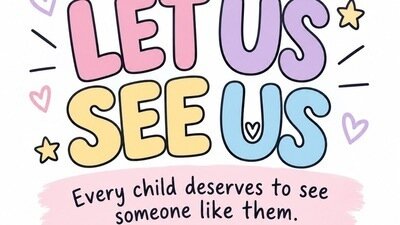

Let Us See Us: Give Medically Complex & Visibly Different Children More Representation
The Issue
Every child deserves to see someone like themselves in the stories they grow up watching.
My name is Lilly and my daughter Lucia was born with multiple medical differences, including Tetralogy of Fallot, a cleft lip and palate, microtia, intestinal malrotation, and a G-tube.
As her mom, I’ve started thinking about something I never thought much about before having her:
Will my daughter grow up seeing children who look like her on TV?
Will she see a character with a G-tube underneath their shirt?
A child with a cleft or another facial difference?
Someone with a different-looking ear or hearing device?
A superhero with a heart surgery scar?
And when she does see someone with a medical condition or disability, will that character simply get to be a kid?
Representation doesn’t always need to be a lesson about being different.
These characters deserve to be funny. Adventurous. Girly. Messy. Brave. Shy. Silly. Smart. Magical. The best friend. The hero. The princess.
Their medical device, scar, disability, or visible difference shouldn’t have to be their entire storyline.
And this isn’t only about Lucia.
It’s for every child who has looked at the characters on their favorite shows, movies, toys, books, and games and rarely—or never—seen someone who looks like them.
We are asking Disney and other companies creating children’s entertainment to intentionally include more characters with:
• Congenital and medical conditions
• Facial and craniofacial differences
• Feeding tubes and other medical devices
• Surgical scars
• Hearing differences and devices
• Limb differences and mobility devices
• Disabilities and chronic illnesses
• Other visible and invisible differences
We also ask that people and families with lived experience be included in the process of creating these characters so that representation is thoughtful, respectful, and authentic.
Our children don’t only deserve to be represented in medical stories.
They deserve to exist in magical ones, too.
Let our kids see the hero who looks like them.
Let them see the princess who looks like them.
Let them see the silly best friend who looks like them.
Let them see themselves.
Let Us See Us.
Please sign and share to help us show children’s entertainment companies that representation like this matters.
17
The Issue
Every child deserves to see someone like themselves in the stories they grow up watching.
My name is Lilly and my daughter Lucia was born with multiple medical differences, including Tetralogy of Fallot, a cleft lip and palate, microtia, intestinal malrotation, and a G-tube.
As her mom, I’ve started thinking about something I never thought much about before having her:
Will my daughter grow up seeing children who look like her on TV?
Will she see a character with a G-tube underneath their shirt?
A child with a cleft or another facial difference?
Someone with a different-looking ear or hearing device?
A superhero with a heart surgery scar?
And when she does see someone with a medical condition or disability, will that character simply get to be a kid?
Representation doesn’t always need to be a lesson about being different.
These characters deserve to be funny. Adventurous. Girly. Messy. Brave. Shy. Silly. Smart. Magical. The best friend. The hero. The princess.
Their medical device, scar, disability, or visible difference shouldn’t have to be their entire storyline.
And this isn’t only about Lucia.
It’s for every child who has looked at the characters on their favorite shows, movies, toys, books, and games and rarely—or never—seen someone who looks like them.
We are asking Disney and other companies creating children’s entertainment to intentionally include more characters with:
• Congenital and medical conditions
• Facial and craniofacial differences
• Feeding tubes and other medical devices
• Surgical scars
• Hearing differences and devices
• Limb differences and mobility devices
• Disabilities and chronic illnesses
• Other visible and invisible differences
We also ask that people and families with lived experience be included in the process of creating these characters so that representation is thoughtful, respectful, and authentic.
Our children don’t only deserve to be represented in medical stories.
They deserve to exist in magical ones, too.
Let our kids see the hero who looks like them.
Let them see the princess who looks like them.
Let them see the silly best friend who looks like them.
Let them see themselves.
Let Us See Us.
Please sign and share to help us show children’s entertainment companies that representation like this matters.
Petition Updates
Share this petition
Petition created on September 15, 2026