
Keep Project Booyah police-led
The issue
KEEP PROJECT BOOYAH POLICE-LED — Protect the Program That Is Changing Young Lives
We, the undersigned, call on the Queensland Government and Queensland Police Service to retain the direct, police-led delivery of Project Booyah and protect the model that has successfully supported young people, families and communities across Queensland.
Project Booyah is more than a youth program.
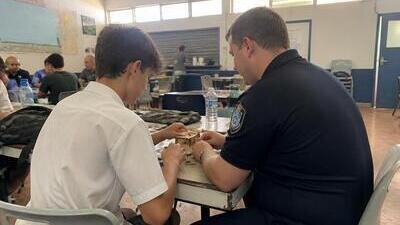
At the heart of its success is something incredibly difficult to replicate: police officers working directly alongside young people, week after week, breaking down barriers, building trust, providing mentorship and changing the way young people see police — and, in many cases, the way they see themselves and their future.
We have been advised that Project Booyah will continue, but that its current direct Queensland Police Service involvement will change, with the program moving to delivery through PCYC youth workers.
THIS PETITION IS NOT ABOUT PCYC VERSUS QPS.
PCYC and its youth workers do incredibly valuable work, and they have been an important part of Project Booyah.
This is about recognising that having police connected to PCYC is not the same as having police directly leading and delivering Project Booyah.
The police component should not be viewed as something that can simply be removed and replaced while expecting the program to remain the same.
For some young people entering Project Booyah, police represent authority, consequences or previous negative experiences.
Then something remarkable happens.
Over the course of the program, those young people spend time with police officers outside the traditional enforcement environment.
They train together.
They face challenges together.
They have difficult conversations.
They laugh together.
They are held accountable.
They are encouraged.
And slowly, barriers begin to come down.
The uniform they may once have feared or resented becomes attached to a person they trust, respect and know genuinely wants them to succeed.
That relationship is not incidental to Project Booyah.
IT IS ONE OF ITS GREATEST STRENGTHS.
As the parent of a young person who successfully completed Project Booyah in Mackay, I have witnessed this firsthand.
I watched my daughter's outlook change throughout this program.
When she was recently asked whether she would have participated in Project Booyah if it had not been for the police officer leading her program, her answer came immediately:
“No.”
That one word should matter.
Because behind every statistic about youth crime, disengagement or early intervention is a young person.
And sometimes reaching that young person comes down to finding the right person, in the right environment, at the right time.
For my daughter, Project Booyah did that.
For other families, it has done the same.
So before fundamentally changing a model that is achieving positive outcomes, we are asking decision-makers to listen to the people who have experienced it.
Talk to the graduates.
Talk to their parents and families.
Talk to the police officers, liaison officers and youth workers who have stood beside these young people.
Look at the outcomes of the existing police-led model and ask a very simple question:
WHY CHANGE SOMETHING THAT IS WORKING?
If a program is successfully breaking down barriers between young people and police, providing positive role models, intervening before young people travel further down the wrong path and helping them believe they are capable of something more, we should be investing in that model — not removing one of the very components that makes it unique.
We are therefore calling on the Queensland Government and Queensland Police Service to:
• Retain Project Booyah as a directly police-led program.
• Maintain meaningful, hands-on QPS involvement throughout the program — not simply an association with police through PCYC.
• Consult Project Booyah graduates, parents, families, staff and communities before implementing changes to the current model.
• Review the demonstrated outcomes of the police-led model before any decision is made to remove or substantially reduce direct QPS involvement.
• Invest in and strengthen Project Booyah rather than dismantling a partnership that is already changing young lives.
This isn't about resisting change for the sake of it.
This isn't about criticising PCYC.
And this isn't PCYC versus QPS.
It is about protecting something that works.
PCYC youth workers and Queensland Police have each brought something valuable to Project Booyah. We don't want one replacing the other. We want that partnership protected.
Our young people deserve every opportunity we can give them.
And when we find an approach that reaches young people others may struggle to reach, we don't take it away.
WE STRENGTHEN IT.
Please sign this petition and stand with Project Booyah graduates, families and supporters in asking Queensland decision-makers to:
KEEP PROJECT BOOYAH POLICE-LED.
Don't wait until the police involvement is gone to realise how important it was.
Protect what is working.
Protect the relationships.
Protect Project Booyah as we know it.

212
The issue
KEEP PROJECT BOOYAH POLICE-LED — Protect the Program That Is Changing Young Lives
We, the undersigned, call on the Queensland Government and Queensland Police Service to retain the direct, police-led delivery of Project Booyah and protect the model that has successfully supported young people, families and communities across Queensland.
Project Booyah is more than a youth program.
At the heart of its success is something incredibly difficult to replicate: police officers working directly alongside young people, week after week, breaking down barriers, building trust, providing mentorship and changing the way young people see police — and, in many cases, the way they see themselves and their future.
We have been advised that Project Booyah will continue, but that its current direct Queensland Police Service involvement will change, with the program moving to delivery through PCYC youth workers.
THIS PETITION IS NOT ABOUT PCYC VERSUS QPS.
PCYC and its youth workers do incredibly valuable work, and they have been an important part of Project Booyah.
This is about recognising that having police connected to PCYC is not the same as having police directly leading and delivering Project Booyah.
The police component should not be viewed as something that can simply be removed and replaced while expecting the program to remain the same.
For some young people entering Project Booyah, police represent authority, consequences or previous negative experiences.
Then something remarkable happens.
Over the course of the program, those young people spend time with police officers outside the traditional enforcement environment.
They train together.
They face challenges together.
They have difficult conversations.
They laugh together.
They are held accountable.
They are encouraged.
And slowly, barriers begin to come down.
The uniform they may once have feared or resented becomes attached to a person they trust, respect and know genuinely wants them to succeed.
That relationship is not incidental to Project Booyah.
IT IS ONE OF ITS GREATEST STRENGTHS.
As the parent of a young person who successfully completed Project Booyah in Mackay, I have witnessed this firsthand.
I watched my daughter's outlook change throughout this program.
When she was recently asked whether she would have participated in Project Booyah if it had not been for the police officer leading her program, her answer came immediately:
“No.”
That one word should matter.
Because behind every statistic about youth crime, disengagement or early intervention is a young person.
And sometimes reaching that young person comes down to finding the right person, in the right environment, at the right time.
For my daughter, Project Booyah did that.
For other families, it has done the same.
So before fundamentally changing a model that is achieving positive outcomes, we are asking decision-makers to listen to the people who have experienced it.
Talk to the graduates.
Talk to their parents and families.
Talk to the police officers, liaison officers and youth workers who have stood beside these young people.
Look at the outcomes of the existing police-led model and ask a very simple question:
WHY CHANGE SOMETHING THAT IS WORKING?
If a program is successfully breaking down barriers between young people and police, providing positive role models, intervening before young people travel further down the wrong path and helping them believe they are capable of something more, we should be investing in that model — not removing one of the very components that makes it unique.
We are therefore calling on the Queensland Government and Queensland Police Service to:
• Retain Project Booyah as a directly police-led program.
• Maintain meaningful, hands-on QPS involvement throughout the program — not simply an association with police through PCYC.
• Consult Project Booyah graduates, parents, families, staff and communities before implementing changes to the current model.
• Review the demonstrated outcomes of the police-led model before any decision is made to remove or substantially reduce direct QPS involvement.
• Invest in and strengthen Project Booyah rather than dismantling a partnership that is already changing young lives.
This isn't about resisting change for the sake of it.
This isn't about criticising PCYC.
And this isn't PCYC versus QPS.
It is about protecting something that works.
PCYC youth workers and Queensland Police have each brought something valuable to Project Booyah. We don't want one replacing the other. We want that partnership protected.
Our young people deserve every opportunity we can give them.
And when we find an approach that reaches young people others may struggle to reach, we don't take it away.
WE STRENGTHEN IT.
Please sign this petition and stand with Project Booyah graduates, families and supporters in asking Queensland decision-makers to:
KEEP PROJECT BOOYAH POLICE-LED.
Don't wait until the police involvement is gone to realise how important it was.
Protect what is working.
Protect the relationships.
Protect Project Booyah as we know it.
Supporter voices
Petition Updates
Share this petition
Petition created on 28 August 2026