Justice for Wonder! Stop the unnecessary killing of gentle grizzly bears in BC
The Issue
On August 12, 2026, the BC Conservation Officer Service killed Wonder, a gentle cub with a limb difference. His mother may have been killed too, despite being gentle, due to complaints from neighbours regarding insecure management of garbage. Now their siblings Nel, Floppy, and Cinnamon are in danger too.
In Ontario cubs with limb differences are assessed at rehabilitation centres. They are not killed in Ontario.
Monsters under the bed
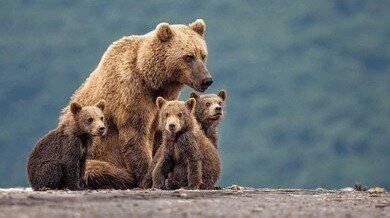
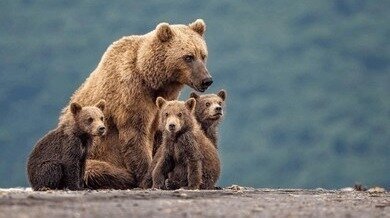
🟥A very gentle Nelson grizzly family had been having what Katie Graves at the Ursa Project Society described as a wonderful summer. She showed us videos of the foursome gambolling in green meadows.
One of the three yearlings had a severely deformed/injured back leg. But he was coping well, keeping up with his family.
On July 23, the BC Conservation Officer Service (BCCOS) itself said there was “no current concern regarding his well-being.”
Yesterday, BCCOS officers killed him. Now they want to shoot his mother too!
The emailed explanation given to media was that, because of his age, injury and “conflict history,” he was unsuitable for relocation or rehabilitation. But no explanation what that conflict history was, or why any need to relocate.
This relaxed, good-natured mother is the definition of a good neighbour to the human community. She is both admired and respected.
Now BCCOS says it is trapping this shattered family and will “assess” what to do with them. They are also targeting another mother with her cubs in same area.
We don’t believe the stated plan to “trap and assess.”
We believe the plan is to trap, relocate and kill.
This mother was previously relocated with her cubs, but returned to Nelson within days — the area is her home, where she teaches her young to find food and navigate their environment.
BCCOS has a long history of using lethal measures against bears and answers to no one.
They are truly the monsters under the bed.
A heart-wrenching event has taken place in the verdant meadows of Nelson, British Columbia, where grizzly bears, lovingly observed and documented by the Ursa Project Society's Katie Graves, were thriving this summer. Among this picturesque group was a grizzly family that had captured the hearts of many—a mother bear and her three playful yearlings. However, tragedy struck when one of these young bears, who had been successfully managing a severely deformed back leg, met an untimely demise.
Despite a statement on July 23 by the BC Conservation Officer Service (BCCOS) declaring "no current concern regarding his well-being," a decision was made to lethally intervene. The reasons for this cruel and unnecessary act remain unclear and unjustified. The young bear was adapting to his injury, joyfully keeping pace with his family, and posed no threat to public safety. His death not only sparked outrage but also cast a shadow of fear over the rest of his family who are now, tragically, in the crosshairs of intervention.
We must question the rationale behind this decision and hold accountable those responsible for this unnecessary act of violence. In this age of awareness and consciousness, there must be an immediate reassessment of policies surrounding wildlife intervention. Grizzly bears are emblematic of Canada's wildlife heritage, and it's crucial they are treated with respect and protected from unwarranted harm.
This petition is not just about one grizzly turning from a vibrant part of the family into a grim statistic. It’s about ensuring these majestic creatures can live freely and safely in their natural habitat. It’s about demanding transparency and compassion in wildlife management decisions so that other bear families will not face the same fate.
Help us urge the BC Conservation Officer Service and relevant authorities to review their decision-making protocols on wildlife intervention. We need better practices in place that prioritise coexistence and the natural thriving of wildlife.
Join us in this vital cause by signing the petition, to stop the unnecessary and senseless killing of grizzly bears in British Columbia. Your voice is crucial in preventing future tragedies and in preserving the rich tapestry of life in our forests.
Here are some important details about the Mother grizzly and her cubs that are potentially in danger of the conservation officer killing them:
On July 24, 2026, the Nelson Star reported that a female grizzly with three cubs had been spotted around Nelson, and the headline specifically said there were "no immediate concerns."
There are also public reports of a mother grizzly and three cubs travelling in the Hall Siding–Salmo area.
So it appears very likely we're talking about the same family.
That makes the change from "no immediate concerns" in late July to a reported destruction order today something worth asking the Conservation Officer Service to explain.
Being in someone's backyard is NOT, by itself, grounds for killing a grizzly under BC's own guidelines
This was the most interesting thing I found.
BC actually has a specific government document called Human–Grizzly Bear (Family Unit) Conflict Response Guidelines — meaning it specifically covers a mother grizzly with cubs.
The province divides situations into three categories.
A Category 3 family is displaying essentially normal bear behaviour and presents a low public-safety risk. The government's examples include bears foraging, crossing roads, travelling near communities, etc. The recommended responses include educating residents, removing/securing attractants, involving WildSafeBC/bylaw, closing areas if necessary, and aversive conditioning/hazing. Killing the bear is not the prescribed response merely because it is near people.
At the opposite end, Category 1 is quite different. The government's examples include a grizzly that has attacked/injured/killed a human, attacked livestock or pets, entered a dwelling, caused significant property damage, has a serious previous conflict history, is badly injured, or otherwise presents a serious public-safety threat. The guidelines say euthanasia can then be appropriate. (They are guidelines though, not mandatory.)
So the critical question isn't simply:
"Has this grizzly been seen in people's yards?"
It is: What has this particular sow actually done that caused COS to classify her as a serious public-safety threat?
That distinction matters enormously.
And there absolutely ARE non-lethal options
BC's own grizzly guidelines contemplate things such as aversive conditioning/hazing, securing or removing attractants, managing people and access, trapping, immobilization, relocation/translocation in appropriate circumstances, education and enforcement against people creating attractants.
Relocation isn't a magic solution — moving grizzlies can itself carry significant risks and bears sometimes return. But it isn't true that killing is automatically the only option.
There's an especially relevant precedent from Jasper. A female grizzly and her cubs repeatedly entered heavily used areas and eventually ate human food. Parks Canada had already been hazing them and trying to move them away from people. Rather than kill the mother, they captured the entire family together, GPS-collared the mother, moved them to another part of the park and continued monitoring them. Parks Canada explicitly said the purpose was to protect people while giving the bears a better chance of survival.
That seems particularly relevant to what is happening around Nelson.
There's also a human-responsibility issue here
The City of Nelson itself acknowledges that unsecured garbage, fruit trees, bird feeders, pet food and BBQs draw bears into residential neighbourhoods. This summer the City announced a "low-tolerance approach" toward people leaving attractants unsecured, including fines starting at $150.
And Ursa's own research found something striking: in 2022, 15 of the 17 black bears killed within Nelson were considered food-conditioned after accessing garbage and/or fruit/nut trees.
So there is a legitimate ethical question here: when human behaviour creates or worsens the conflict, how much effort should be required to correct the human side of the equation before an animal is killed?
That's actually very close to the philosophy behind BC's Bear Smart program.
One thing I'd slightly separate from your moral argument
I understand your point that many Nelson residents love this family while a smaller number may be frightened by them. But I wouldn't make popularity versus fear the central argument.
If a grizzly genuinely presents a serious and imminent danger to people, wildlife officials can't reasonably determine its fate by majority vote.
The much stronger argument is:
If the mother has not attacked anyone, threatened anyone, entered homes, killed pets/livestock or displayed escalating aggressive behaviour, what objective evidence justifies moving her from a low/moderate conflict category into a category warranting destruction — and which non-lethal interventions were attempted first?
That is a very difficult question for the government to brush aside, because it uses their own decision-making framework.
Another bear has been killed in our province. To some, he was just a yearling grizzly with a limp. To the people who watched him, he was Wonder — the cub residents saw emerge from the den, then grow: playing with his two siblings, keeping up despite his bad leg, doing just fine. His injury was old, and he learnt to live with it. Conservation officers themselves had said as much only weeks earlier, describing him as mobile, feeding, and of no current concern regarding his well-being.
Then, on August 12th, his life was cut short, without any transparent explanation of what had changed. The BC COS said his age, injury and "conflict history" made him unsuitable for rehabilitation or relocation, without ever explaining what that history actually was. As I am writing this, his mother might have been killed too, or officers may be trying to kill her, and who knows what has happened to his siblings. A family that just days ago was living its life is now shattered.
The words habituation, food-conditioning, conflict and public safety are thrown around far too casually by government and the media, as though they were settled scientific conclusions rather than consequential labels that should require evidence. A community report is information, not automatically a conflict. Several reports do not magically become a behavioural history of a bear. Somewhere between those reports and the decision to kill, interpretation needs to take place, and that is precisely the part of the process the public rarely gets to see.
Those of us who question these wildlife management decisions are routinely dismissed as being "emotional." And yet we bring the science, in letters, articles and meetings. Local bear groups do the practical work too, day after day.
Coexistence is hard work and it never really ends, because it is a relationship built through ongoing adjustment by both people and animals. Bears learn from us just as we learn from them. They adapt to predictable human presence, learn where and when people are likely to be, and adjust their behaviour accordingly. Tolerance does not automatically translate into conflict. Recent research on large carnivores even raises the opposite concern: removing established, resident animals who have learned to live around people may create space for younger, less experienced and less predictable animals to move in.
This is also why the science behind the labels matters so much. Habituation is a learning process. A bear that does not immediately flee from a person may be showing tolerance, reduced flight response or simply individual personality. Food-conditioning also develops through repeated experience and cannot reasonably be inferred from a single observation of a bear eating human food. Yet these labels can become shorthand for a bear that has supposedly crossed some irreversible line.
B.C.’s bear conflict response frameworks and family-unit guidelines have not kept pace with this science. Some of the assumptions behind the categories go back decades, while the placement of an individual bear within those categories can depend heavily on interpretation. In my recent presentation on bear 'management,' I made exactly this point: the behaviour of a given bear may not have changed, but the label assigned to this behaviour has. What was once acceptable becomes intolerable. Dangerous, threatening, menacing.
What's worse, this subjectivity is accompanied by a lack of transparency. If a bear is reclassified from tolerated presence to a high-threat category and ultimately to a lethal response, what observable behaviour underpins and justifies the change? What scientific evidence supports that shift? How was it verified, and how was the animal's previous behavioural history considered? These are not trivial questions when the answers determine whether that animal lives or dies.
It all comes down to coexistence and what it really means. Or what it does not mean. It is not the absence of tension or proximity to wildlife, or even occasional conflict. It does not necessitate separating people from bears somewhere else. We live in overlapping landscapes, and a bear moving through a neighbourhood need not signify impending danger. It is, instead, an opportunity to express our tolerance, understanding, compassion, respect and, of course, caution. But caution is not a synonym for fear, particularly the kind of disproportionate fear that dooms bears but doesn't necessarily make us any safer.
We live in a rapidly changing world, and one of the clearest expressions of that change is how people and wildlife interact, learn and coexist.
Many communities are becoming more appreciative of the wildlife living alongside them. And wildlife, bears included, is adapting.
What also needs to evolve is the way wildlife is managed, which is increasingly at odds with what communities want, what bears deserve, and what science shows.
Because in the end, it is the management system that so casually, so hastily, allows the trigger to be pulled.
_______
Wonder and his beautiful family, captured on video by Robert Filippo

91
The Issue
On August 12, 2026, the BC Conservation Officer Service killed Wonder, a gentle cub with a limb difference. His mother may have been killed too, despite being gentle, due to complaints from neighbours regarding insecure management of garbage. Now their siblings Nel, Floppy, and Cinnamon are in danger too.
In Ontario cubs with limb differences are assessed at rehabilitation centres. They are not killed in Ontario.
Monsters under the bed
🟥A very gentle Nelson grizzly family had been having what Katie Graves at the Ursa Project Society described as a wonderful summer. She showed us videos of the foursome gambolling in green meadows.
One of the three yearlings had a severely deformed/injured back leg. But he was coping well, keeping up with his family.
On July 23, the BC Conservation Officer Service (BCCOS) itself said there was “no current concern regarding his well-being.”
Yesterday, BCCOS officers killed him. Now they want to shoot his mother too!
The emailed explanation given to media was that, because of his age, injury and “conflict history,” he was unsuitable for relocation or rehabilitation. But no explanation what that conflict history was, or why any need to relocate.
This relaxed, good-natured mother is the definition of a good neighbour to the human community. She is both admired and respected.
Now BCCOS says it is trapping this shattered family and will “assess” what to do with them. They are also targeting another mother with her cubs in same area.
We don’t believe the stated plan to “trap and assess.”
We believe the plan is to trap, relocate and kill.
This mother was previously relocated with her cubs, but returned to Nelson within days — the area is her home, where she teaches her young to find food and navigate their environment.
BCCOS has a long history of using lethal measures against bears and answers to no one.
They are truly the monsters under the bed.
A heart-wrenching event has taken place in the verdant meadows of Nelson, British Columbia, where grizzly bears, lovingly observed and documented by the Ursa Project Society's Katie Graves, were thriving this summer. Among this picturesque group was a grizzly family that had captured the hearts of many—a mother bear and her three playful yearlings. However, tragedy struck when one of these young bears, who had been successfully managing a severely deformed back leg, met an untimely demise.
Despite a statement on July 23 by the BC Conservation Officer Service (BCCOS) declaring "no current concern regarding his well-being," a decision was made to lethally intervene. The reasons for this cruel and unnecessary act remain unclear and unjustified. The young bear was adapting to his injury, joyfully keeping pace with his family, and posed no threat to public safety. His death not only sparked outrage but also cast a shadow of fear over the rest of his family who are now, tragically, in the crosshairs of intervention.
We must question the rationale behind this decision and hold accountable those responsible for this unnecessary act of violence. In this age of awareness and consciousness, there must be an immediate reassessment of policies surrounding wildlife intervention. Grizzly bears are emblematic of Canada's wildlife heritage, and it's crucial they are treated with respect and protected from unwarranted harm.
This petition is not just about one grizzly turning from a vibrant part of the family into a grim statistic. It’s about ensuring these majestic creatures can live freely and safely in their natural habitat. It’s about demanding transparency and compassion in wildlife management decisions so that other bear families will not face the same fate.
Help us urge the BC Conservation Officer Service and relevant authorities to review their decision-making protocols on wildlife intervention. We need better practices in place that prioritise coexistence and the natural thriving of wildlife.
Join us in this vital cause by signing the petition, to stop the unnecessary and senseless killing of grizzly bears in British Columbia. Your voice is crucial in preventing future tragedies and in preserving the rich tapestry of life in our forests.
Here are some important details about the Mother grizzly and her cubs that are potentially in danger of the conservation officer killing them:
On July 24, 2026, the Nelson Star reported that a female grizzly with three cubs had been spotted around Nelson, and the headline specifically said there were "no immediate concerns."
There are also public reports of a mother grizzly and three cubs travelling in the Hall Siding–Salmo area.
So it appears very likely we're talking about the same family.
That makes the change from "no immediate concerns" in late July to a reported destruction order today something worth asking the Conservation Officer Service to explain.
Being in someone's backyard is NOT, by itself, grounds for killing a grizzly under BC's own guidelines
This was the most interesting thing I found.
BC actually has a specific government document called Human–Grizzly Bear (Family Unit) Conflict Response Guidelines — meaning it specifically covers a mother grizzly with cubs.
The province divides situations into three categories.
A Category 3 family is displaying essentially normal bear behaviour and presents a low public-safety risk. The government's examples include bears foraging, crossing roads, travelling near communities, etc. The recommended responses include educating residents, removing/securing attractants, involving WildSafeBC/bylaw, closing areas if necessary, and aversive conditioning/hazing. Killing the bear is not the prescribed response merely because it is near people.
At the opposite end, Category 1 is quite different. The government's examples include a grizzly that has attacked/injured/killed a human, attacked livestock or pets, entered a dwelling, caused significant property damage, has a serious previous conflict history, is badly injured, or otherwise presents a serious public-safety threat. The guidelines say euthanasia can then be appropriate. (They are guidelines though, not mandatory.)
So the critical question isn't simply:
"Has this grizzly been seen in people's yards?"
It is: What has this particular sow actually done that caused COS to classify her as a serious public-safety threat?
That distinction matters enormously.
And there absolutely ARE non-lethal options
BC's own grizzly guidelines contemplate things such as aversive conditioning/hazing, securing or removing attractants, managing people and access, trapping, immobilization, relocation/translocation in appropriate circumstances, education and enforcement against people creating attractants.
Relocation isn't a magic solution — moving grizzlies can itself carry significant risks and bears sometimes return. But it isn't true that killing is automatically the only option.
There's an especially relevant precedent from Jasper. A female grizzly and her cubs repeatedly entered heavily used areas and eventually ate human food. Parks Canada had already been hazing them and trying to move them away from people. Rather than kill the mother, they captured the entire family together, GPS-collared the mother, moved them to another part of the park and continued monitoring them. Parks Canada explicitly said the purpose was to protect people while giving the bears a better chance of survival.
That seems particularly relevant to what is happening around Nelson.
There's also a human-responsibility issue here
The City of Nelson itself acknowledges that unsecured garbage, fruit trees, bird feeders, pet food and BBQs draw bears into residential neighbourhoods. This summer the City announced a "low-tolerance approach" toward people leaving attractants unsecured, including fines starting at $150.
And Ursa's own research found something striking: in 2022, 15 of the 17 black bears killed within Nelson were considered food-conditioned after accessing garbage and/or fruit/nut trees.
So there is a legitimate ethical question here: when human behaviour creates or worsens the conflict, how much effort should be required to correct the human side of the equation before an animal is killed?
That's actually very close to the philosophy behind BC's Bear Smart program.
One thing I'd slightly separate from your moral argument
I understand your point that many Nelson residents love this family while a smaller number may be frightened by them. But I wouldn't make popularity versus fear the central argument.
If a grizzly genuinely presents a serious and imminent danger to people, wildlife officials can't reasonably determine its fate by majority vote.
The much stronger argument is:
If the mother has not attacked anyone, threatened anyone, entered homes, killed pets/livestock or displayed escalating aggressive behaviour, what objective evidence justifies moving her from a low/moderate conflict category into a category warranting destruction — and which non-lethal interventions were attempted first?
That is a very difficult question for the government to brush aside, because it uses their own decision-making framework.
Another bear has been killed in our province. To some, he was just a yearling grizzly with a limp. To the people who watched him, he was Wonder — the cub residents saw emerge from the den, then grow: playing with his two siblings, keeping up despite his bad leg, doing just fine. His injury was old, and he learnt to live with it. Conservation officers themselves had said as much only weeks earlier, describing him as mobile, feeding, and of no current concern regarding his well-being.
Then, on August 12th, his life was cut short, without any transparent explanation of what had changed. The BC COS said his age, injury and "conflict history" made him unsuitable for rehabilitation or relocation, without ever explaining what that history actually was. As I am writing this, his mother might have been killed too, or officers may be trying to kill her, and who knows what has happened to his siblings. A family that just days ago was living its life is now shattered.
The words habituation, food-conditioning, conflict and public safety are thrown around far too casually by government and the media, as though they were settled scientific conclusions rather than consequential labels that should require evidence. A community report is information, not automatically a conflict. Several reports do not magically become a behavioural history of a bear. Somewhere between those reports and the decision to kill, interpretation needs to take place, and that is precisely the part of the process the public rarely gets to see.
Those of us who question these wildlife management decisions are routinely dismissed as being "emotional." And yet we bring the science, in letters, articles and meetings. Local bear groups do the practical work too, day after day.
Coexistence is hard work and it never really ends, because it is a relationship built through ongoing adjustment by both people and animals. Bears learn from us just as we learn from them. They adapt to predictable human presence, learn where and when people are likely to be, and adjust their behaviour accordingly. Tolerance does not automatically translate into conflict. Recent research on large carnivores even raises the opposite concern: removing established, resident animals who have learned to live around people may create space for younger, less experienced and less predictable animals to move in.
This is also why the science behind the labels matters so much. Habituation is a learning process. A bear that does not immediately flee from a person may be showing tolerance, reduced flight response or simply individual personality. Food-conditioning also develops through repeated experience and cannot reasonably be inferred from a single observation of a bear eating human food. Yet these labels can become shorthand for a bear that has supposedly crossed some irreversible line.
B.C.’s bear conflict response frameworks and family-unit guidelines have not kept pace with this science. Some of the assumptions behind the categories go back decades, while the placement of an individual bear within those categories can depend heavily on interpretation. In my recent presentation on bear 'management,' I made exactly this point: the behaviour of a given bear may not have changed, but the label assigned to this behaviour has. What was once acceptable becomes intolerable. Dangerous, threatening, menacing.
What's worse, this subjectivity is accompanied by a lack of transparency. If a bear is reclassified from tolerated presence to a high-threat category and ultimately to a lethal response, what observable behaviour underpins and justifies the change? What scientific evidence supports that shift? How was it verified, and how was the animal's previous behavioural history considered? These are not trivial questions when the answers determine whether that animal lives or dies.
It all comes down to coexistence and what it really means. Or what it does not mean. It is not the absence of tension or proximity to wildlife, or even occasional conflict. It does not necessitate separating people from bears somewhere else. We live in overlapping landscapes, and a bear moving through a neighbourhood need not signify impending danger. It is, instead, an opportunity to express our tolerance, understanding, compassion, respect and, of course, caution. But caution is not a synonym for fear, particularly the kind of disproportionate fear that dooms bears but doesn't necessarily make us any safer.
We live in a rapidly changing world, and one of the clearest expressions of that change is how people and wildlife interact, learn and coexist.
Many communities are becoming more appreciative of the wildlife living alongside them. And wildlife, bears included, is adapting.
What also needs to evolve is the way wildlife is managed, which is increasingly at odds with what communities want, what bears deserve, and what science shows.
Because in the end, it is the management system that so casually, so hastily, allows the trigger to be pulled.
_______
Wonder and his beautiful family, captured on video by Robert Filippo
The Decision Makers

Supporter Voices
Petition Updates
Share this petition
Petition created on August 13, 2026