

Justice for Bangladeshi Students: Urging ICC Action Against Crimes Against Humanity
The Issue
Background of the Quota Reform Movement in Bangladesh
In Bangladesh, the government job sector was historically governed by a quota system, allocating 56% of positions across various groups: 30% were reserved for children and grandchildren of freedom fighters, 10% for individuals from each district, 10% for women, 5% for tribal people (ethnic minorities), and 1% for physically challenged individuals. This system, intended to promote inclusivity, faced criticism and demands for reform over several decades, particularly concerning recruitment processes of the Bangladesh Public Service Commission (BPSC).
The first significant student protests against the quota system's discriminatory aspects occurred in 1997, with subsequent demonstrations in 2007, 2013 and 2018, particularly at Dhaka University. Despite these protests, governmental response remained minimal until 2018, when widespread national protests prompted Prime Minister Sheikh Hasina to abolish quotas for first and second-class government jobs. This decision followed her parliamentary declaration, though critics argue it was also a reaction to political pressures, as the Prime Minister, accused of securing power through questionable elections, dismantled the entire system.
Following the abolition, the Awami League, leveraging the historical narrative of the liberation war for political gain, sought to reinstate the quota system through judicial avenues. This led to the High Court's June 5 declaration that the 2018 government notification abolishing the quotas was illegal. In response, students across the nation rallied once more, forming a peaceful, nationwide movement advocating for rational quota reforms. This movement, perceived as a direct challenge to the autocratic tendencies of the current government, garnered support from various sectors, including descendants of freedom fighters who aligned with the students' calls for justice and equitable reform.
Peaceful Student Movement
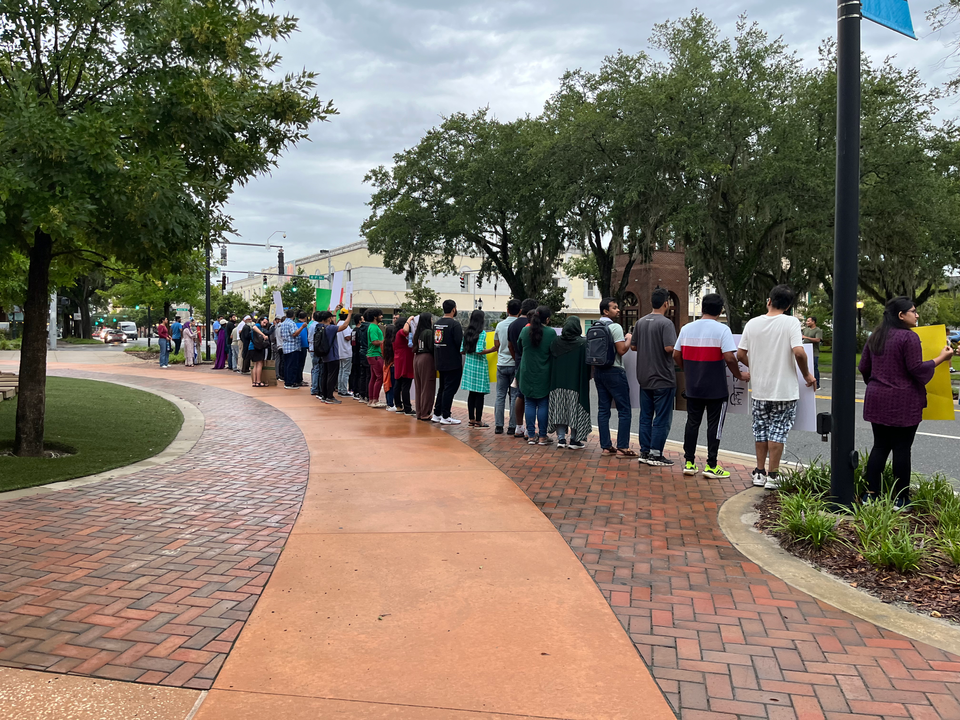
Following the High Court's decision to uphold the quota for freedom fighters in government jobs, a widespread and orderly student protest movement commenced at Dhaka University. On July 6, students convened a protest rally in front of the Raju Sculpture, an event marked by the participation of activists from the 2018 quota reform movement. The unrest spread to other educational institutions, including Jagannath University and Jahangirnagar University, where students expressed their discontent across both public and private campuses.
On July 7, students from various universities organized a nationwide event known as the 'Bangla Blockade,' articulating four key demands centered around the reformation of the quota system. This event saw the blockade of several major roads in Dhaka, lasting approximately five hours before the protesters dispersed peacefully by 8 p.m. The following day, the student movement continued with similar blockades and expanded to include boycotts of classes and examinations at colleges and universities across the country, including Dhaka. This day also saw the formation of a coordinated group named 'Veishamyabirodhi Chhatra Andolan' (Anti-Discrimination Students Movement), consisting of 65 members (23 coordinators and 42 co-coordinators), signaling a structured and unified response to the quota issue.
In light of these protests, on July 8, five government ministers and state ministers met in a session chaired by Awami League Secretary General and Road Transport and Bridges Minister Obaidul Quader. Details of their discussions were not disclosed to the media, adding to the tensions.
The movement gained further momentum on July 10, when the Appellate Division of the Supreme Court decided to postpone the High Court’s judgment for four weeks. Despite this delay, the students vowed to continue their protests, calling for the executive branch's direct intervention to address and reform the entire quota system. This ongoing commitment underscores the students' determination to seek substantial and fair changes within the governmental recruitment framework.
Peaceful Protests and Government Violence
On July 12, students organized another 'Bangla Blockade' to advocate for comprehensive quota reform in all levels of government employment through legislative changes in the Parliament of Bangladesh. During this event, participants overcame a police barricade and occupied the Shahbag intersection in the capital city. Unfortunately, this demonstration was met with violence when police clashed with students from Comilla University, resulting in at least 15 students sustaining injuries.
The following day, on July 13, protest marches and rallies were synchronized across university campuses nationwide at 4 pm, both to demand quota reforms and to condemn the violent police actions at Comilla University. The situation escalated further when, on July 14, Prime Minister Sheikh Hasina disparaged the protesting students by labeling them as "Razakar's grandchildren," a term historically associated with collaborators of the Pakistani army during Bangladesh's liberation war. This remark deeply offended the student community, inciting them to chant slogans emphasizing their demands for justice and fairness over the established quota system.
The tension intensified on July 15 when Obaidul Quader, the Minister of Road Transport and Bridges and the General Secretary of the Awami League, publicly stated that the Chhatra League (the student wing of the ruling party) was prepared to counteract the students' "brave behavior" from the previous Sunday. Following his statement, government-endorsed groups, including the Chhatra League and the mercenary group known as Lathial Bahini, aggressively confronted the protesters. This government-sanctioned response aimed to suppress the student-led movement with considerable force, further involving various state forces like the Police, the Rapid Action Battalion (RAB), the Border Guard Bangladesh (BGB), and Ansar. Such actions catalyzed widespread condemnation as these entities attempted to forcefully quell the peaceful protests, with significant public backlash especially following attacks on unarmed students, notably women at Dhaka University.
In reaction to these assaults, students across Bangladesh united to boycott the Chhatra League, marking a significant moment of collective resistance against the aggressive tactics employed by government-supported organizations. This nationwide rejection of the Chhatra League underscored the escalating frustration and determination among students to continue advocating for their rights in the face of governmental violence.
Student Protest to Mass Uprising
Faced with escalating student protests, the government resorted to shutting down all educational institutions, including universities, colleges, schools, and madrasas nationwide on July 16. In addition to this drastic measure, law enforcement forcibly evacuated students from campus facilities at major universities such as Dhaka University, Jahangirnagar University, and Rajshahi University. Students were expelled from campus dormitories and mess halls, effectively displacing them.
As the student-led protests continued unabated, the government escalated its response by deploying the Border Guard Bangladesh (BGB) throughout the country. This response included open fire on processions involving students and unarmed civilians, leading to indiscriminate violence. Notably, on this day, Abu Sayeed, a protest coordinator from Begum Rokeya University, was fatally shot at close range by police. The violence resulted in the deaths of at least six students across various regions, including Dhaka and Chittagong, with the involvement of police, the Chhatra League, and the Jubo League—both of which are affiliated with the ruling party.
This harsh crackdown did not quell the spirit of the protesters; rather, it ignited a broader national outcry. The oppressive actions taken by the government transformed the student protests into a significant mass uprising, marking one of the most substantial movements in the history of Bangladesh. The general populace joined students in the streets, rallying against the government's severe tactics and calling for fundamental changes and accountability. This mass mobilization reflected a pivotal moment in the nation's pursuit of justice and democratic governance, highlighting a collective stand against authoritarian measures.
Crimes Against Humanity on Protesters and Students in Bangladesh
During an imposed curfew, the Bangladesh army utilized UN-marked armored vehicles and helicopters in attempts to suppress the protesters. On the streets, the police, Rapid Action Battalion (RAB), and Border Guard Bangladesh (BGB) escalated their use of force, firing bullets, rubber bullets, tear shells, and sound grenades from helicopters directly at protesters. Despite these extreme measures, the widespread public dissent continued to grow, underscoring the depth of discontent among the populace.
On July 17, in a poignant response to the violence, students across various campuses held funeral and coffin processions to honor those killed. Tragically, these memorials were also marred by violence as government forces and Chhatra League members disrupted the gatherings. This aggression led students to declare a 'complete shutdown' nationwide. That evening, the Prime Minister addressed the nation but failed to acknowledge or meet the protesters' demands. Concurrently, Awami League General Secretary Obaidul Quader urged party leaders to bolster local resistance against the protests.
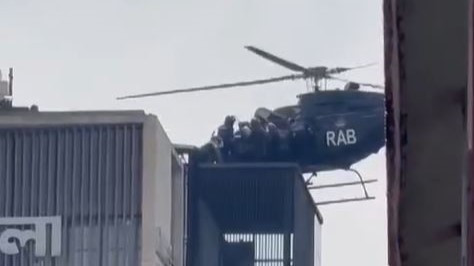
By July 18, in a further clampdown, the government suspended all internet connections, instituting a communications blackout that plunged the country into informational darkness. The officially reported death toll was at least 213, with human rights organizations suggesting figures between 300 to 500. The government’s aggressive actions extended to the streets, where even wounded protesters seeking medical help were attacked by Chhatra League, prevented from receiving care, and had their medical records confiscated.
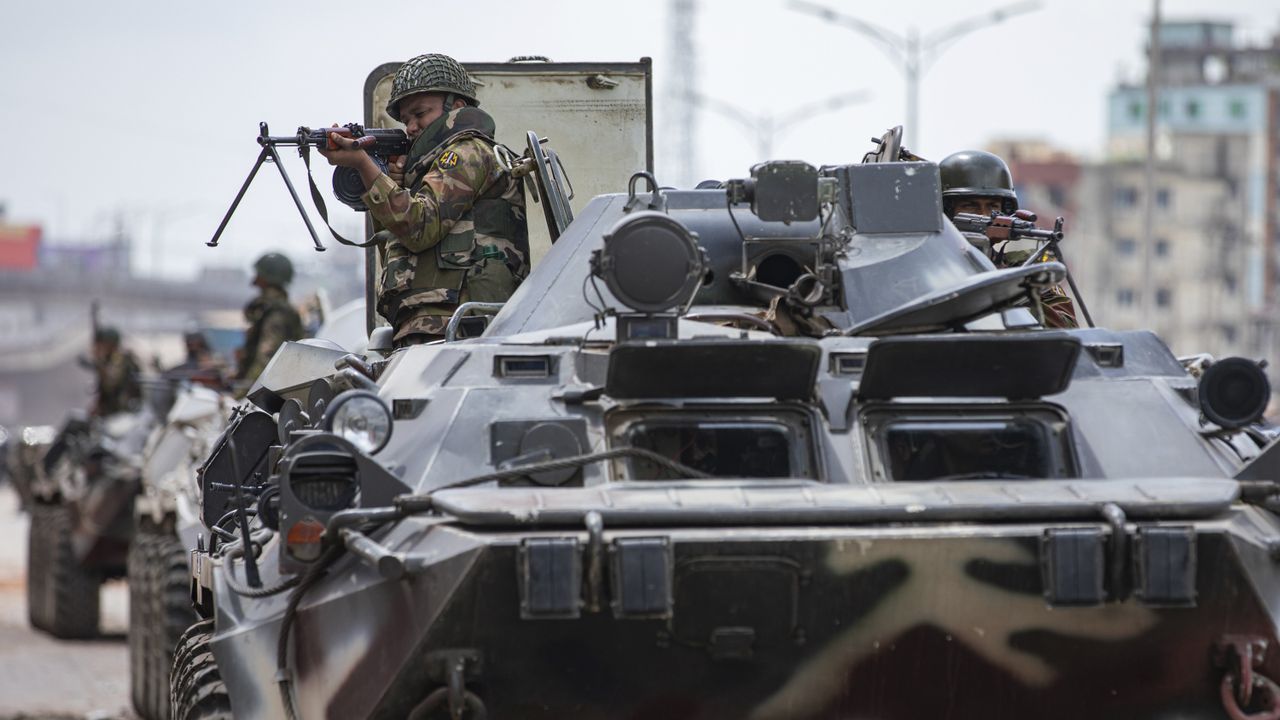
The nationwide curfew continued, with the military intensifying its presence. Reports indicated several fatalities due to military actions, including the use of UN-marked vehicles and helicopters to quell peaceful assemblies. The actions of the government, led by a Prime Minister widely criticized for authoritarian practices, sparked international outcry over the apparent crimes against humanity. Despite her claims of protecting students, her government’s actions spoke otherwise, casting protesters as militants and imposing severe reprisals against any form of dissent.
The repression resulted in the mass arrest of over 10,000 individuals, predominantly students, with many detained under harsh conditions, often without just cause or legal proceedings. The government's response has been characterized by a disturbing disregard for basic human rights, prompting widespread domestic and international condemnation.
The severity of the government's tactics against its citizens highlights a grim reality in Bangladesh, prompting calls from global entities for restraint and respect for human rights. As the government tentatively restored internet services, the crackdown's depth and the subsequent erasure of evidential records continued to provoke severe backlash both within and outside Bangladesh.
The reported casualties from the recent events in Bangladesh, as of July 30, 2024, include:
1. Deaths: 211 individuals have lost their lives.
2. Injuries: 213 people have been reported injured, with data from 7 private hospitals still unaccounted for.
3. Shot: 6,703 individuals have been reported as shot during the incidents.
4. Eye injuries: There have been 231 cases of eye injuries caused by bullets and other projectiles.
5. Disability: 702 people have become disabled as a result of their injuries.
6. Legal Cases: There have been 4,110 legal cases filed in relation to the incidents.
7. Arrests: 545 cases of arrests have been made.
These figures are sourced from Prothom Alo and reflect the severe impact of the crackdown on the population involved in the protests Human rights organizations vow unofficial numbers are much higher then this figure.
This massive crackdown and crimes against humanity is documented in national and international media and human rights organizations:
On July 29, 2024, Amnesty Internation reports under the headline “What is happening at the quota-reform protests in Bangladesh?: that On July 15, 2024, Dhaka University students peacefully protested for quota reforms in government jobs when attacked by armed individuals, reportedly Bangladesh Chhatra League (BCL) members affiliated with the ruling Awami League. On July 16, police used tear gas and batons on protesters at Begum Rokeya University, resulting in Abu Sayed's death from police gunfire, sparking national outrage. By July 18, 32 protesters had died, escalating to 75 on July 19, with a total of over 200 killed and 2,500 arrested within ten days. Authorities imposed an internet blackout and deployed security forces, leading to mass violence, arbitrary arrests, and media suppression. See: https://www.amnesty.org/en/latest/news/2024/07/what-is-happening-at-the-quota-reform-protests-in-bangladesh/
The Human Rights Watch report titled “Bangladesh: Security Forces Target Unarmed Students” from July 22, 2024, details severe human rights violations by Bangladeshi security forces against student protesters. The government deployed the army, imposed curfews, and shut down internet services following violent clashes. Over 160 people were reported killed, with fears that the actual number is higher. Protesters were initially demonstrating against a reinstated job quota favoring war veterans' descendants. The government's response included the use of live ammunition and tear gas, resulting in numerous deaths and injuries. Journalists were also targeted, and many protesters were arbitrarily arrested and allegedly tortured. The report calls for international pressure to halt the excessive use of force and to hold those responsible accountable. See: https://www.hrw.org/news/2024/07/22/bangladesh-security-forces-target-unarmed-students
Amnesty International has confirmed in the report titled “Bangladesh: Witness testimony, video and photographic analysis confirm police used unlawful force against protesters’ on July 17, 2024 the use of unlawful force by Bangladeshi authorities against unarmed student protesters during the 'Bangla-Blockade' quota-reform protests. Evidence, including witness testimonies and authenticated videos, indicates that police used excessive force, including live ammunition, tear gas, rubber bullets, and birdshot, which resulted in at least six deaths and thousands of injuries over two days. Specific incidents include the killing of 25-year-old Abu Sayed by police using 12-gauge shotguns loaded with birdshot, deemed unlawful for protest policing. Protesters were also attacked by members of the Bangladesh Chatra League (BCL), affiliated with the ruling party, who used rods, sticks, and clubs, leading to severe injuries like bashed heads, broken hands, and fractured legs. Amnesty International calls for accountability and adherence to international laws protecting the right to peaceful assembly. See: https://www.amnesty.org/en/latest/news/2024/07/bangladesh-witness-testimony-video-and-photographic-analysis-confirm-police-used-unlawful-force-against-protesters/
On 20 July, 2024, Aljazeera reports under the title “ Bangladesh imposes curfew as death toll from student protests mounts” in Bangladesh, the government has imposed a nationwide curfew and communication blackout to suppress student-led protests against government job quotas. Security forces, including the military and police, have been deployed to patrol the streets. The protests, initially peaceful, escalated due to violent crackdowns, resulting in over 114 deaths and thousands of injuries. Security forces have used live ammunition, tear gas, rubber bullets, and birdshot against unarmed protesters, leading to significant casualties. Hospitals have reported receiving numerous bodies, and many protestors have been severely injured, with reports of bashed heads, broken hands, and fractured legs. The curfew and internet shutdown continue, intensifying public anxiety and unrest. See: https://www.aljazeera.com/news/2024/7/20/bangladesh-imposes-shutdown-as-death-toll-from-student-protests-mounts
DW reports titled “UN decries 'shocking' attacks on Bangladesh student protests” on July 19, 2024, that The United Nations human rights chief condemned the "shocking and unacceptable" attacks on student protesters in Bangladesh. Following weeks of peaceful demonstrations against the reintroduction of a public sector job quota system, Bangladeshi authorities enforced a curfew and conducted a violent crackdown, resulting in over 100 deaths and hundreds of injuries. The protests escalated as police and paramilitary units used excessive force, including live ammunition and tear gas, to disperse unarmed demonstrators. Eyewitnesses reported severe injuries, including bashed heads and fractured limbs. The situation worsened with the government imposing an internet blackout and detaining opposition leaders and protest organizers. The UN has called for impartial investigations and accountability for those responsible for the violence. See: https://www.dw.com/en/un-decries-shocking-attacks-on-bangladesh-student-protests/a-69717260
On July 18, 2024, The International Federation for Human Rights (FIDH) reports under the headline “Bangladesh: Attacks and killings of peaceful student protesters strongly condemned” that The International Federation for Human Rights (FIDH) and Odhikar have condemned the violent attacks on peaceful student protesters in Bangladesh, which resulted in 13 deaths and over a thousand injuries. The protests began on July 1, 2024, against a High Court ruling to reintroduce a quota system for government jobs, reserving 30% for descendants of 1971 Liberation War fighters. Law enforcement used excessive force, including firearms, tear gas, stun grenades, rubber bullets, and shotgun pellets. The Bangladesh Chhatra League (BCL), affiliated with the ruling party, also attacked protesters. The government blocked mobile internet services and deployed paramilitary forces in major cities. FIDH and Odhikar call for an independent investigation into the violence and accountability for those responsible. See: https://www.fidh.org/en/region/asia/bangladesh/bangladesh-attacks-and-killings-of-peaceful-student-protesters
ABC News on July 30, 2024, reports under the headline “Bangladesh mourns some 200 deaths as student protests wind down and thousands are arrested” that In recent weeks, Bangladesh has mourned the deaths of over 200 individuals as a result of violence stemming from student protests against a government quota system reserving 30% of public sector jobs for families of war veterans. The protests began peacefully but turned violent on July 15 when activists from the ruling party's student wing attacked demonstrators. Security forces responded with excessive force, including tear gas, rubber bullets, and live ammunition. The ensuing violence has left thousands injured and led to approximately 10,000 arrests. A nationwide curfew and internet blackout were imposed, though these measures have been gradually relaxed. Authorities have been urged to conduct impartial investigations and hold those responsible for the violence accountable. See: https://abcnews.go.com/International/wireStory/bangladesh-mourns-200-deaths-student-protests-wind-thousands-112394303
Bangladeshi netizens and the diaspora have shown significant solidarity against the recent violent actions of the Bangladeshi government and are demanding justice. Following the deadly clashes in July 2024, which resulted in over 200 deaths due to law enforcement actions against student protesters, there has been a strong anti-government sentiment online. Despite an internet blackout and social media restrictions, people have used VPNs to express their outrage. On July 29, the government declared a mourning day for the victims, but many boycotted this, seeing it as insincere. Instead, organizers of the Anti-Discrimination Student Movement urged people to show their protest by using red symbols on social media, representing a 'red card' to the government's actions. This online protest saw widespread participation from students, teachers, activists, celebrities, and journalists, who changed their profile pictures and posted images with red cloths, symbolizing their dissent and demand for justice. [Source, “A Majority of Bangladeshi Netizens Show Red Card to Government’s Mourning Decision”, July 31, 2024, The Diplomat, https://thediplomat.com/2024/07/a-majority-of-bangladeshi-netizens-shows-red-card-to-governments-mourning-decision/
Escalating Repression: Government Crackdown on Student Protests in Bangladesh
In the wake of a massive crackdown on student protests in Bangladesh, the government has initiated a series of arrests targeting student leaders and opposition activists. The crackdown has been widely criticized internationally, following the dissemination of numerous videos and photographs on social media that show police, army, and paramilitary forces using lethal force against protesters.
The global community, including the United Nations, European Union, and Amnesty International, has urged the Dhaka government to de-escalate and address the grievances of the students peacefully. These students have been protesting a quota system in government job allocation, which they argue limits their employment opportunities by reserving a significant percentage of positions for specific groups.
Despite a recent Supreme Court decision that seemed to align with the protesters' demands by reducing the quota significantly, the protests have intensified due to the government's violent tactics and the subsequent repression, including the arrests of over 10,000 individuals, mostly students. [Source: Voice of America, “Bangladesh faces growing criticism for violent crackdown on students”, July 31, 2024, https://www.voanews.com/a/bangladesh-faces-growing-criticism-for-violent-crackdown-on-students-/7723896.html This aggressive response has only deepened the crisis, leading to widespread accusations of human rights violations and increasing the sense of political and economic disenfranchisement among the populace.
According to media reports, over 213,000 individuals, most of whom remain unnamed, have been implicated in approximately 200 cases registered at police stations across the capital in relation to the recent protest-related violence. These reports also note a significant number of opposition party leaders and activists among those arrested. [Source: The Daily Star, “Lift curfew, restore access to social media”, Jul 31, 2024, https://www.thedailystar.net/news/bangladesh/news/lift-curfew-restore-access-social-media-3666056 The practice of including unnamed accused in case files grants law enforcement broad discretion to detain individuals at will, a tactic that has been previously criticized by Amnesty International for its potential abuse and arbitrary application. This approach raises serious concerns about the rule of law and the potential for violations of human rights.
The actions by the Bangladeshi government during the crackdown on the student-led protests over the quota reform movement is classified as crimes against humanity.
In the context of the recent events in Bangladesh, there is a compelling demand that the actions of the government must be classified as "crimes against humanity" under international law. This classification stems primarily from the nature and scale of the governmental response to the student protests, which according to multiple reports included widespread and systematic attacks against civilians, including murder, imprisonment, and other inhumane acts.
- Legal Definition and Context: Crimes against humanity are defined by the Rome Statute of the International Criminal Court as acts committed as part of a widespread or systematic attack directed against any civilian population, with knowledge of the attack. These include murder, extermination, enslavement, deportation, imprisonment, torture, rape, and other forms of sexual violence of comparable gravity. Notably, these crimes do not require a connection to armed conflict and can be committed in times of peace.
- Government Actions During the Protests: In the context of the Bangladeshi protests, the government's response involved the use of lethal and non-lethal force against demonstrators, many of whom were unarmed students protesting peacefully. Reports indicate that the security forces engaged in actions such as shooting, indiscriminate shooting from helicopters, use of tear gas, and baton charges, which resulted in numerous deaths and injuries. The use of UN-marked armored vehicles and helicopters to suppress peaceful gatherings further indicates a coordinated effort to intimidate and violently quash the protests. Additionally, the massive arbitrary arrests and detention of thousands of protesters, the suppression of protest through internet shutdowns, and the targeting of opposition members further exemplify a systematic attack against the civilian population.
- Widespread and Systematic Nature: The scale of the response, involving thousands of alleged victims across multiple locations, and the reported coordination of these actions, suggest a systematic approach to repressing the protest movement. This aligns with the requirement for crimes against humanity that the acts be part of a widespread or systematic attack against a civilian population.
- State or Organizational Policy: The element of a state or organizational policy, as required by international law for crimes against humanity, appears to be met here. The deployment of the military and the coordination among various security forces suggest state-level endorsement and orchestration of the crackdown. This policy does not need to be explicitly documented as it can be inferred from the scale and nature of the violence used against the civilian population.
- Knowledge and Intent: The deployment of significant military and police resources, the use of tear gas, and live ammunition against protesters indicate that these actions were taken with knowledge of the attack on the civilian population. The actions appear to be part of an orchestrated campaign to enforce government policy and authority through extreme measures.

2,748
The Issue
Background of the Quota Reform Movement in Bangladesh
In Bangladesh, the government job sector was historically governed by a quota system, allocating 56% of positions across various groups: 30% were reserved for children and grandchildren of freedom fighters, 10% for individuals from each district, 10% for women, 5% for tribal people (ethnic minorities), and 1% for physically challenged individuals. This system, intended to promote inclusivity, faced criticism and demands for reform over several decades, particularly concerning recruitment processes of the Bangladesh Public Service Commission (BPSC).
The first significant student protests against the quota system's discriminatory aspects occurred in 1997, with subsequent demonstrations in 2007, 2013 and 2018, particularly at Dhaka University. Despite these protests, governmental response remained minimal until 2018, when widespread national protests prompted Prime Minister Sheikh Hasina to abolish quotas for first and second-class government jobs. This decision followed her parliamentary declaration, though critics argue it was also a reaction to political pressures, as the Prime Minister, accused of securing power through questionable elections, dismantled the entire system.
Following the abolition, the Awami League, leveraging the historical narrative of the liberation war for political gain, sought to reinstate the quota system through judicial avenues. This led to the High Court's June 5 declaration that the 2018 government notification abolishing the quotas was illegal. In response, students across the nation rallied once more, forming a peaceful, nationwide movement advocating for rational quota reforms. This movement, perceived as a direct challenge to the autocratic tendencies of the current government, garnered support from various sectors, including descendants of freedom fighters who aligned with the students' calls for justice and equitable reform.
Peaceful Student Movement
Following the High Court's decision to uphold the quota for freedom fighters in government jobs, a widespread and orderly student protest movement commenced at Dhaka University. On July 6, students convened a protest rally in front of the Raju Sculpture, an event marked by the participation of activists from the 2018 quota reform movement. The unrest spread to other educational institutions, including Jagannath University and Jahangirnagar University, where students expressed their discontent across both public and private campuses.
On July 7, students from various universities organized a nationwide event known as the 'Bangla Blockade,' articulating four key demands centered around the reformation of the quota system. This event saw the blockade of several major roads in Dhaka, lasting approximately five hours before the protesters dispersed peacefully by 8 p.m. The following day, the student movement continued with similar blockades and expanded to include boycotts of classes and examinations at colleges and universities across the country, including Dhaka. This day also saw the formation of a coordinated group named 'Veishamyabirodhi Chhatra Andolan' (Anti-Discrimination Students Movement), consisting of 65 members (23 coordinators and 42 co-coordinators), signaling a structured and unified response to the quota issue.
In light of these protests, on July 8, five government ministers and state ministers met in a session chaired by Awami League Secretary General and Road Transport and Bridges Minister Obaidul Quader. Details of their discussions were not disclosed to the media, adding to the tensions.
The movement gained further momentum on July 10, when the Appellate Division of the Supreme Court decided to postpone the High Court’s judgment for four weeks. Despite this delay, the students vowed to continue their protests, calling for the executive branch's direct intervention to address and reform the entire quota system. This ongoing commitment underscores the students' determination to seek substantial and fair changes within the governmental recruitment framework.
Peaceful Protests and Government Violence
On July 12, students organized another 'Bangla Blockade' to advocate for comprehensive quota reform in all levels of government employment through legislative changes in the Parliament of Bangladesh. During this event, participants overcame a police barricade and occupied the Shahbag intersection in the capital city. Unfortunately, this demonstration was met with violence when police clashed with students from Comilla University, resulting in at least 15 students sustaining injuries.
The following day, on July 13, protest marches and rallies were synchronized across university campuses nationwide at 4 pm, both to demand quota reforms and to condemn the violent police actions at Comilla University. The situation escalated further when, on July 14, Prime Minister Sheikh Hasina disparaged the protesting students by labeling them as "Razakar's grandchildren," a term historically associated with collaborators of the Pakistani army during Bangladesh's liberation war. This remark deeply offended the student community, inciting them to chant slogans emphasizing their demands for justice and fairness over the established quota system.
The tension intensified on July 15 when Obaidul Quader, the Minister of Road Transport and Bridges and the General Secretary of the Awami League, publicly stated that the Chhatra League (the student wing of the ruling party) was prepared to counteract the students' "brave behavior" from the previous Sunday. Following his statement, government-endorsed groups, including the Chhatra League and the mercenary group known as Lathial Bahini, aggressively confronted the protesters. This government-sanctioned response aimed to suppress the student-led movement with considerable force, further involving various state forces like the Police, the Rapid Action Battalion (RAB), the Border Guard Bangladesh (BGB), and Ansar. Such actions catalyzed widespread condemnation as these entities attempted to forcefully quell the peaceful protests, with significant public backlash especially following attacks on unarmed students, notably women at Dhaka University.
In reaction to these assaults, students across Bangladesh united to boycott the Chhatra League, marking a significant moment of collective resistance against the aggressive tactics employed by government-supported organizations. This nationwide rejection of the Chhatra League underscored the escalating frustration and determination among students to continue advocating for their rights in the face of governmental violence.
Student Protest to Mass Uprising
Faced with escalating student protests, the government resorted to shutting down all educational institutions, including universities, colleges, schools, and madrasas nationwide on July 16. In addition to this drastic measure, law enforcement forcibly evacuated students from campus facilities at major universities such as Dhaka University, Jahangirnagar University, and Rajshahi University. Students were expelled from campus dormitories and mess halls, effectively displacing them.
As the student-led protests continued unabated, the government escalated its response by deploying the Border Guard Bangladesh (BGB) throughout the country. This response included open fire on processions involving students and unarmed civilians, leading to indiscriminate violence. Notably, on this day, Abu Sayeed, a protest coordinator from Begum Rokeya University, was fatally shot at close range by police. The violence resulted in the deaths of at least six students across various regions, including Dhaka and Chittagong, with the involvement of police, the Chhatra League, and the Jubo League—both of which are affiliated with the ruling party.
This harsh crackdown did not quell the spirit of the protesters; rather, it ignited a broader national outcry. The oppressive actions taken by the government transformed the student protests into a significant mass uprising, marking one of the most substantial movements in the history of Bangladesh. The general populace joined students in the streets, rallying against the government's severe tactics and calling for fundamental changes and accountability. This mass mobilization reflected a pivotal moment in the nation's pursuit of justice and democratic governance, highlighting a collective stand against authoritarian measures.
Crimes Against Humanity on Protesters and Students in Bangladesh
During an imposed curfew, the Bangladesh army utilized UN-marked armored vehicles and helicopters in attempts to suppress the protesters. On the streets, the police, Rapid Action Battalion (RAB), and Border Guard Bangladesh (BGB) escalated their use of force, firing bullets, rubber bullets, tear shells, and sound grenades from helicopters directly at protesters. Despite these extreme measures, the widespread public dissent continued to grow, underscoring the depth of discontent among the populace.
On July 17, in a poignant response to the violence, students across various campuses held funeral and coffin processions to honor those killed. Tragically, these memorials were also marred by violence as government forces and Chhatra League members disrupted the gatherings. This aggression led students to declare a 'complete shutdown' nationwide. That evening, the Prime Minister addressed the nation but failed to acknowledge or meet the protesters' demands. Concurrently, Awami League General Secretary Obaidul Quader urged party leaders to bolster local resistance against the protests.
By July 18, in a further clampdown, the government suspended all internet connections, instituting a communications blackout that plunged the country into informational darkness. The officially reported death toll was at least 213, with human rights organizations suggesting figures between 300 to 500. The government’s aggressive actions extended to the streets, where even wounded protesters seeking medical help were attacked by Chhatra League, prevented from receiving care, and had their medical records confiscated.
The nationwide curfew continued, with the military intensifying its presence. Reports indicated several fatalities due to military actions, including the use of UN-marked vehicles and helicopters to quell peaceful assemblies. The actions of the government, led by a Prime Minister widely criticized for authoritarian practices, sparked international outcry over the apparent crimes against humanity. Despite her claims of protecting students, her government’s actions spoke otherwise, casting protesters as militants and imposing severe reprisals against any form of dissent.
The repression resulted in the mass arrest of over 10,000 individuals, predominantly students, with many detained under harsh conditions, often without just cause or legal proceedings. The government's response has been characterized by a disturbing disregard for basic human rights, prompting widespread domestic and international condemnation.
The severity of the government's tactics against its citizens highlights a grim reality in Bangladesh, prompting calls from global entities for restraint and respect for human rights. As the government tentatively restored internet services, the crackdown's depth and the subsequent erasure of evidential records continued to provoke severe backlash both within and outside Bangladesh.
The reported casualties from the recent events in Bangladesh, as of July 30, 2024, include:
1. Deaths: 211 individuals have lost their lives.
2. Injuries: 213 people have been reported injured, with data from 7 private hospitals still unaccounted for.
3. Shot: 6,703 individuals have been reported as shot during the incidents.
4. Eye injuries: There have been 231 cases of eye injuries caused by bullets and other projectiles.
5. Disability: 702 people have become disabled as a result of their injuries.
6. Legal Cases: There have been 4,110 legal cases filed in relation to the incidents.
7. Arrests: 545 cases of arrests have been made.
These figures are sourced from Prothom Alo and reflect the severe impact of the crackdown on the population involved in the protests Human rights organizations vow unofficial numbers are much higher then this figure.
This massive crackdown and crimes against humanity is documented in national and international media and human rights organizations:
On July 29, 2024, Amnesty Internation reports under the headline “What is happening at the quota-reform protests in Bangladesh?: that On July 15, 2024, Dhaka University students peacefully protested for quota reforms in government jobs when attacked by armed individuals, reportedly Bangladesh Chhatra League (BCL) members affiliated with the ruling Awami League. On July 16, police used tear gas and batons on protesters at Begum Rokeya University, resulting in Abu Sayed's death from police gunfire, sparking national outrage. By July 18, 32 protesters had died, escalating to 75 on July 19, with a total of over 200 killed and 2,500 arrested within ten days. Authorities imposed an internet blackout and deployed security forces, leading to mass violence, arbitrary arrests, and media suppression. See: https://www.amnesty.org/en/latest/news/2024/07/what-is-happening-at-the-quota-reform-protests-in-bangladesh/
The Human Rights Watch report titled “Bangladesh: Security Forces Target Unarmed Students” from July 22, 2024, details severe human rights violations by Bangladeshi security forces against student protesters. The government deployed the army, imposed curfews, and shut down internet services following violent clashes. Over 160 people were reported killed, with fears that the actual number is higher. Protesters were initially demonstrating against a reinstated job quota favoring war veterans' descendants. The government's response included the use of live ammunition and tear gas, resulting in numerous deaths and injuries. Journalists were also targeted, and many protesters were arbitrarily arrested and allegedly tortured. The report calls for international pressure to halt the excessive use of force and to hold those responsible accountable. See: https://www.hrw.org/news/2024/07/22/bangladesh-security-forces-target-unarmed-students
Amnesty International has confirmed in the report titled “Bangladesh: Witness testimony, video and photographic analysis confirm police used unlawful force against protesters’ on July 17, 2024 the use of unlawful force by Bangladeshi authorities against unarmed student protesters during the 'Bangla-Blockade' quota-reform protests. Evidence, including witness testimonies and authenticated videos, indicates that police used excessive force, including live ammunition, tear gas, rubber bullets, and birdshot, which resulted in at least six deaths and thousands of injuries over two days. Specific incidents include the killing of 25-year-old Abu Sayed by police using 12-gauge shotguns loaded with birdshot, deemed unlawful for protest policing. Protesters were also attacked by members of the Bangladesh Chatra League (BCL), affiliated with the ruling party, who used rods, sticks, and clubs, leading to severe injuries like bashed heads, broken hands, and fractured legs. Amnesty International calls for accountability and adherence to international laws protecting the right to peaceful assembly. See: https://www.amnesty.org/en/latest/news/2024/07/bangladesh-witness-testimony-video-and-photographic-analysis-confirm-police-used-unlawful-force-against-protesters/
On 20 July, 2024, Aljazeera reports under the title “ Bangladesh imposes curfew as death toll from student protests mounts” in Bangladesh, the government has imposed a nationwide curfew and communication blackout to suppress student-led protests against government job quotas. Security forces, including the military and police, have been deployed to patrol the streets. The protests, initially peaceful, escalated due to violent crackdowns, resulting in over 114 deaths and thousands of injuries. Security forces have used live ammunition, tear gas, rubber bullets, and birdshot against unarmed protesters, leading to significant casualties. Hospitals have reported receiving numerous bodies, and many protestors have been severely injured, with reports of bashed heads, broken hands, and fractured legs. The curfew and internet shutdown continue, intensifying public anxiety and unrest. See: https://www.aljazeera.com/news/2024/7/20/bangladesh-imposes-shutdown-as-death-toll-from-student-protests-mounts
DW reports titled “UN decries 'shocking' attacks on Bangladesh student protests” on July 19, 2024, that The United Nations human rights chief condemned the "shocking and unacceptable" attacks on student protesters in Bangladesh. Following weeks of peaceful demonstrations against the reintroduction of a public sector job quota system, Bangladeshi authorities enforced a curfew and conducted a violent crackdown, resulting in over 100 deaths and hundreds of injuries. The protests escalated as police and paramilitary units used excessive force, including live ammunition and tear gas, to disperse unarmed demonstrators. Eyewitnesses reported severe injuries, including bashed heads and fractured limbs. The situation worsened with the government imposing an internet blackout and detaining opposition leaders and protest organizers. The UN has called for impartial investigations and accountability for those responsible for the violence. See: https://www.dw.com/en/un-decries-shocking-attacks-on-bangladesh-student-protests/a-69717260
On July 18, 2024, The International Federation for Human Rights (FIDH) reports under the headline “Bangladesh: Attacks and killings of peaceful student protesters strongly condemned” that The International Federation for Human Rights (FIDH) and Odhikar have condemned the violent attacks on peaceful student protesters in Bangladesh, which resulted in 13 deaths and over a thousand injuries. The protests began on July 1, 2024, against a High Court ruling to reintroduce a quota system for government jobs, reserving 30% for descendants of 1971 Liberation War fighters. Law enforcement used excessive force, including firearms, tear gas, stun grenades, rubber bullets, and shotgun pellets. The Bangladesh Chhatra League (BCL), affiliated with the ruling party, also attacked protesters. The government blocked mobile internet services and deployed paramilitary forces in major cities. FIDH and Odhikar call for an independent investigation into the violence and accountability for those responsible. See: https://www.fidh.org/en/region/asia/bangladesh/bangladesh-attacks-and-killings-of-peaceful-student-protesters
ABC News on July 30, 2024, reports under the headline “Bangladesh mourns some 200 deaths as student protests wind down and thousands are arrested” that In recent weeks, Bangladesh has mourned the deaths of over 200 individuals as a result of violence stemming from student protests against a government quota system reserving 30% of public sector jobs for families of war veterans. The protests began peacefully but turned violent on July 15 when activists from the ruling party's student wing attacked demonstrators. Security forces responded with excessive force, including tear gas, rubber bullets, and live ammunition. The ensuing violence has left thousands injured and led to approximately 10,000 arrests. A nationwide curfew and internet blackout were imposed, though these measures have been gradually relaxed. Authorities have been urged to conduct impartial investigations and hold those responsible for the violence accountable. See: https://abcnews.go.com/International/wireStory/bangladesh-mourns-200-deaths-student-protests-wind-thousands-112394303
Bangladeshi netizens and the diaspora have shown significant solidarity against the recent violent actions of the Bangladeshi government and are demanding justice. Following the deadly clashes in July 2024, which resulted in over 200 deaths due to law enforcement actions against student protesters, there has been a strong anti-government sentiment online. Despite an internet blackout and social media restrictions, people have used VPNs to express their outrage. On July 29, the government declared a mourning day for the victims, but many boycotted this, seeing it as insincere. Instead, organizers of the Anti-Discrimination Student Movement urged people to show their protest by using red symbols on social media, representing a 'red card' to the government's actions. This online protest saw widespread participation from students, teachers, activists, celebrities, and journalists, who changed their profile pictures and posted images with red cloths, symbolizing their dissent and demand for justice. [Source, “A Majority of Bangladeshi Netizens Show Red Card to Government’s Mourning Decision”, July 31, 2024, The Diplomat, https://thediplomat.com/2024/07/a-majority-of-bangladeshi-netizens-shows-red-card-to-governments-mourning-decision/
Escalating Repression: Government Crackdown on Student Protests in Bangladesh
In the wake of a massive crackdown on student protests in Bangladesh, the government has initiated a series of arrests targeting student leaders and opposition activists. The crackdown has been widely criticized internationally, following the dissemination of numerous videos and photographs on social media that show police, army, and paramilitary forces using lethal force against protesters.
The global community, including the United Nations, European Union, and Amnesty International, has urged the Dhaka government to de-escalate and address the grievances of the students peacefully. These students have been protesting a quota system in government job allocation, which they argue limits their employment opportunities by reserving a significant percentage of positions for specific groups.
Despite a recent Supreme Court decision that seemed to align with the protesters' demands by reducing the quota significantly, the protests have intensified due to the government's violent tactics and the subsequent repression, including the arrests of over 10,000 individuals, mostly students. [Source: Voice of America, “Bangladesh faces growing criticism for violent crackdown on students”, July 31, 2024, https://www.voanews.com/a/bangladesh-faces-growing-criticism-for-violent-crackdown-on-students-/7723896.html This aggressive response has only deepened the crisis, leading to widespread accusations of human rights violations and increasing the sense of political and economic disenfranchisement among the populace.
According to media reports, over 213,000 individuals, most of whom remain unnamed, have been implicated in approximately 200 cases registered at police stations across the capital in relation to the recent protest-related violence. These reports also note a significant number of opposition party leaders and activists among those arrested. [Source: The Daily Star, “Lift curfew, restore access to social media”, Jul 31, 2024, https://www.thedailystar.net/news/bangladesh/news/lift-curfew-restore-access-social-media-3666056 The practice of including unnamed accused in case files grants law enforcement broad discretion to detain individuals at will, a tactic that has been previously criticized by Amnesty International for its potential abuse and arbitrary application. This approach raises serious concerns about the rule of law and the potential for violations of human rights.
The actions by the Bangladeshi government during the crackdown on the student-led protests over the quota reform movement is classified as crimes against humanity.
In the context of the recent events in Bangladesh, there is a compelling demand that the actions of the government must be classified as "crimes against humanity" under international law. This classification stems primarily from the nature and scale of the governmental response to the student protests, which according to multiple reports included widespread and systematic attacks against civilians, including murder, imprisonment, and other inhumane acts.
- Legal Definition and Context: Crimes against humanity are defined by the Rome Statute of the International Criminal Court as acts committed as part of a widespread or systematic attack directed against any civilian population, with knowledge of the attack. These include murder, extermination, enslavement, deportation, imprisonment, torture, rape, and other forms of sexual violence of comparable gravity. Notably, these crimes do not require a connection to armed conflict and can be committed in times of peace.
- Government Actions During the Protests: In the context of the Bangladeshi protests, the government's response involved the use of lethal and non-lethal force against demonstrators, many of whom were unarmed students protesting peacefully. Reports indicate that the security forces engaged in actions such as shooting, indiscriminate shooting from helicopters, use of tear gas, and baton charges, which resulted in numerous deaths and injuries. The use of UN-marked armored vehicles and helicopters to suppress peaceful gatherings further indicates a coordinated effort to intimidate and violently quash the protests. Additionally, the massive arbitrary arrests and detention of thousands of protesters, the suppression of protest through internet shutdowns, and the targeting of opposition members further exemplify a systematic attack against the civilian population.
- Widespread and Systematic Nature: The scale of the response, involving thousands of alleged victims across multiple locations, and the reported coordination of these actions, suggest a systematic approach to repressing the protest movement. This aligns with the requirement for crimes against humanity that the acts be part of a widespread or systematic attack against a civilian population.
- State or Organizational Policy: The element of a state or organizational policy, as required by international law for crimes against humanity, appears to be met here. The deployment of the military and the coordination among various security forces suggest state-level endorsement and orchestration of the crackdown. This policy does not need to be explicitly documented as it can be inferred from the scale and nature of the violence used against the civilian population.
- Knowledge and Intent: The deployment of significant military and police resources, the use of tear gas, and live ammunition against protesters indicate that these actions were taken with knowledge of the attack on the civilian population. The actions appear to be part of an orchestrated campaign to enforce government policy and authority through extreme measures.
Supporter Voices
Petition Updates
Share this petition
Petition created on 1 August 2024