
Reinstate Rail Passenger Services on the Tottenham Branch Line
Reinstate Rail Passenger Services on the Tottenham Branch Line
The issue
Many people in rural and regional towns, especially low-income earners, young families, new arrivals and pensioners are already finding it too expensive to run a car. This means they will start going without food in order to pay their bills. As for being in a position to purchase a new electric vehicle, well that will also be way beyond their means. This, of course, is a recipe for disaster.
There is a renewed push by the state and federal governments to encourage even more people to move to the bush including migrant workers. But the NSW Government, in the past, has not put any additional infrastructure in place to support a massive increase in population in the west, including affordable and reliable public transport.
Decentralisation is the answer to many of the problems being faced in overcrowded cities like Sydney, including where to send new migrants. However, before people will consider moving to country areas, they need to be assured the infrastructure they will need to commute to jobs, go shopping, do business, attend medical appointments, take on study commitments and have a social life, is already in place. Many new migrants and young first home buyers will not be in a position to buy a family car or even put fuel in it for that matter, and will be relying 100% on public transport.
The previous NSW Government announced a future 'Fast Train' service between Parkes and Sydney, which would enable people living in the Central West better access to the coast. However, there are as yet, no plans to reinstate connecting passenger rail services to access that 'Fast Train' - so how do people get to Parkes to connect with it if they can't afford the fuel or are unable to drive at all?
Passenger services on the Tottenham Branch Line, like many other branch lines in inland NSW, were closed down in 1974 and when that happened, all the towns along its route suffered terribly - people moved away in droves, businesses closed and basic services were shut down one after the other. Towns like Tullamore, Albert, Tottenham, Bogan Gate and Trundle all became virtual 'ghost towns'. And each of those communities can now only boast populations of a few hundred people.
But there are big changes coming to the Central West in the form of the new Inland Rail linking Parkes with Melbourne and Brisbane. The Tottenham Branch Line also connects with Parkes (via Bogan Gate), which could easily bring commuters to and from that inland city for work and enable smooth connections with the proposed 'Fast Train' to Sydney.
The city of Parkes is on a trajectory to become one of the largest inland industrial and logistics hubs in Australia, due to its positioning on the crossroads of the Inland Rail Line and the Transcontinental Line. That city is also being earmarked as the site for Australia's first and largest Inland International Freight Airport - so there will soon be more jobs than people in the region. (Around 3,000 new jobs has been the number touted by the previous government.)
There are also cobalt, nickel and scandium mines and related processing plants opening soon at Fifield (near Trundle) and there will be an immediate need for better transport options to get workers to and from those mines. And once these mines and processing plants are in full production, there will no doubt be even more jobs available in all the towns along the Tottenham Branch Line as hi-tech industries, such as li-ion battery, electric car, fast train, aviation, space component and sports equipment industries, which all use these minerals, become established in the area. Many of the towns along the Bogan Way are already in the process of establishing new industrial zones in readiness of the manufacturing boom forecast for the region.
A passenger train is the most logical way to get all these workers to and from these future work centres without causing even more chaos and deaths on our narrow, pot-holed roads.
The branch line itself needs an upgrade so it can be used for the expected additional, heavier freight moving between these new mines, industrial hubs, grain receival depots and Parkes and so it is suitable for safer passenger trains. But the cost, which is expected to be far less than that of the Sydney and Parramatta light rail projects combined, will be well worth it as it will attract thousands of people to move to this part of the state.
If the Tottenham Branch Line was to be upgraded and passenger services were to be re-instated, it would breathe new life into all the towns along the Bogan Way. New homes would spring up, new businesses and factories would open and people would be able to commute to and from work, affordably and in comfort and safety. And the Central West would become an extremely viable option for many first home buyers, renters and workers from Sydney and other overcrowded cities.
On top of all these benefits, a whole new tourism industry would spring up, making it easier for International and Interstate visitors to experience the Central West in comfort, by rail. And these visitors would be spending their money in the towns along the Bogan Way instead of elsewhere.
By upgrading one branch line and reinstating one passenger rail service, which offered a daily commute for people living in the Central West, an entire region in western NSW would start to boom again. It really is that simple to get the Central West back on track - so let's get on with it!
The future of New South Wales lies in the west of the state, not Western Sydney.
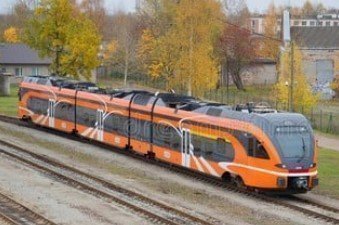
Photo: A modern rail motor similar to one that could be running on the Tottenham Branch Line if we get enough signatures. It is envisaged the rail motor would be solar/bio-fuel hybrid driven and would not rely on fossil fuel.
***************************************

The issue
Many people in rural and regional towns, especially low-income earners, young families, new arrivals and pensioners are already finding it too expensive to run a car. This means they will start going without food in order to pay their bills. As for being in a position to purchase a new electric vehicle, well that will also be way beyond their means. This, of course, is a recipe for disaster.
There is a renewed push by the state and federal governments to encourage even more people to move to the bush including migrant workers. But the NSW Government, in the past, has not put any additional infrastructure in place to support a massive increase in population in the west, including affordable and reliable public transport.
Decentralisation is the answer to many of the problems being faced in overcrowded cities like Sydney, including where to send new migrants. However, before people will consider moving to country areas, they need to be assured the infrastructure they will need to commute to jobs, go shopping, do business, attend medical appointments, take on study commitments and have a social life, is already in place. Many new migrants and young first home buyers will not be in a position to buy a family car or even put fuel in it for that matter, and will be relying 100% on public transport.
The previous NSW Government announced a future 'Fast Train' service between Parkes and Sydney, which would enable people living in the Central West better access to the coast. However, there are as yet, no plans to reinstate connecting passenger rail services to access that 'Fast Train' - so how do people get to Parkes to connect with it if they can't afford the fuel or are unable to drive at all?
Passenger services on the Tottenham Branch Line, like many other branch lines in inland NSW, were closed down in 1974 and when that happened, all the towns along its route suffered terribly - people moved away in droves, businesses closed and basic services were shut down one after the other. Towns like Tullamore, Albert, Tottenham, Bogan Gate and Trundle all became virtual 'ghost towns'. And each of those communities can now only boast populations of a few hundred people.
But there are big changes coming to the Central West in the form of the new Inland Rail linking Parkes with Melbourne and Brisbane. The Tottenham Branch Line also connects with Parkes (via Bogan Gate), which could easily bring commuters to and from that inland city for work and enable smooth connections with the proposed 'Fast Train' to Sydney.
The city of Parkes is on a trajectory to become one of the largest inland industrial and logistics hubs in Australia, due to its positioning on the crossroads of the Inland Rail Line and the Transcontinental Line. That city is also being earmarked as the site for Australia's first and largest Inland International Freight Airport - so there will soon be more jobs than people in the region. (Around 3,000 new jobs has been the number touted by the previous government.)
There are also cobalt, nickel and scandium mines and related processing plants opening soon at Fifield (near Trundle) and there will be an immediate need for better transport options to get workers to and from those mines. And once these mines and processing plants are in full production, there will no doubt be even more jobs available in all the towns along the Tottenham Branch Line as hi-tech industries, such as li-ion battery, electric car, fast train, aviation, space component and sports equipment industries, which all use these minerals, become established in the area. Many of the towns along the Bogan Way are already in the process of establishing new industrial zones in readiness of the manufacturing boom forecast for the region.
A passenger train is the most logical way to get all these workers to and from these future work centres without causing even more chaos and deaths on our narrow, pot-holed roads.
The branch line itself needs an upgrade so it can be used for the expected additional, heavier freight moving between these new mines, industrial hubs, grain receival depots and Parkes and so it is suitable for safer passenger trains. But the cost, which is expected to be far less than that of the Sydney and Parramatta light rail projects combined, will be well worth it as it will attract thousands of people to move to this part of the state.
If the Tottenham Branch Line was to be upgraded and passenger services were to be re-instated, it would breathe new life into all the towns along the Bogan Way. New homes would spring up, new businesses and factories would open and people would be able to commute to and from work, affordably and in comfort and safety. And the Central West would become an extremely viable option for many first home buyers, renters and workers from Sydney and other overcrowded cities.
On top of all these benefits, a whole new tourism industry would spring up, making it easier for International and Interstate visitors to experience the Central West in comfort, by rail. And these visitors would be spending their money in the towns along the Bogan Way instead of elsewhere.
By upgrading one branch line and reinstating one passenger rail service, which offered a daily commute for people living in the Central West, an entire region in western NSW would start to boom again. It really is that simple to get the Central West back on track - so let's get on with it!
The future of New South Wales lies in the west of the state, not Western Sydney.
Photo: A modern rail motor similar to one that could be running on the Tottenham Branch Line if we get enough signatures. It is envisaged the rail motor would be solar/bio-fuel hybrid driven and would not rely on fossil fuel.
***************************************
Petition Closed
Share this petition
The Decision Makers

Petition Updates
Share this petition
Petition created on 19 January 2018