

Innovative Peace Proposal for Immediate Resolution of Ukraine-Russia Conflict
The issue
Dear Global Citizens,
Subject: A Strategic Proposal for Resolving the Ukraine-Russia Conflict
I respectfully present a strategic seven-point plan aimed at resolving the complex Ukraine-Russia conflict. This proposal leverages historical precedent and is crafted with a vision for practical and sustainable peace.
- Territorial Adjustment and Sovereignty Recognition: Advocates for Russia and Ukraine's reversion to pre-2022 borders with the potential for a demilitarised, 100-year renewable lease of Crimea post a comprehensive consultation with Ukraine.
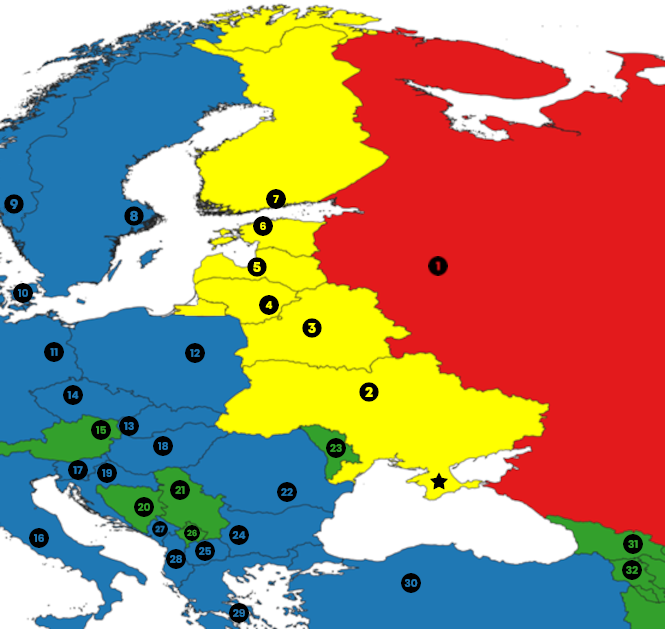
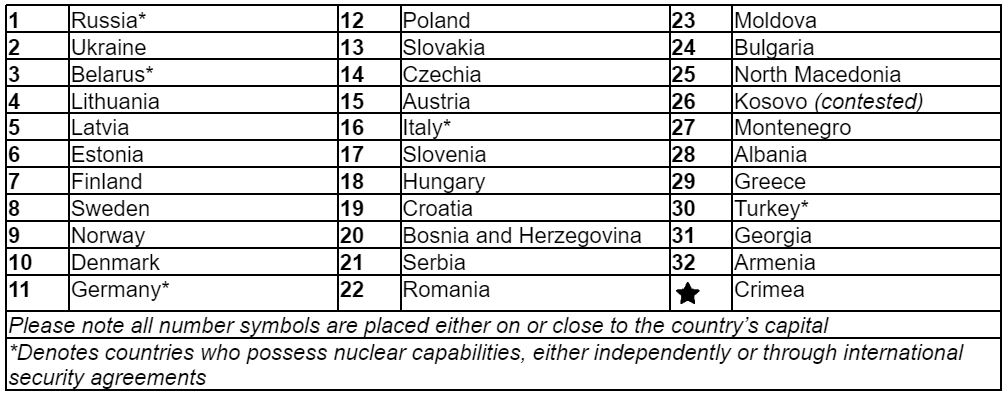
- The European Peace Line: Proposes a buffer zone (see illustration at end of document) to limit nuclear arms and restrict foreign military presence, coupled with a regional non-aggression pact subject to regular review and potential suspension if terms are violated.
- Mutual Security Agreements: Allows Ukraine the right to seek individual security arrangements, with any NATO membership decision pending comprehensive consultation with Russia. Black Sea military operations would be confined to bordering countries unless unanimously agreed upon otherwise.
- Economic Reconciliation and Humanitarian Aid: Suggests a framework for economic support and humanitarian aid, linked to the progress of the peace plan, akin to the post-WWII Marshall Plan.
- Legal Framework and Ceasefire Conditions: Seeks UN endorsement for the protection of Russian-speaking Ukrainians, along with conditions to address ceasefire terms, POW exchanges, and the safe return of displaced children.
- Arms Control and De-escalation Measures: Recommends a comprehensive arms control treaty within the Peace Line, emphasising nuclear and advanced weaponry, alongside a broader Eastern European security framework inclusive of Russian participation.
- Permanent, Adaptive Agreement: Envisions an enduring, adaptable agreement fostering regular diplomatic dialogue with Russia, and proposes the exploration of a comprehensive European security treaty.
These suggestions are meant to act as starting points for more granular discussions, recognising that each point will require in-depth negotiation and the willingness to adapt as circumstances evolve. The success of these proposals will depend on the active and sustained engagement of all involved stakeholders, from the local to the international level.
Implementation Strategy:
A phased approach ensures a clear progression from preparatory groundwork to negotiation and final resolution, featuring:
- Phase 1: Preliminary assessments, communication strategy development, and stakeholder mapping.
- Phase 2: Roundtable discussions, establishment of a joint monitoring committee, and the initiation of legal and economic frameworks.
- Phase 3: The roll-out of economic and humanitarian aid, arms control measures, and cultural preservation initiatives.
Positive Outcomes for Stakeholders:
For Russia and Ukraine, these range from formalising Crimea’s status to the restoration of Ukraine’s territorial integrity. For NATO and the international community, the benefits include reduced military tension and a potential model for resolving similar global disputes.
Conclusion:
This strategic proposal is a call to action for global leaders to collaborate towards a peaceful resolution. It is not presented as the ultimate solution but as a catalyst for dialogue, with a clear understanding of the challenges and complexities inherent in such negotiations. The spirit of this document is to inspire a concerted effort to build a framework that not only resolves the current conflict but also contributes to a stable and prosperous region.
Yours faithfully,
Mars Warden
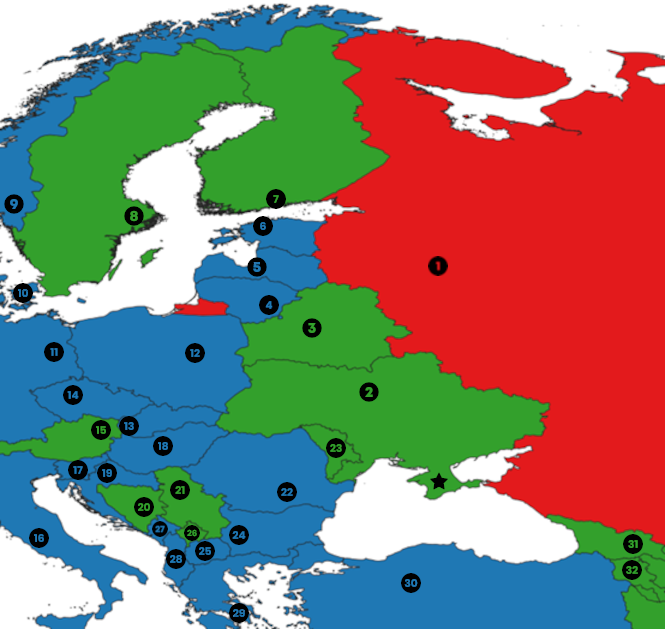
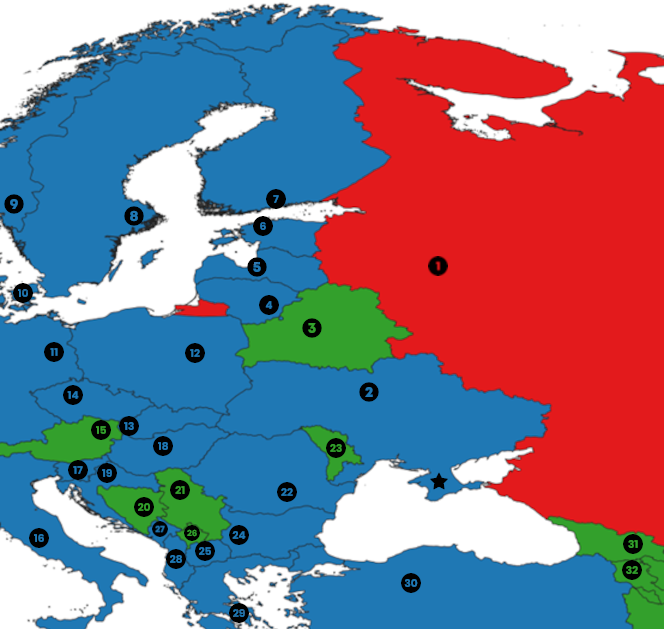
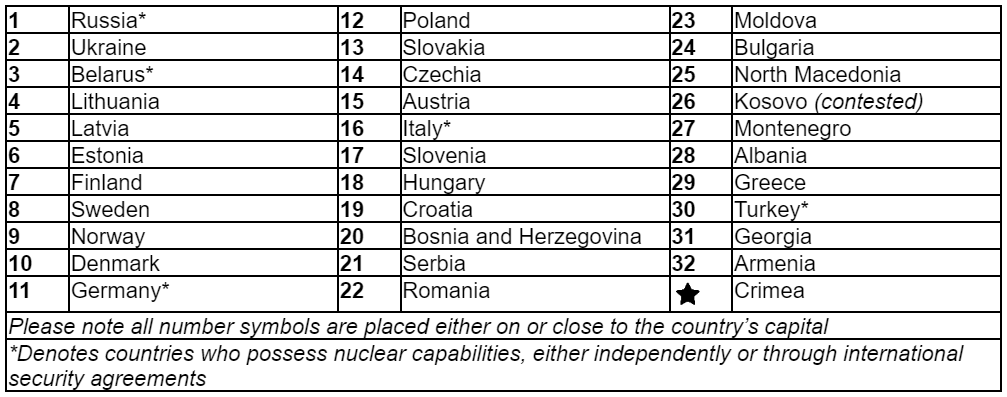
Illustration – Territorial Forecasts
Blue – NATO
Red – Russia
Green – Independent
Yellow – The European Peace Line
Pre-conflict
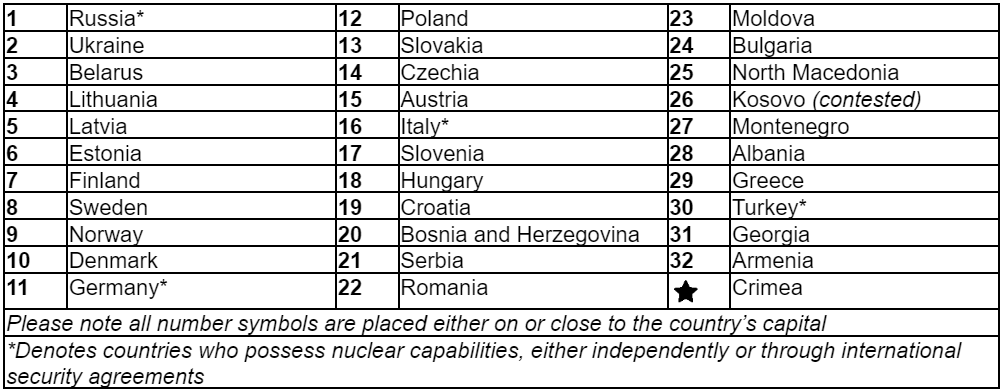
Total Russian Victory
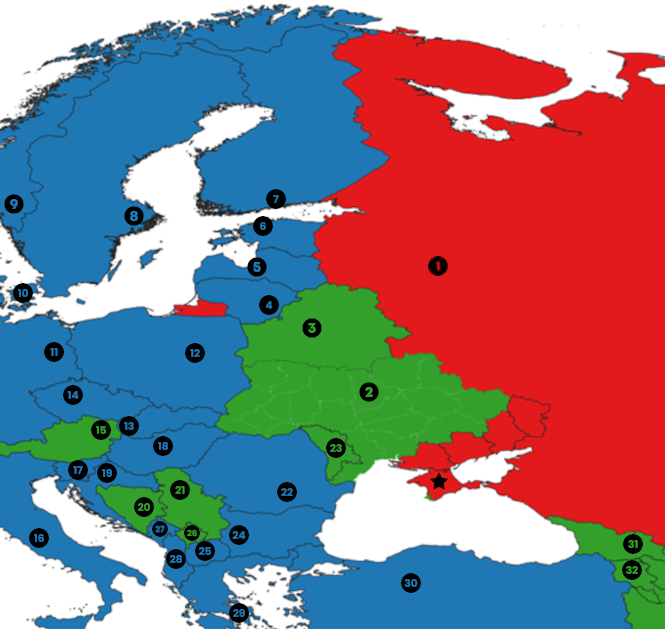
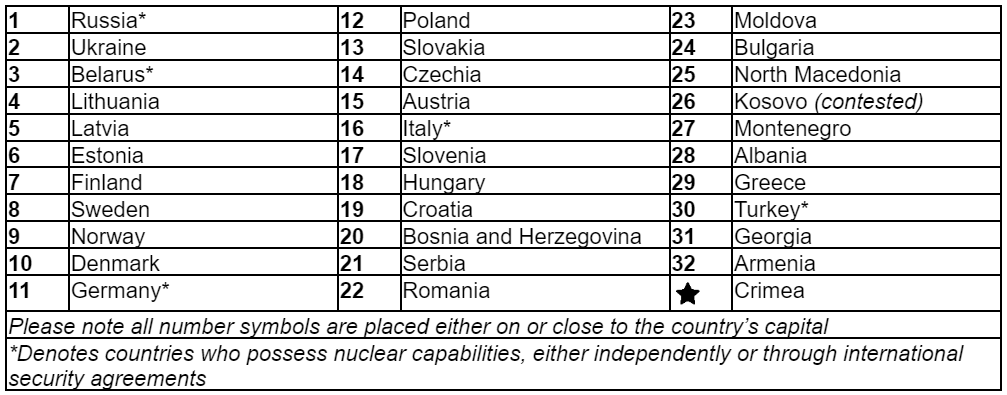
Total Ukrainian Victory
The European Peace Line

150
The issue
Dear Global Citizens,
Subject: A Strategic Proposal for Resolving the Ukraine-Russia Conflict
I respectfully present a strategic seven-point plan aimed at resolving the complex Ukraine-Russia conflict. This proposal leverages historical precedent and is crafted with a vision for practical and sustainable peace.
- Territorial Adjustment and Sovereignty Recognition: Advocates for Russia and Ukraine's reversion to pre-2022 borders with the potential for a demilitarised, 100-year renewable lease of Crimea post a comprehensive consultation with Ukraine.
- The European Peace Line: Proposes a buffer zone (see illustration at end of document) to limit nuclear arms and restrict foreign military presence, coupled with a regional non-aggression pact subject to regular review and potential suspension if terms are violated.
- Mutual Security Agreements: Allows Ukraine the right to seek individual security arrangements, with any NATO membership decision pending comprehensive consultation with Russia. Black Sea military operations would be confined to bordering countries unless unanimously agreed upon otherwise.
- Economic Reconciliation and Humanitarian Aid: Suggests a framework for economic support and humanitarian aid, linked to the progress of the peace plan, akin to the post-WWII Marshall Plan.
- Legal Framework and Ceasefire Conditions: Seeks UN endorsement for the protection of Russian-speaking Ukrainians, along with conditions to address ceasefire terms, POW exchanges, and the safe return of displaced children.
- Arms Control and De-escalation Measures: Recommends a comprehensive arms control treaty within the Peace Line, emphasising nuclear and advanced weaponry, alongside a broader Eastern European security framework inclusive of Russian participation.
- Permanent, Adaptive Agreement: Envisions an enduring, adaptable agreement fostering regular diplomatic dialogue with Russia, and proposes the exploration of a comprehensive European security treaty.
These suggestions are meant to act as starting points for more granular discussions, recognising that each point will require in-depth negotiation and the willingness to adapt as circumstances evolve. The success of these proposals will depend on the active and sustained engagement of all involved stakeholders, from the local to the international level.
Implementation Strategy:
A phased approach ensures a clear progression from preparatory groundwork to negotiation and final resolution, featuring:
- Phase 1: Preliminary assessments, communication strategy development, and stakeholder mapping.
- Phase 2: Roundtable discussions, establishment of a joint monitoring committee, and the initiation of legal and economic frameworks.
- Phase 3: The roll-out of economic and humanitarian aid, arms control measures, and cultural preservation initiatives.
Positive Outcomes for Stakeholders:
For Russia and Ukraine, these range from formalising Crimea’s status to the restoration of Ukraine’s territorial integrity. For NATO and the international community, the benefits include reduced military tension and a potential model for resolving similar global disputes.
Conclusion:
This strategic proposal is a call to action for global leaders to collaborate towards a peaceful resolution. It is not presented as the ultimate solution but as a catalyst for dialogue, with a clear understanding of the challenges and complexities inherent in such negotiations. The spirit of this document is to inspire a concerted effort to build a framework that not only resolves the current conflict but also contributes to a stable and prosperous region.
Yours faithfully,
Mars Warden
Illustration – Territorial Forecasts
Blue – NATO
Red – Russia
Green – Independent
Yellow – The European Peace Line
Pre-conflict
Total Russian Victory
Total Ukrainian Victory
The European Peace Line
The Decision Makers


Petition Updates
Share this petition
Petition created on 21 May 2024