

Include Lipedema in US ICD-10: Recognize This Distinct Disease Now, Don't Wait for ICD-11
The Issue
Who is impacted?
Millions of Americans, predominantly women, suffer from lipedema, a painful and progressive loose connective tissue disorder that is often misdiagnosed as simple obesity. These individuals face physical discomfort, mobility issues, and psychological distress due to the lack of proper diagnosis and treatment. Without a specific ICD-10-CM code, patients struggle to receive appropriate medical care, insurance coverage, and recognition of their condition as a legitimate medical issue.
What is at stake?
Including lipedema in the US ICD-10-CM would be a game-changer for patients and healthcare providers alike. It would facilitate accurate diagnosis, improve access to treatment, and potentially lead to more research funding. This recognition would validate the experiences of countless sufferers and pave the way for better understanding and management of the condition. Conversely, if lipedema remains uncoded, patients will continue to face barriers to care, financial burdens, and the physical and emotional toll of an unrecognized illness.
Why is now the time to act?
While lipedema is included in ICD-11, the implementation of a new ICD version can take many years, as evidenced by the lengthy transition to ICD-10. Patients cannot afford to wait. By adding lipedema to ICD-10-CM now, we can bridge this gap and provide immediate relief to those suffering. The medical community increasingly recognizes lipedema as a distinct condition, and it's crucial that our diagnostic coding system reflects this understanding. Swift action can improve countless lives and advance our healthcare system's ability to address this under-recognized but impactful disorder.
Why Would Someone NOT Want an ICD-10 Code for Lipedema?
Here's why. GREED. It's worth noting that some organizations might benefit financially from the current lack of a specific ICD code for lipedema. Companies that are paid to advocate for insurance coverage for surgery would be less lucrative if there was a consistent ICD 10 code recognizing lipedema as a disease instead of a handful of random symptoms that are hard to put together. This code is the foundation of insurance companies having to recognize and pay for our treatments. With a code in place, we are paving the way to put paid advocates in less of a wonderful financial situation and they would have to evolve to focus on getting full payment for all services instead of just surgery. Insurance companies, also, might prefer the status quo as it allows them to more easily deny coverage for lipedema treatments. Similarly, some healthcare providers who specialize in treating related conditions might see a decrease in referrals if lipedema were more accurately diagnosed. These financial incentives could potentially lead to resistance against creating a specific ICD code for lipedema.
Despite these challenges, progress is being made. The ICD-11, which hasn't yet been adopted in the United States, includes a code for lipedema (EF02.2). This recognition at the international level is a significant step forward, but more needs to be done to ensure its implementation in the U.S. healthcare system.
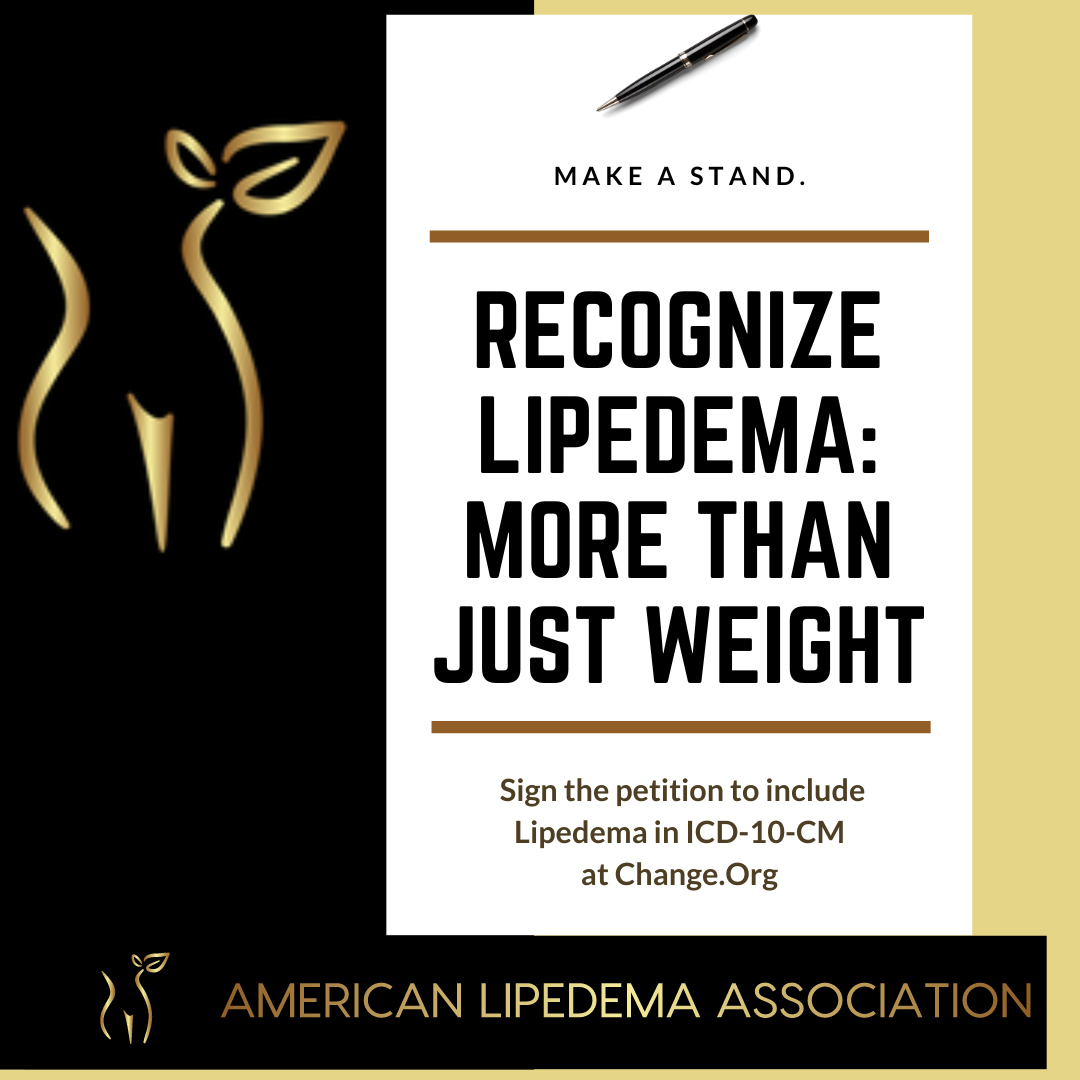
As patients, advocates, and healthcare professionals, we have the power to drive change. A petition on Change.org is currently calling for the addition of an ICD-10 code for lipedema. By signing this petition, you can help bring attention to this important issue and push for official recognition of lipedema in the U.S. healthcare system.
This petition will be shared with officials who make the decision to include lipedema in the ICD-10-CM, this September. Work is already well underway with more than one proposal submitted to the committee, and we will be there to show our support with signatures in hand!

Victory
The Issue
Who is impacted?
Millions of Americans, predominantly women, suffer from lipedema, a painful and progressive loose connective tissue disorder that is often misdiagnosed as simple obesity. These individuals face physical discomfort, mobility issues, and psychological distress due to the lack of proper diagnosis and treatment. Without a specific ICD-10-CM code, patients struggle to receive appropriate medical care, insurance coverage, and recognition of their condition as a legitimate medical issue.
What is at stake?
Including lipedema in the US ICD-10-CM would be a game-changer for patients and healthcare providers alike. It would facilitate accurate diagnosis, improve access to treatment, and potentially lead to more research funding. This recognition would validate the experiences of countless sufferers and pave the way for better understanding and management of the condition. Conversely, if lipedema remains uncoded, patients will continue to face barriers to care, financial burdens, and the physical and emotional toll of an unrecognized illness.
Why is now the time to act?
While lipedema is included in ICD-11, the implementation of a new ICD version can take many years, as evidenced by the lengthy transition to ICD-10. Patients cannot afford to wait. By adding lipedema to ICD-10-CM now, we can bridge this gap and provide immediate relief to those suffering. The medical community increasingly recognizes lipedema as a distinct condition, and it's crucial that our diagnostic coding system reflects this understanding. Swift action can improve countless lives and advance our healthcare system's ability to address this under-recognized but impactful disorder.
Why Would Someone NOT Want an ICD-10 Code for Lipedema?
Here's why. GREED. It's worth noting that some organizations might benefit financially from the current lack of a specific ICD code for lipedema. Companies that are paid to advocate for insurance coverage for surgery would be less lucrative if there was a consistent ICD 10 code recognizing lipedema as a disease instead of a handful of random symptoms that are hard to put together. This code is the foundation of insurance companies having to recognize and pay for our treatments. With a code in place, we are paving the way to put paid advocates in less of a wonderful financial situation and they would have to evolve to focus on getting full payment for all services instead of just surgery. Insurance companies, also, might prefer the status quo as it allows them to more easily deny coverage for lipedema treatments. Similarly, some healthcare providers who specialize in treating related conditions might see a decrease in referrals if lipedema were more accurately diagnosed. These financial incentives could potentially lead to resistance against creating a specific ICD code for lipedema.
Despite these challenges, progress is being made. The ICD-11, which hasn't yet been adopted in the United States, includes a code for lipedema (EF02.2). This recognition at the international level is a significant step forward, but more needs to be done to ensure its implementation in the U.S. healthcare system.
As patients, advocates, and healthcare professionals, we have the power to drive change. A petition on Change.org is currently calling for the addition of an ICD-10 code for lipedema. By signing this petition, you can help bring attention to this important issue and push for official recognition of lipedema in the U.S. healthcare system.
This petition will be shared with officials who make the decision to include lipedema in the ICD-10-CM, this September. Work is already well underway with more than one proposal submitted to the committee, and we will be there to show our support with signatures in hand!
The Decision Makers

Supporter Voices
Petition Updates
Share this petition
Petition created on July 2, 2024