

In Honor of Flaco: A Petition To Promise to Do Your Part For Bird Safety
The Issue
A Petition To Pledge to Do Your Part For Bird Safety—In Honor of Flaco
ABC News called Flaco "the most famous owl in the world" while New Yorkers called him their spirit animal. After breaking free from the Central Park Zoo, the orange-eyed Eurasian eagle-owl thrived in the urban skies of Manhattan for a little over a year, garnering an international fan club of enthusiasts who followed his every move. Sadly, on February 23, 2024, Flaco’s adventures came to an end after colliding with an eight-story building on West 89th Street. His life had become a symbol of freedom and resilience. His death, a call for change.
Make a pledge, make a promise to make your OWN windows at home or at the office safe for birds by simply affixing non-intrusive decals to the glass to prevent crashes. The purpose of this petition is to declare that YOU will do your individual part to make your windows safe to protect birds. Collectively, if we are all responsible for our own windows, we can make a difference.
The Bird Safe Buildings Act will be renamed the FLACO Act (“Feathered Lives Also Count” Act) and will require any new or significantly altered state buildings to incorporate bird-friendly designs, particularly in their windows.
Note: Nearly a quarter million birds in New York City, and more than one billion across the country, die each year from collisions with buildings. This number can be significantly reduced if buildings utilize bird-safe practices.
The Dark Skies Protection Act would significantly reduce light pollution in New York by requiring most non-essential outdoor lighting be covered by an external shield, be motion-activated, or be turned off between 11 PM and 5 AM.
Note: Around 80 percent of migrating birds move at night but light pollution can disrupt a bird’s natural sense of their environment.
Below is taken from this website, with everything you need to know to make your home safe to share with birds in their natural habitat.
Https://Abcbirds.org/Solutions/Prevent-Home-Collisions/
From The Website AllAboutBirds.com
Treatments For Existing Windows
To deter small birds, vertical markings on windows should ideally be spaced in a 2-inch by 2-inch grid. (This will safeguard the windows for even the smallest birds such as hummingbirds, gnatcatchers, siskins, kinglets, and the like.) All marking techniques should be applied to the outside of the window.
Tempera paint or soap. Mark the outside of the window with soap or tempera paint, which is inexpensive and long lasting. You can use either a grid pattern of 2 inches by 2 inches (see above), or get creative and paint patterns or artwork on your window.
Decals. Put decals, stickers, sun catchers, mylar strips, masking tape, or other objects (even sticky notes) on the outside surface of the window. These are only effective when spaced very closely (see above). Note that hawk silhouettes do little to deter birds. Remember: placing just one or two window stickers on a large window is not going to prevent collisions—they must cover most of the glass with the spaces between too narrow for birds to fly through.
Dot Patterns and Tape. Long-lasting tape products offer an easier way to apply the correct spacing of dots across your window. Products such as those available at Feather Friendly work well in preventing collisions.
Acopian Bird Savers. Also known as “zen curtains,” these closely spaced ropes hang down over windows. They do the work of tape or decals but are easier to install and can be aesthetically pleasing. They areFlF highly effective and are the method we use to safeguard windows at the Cornell Lab headquarters. You can order them to fit your windows or make your own.
Screens. Installing mosquito screens over your windows is very effective, as long as they are on the outside of the window and cover the entire surface.
Netting. Cover the glass on the outside with netting at least 3 inches from the glass, taut enough to bounce birds off before they hit. Small-mesh netting (around 5/8″ or 1.6 cm) is best, so that birds don’t get their heads or bodies entangled but will bounce off unharmed. You can mount the netting on a frame, such as a storm-window frame, for easy installation and removal.
One-way transparent film. Products such as Collidescape permit people on the inside to see out, but makes the window appear opaque on the outside. They can reduce the amount of light that comes in your window (this can also reduce your cooling costs), according to Sheppard.
###
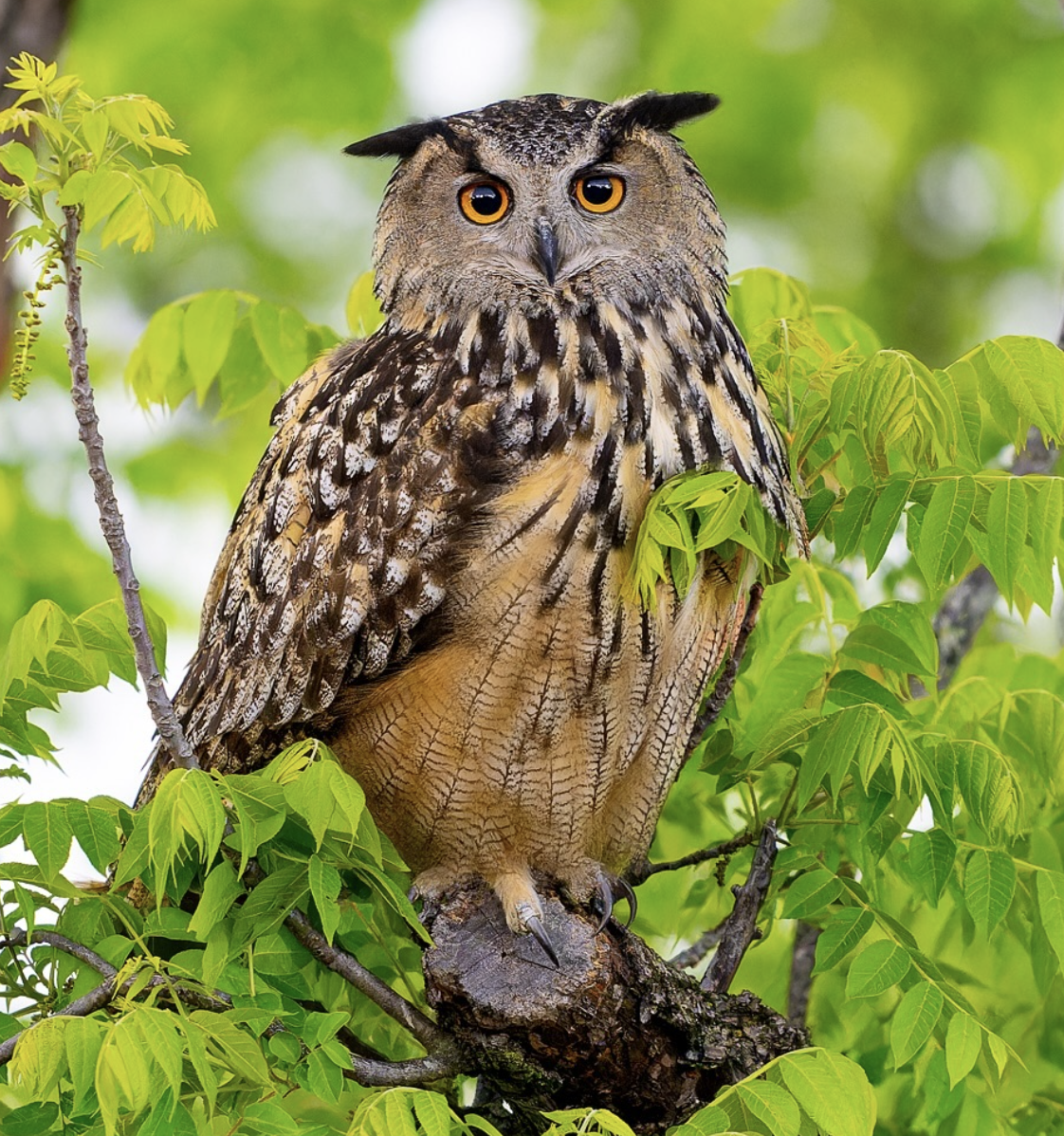
photo credit: David Lei

1,971
The Issue
A Petition To Pledge to Do Your Part For Bird Safety—In Honor of Flaco
ABC News called Flaco "the most famous owl in the world" while New Yorkers called him their spirit animal. After breaking free from the Central Park Zoo, the orange-eyed Eurasian eagle-owl thrived in the urban skies of Manhattan for a little over a year, garnering an international fan club of enthusiasts who followed his every move. Sadly, on February 23, 2024, Flaco’s adventures came to an end after colliding with an eight-story building on West 89th Street. His life had become a symbol of freedom and resilience. His death, a call for change.
Make a pledge, make a promise to make your OWN windows at home or at the office safe for birds by simply affixing non-intrusive decals to the glass to prevent crashes. The purpose of this petition is to declare that YOU will do your individual part to make your windows safe to protect birds. Collectively, if we are all responsible for our own windows, we can make a difference.
The Bird Safe Buildings Act will be renamed the FLACO Act (“Feathered Lives Also Count” Act) and will require any new or significantly altered state buildings to incorporate bird-friendly designs, particularly in their windows.
Note: Nearly a quarter million birds in New York City, and more than one billion across the country, die each year from collisions with buildings. This number can be significantly reduced if buildings utilize bird-safe practices.
The Dark Skies Protection Act would significantly reduce light pollution in New York by requiring most non-essential outdoor lighting be covered by an external shield, be motion-activated, or be turned off between 11 PM and 5 AM.
Note: Around 80 percent of migrating birds move at night but light pollution can disrupt a bird’s natural sense of their environment.
Below is taken from this website, with everything you need to know to make your home safe to share with birds in their natural habitat.
Https://Abcbirds.org/Solutions/Prevent-Home-Collisions/
From The Website AllAboutBirds.com
Treatments For Existing Windows
To deter small birds, vertical markings on windows should ideally be spaced in a 2-inch by 2-inch grid. (This will safeguard the windows for even the smallest birds such as hummingbirds, gnatcatchers, siskins, kinglets, and the like.) All marking techniques should be applied to the outside of the window.
Tempera paint or soap. Mark the outside of the window with soap or tempera paint, which is inexpensive and long lasting. You can use either a grid pattern of 2 inches by 2 inches (see above), or get creative and paint patterns or artwork on your window.
Decals. Put decals, stickers, sun catchers, mylar strips, masking tape, or other objects (even sticky notes) on the outside surface of the window. These are only effective when spaced very closely (see above). Note that hawk silhouettes do little to deter birds. Remember: placing just one or two window stickers on a large window is not going to prevent collisions—they must cover most of the glass with the spaces between too narrow for birds to fly through.
Dot Patterns and Tape. Long-lasting tape products offer an easier way to apply the correct spacing of dots across your window. Products such as those available at Feather Friendly work well in preventing collisions.
Acopian Bird Savers. Also known as “zen curtains,” these closely spaced ropes hang down over windows. They do the work of tape or decals but are easier to install and can be aesthetically pleasing. They areFlF highly effective and are the method we use to safeguard windows at the Cornell Lab headquarters. You can order them to fit your windows or make your own.
Screens. Installing mosquito screens over your windows is very effective, as long as they are on the outside of the window and cover the entire surface.
Netting. Cover the glass on the outside with netting at least 3 inches from the glass, taut enough to bounce birds off before they hit. Small-mesh netting (around 5/8″ or 1.6 cm) is best, so that birds don’t get their heads or bodies entangled but will bounce off unharmed. You can mount the netting on a frame, such as a storm-window frame, for easy installation and removal.
One-way transparent film. Products such as Collidescape permit people on the inside to see out, but makes the window appear opaque on the outside. They can reduce the amount of light that comes in your window (this can also reduce your cooling costs), according to Sheppard.
###
photo credit: David Lei
Supporter Voices
Petition Updates
Share this petition
Petition created on March 1, 2024